Nigerian farmers and herders have really not been too friendly. There has been some animosity between them over grazing activities of the cattle. Anytime herds graze on farmlands, destroying crops in the process, violence erupts. While the herdsmen claim rights for their cattle, as their source of economic sustainability, the crops are the source of economic life for the farmers. Somehow, this fragile peace was managed until 2015 when Muhammadu Buhari won election as president of Nigeria. From here, everything changed. The herdsmen became more violent, taking on communities, daring authorities on all sides. Interestingly, none of their leaders have been arrested for questioning. One wonders whether the audacity by leaders of these Fulani socio-cultural groups has anything in common with the mindset of the federal authorities. Or a game plan hatched long ago.
Looking back, we’ve had former Nigerian President’s of Fulani extraction like late Alhaji Shehu Shagari and Umaru Musa Yar’Adua. Yet, we didn’t see this impunity. We didn’t come in contact with a murderous gang of cattle rearers who invaded communities, kill people in their sleep, destroyed farmlands like what we’re currently experiencing under President Buhari. We didn’t see where a Fulani organisaistion dared a community, issued and carried out their threats, with no one questioning them. Could Miyetti Allah Kautal Hore be emboldened because of the body language of Mr. President?
We are therefore not surprised when the National President of Miyetti Allah Kautal Hore, Alhaji Abdullahi Bodejo in an interview in The Sun newspapers, published on Saturday January 23, 2021 made some scathing remarks against Benue state Governor Samuel Ortom over the governor’s stand on the menace of Fulani herdsmen in the state. Governor Ortom has always stood for the protection of lives and properties for everyone in Benue. This is the same life that armed herdsmen who are believed to be members of Badejo’s association, the Miyetti Allah have serially violated through wanton killings, moving from community to community.
Governor Ortom had in 2018, called for the arrest and prosecution of the Miyetti Allah chief, Alhaji Badejo for making inciting and inflamatory statements. Sadly, Badejo never got any invite from the Police or the Department of State Services, DSS.
Badejo’s recent outburst against Governor Ortom could therefore be traced to the governor’s stand against open grazing in the state. This is pursuant to the 2017 Open Grazing, Prohibition and Ranches Establishment Law. The governor have encourgaed Miyetti Allah Kautal Hore or anyone who wants to rear cattle in the state to follow the prescription as contained in the law and not to circumvent the process.
It is therefore absurd for Alhaji Badejo whose members have serially invaded and killed hapless citizens of Benue, from Agatu to Logo, Guma, Makurdi, Gwer East, Gwer West, Kwande, Tarka among many others, leaving blood in its trail to come out to cast aspersions on Governor Ortom to whip up sentiments where they don’t even exist.
Instead of apologising to the people of Benue and indeed Nigeria at large for the heinous and murderous activities of Miyetti Allah members in the state, Bodejo have chosen to divert attention to Governor Ortom, who incidentally opened the eyes of other governors in the country to the evil agenda of the group to attack, conquer and devour their host communities.
In deed, we are not surprised at the hatred Miyetti Allah and its allies nurse against the person of Governor Ortom. It is because Governor Ortom resisted the establishment of cattle colonies, also known as RUGA settlements in the state that has made Badejo and his acolytes hate him more. But it is an open secret that Ortom has exhibited an uncommon courage in the defence of Benue. He has shown tenacity of purpose in administering the state, displayed undying love for his subjects, resilience against forces of darkness and obsession with good governance.
I wish to remind the Miyetti Allah helmsman that the primary responsibility of any government is the security of life and property as well as the welfare of the people. And the people of Benue are proud to have Governor Ortom, who has performed excellently in protecting the lives and property of his people from criminal activities of marauding and unrepentant groups. Governor Ortom would rather protect his people than kowtow to some blood-thirsty criminals.
Let it be known that this new utterance by Bodejo is another attempt to incite and direct invitation for anarchy against the state. It is not only a threat to the peace of this country but also a prelude to another round of attacks on Benue. Let it be known that no group should be above the law to stand and be dictating to states on how to accord preference to it at the expense of other Nigerians. The Miyetti Allah’s persistence in making these inflamatory statements is capable of stirring crises in the country.
Miyetti Allah through Bodejo, is known for issuing threats to Benue. Sometimes in 2017, he threatened the Benue people because Governor Ortom signed the Open Grazing and Prohibition and Ranches Establishment Law in 2017 passed by the Benue State House of Assembly. This threat was carried out on the eve of 2018 New Year when their armed militia murdered 73 innocent persons in their sleep. The armed herdsmen have severally destroyed properties worth millions of naira and displaced over 500,000 people in Guma, Makurdi, Gwer West, Buruku and Logo local government areas who are still squatting in various locations of IDP camps.
It is not for Badejo to stand in judgement against the performance of Governor Ortom or demand accountability. But suffice it to say that the governor has performed creditably in his almost six years in all sectors. This cuts across education sub-sector, agrculture, trade and investments where low interest loans are facilitated for the people in a partnership with the Bank of Industry for small and medium enterprises for their businesses. There has been huge improvement in the construction of road network across the state, health, security etc. And activities of people like Badejo and groups like Miyetti Allah is drawing us backwards.
It has therefore become glaring that when we don’t sanction those who violates the sanity of lives, but are allowed to walk freely, we are only encouraging anarchy. Miyetti Allah has been too brazen in this. They speak out as if they are authorities unto themselves. It is high time the likes of Badejo and his co-conspirators are made to pay for the crimes they aid and abet. Or that we have two sets of citizenship living in Nigeria. Except we’re been told that some individuals are greater than the law.
Ikyur is the Principal Special Assistant on Media to Benue State Governor.
The Nigerian Centre for Disease Control (NCDC), on Monday night, announced 1,430 new cases of COVID-19 infections in the country.
The health agency disclosed that Lagos had the highest record of the fresh cases with-744, Plateau-100, Oyo-77, FCT-75, Nasarawa-74, Katsina-48, Edo-42, Kano-41, Enugu-37, Rivers-34, Ogun-33, Kwara-32, Niger-28, Ebonyi-27, Kaduna-26, Borno-12, Yobe-10, Ekiti-5 and Gombe-1.
The agency said three deaths occurred in the country in the last 24 hours, as the fatality figure increased from 1,504 on Sunday to 1,507 on Monday.
The data from the agency disclosed that 1,131 patients were discharged in the last 24 hours as the figure of discharged cases stood at 98,359 while 13,130 cases were still active in the country.
The agency said the discharges on Monday included 435 community recoveries in Lagos State and 184 community recoveries in Kaduna State managed in line with guidelines.
Total confirmed cases in Nigeria – 112,996 Total discharged cases – 98,359 Total deaths – 1,507
Fighting against the second wave of coronavirus pandemic, the private sector Coalition Against COVID-19 (CACOVID), has supported the Federal Government with the supply of critical oxygen for case management of Covid-19 patients, to Isolation centres across the Country.
Updating media on the latest donations by CACOVID, yesterday in Lagos, Managing director and CEO of Aliko Dangote Foundation, who doubles as an administrator of CACOVID, Zouera Youssoufou said the provision of oxygen to all the isolation centres across the country was made available by a key partner of CACOVID, Mr. Raj Gupta of African Industries Group, at no costs, immediately the request for oxygen was made from the Presidential task force on COVID-19.
She said: ”As you all know, we are experiencing a severe oxygen supply problem in the country with this 2nd wave. CACOVID, through one of our founding members, Mr. Raj Gupta of African Industries Group immediately stepped up and has been providing oxygen in Abuja, mainly to the National Hospital and Gwagwalada Specialist Hospital in FCT. Since December 21, 2020 when we first received the request for oxygen from the Presidential Task Force on COVID-19, 1300 cylinders have been delivered, and we will continue to do so as long as this is required.”
Youssoufou said the same offer has been made to Lagos state, where there is oxygen shortage and that CACOVID as at last week has provided 122 cylinders already refilled for use and sent to the Yaba medical centre.
She said: ”In addition to the oxygen that has been provided by African Industries Group, CACOVID has also purchased over 1,000 cylinders to be distributed to the states that have the most need.”
Making a commitment on behalf of CACOVID, Raj Gupta of African Industries Group said ” …We will continue to support Nigeria with oxygen for free for as long as this is required. No Covid patient in any public hospital or isolation centre should have to pay for oxygen… We have been in Nigeria for 50 years and this year marks our 50th anniversary. We manufacture Oxygen as one of our steel making process but when we noticed COVID-19 patients are dying of Oxygen, we have to step in, through CACOVID.
“As a member of CACOVID, this is our support in moving the country forward and we see this as a humanitarian crisis and as a responsible company, we have to step in, to ensure that no-one died due to lack of Oxygen. If it takes us to temporarily stop our steel production, we will happily do that for our people to live and be healthy in Nigeria”
On cost implication, Gupta said it is a secondary issue and that what is of most concerns to the company is, saving lives.
Youssoufou recalled that Since “March 2020, when CACOVID was convened, the coalition has raised about N39 billion, which has been spent on supporting the establishment of 39 isolation centres across the country, including the largest and most used in Lagos, during this second wave.
She said: “We also purchased millions of PPEs, testing supplies, palliatives for 10.7 million people, and provided risk communication in support of the messaging campaigns to keep Nigerians aware and protected from the virus.”
Youssoufou explained that though African Industries Group has made all the appropriate technological adjustments to ensure the Oxygen they supply is what is required. (Theconclaveng)
Mr Boss Mustapha, Chairman, Presidential Task Force (PTF) on COVID-19 and Secretary to the Government of the Federation, said Nigeria recorded four cases of COVID-19, B117 variant strain, first reported in the UK.
The PTF chairman made the disclosure at national briefing on Monday in Abuja.
Mustapha said; “over the last few weeks, the PTF had been closely following the rising number of infections reported daily in Nigeria and in other jurisdictions.
“Similarly, our scientists have been sequencing the variants of the virus.
“There have been reports of cases with the B117 variant strain first reported in the UK, found in Nigeria. Three of these were in travelers out of Nigeria and one in a resident.”
He also stated that the daily statistics for Nigeria as at January 24, 2020 showed that cases were 121,566; total tests so far were 1,270,523; active cases were 22,834, amounting to 19.4 per cent; discharged patients were 97,228 and deaths stood at 1,504.
“Also, over seven days ending Jan. 23, the statistics showed that tests conducted were 58,974 while cases recorded were 11,179, with a positivity of 19.0 per cent.
“62 deaths were recorded, with case fatality ratio of 0.6 per cent; active cases stood at 23,568 at 19.4 per cent.
“All these numbers represent increases from the previous seven days and we are looking at taking further public health containment measures in local government areas that are considered high burden,” he explained.
On the activities of the PTF in managing COVID-19, the PTF chairman said: “The management of cases is gradually improving with the availability of medical oxygen. Government is also fast tracking the rehabilitation of existing plants and construction of new ones as approved by the President.
“The PTF has advanced in the deployment of resources for the national testing week and continues to review the bottlenecks affecting the turnaround time for testing.
“The PTF is improving on the International Travel Portal to minimise the challenges passengers keep encountering,” he said.
Speaking on the phase three eased lockdown, Mustapha said the PTF “is reviewing the guidelines on the implementation of phase three of the eased lockdown which is due to expire today (on Monday).
“In view of the fact that our numbers are not abating, all extant measures prescribed in these guidelines are (subject to some modifications) extended by a period of one month with effect from Tuesday, Jan. 26,” he said.
On vaccines, he said the expected 100,000 doses would arrive the country in early February.
According to him, the effort to access and deploy vaccines are progressing and as already announced by COVAX, the initial 100,000 doses Nigeria is expecting will now arrive in the early weeks of February.
“We wish to assure all Nigerians that the vaccines will be safe and effective when eventually it is deployed. We enjoin everyone to join in the campaign to eliminate vaccine hesitancy.
“I have to however, advise all Nigerians that the only source of vaccines that is safe and effective in Nigeria is through the channels of the National Primary Health Care Development Agency (NPHCDA) Please do not patronise any one hawking or marketing vaccines,” he added. (NAN)
Yoruba activist, Chief Sunday Adeyemo, popularly known as Sunday Igboho, has declared some Yorubas were part of those who razed his residence in the early hours of Tuesday.
He however said he didn’t have the full details of those who committed the arson.
“What I find surprising is that some Yorubas are in support of the herdsmen to set my house on fire. I’m saddened by it,” he said.
On the suspected arsonists, he said: “For now, I do not suspect anyone.
“When they knew they could fight, fire gunshots, and set a house ablaze, isn’t it where I stay that they are supposed to come? If they had come to the house where I stay, I would have had evidence for you people (journalists) because they won’t all escape.
“It’s either you meet their dead bodies or meet them with broken legs. I thank God that they applied wisdom by going to a house where they know that I don’t live and destroyed my properties and burnt it down.”
He also disclosed the value of damaged items in the residence could not be less than N50m.
On how he knew about the attack on his old house, Igboho, who spoke with journalists, said the arsonists fired gunshots before breaking in.
He said: “Around 3.30am today, my younger ones residing at my old house rushed to my gate to wake me up, saying some bandits came to the house, fired gunshots, broke the gate and set the house ablaze. The two people at the house managed to escape. By the time I got there, the bandits had escaped. So, we called firefighters to help us put out the fire.”
On why he’s against the criminal herdsmen, Igboho said their atrocities in Yorubaland are preventing peace from reigning.
“These Fulanis are killing our brothers in our fatherland. They’re killing, raping, and kidnapping. All the things they are doing to us are not good. That’s why I’m trying to unite our people so that we can chase them away for peace to reign in Yorubaland,” he said. (Thenigerialawyer)
Mr. Jibrin Samuel Okutepa, a Senior Advocate of Nigeria, has said that things in the country are not working the way they should.
In a statement made available to TheNigeriaLawyer, Okutepa said Nigerians have become enemies of themselves and are sabotaging the system for economic gains.
He added that education is no longer a key to anything one wants in life as there are many graduates without jobs.
“Nigeria and Nigerians are in a perilous time. Things are just not working the way it should be.
“Nigerians have become terrible enemies of the system they operate and have decided to sabotage the system for economic gains.
“Those days we are told education is key to anything you want in life.
Families therefore struggled and sent their wards and children to schools. These wards and children have been trained and now graduates.
“We now have graduates with good grades roaming the streets and offices seeking employment.”
The distinguished silk lamented that those in positions to give jobs now demand for money before giving people jobs
He further lamented that the government which was voted into power to fight corruption is doing nothing about it
He said, “Daily people who have the means get employed and paid for the employment. Those who have no means to pay cannot be employed because they cannot pay and some refused to pay to be employed.
“Today in Nigeria civil and public servants sell employments to Nigerians. This is an open fact.
“Yet Nigerian government, the government we voted to protect us and fight corruption and corrupt means moves on as if nothing is happening.”
Okutepa traced insecurity to unemployed youths who are left with only option of buying jobs if they can afford it. According to him, those selling employments are either Muslims or Christians who go to places of worship to pray. How will God heal our land? He asked
He said, “The insecurity in Nigeria can be traced directly to the army of unemployed youths. Youth restiveness in Nigeria is directly a function of unemployment. Selling employment to Nigerians by Nigerians in privileged positions is corruption. This government was elected to fight corruption.
“The Nigerian constitution imposes a duty on Nigerian government and all of us to expose and eradicate corruption in all ramifications. Instead, corruption seems to have become our ways of life.No one cares. Nobody is concerned. Yet those who go about selling employments to Nigerians are either of Christian faith or Muslim faith. Yet these people go to church or mosque to pray and worship God. How will God heal our land in this circumstances.
“Is President Muhammad Buhari not aware that some people in government are selling employment to Nigerians. Is vice president Osibanjo SAN not aware of it. Is Minister for Labour and Productivity not aware of these racketeering. Are our security agencies not aware of these nefarious activities.
“Why do we pretend that all is well with us when we are individually or collectively sick?”
Okutepa said he woke up with these burden on his heart and wondered corruption is being eradicated or institutionalized
He said Nigerians are in pains. He called on President Buhari to arrest the situation as many families have graduates without jobs
“I woke up this morning with these heavy burdens on my heart. Why are we like this in this country. You have the privilege to give out employment and you are selling it. What kind of human beings are you. What kind of employee are you breeding.
“Are we eradicating corruption or we are institutionalise it further. How will those who paid to be employed exhibit patriotism and nationalistic tendencies tomorrow.
“We have prostitutes employment processes. It is now money for hands employment letters in your hands. What kind of country is this.
“I call on President Muhammad Buhari to urgently look into these dangerous trends going on and arrest the situations without delay. Nigerians are suffering and in agony and pains. Many families have graduates without jobs. Those who seek to be employed are being exposed to unimaginable ordeals in their father land. Nigerian government must do something before the time bomb explodes.This is my feelings today.” he said. (Thenigerialawyer)
In the Federal High Court, Kwara State Judicial Division, the 1st respondent filed an originating summons, claiming that he won the 2nd respondent’s primaries as the candidate to contest the House of Assembly Election for Essa, Shawo and Igboidun Constituency, but that the 2nd respondent unlawfully substituted him with the appellant as its candidate. He prayed for determination of questions to the effect that; whether by provisions of sections 86 and 87, Electoral Act, 2010, the 2nd respondent had the right to substitute him with the appellant. The 1st respondent prayed for declaratory reliefs to the effect that: he is the rightful candidate who won the primaries and should be recognized as such; orders nullifying appellant’s nomination and order of perpetual injunction restraining the 2nd respondent from recognizing the appellant as its candidate, for the election. The appellant and 2nd respondent filed preliminary objections to the action. The trial court granted the reliefs sought by the 1st respondent. Dissatisfied, the appellant appealed to the Court of Appeal contending that the trial court erred amongst other grounds when it held that the court had jurisdiction to entertain the matter despite the failure to seal the originating process contrary to Order 6, rule 2 (1), Kwara State High Court (Civil Procedure) Rules, 2005.
DECISION OF COURT ON THE ISSUE
The Court in answering the said question, Per. Hamma Akawu Barka, J.C.A, while quoting the case of Comrade Adams Aliyu Oshiomole & 3Ors V. Hon. Ishola Balogun Fulani & Ors (unreported) in Appeal No. CA/IL/148/2018, delivered on 12th February, 2019, wherein heavy reliance was placed on the case of Igiriga V. Bassey (2013) LPELR-CA/C/174/2009, Per Ndukwe-AnyanwuJ.C.A, held that:
“A writ issued without the registrar’s seal is incompetent and cannot be cured. Where the word shall is used in any legislation, it means it is mandatory. There is no other meaning that can be ascribed to it. The word shall means that any failure on the part of the registrar to seal the writ of summons invalidates the writ. A writ unlike other processes is an originating court process and it requires the registrar’s seal……”
The court further held that, it is trite, that the duty of the registrar of the court to seal an originating summons (motion) or writ of summons is a fundamental requirement of the law. Thus, any failure by the registrar to seal an originating process is not a mere irregularity; indeed, it is a condition precedent that foist jurisdiction upon the court. As such defect is so crucial that it renders the court devoid of jurisdiction to determine the action…….in other words, the lower court was in grave error in holding that the originating summons in this case is competently before the court.
ARGUMENT ON THE OTHER SIDE
The converse argument presented by the respondent and which the trial court concurred with was hinged on the case of State Independent Electoral Commission V. National Conscience Party (2008) LPELR-4980 (CA), per Sankey JCA, which is to the effect that:
“ The fact that the summons which was duly filed after due payment of appropriate assessed fees was not signed by the registrar or other officer duly authorized does not constitute an incurable irregularity and does not render the proceedings a nullity as the originating summons could have been rectified quite easily at such initial stage of the proceedings by the registrar or other officer by signing same as required by the rules…..in my view, the fact that the originating summons was not signed by the registrar or other officer authorized in that regard is a technicality that should not be allowed to defeat the cause of justice.”
The Court of Appeal in this instance was however not swayed by the above argument, as it distinguished Order 6, rule 8 of the High Court (Civil Procedure) Rules of Ondo State 1987 applicable to Ekiti State at that time applied in that case from the Kwara State Rules in issue, and ruled that by a careful and critical examination of both Rules that; while that of Kwara State contains mandatory force and a condition precedent with the use of “Shall”, the former conveys discretion without a coercive force. The Court concluded that the defect goes to the root of the suit, thus rendering it incompetent and thus ousts the jurisdiction of the court. In the circumstances, the proper order to make is that of striking out of the defective process. The Court struck out the Originating summon.
THOUGHTS AND CONCLUSIONS ON THE DECISION OF THE COURT
One of the canons of interpretation of statutes is the literal rule where the clear words of such statute are given their ordinary meaning. This rule coupled with the legalistic bend, that use of “Shall” in a statutory book would mean compulsion and not discretion, led the court in the above case to its conclusion.
It is necessary to state that the need to glean the intention of the legislature or enacting authourity of a statute by reading through other provisions of the statute contextually cannot be over- emphasized. It is definitely not at all times that the word shall, will be given a mandatory meaning; reading the wordings of the statute in whole might suggest a discretionary perspective. The tendency to compulsion in such a case is slavish and a religious adherence to letters without the spirit thereof.
This writer faults the decision of the court in this case in this respect, because by the clear reading of Order 4, rule 1 of the said Kwara State High Court (Civil Procedure) Rule, 2005, the effect of failure to comply with the rules in beginning or purporting to begin a proceeding is that it does not nullify same automatically; the court has the discretion to order for a regularization of the document. The provision reads thus:
When in beginning or purporting to begin any proceedings, or at any stage in the course of or in connection with any proceedings, there has, by reason of anything done or left undone, been a failure to comply with the requirements of these Rules, whether in respect of time, place, manner, form or content or in any other respect, the failure MAY be treated as an irregularity and if so treated, will not nullify the proceedings, or any document, judgment or order therein.
The discretionary powers of court ought to be used not just judicially, but judiciously. It is submitted here, that the discretion of the court in this case with this issue was not used judiciously, particularly when the Rules provided power for amendment of such defaulting document (See. Sub rule 2 of Order 4). Surprisingly, the court in its judgment did not make recourse to this provision of the said Rules on the effect of non compliance with the dictates of the Rules.
However, the crux of this argument is that the decision should not be applied in stock, lock and barrel fashion. The same way the court distinguished the case of State Independent Electoral Commission V. National Conscience Party (Supra) before reaching its conclusion is the adjuration of the writer here. The Rules of court bears different consequence for failure to do a certain act, and as such it should be the litmus for holding such default as an irregularity or otherwise. An example may be apposite: The Edo State High Court (Civil Procedure) Rules, 2018 provides in Order 5, Rule 1as follows with respect to non compliance with the rules while instituting an action:
Where in beginning or purporting to begin any proceeding there has by any reason of anything done or left undone, been a failure to comply with the requirements of these rules, the failure SHALL NOT nullify the proceedings.
The following rule under this Order makes room for an order of regularization by the Judge in case of any of such default. The end result being that matters are not struck out for reason of mere technicality, particularly when same was as a result of the default of the registrar as was in the case in review. It is urged therefore that the Heads of our courts with the enacting powers to make these Rules should take this into consideration, and even when they want to retain the provision as incompetency, they should create circumstances where the litigants ought not to bear the repercussion for the failure of the court officials in the registry. It is totally unfair and unjust that the sin or omission of the registry or court should be visited on the litigants, especially when the lawyer and the client has done substantially all that is demanded of them like the payment of the appropriate fees, proper naming of parties, attachment of accompanying documents, delivery of the required number of copies, etc; and the other party had taken steps in the proceeding.
The objective and inclination of court being to sustain and dispose off of cases in their merit, the need to ensure our laws do not permit consequences that aid technicality is imperative, save where it would occasion a miscarriage of justice or prejudice any of the parties. Where the default is curable and is harmless, regularization should be permissible at the minimum. (Thenigerialawyer)
As a well cultured Nigerian and Catholic Christian, I abhor criminality in all its ramifications. I have been a serial victim. But God has always delivered me from the snares of all evils (Psalm 23). As a constitutional lawyer and Human Rights Activist, I speak not just for today, but for tomorrow and posterity. I do not simply jump into the fray of issues and take the popular and most convenient route. Many do. Without weighing the possible negative effect of such populist positions. Such may be good music to the ears in the short measure. I prefer to look at, not just the short, but the medium and long term effects and consequences of such delicate matters. That is why over 98% of my postulations have always come to pass. Not a few Nigerians have wondered aloud whether I am a prophet, seer or Nostradamus. I am neither. Some Nigerians have, on the trending issue, been vociferously in support of the Ondo State’s blanket order given to herders, by my good friend, Governor Rotimi “Aketi” Akeredolu, to quit Ondo forest reserves within 7 days. Many have applauded it. Many endorsed; clapped. There is some sense in this, éclat though. But, have we stopped for a moment, to look at the possible manifold and ponderous effects of such a blanket order on other tribes and indigenes living in other parts of Nigeria other than their own? Have we analysed and interrogated the issues?
When my good friend, Governor Nyesom Wikee of Rivers State ordered the demolition of a hotel for the owner’s violation of covid-19 rules, I intervened, arguing that he should have done it through a court order. I suggest that the owner of the hotel should go to court for redress. In the same measure, I argued that Governor Nasir-El-Rufai should not have rolled out bulldozers and caterpillars to demolish a hotel in Kaduna simply because it was alleged that the owner had desired to use it for a nude party, a matter never proved. It was simply political. But, I believed it should have been done through a court order; not through brute force.
We cannot use illegality to fight illegality; just as it is wrong to use corruption to fight corruption. Can we really stop Nigerians from plying their trade in any part of Nigeria, if done legitimately and in accordance with extant laws? I think not. I hope not. I pray not. We must learn, in a constitutional democracy, to be a country governed by laws, not men. We must build a country of strong institutions, not strong men.
This was why America only just recently defeated a strongman, performer president Donald Trump, with strong institution. It is in this context I will now proceed to critically analyse and interrogate, whether Governor Akeredolu’s 7 days Quit Notice for herders to quit Ondo State forest reserves is legal, constitutional and proper.
THE LEGAL REGIME The Land Use Act of 1978 (LUA) has since laid the issue to rest as to who controls land in Nigeria. The provisions of Sections 1 and 2 of the Land Use Act, provides that “all land comprised in the territory of each state in the Federation are hereby vested in the Governor of that State such land shall be held in trust and administered for the use and common benefit of all Nigerians in accordance with the provisions of this Act”. The Act says “all Nigerians”, not only indigenes of a state. The case of NZENWATA & ORS V. NZENWATA (2016) LPELR-410 89(CA) gives a detailed explanation of the control and management of land under the Land Use Act, 1978, in the following words: “By the provisions of Sections 1 and 2 of the Land Use Act, 1978, all land comprised in the territory of each State in the Federation were/are vested in the Governor of that state and such land shall be held in trust and administered for the use and common benefit of all Nigerians in accordance with the provisions of the Act (Section 1 of the Act). Also as from the commencement of the Act, all land in the urban areas shall be under control and management of the Governor of each State and all other land shall, subject to the Act, be under the control and management of the Local Government within the area of jurisdiction of which the land is situated. (Section 2(a) and (b) of the Act). By the provisions of Sections 5 (1) and 6(1) of the Act which deal with the Principles of Tenure, Powers of the Governor and Local Governments and Rights of Occupiers: It shall be lawful for the Governor in respect of land, whether or not in an urban Area- (a) to grant statutory rights of occupancy to any person for all purposes.” Section 5(1) (a) Section 6 (1) of the Act on the other hand provides that: It shall be lawful for a Local Government in respect of land not in an urban area- (a) to grant customary rights of occupancy to any person or organization for the use of land in the Local Government Area for agricultural, residential and other purposes.” The combined effect of the provisions of all the Sections of the Act above quoted is that all lands in urban areas as well as the Rural Areas are either vested in the Governors or Local Government Chairmen and all citizens of this Country who hitherto owned land or not are mere beneficial occupiers or owners as the State Governor in cases of land in Urban areas hold such land in trust for them. See Savannah Bank of (Nig) Ltd. & Anor v. Ajilo & Anor (1989) LPELR-3019 (SC) Per Belgore, JSC (as he then was) at pages 84-85, Paragraphs A-C).” Per AGUBE, J.C.A. (Pp. 32-34, Paras. D-D).”
In accordance with Section 1 of the Land Use Act 1978, State Governors can exercise the power to grant statutory rights of occupancy in any part of the State, at which point a proof of the right of occupancy, which is known as a Certificate of Occupancy, is issued by the State Governor. From the above provisions, it is crystal clear that my good friend, the Ondo State government and its Governor, Arakunrin “Aketi” Rotimi Akeredolu has control over all lands within his State territory. It is also clear that “all citizens of this country who hitherto owned land or not are mere beneficial occupies or owners as the state Governor in cases of land in urban areas hold such in trust for them”.
Additionally, section 28 of the LUA, 1978, provides for the powers of the Governor to revoke a right of occupancy already granted for overriding public interest. Similarly, the instances in which these rights can be revoked are provided for in the same section (28). From the aforementioned, it is within the powers of the Ondo State Governor to exorcise and expel occupants of lands within its territories, if it is shown to be in the overriding interest of the public, such as security matters. Governor Akeredolu can therefore, in exercising the rights granted to him by virtue of his position as Governor of Ondo State, issue the order asking herders to vacate the forests reserves within seven days, simply on the ground that the reserve belongs to the Ondo State government. Indeed, the Governor can compulsorily acquire such lands as occupied by the ungovernable herdsmen, in accordance with section 44 of the 1999 Constitution. In such a lawful event, the Governor is expected to make prompt payment of compensation to the herdsmen, who have lawfully been in occupation without criminal records in accordance with section 44(1)(a) of the Constitution. See AIGORO V. COMMISSIONER OF LANDS AND HOUSING, KWARA STATE (2011) LPELR-9112(CA). The Governor has duly exercised his powers under the Land Use Act by giving the 7 days quit notice to the herdsmen. This is constitutional and legal. It is also correct to state that something drastic needed to be done to tackle the increasing menace of crimes and violent acts faced in Ondo State forest reserves, which the Governor adduced as his reason for the order. Said Hippocrates (the father of Medicine), “desperate diseases require desperate remedies”. Akeredolu’s primary function as Governor of Ondo State is the security and welfare of his people (section 14(2)(b) of the 1999 Constitution). However, it is trite law that the Governor’s powers are only effective up to the extent that they do not arbitrarily affect a citizen’s fundamental rights under the 1999 Constitution, without resort to due process of law. The Constitution of the Federal Republic of Nigeria (1999) as amended, supersedes the provisions of the Land Use Act. It is the highest law of the land, the grundnorm, the fontact origo, and supreme law. See ABACHA & ORS V. FAWEHINMI (2000) LPELR-14(SC). Thus, where any law or provisions of laws conflict with the Constitution, such a law is null and void to the extent of its inconsistency. Inherently, Governors are bound by their oath of office to obey and uphold the Constitution and all other laws that uphold it. No Governor can therefore unilaterally, arbitrarily, whimsically and capriciously order a group of people, tribe or religion to vacate, by fiat and ultimatum, any part of a state which they govern, without resort to due process and the law courts, as this will amount to encroaching on the fundamental rights of citizens as guaranteed by the Constitution. These rights include right to freedom of movement (section 41); right to freedom from discrimination (section 42); and right to own movable and immovable property (section 44). How fair and equitable is a 7 day quit notice from a habit where people have lived all their lives, some for decade? I think it is not!
RIGHT TO OWN LAND It is arguable that the herdsmen, who have been issued quit notice by Governor Akeredolu are actually being arbitrarily sent away from lands over which they have since legally acquired title and possession over. Where it is proven that some herdsmen have peacefully lived on their occupied lands for a significant time without committing crimes, then they are deemed to have a bonafide title to such lands occupied by them under the law. The case of IDUNDUN AND ORS V. IKUMAGBA AND ORS (1976) 9-10 S.C. 227, reflects this legal position, as it posits five ways in which title to land can be proven: i. By traditional evidence in the form of traditional history. ii. By production of documents of title iii. By proving acts of ownership and possession over a sufficient length of time which are numerous and positive enough as to warrant the inference that the person is the true owner. iv. By proving acts of long possession and enjoyment of land; and By proof of possession of connected and adjacent land, in circumstances which make it probable that the owner of such adjacent or connected land is probably the owner of the land in dispute. The above five ways to prove title to land are not mutually connected. Ergo, proving one of these ways is sufficient enough to prove title. See the case of BARTHOLOMEW ONWUBUARIRI & ORS V. ISAAC IGBOASOIYI & ORS (2011) LPELR. Where any of these are proved, the government’s order could be successfully challenged as constituting a breach of those herders’ title or possessory rights. However, section 28 of the Land Use act bestows title over all lands of a state on the Governor, to hold in trust for the people. Consequentially, Governor Akeredolu can lawfully give out lands in a state, just as he can also lawfully take them back. This is the dilemma – striking a delicate balance between Nigerians’ right to live and carry out business wherever they desire, and the need that they live peacefully, without criminal tendencies, in such places. Can the individual ownership or possessory rights of these herders override the need for the Governor to maintain law and order as the Chief Security Officer of his state (section 215(4) 1999 Constitution); and to give maximum security to his people (section 14(2)(b) 1999 Constitution)? I think not. But, can he do so by fiat, without resort to due process through a court of competent jurisdiction? I think not.
FREEDOM OF MOVEMENT The Constitution of the Federal Republic of Nigeria, 1999 (as altered) provides the citizen’s right to freedom of movement throughout Nigeria. He is also allowed to reside in any part thereof. Section 41 (1) of the Constitution of the Federal Republic of Nigeria, in very clear and precise words, provides as follows:
“Every citizen of Nigeria is entitled to move freely throughout Nigeria and to reside in any part thereof, and no citizen of Nigeria shall be expelled from Nigeria or refused entry thereto or exit therefrom”.
This fundamental right is widely applied, as citizens are thereby permitted to move about and across all corners, nooks and crannies within Nigeria, as was aptly held in the case of OKAFOR v. LAGOS STATE GOVT & ANOR (2016) LPELR-41066(CA). It is of no effect whether the citizens live where the land is located, or whether they are mere nomads. This position has been clearly reiterated by the apex court in IBRAHIM V. MOHAMMED (2003) FWLR (PT. 156) 902, where Lordship Kalgo, JSC, stated thus: “The Land Use Act was promulgated as a whole with a view to making land available to all Nigerians irrespective of where they live”.
Do you hear that please? See also the case of AROWOLO V. AKAPO & ORS (2002) LPELR-7063(CA). The only exception/limitation to this is, where restrictions have been placed on the movement or residence of such a person, if he commits a crime, or is suspected to have committed a crime with a view to ‘preventing him from leaving Nigeria’. Thus, applying the literal rule, this limitation appears to apply in an instance such as the present case, where the crime is committed, or is expected, or foreseen, as was Governor’s Akeredolu’s reasons for tackle the increasing spate of violent crimes perpetrated by herders in the forest reserve of Ondo State. The Governor is legally correct and competent to demand that herders should register for proper identification. Why will they not want to do this, when this will actually help the genuine herders to be separated from the violent and criminally-minded ones, such as kidnappers and armed bandits? This registration will determine how many herders are actually operating in the forest reserves and also separate the authentic herders from invading terrorists who spill in from neighbouring countries.
WHAT MUST AKEREDOLU DO TO QUIT THE HERDERS? Legally speaking, the right channel available for Governor Akeredolu, in my humble legal opinion (if he must demand their exit within 7 days), is for the Governor to file an action at the Federal High Court, Akure, stating the reasons as to his request to oust and quit the herdsmen from the Ondo forest reserves. His reasons are strong and cogent enough, and courts would readily agree with him. This will enure his acts with legal and constitutional imprimatur; not resort to self-help. Freedom of movement, in any case, is not absolute; though courts of law in Nigeria rarely grant applications that breach the fundamental rights of citizens. In KALU V. FEDERAL REPUBLIC OF NIGERIA & ORS (2012) LPELR-9287(CA), the issue for determination was whether the rights to personal liberty and freedom of movement as guaranteed by the Constitution of the Federal Republic of Nigeria, are absolute. There, EKO, J.C.A. (as he then was), in pages 44-45, paragraphs F-E, concisely and unambiguously stated: “The courts, including the Federal High Court, know the law and would not do things to whimsically undermine the rights of parties guaranteed by the Constitution. The rights to personal liberty and freedom of movement, guaranteed respectively by sections 35 and 41 of the 1999 Constitution, are not absolute. Section 41 (2) (a) of the Constitution says that the right to freedom of movement may be deprived under a law that is reasonably justifiable in a democratic society that imposes restrictions on the “movement of any person who has committed or is reasonably suspected to have committed a criminal offence in order to prevent him from leaving Nigeria”. An application for enforcement of a party’s fundamental right presupposes the right has been, is being or is likely to be violated otherwise than in accordance with the procedure permitted by law. That argument will be defeated when it is apparent that the right has been deprived of in accordance with the procedure permitted by law.” Consequently, once the Governor can demonstrate to the court that the peace and order of Ondo State have been serially breached by the herders, the constitutionality of Governor Akeredolu’s order will not be faulted by a court of law; and same will be held to be constitutional; and not unconscionable, arbitrary, oppressive, discriminatory, illegal or ultra vires his gubernatorial powers. This is the best route to follow.
FREEDOM FROM DISCRIMINATION In discussing this fundamental right, I would refer to the Punch Newspaper publication of 19th January, 2021, in which the Senior Special Assistant to the President on Media and Publicity, Garba Shehu, replied Governor Rotimi Akeredolu’s order thus: “Governor Rotimi Akeredolu, a seasoned lawyer, Senior Advocate of Nigeria and indeed, a former President of the Nigerian Bar Association, has fought crime in his state with passion and commitment, greater sensitivity and compassion for the four years he has run its affairs and, in our view, will be the least expected to unilaterally oust thousands of herders who have lived all their lives in the state on account of the infiltration of the forests by criminals”.
I completely agree with this opinion. It is important to note that not every Fulani herder living in Ondo state is a criminal. Some, or many, who have lived there for decades, do not fall into the category of the rampant, blood-lusty “herdsmen” terrorizing citizens and states in Nigeria. Consequently, the categorization of every Fulani within the herdsmen bracket, or the categorization of every and all herdsmen in the blood-lusty herdsmen bracket will, in my humble view, appear to be blanketly discriminatory. This is contrary to freedom from discrimination as guaranteed by section 42 of the 1999 Constitution. It is a court of law that can sift the chaff from the seeds. I do not agree with the tarring of a whole race or occupation with the besmearing paintbrush of criminality. Let me give an example: if some Igbo or Edo or Yoruba indigenes (permit my example) living outside their states, are fond of committing crimes in the Sagon Gari area of Kano City, it will be wrong, unconstitutional and even immoral, will it not, to term Igbos, Edos and Yorubas living in Kano as criminals who must be evicted within seven (7) days. What about the majority of the innocent ones, many of whom are living in Kano in their third generation? My simple thesis is that criminals must be separated from the innocent ones. I therefore agree with the compulsory registration exercise introduced by Akeredolu, to sift the good from the bad; the beautiful from the ugly; the clean from the tainted, and the innocent from the guilty. WAS THE PRESIDENCY RIGHT IN ITS REACTION TO AKEREDOLU QUIT NOTICE?
The Presidency in my view, is right to be gravely worried about the Governor’s 7 day quit notice, seeing that this would infringe on the fundamental rights of Nigerian citizens, without a valid court order to that effect. A court order, I repeat, is necessary. We must carefully guide against ethno-religious reprisals in a volatile, mutually suspicious country of major religions and ethnic fault-lines as we have. By the way, why will Governors abdicate their solemn duties of protecting their people through short cuts? What stops Governor Akeredolu and other South West Governors from deploying their local vigilante groups such as AMOTEKUN, to flush out the identified criminals and prosecute them? What are they paid for? Why use the crimes of some (whether in the minority or majority) to deal with every herdsman, including the innocent ones? I don’t agree with this, even if my view is unpopular. Afterall, I am not in any popularity contest with anyone.
HOW BEST STATES CAN TACKLE THIS ISSUE OF INSECURITY
SOME IDENTIFIED PROBLEMS
– Bad governance and poor leadership Bad governance and poor leadership still remain Nigeria’s bane and fundamental cause of insecurity from the past till date. It is the duty of every government anywhere to see its primary function as providing basic services such as security, welfare, water, electricity, good road network, quality education, and general infrastructure. Our governments do not. – Overpopulation Nigeria’s population has grown from 33 million in 1950 to about 208 million today [UNO, mid-June, 2020]. This phenomenal increase of the population has put enormous pressure on land and water resources used by farmers and pastoralists. This pressure has led to the blockage of transhumance routes and loss of grazing land to agricultural expansion, while the increased southward movement of pastoralists has led to increased conflict with local communities, with the latter (e.g. Ondo State) being at the receiving end. – Porous Borders One major immediate factor which has enhanced insecurity in Nigeria is the porous borders of the country, where individual movements are largely untracked. Given the porous borders, as well as the weak security system, weapons easily find their way into Nigeria from other countries. Small arms and light weapons proliferation have enabled militant and criminal groups to have unhindered access to arms. Nigeria is estimated to host over 70 percent of about 8 million illegal weapons in West Africa. The porosity of Nigerian borders has also led to unceasing influx of migrants from neighbouring countries, such as Niger Republic, Chad and Republic of Benin. These migrants who are mostly young men constitute the perpetrators of major crimes in the country. – Rural /Urban Drift The migration of jobless youths from rural areas to urban centres is a major cause of insecurity in Nigeria. Nigeria is one of the countries in the world with very high rural/urban drift. – Lack of social irresponsibility of companies Companies engage in corporate social responsibility to enable them offset corporate social irresponsibility. The rise of terror groups in some parts of the country is directly related to the abysmal neglect of social responsibility by companies to the community where they operate. This has been the case of the Niger Delta, leading to crisis. – Acts of Terrorism Acts of terrorism have become the most fundamental source of insecurity in Nigeria. Its primary base and source have been squarely located in religious and ethnic fanaticism and intolerance. There is fear, destruction and death, especially against unarmed targets, property and infrastructure in states.
RECOMMENDED PANACEA
1. Establishment of Grazing Reserves – The establishment of permanent grazing reserves provides the opportunity for practising a more limited form of pastoralism and constitutes a pathway towards a better template of animal husbandry. Nigeria has a total of 417 grazing reserves out of which only about 113 have been gazetted. It is clear that pastoralism, at least in the short and medium term, may help to prevent seasonal migration of herders from dry to wet season grazing areas.
2. Law and Policy – There is an emerging conflict between the constitutionally guaranteed freedom of movement of persons and goods, and laws emerging in some States which restrict movement. Some States have, rightfully, enacted laws or are still processing bills to prevent open grazing on their territory. There are some initiatives so far in Benue, Ekiti, Taraba and Edo States. Could such laws be effective in prohibiting nomadic pastoralism, which is practised by millions of Nigerians, especially of the Fulani stock? We shall find out sooner than later.
3. Community policing should be immediately established within states of Nigeria for effective management of insecurity. Nigeria’s behemoth Police Force (sections 214 and 215 of the 1999 Constitution) should be dismantled in favour of states, LGAs and community policing.
4. There is an urgent need to create an enabling economic environment that allows for social, security, economic and physical infrastructure. This will allow for business and industrial growth.
5. Creation of job opportunities for the teeming youth is a sine qua non to prevent rising crime.
6. Adequate punishment e.g. barring for life, politicians who use thugs for politics, should be encouraged. This will help our electoral system.
7. There must be good governance, transparency and accountability.
8. Security systems must be strengthened – Our weak security system can be attributed to a number of factors which include corruption, inadequate funding of the Police (and other security agencies), lack of modern equipment, poor welfare of security personnel, and inadequate personnel. There is therefore the need to imrpove our security architecture through the training of security officers, sufficient training in modern security methodologies, provision of state-of-the-art equipment and appropriate remuneration, good service conditions, and a convenient pension scheme. Modern methods of intelligence gathering, and intelligence sharing, training, logistics, motivation, and deploying advanced technology in managing security challenge should be introduced immediately.
9. Poverty reduction is a must. A realistic social security programme must be vigorously pursued and implemented, to ensure that the teeming populace meet their basic needs.
10. There should be mutual trust, respect and accommodation by all ethnic and religious groups in Nigeria. No section should claim superiority over others whom they unfortunately regard as vassals.
In the Supreme Court of Nigeria Holden at Abuja On Friday, the 5th day of June, 2020
Before Their Lordships
Nwali Sylvester Ngwuta
Olukayode Ariwoola
John Inyang Okoro
Amina Adamu Augie
Uwani Musa Abba Aji
SC.103/2007
Between ABUBAKAR ABDULRAHMAN APPELLANT
And NIGERIAN NATIONAL PETROLEUM
CORPORATION RESPONDENT
(Lead Judgement delivered by Honourable Uwani Musa Abba Aji, JSC)
Facts
The Appellant was an employee of the Respondent until his employment was terminated by a letter of termination dated 26th April, 2000, on the ground that “his service no longer required”. Consequently upon this, the Respondent filed an action against the Respondent at the Federal High Court. By the Originating Summons dated 9th July, 2003, he sought an order of court compelling the Respondent to pay his pension and medical benefits, following the termination of his employment.
The Respondent filed a Preliminary Objection challenging the competence of the suit, on the ground that the action was statute barred by virtue of Section 12(1) of the NNPC Act. The trial court delivered its ruling on the Preliminary Objection, holding that the action was not caught by Section 12(1) of the NNPC Act as it was an action bordering on right to pension and other benefits which were not limited by the said Act. The Preliminary Objection was thus, dismissed.
Dissatisfied, the Respondent filed an appeal to the Court of Appeal, which court allowed the appeal. The Appellant therefore, appealed the decision of the Court of Appeal to the Supreme Court.
Issue for Determination
The Appellant formulated three issues for determination. The Respondent also formulated three similar issues for determination. In its determination of the appeal, the Supreme Court subsumed the issues formulated by the parties into one issue thus:
Whether the terminal benefits of the Appellant are subject to Section 12(1) of the NNPC Act, 2004.
Arguments
Counsel for the Appellant argued that the Appellant’s cause of action and his consequential right to sue the Respondent for his terminal benefits were not caught/limited by Section 12(1) of the NNPC Act, 2004, as the injury occasioned by the Respondent’s neglect to pay the Appellant his pension and medical benefits, was a continuing one.
Conversely, counsel for the Respondent argued that the Appellant’s cause of action accrued on 26th April, 2000, the date the Appellant’s appointment was terminated by the Respondent, and that the Appellant’s action was statute barred by reason of the Appellant’s failure to bring the action within twelve months of that date, as provided in Section 12(1) of the NNPC Act.
Court’s Judgement and Rationale
The Apex Court reproduced the provisions of Section 12(1) of the NNPC Act, 2004 which provides that
“Notwithstanding anything in any other enactment, no suit against the Corporation, a member of the Board or any employees of the Corporation for any act done in pursuance or execution of any enactment or law, or of any public duties or authority, or in respect of any alleged neglect or default in the execution of such enactment or law, duties or authority, shall lie or be instituted in any court, unless it is commenced within twelve months next after the act, neglect or default complained of or, in the case of a continuance of damage or injury, within twelve months next after the ceasing thereof”.
The Court held that although Section 12(1) of the NNPC Act puts a bar on the time within which an action can be instituted against the Respondent Corporation for a completed act; the same Section however, recognised an exception; which is where the injury is a continuing one. Where the injury is continuous, the continuance of the damage or injury constitutes an exception to the general rule regarding time bar, thus, where there has been a continuance of the damage, a fresh cause of action arises from time to time, as often as damage is caused. Reliance was placed on INEC v OGADIGBO LOCAL GOVERNMENT & ORS (2015) LPELR – 24839 (SC); OBIEFUNA v OKOYE (1961) All NLR 357 at 360; NNPC v NWODO & ORS (2018) LPELR–45872 (CA) and OLAOSEBIKAN v WILLIAMS (1996) 5 NWLR (Pt. 449) 437 at 456-457 D-H.
The Court held that the completed act which could have been caught by the limitation bar under Section 12(1) of the NNPC Act, was the termination of the Appellant’s employment on 26th April, 2000, over which the Appellant’s right to sue the Respondent expired and abated in the following 12 months, in April 2001. The continuance of the “neglect or default complained of or, in the case of a continuance of damage or injury” to pay the Appellant his pension and medical benefits, constituted an exception to the general rule of Section 12(1) of the NNPC Act.
From the Appellant’s statement of facts, it could be deduced that the pension, which was the Appellant’s claim and which was the basis of the appeal, is recurrent in nature and fell due for payment to the Appellant every month. Hence, a fresh cause of action arises whenever the Respondent neglects or defaults to pay the Appellant his pension and medical benefits, same being his terminal benefits. Such default on the part of the Respondent constitutes continuous injury to the Appellant, and thereby brings his grievance within the exception to the general rule in Section 12(1) of the NNPC Act.
Furthermore, on the inapplicability of Section 12(1) of the NNPC Act and subsistence of the right of the Appellant to pension and medical care as provided in the Respondent’s Conditions of Service, the Court approved the decision of the Court of Appeal, per Obaseki-Adejumo J.C.A. in UGBECHE v NNPC (2016) LPELR-42033 (CA) in which His Lordship held that: “Section 173 of the 1999 Constitution relates to the protection of pension rights….Section 210(1) and (2) provides… simply that pension or gratuity should not be withheld under any circumstance, thus the permission of Section 2(a) of the Public Officers Protection Act will not be applicable to the claims of the Appellants. It is inhumane and wicked for a retiree or pensioner to be denied his pension or gratuity when he ought to enjoy same, and when he ought to be enjoying the fruit of his labour. The 1999 Constitution vide Section 210 is to the effect that, pension or gratuity shall never be withheld under any guise or condition that is not clearly stipulated”.
The Court laid particular emphasis on the part of the decision where the Court of Appeal held that: “The Appellant’s claim herein is a claim bordering on terminal benefits, to wit, pension and gratuity… “Pension is a serious matter. It is designed to cushion the retiree from the hardship of life in retirement, and to also serve as a reward for the retiree’s past meritorious service to the employer. I am therefore, of the firm view that the decision of this court in POPOOLA & ORS v A-G, KWARA STATE & ORS is applicable to the instant appeal, to the extent that in so far at the Appellant’s claim as reproduced above relates to pension and gratuity, Section 12(1) of the NNPC Act cannot apply to bar the Appellant from instituting an action on the ground that same is statute barred. In this regard, Section 12(1) appears to be inconsistent with Section 173 of the 1999 Constitution which safeguards every citizen’s pension and gratuity rights.”
Relying on its decision in NIGERIAN PORTS AUTHORITY v CONSTUZIONI GENERALI FARSURA COGEFAR SPA & ANOR. (1974) 1 All NLR (Pt. 2) 463, the Apex Court held that since the suit or relief sought by the Appellant was not against the termination of his employment, which suit or right would have abated 12 months after the termination of his employment on 26/4/2000, that is since 26/4/2001; the right to pension and medical benefits having been earned and owed as contained in the Respondent’s Conditions of Service, the action cannot be said to be statute barred.
At the date of the termination of the Appellant’s appointment, there was no breach of the Respondent’s obligation to pay pension to the Appellant; hence, the cause of action could not have accrued on that date, as the Appellant had not suffered any injury giving him the right to seek redress in court. The termination of the Appellant’s appointment was not the cause of action, but the neglect, default and failure of the Respondent to honour its obligation to pay pension to the Appellant.
Appeal Allowed.
Representation
A. Manta, Esq. for the Appellant.
Paul Usoro, SAN, Nnamonso Ekanem, SAN with Ime Edem-Nse for the Respondent.
Reported by Optimum Publishers Limited, Publishers of the Nigerian Monthly Law Reports (NMLR) (An Affiliate of Babalakin & Co.)
Investigative journalist ‘Fisayo Soyombo spent 10 weeks tracing the deaths, disappearances and injuries from the military intervention in the Lekki Toll Gate protest of October 20, 2020. In the second of this three-part series, he names some of the dead and reveals their faces. He also documents their final moments and what their passing means to their friends, families, loved ones and the acquaintances they made at the protest ground.
VIEWER DISCRETION ADVISED
Put the blame on God
OLALEKAN ‘BIGGIE’ ABIDEEN (1)
Had Olalekan ‘Biggie’ Abideen and his friend left the Lekki Toll Gate five minutes earlier than they attempted on October 20, both of them would have been alive today. By the time they finally left, it was a little too late.
“We were about going home at that late hour when we heard the sound of gunshots,” his friend and fellow protester told a journalist disguised as a sympathizer. “We turned back only to see that Biggie had been gunned down. The soldiers were the ones shooting, so we all scattered.”
His friend didn’t say more than that. As a matter of fact, back then, October 29,2020, nobody else wanted to speak about the death publicly, fearing it could lead to their disappearance or death, as it happened to Delight’s neighbours and two of Joshua Ossai’s friends. In the previous week — the third in October — everyone in the neighbourhoood had shunned questions on whether anyone of them was killed at the toll gate or not. But an undercover approach yielded revelations about two deaths — Biggie’s and Matthew Egop’s. However, FIJ soon found out Egop was killed at Jakande Bus Stop — not Lekki — on the eve of the Lekki Toll Gate shootings. Several weeks after, Biggie’s family are still smarting from his passing.
“I spoke with him that night and he told me his location. It was shortly after that conversation that they informed me something had happened to him. I screamed that it was a lie,” his mum told sympathisers, unaware one of them is a journalist. “I called a bike man to take me to the place but I fell down thrice before we got there.”
Biggie’s mum was doing laundry in her small shop where she sold drinks and spirits at a market some 1km away from Jakande Roundabout along Lekki-Ajah Expressway, but she abandoned it to discuss her loss.
“Look at how bad my leg is,” she says, revealing a swelling to her listeners. “Walking is still a challenge for me.”
So it was for the deceased’s daughter, who fainted and landed in a gutter when the news of Biggie’s demise was broken to her. Neighbours had a terribly hard time extricating her from the culvert. When she regained consciousness, she wouldn’t stop asking grandma for her dad’s whereabouts.
Biggie’s kids, a boy and a girl, have since been withdrawn from school. But there are even more pressing issues to sort out. The family still haven’t come to terms with his passing. When his mum informed them, they told her to “produce our child”.
“I asked if I was responsible for his death,” the grieving woman says. “Not their fault, though; it’s God I blame.”
Invited to Come and Die in Lagos… All the Way from Adamawa
ABOUTA SOLOMON, 20 (2)
Nathaniel Solomon, 33, encouraged his brother Abouta to jettison life in their native Mubi North Local Government Area of Adamawa State for the greener pastures of Lagos. Life in the village was tough on Abouta. There was no job; his aged parents had no means of supporting him. But Nathaniel had recently opened a car wash in Lagos. If Abouta could man it, he reasoned, then half his problems were solved. Abouta agreed to come. In June 2019, he made the daylong road trip to Lagos. It turned out to be an appointment with death!
Abouta joined his brother at Marwa Waterside, Lekki, proving not only a decent manager of the car wash but also a dutiful caregiver to Nathaniel’s kids. In addition, he had a telepathic relationship with his brother. No surprise, therefore, that while Abouta was protesting at the Lekki Toll Gate on the night of October 20, his brother could not concentrate on work because he had “a strange feeling and unexplained body weakness”.
Nathaniel recalls telling his friends that his body was weak and he didn’t know why. Some 30 minutes after, three people in the neighbourhood ran in to break a sad news.
“They told us that some people shot at them at the toll gate and before they knew what was happening, my brother fell,” Nathaniel says in pain-laden pitch. “They said Abouta had been killed. Four of them went to the protest from the neighbourhood but he alone died.”
Although he was speaking on December 15 — almost two months after the tragedy — Nathaniel clenched his teeth intermittently, his eyes reddened by grief, his voice weakened by the sheer memory of it all.
“When we finally got to his corpse, I fainted but I was subsequently resuscitated,” he tells FIJ. “We arranged for a vehicle to take his body to St Paul’s Mortuary, Oyingbo. The next day, we took his body to the village in Adamawa and buried him around 5pm on October 22nd.”
Any preventable death is painful, but Abouta’s is far worse. Until October 20, his mother had lost six of her eight children. His sudden demise leaves Nathaniel as the poor woman’s ‘last man standing’. It’s an irreplaceable loss.
“Honestly, I am feeling bad because it’s like even if someone gave me everything in this country, I will never be happy because this is my younger brother that I am proud of,” laments Nathaniel. “He made me happy whenever I saw him. Now, I feel bad because anything I do now cannot favour me because if I become wealthy, my brother cannot inherit me when I’m gone.”
Nathaniel sorely misses the man who took care of his kids during his frequent absence from home, who respected everyone, who never wanted to fight anyone.
“My brother protested at the toll gate for our good. I was there on some days too,” he says.
Ten days before Abouta’s killing, the National Association of Nigerian Students (NANS), released a statement claiming knowledge that “some internet fraudsters, in a bid to continue perpetrating their criminal acts, are mobilising hoodlums to protest against the activities of SARS”. This perspective was shared by the Arewa Youths Consultative Forum (AYCF), which, in fact, said “a close look at the types of persons masquerading as protesters would reveal that they are there to protect the hidden interests of high-profile fraudsters, aka Yahoo Boys, thugs, street urchins and their collaborators”.
But Nathaniel maintains his brother was none of these.
“Abouta was not a yahoo boy or street urchin. He was an innocent person,” he says. “My brother had respect. He avoided fighting with people. I know his character. He was good to me and to others. He was a nice young man.”
Nathaniel “cannot point at anything bad about Abouta”. “He used to wash my clothes,” he says. “He would take care of my children when my wife and I were not at home. Now, no one helps me with that. My mom is aged; she cannot do that for me and [even if she wanted to,] there is no one to help her on the farm.”
“Hin Don Die”
IFEANYI (4)
It was no coincidence that Akin Kolawole and Ifeanyi struck up immediate friendship when they bumped into each other around the Lekki Toll Gate on October 20. Each spotted an Afro and a bushy beard. They were both creatives. They had both been previously profiled and harassed — not once, not twice — by SARS officials. Akin, 25, said Ifeanyi was soft-spoken but even he, as he recalled that traumatic experience 10 weeks later, spoke as softly as humans come. Apart from one dying and the other living, there isn’t much to choose between the duo.
When soldiers arrived at the toll gate that night, Akin and Ifeanyi raised their flags and sang the national anthem as the protest coordinators had instructed the crowd to. But when the soldiers opened fire, they fled.
“So we were all together, myself and Ifeanyi, at every point in time. We ducked when the soldiers shot. When the shooting ceased, we ran,” Akin says while recounting Ifeanyi’s last moments in an interview with FIJ on December 30.
“We always ensured we were down and tried to stay down but at some point, the shootings had subsided, so we fled. We didn’t even know where we were running to but we just kept on but we ensured we were not very far from each other.”
Ifeanyi was ahead of Akin in the race. Suddenly, Akin discovered he had overtaken him. Not only that, his friend was no longer running beside him. He turned back to see Ifeanyi had dropped to the floor and hear someone scream: “Hin don die.”
“The thing I remember vividly was I was in front and he was behind as we were running,” says Akin. “You are ensuring that you stay alive and then the next thing you hear is ‘him don die’. I saw blood; he was in a pool of blood. I looked back and I saw he was the guy I was with. It was a horrifying experience.”
How much of Ifeanyi does Akin know — and remember?
“One day is not just enough to know a couple of things about people, but one thing I got from him is he was a graphics designer. He was fair in complexion; he had a bushy hair — kind of like Afro — and full beards.” he says. “Look, he was killed the very first day we met so I don’t know too much about him! But looking at him, he was such a gentleman who couldn’t hurt a fly. We both wanted a better government… we wanted our voices heard. He told me had been harassed by SARS a couple of times on the Island — that’s why he joined the protest.”
The interview is holding ten weeks after the incident, but Akin has not recovered from the trauma of Ifeanyi’s death and his own narrow escape. “I have to be honest with you, I haven’t recovered,” he says, “because I feel like when you face death, it’s different from when you hear about it.”
Gunned Down While Going Down
UNIDENTIFIED (5)
Four years of pent-up anger pushed Freeborn Ofurie to join the Lekki Toll Gate protest four days after it kicked off. Back in 2016, Ofurie was arrested by SARS officials after “two sophisticated phones” were found on him. In his mid-thirties at the time, Ofurie had never set foot on a police station much less spend a day there. This time, he spent three.
“I was locked up for three days and I spent over N200,000 to regain my freedom,” he says, “so when I heard about the #EndSARS movement, I got upset and joined after four days.”
Ofurie joined a group that volunteered to sweep and clean the protest ground daily. Therefore, he was present in the evening of October 20 when soldiers arrived at the toll gate. When the shootings began, he hid himself behind the iron barricade demarcating the main road from the pedestrian lane.
“I was behind the Lekki Concession Company (LCC) barricade, so I hid there, just very close to the toll gate. So I got a good glimpse of what happened,” he tells FIJ. “The soldiers were shooting in all directions but I lay down flat. Then I saw that a bullet hit someone in the chest; the person dropped down immediately. The victim was in the crowd; he was trying to go down when the soldier shot at him.”
Ofurie saw “the particular soldier” who pulled the trigger; but since it was dark, only the soldier’s cap was quite visible to him.
“The soldiers were filming the incident themselves,” he says, so I told myself that since they had killed one person in my presence, they were going to kill more. That’s why I pulled myself out.”
Had the circumstances been different, he himself may have been killed when soldiers discovered him in hiding. “A female soldier dressed in black mufti all through was filming,” he recalls. “What saved me was that when they pointed a gun at me, I decided to lie down, so they kind of felt I wasn’t a threat.”
Brought in Dead to Reddington!
THREE UNNAMED BODIES (6, 7, 8)
On October 23 — three days after the protests were forcefully halted by soldiers’ bullets — a doctor with Reddington Hospital located at 15 Admiralty Way, Lekki Phase I, Lagos, confirmed that 10 supposedly injured gunshot victims were brought to the hospital on the night of October 20, but three of them were Brought In Dead (BID)“I saw 10 bodies with my own eyes and three of them were dead by the time they got here,” said the doctor, who asked not to be named as it would cost him his job. “But I do not know if more bodies were brought in before or after the ones I saw. I’ve only told you what I know.”
Asked why the hospital did not react when Babajide Sanwo-Olu, Governor of the state, said on October 21 that only one person had died at Reddington, the doctor said the hospital had been warned by the Governor not to announce any death and the hospital management had in turn informed its staff to act likewise.
The doctor declined to answer further questions, saying doing so “will definitely give me out”. The doctor maintained being in possession of “evidence of the deaths” but vowed that even though it is impossible to speak out now, it would eventually happen “someday in the future”.
A new development three days after the interaction with the doctor seemed to validate the doctor’s claims. On that day — October 26 — another Reddington doctor asked to be excused from a gathering of friends to attend an emergency meeting convened by the management of the hospital. The feedback from the doctor after the meeting was that the hospital warned them to avoid talking to the media, ensure their social media accounts were not compromised and mind their business. “We were told to just come in, do our jobs and go home,” the doctor said.
On Saturday January 23, FIJ contacted Reddington Hospital for comments, but a woman who answered the phone and simply identified herself as Chantelle, said: “They [including the PRO] are not open on weekends, they are not in the office today, so you will have to call back by Monday.” When FIJ persisted, she asked what the matter was, and was duly told it was about the toll plaza incident of October 20. Still, she repeated the line: “They’re not in the office today.”
FIJ called three times on Monday January 25, but in each occasion the receiver said the PRO was “not on seat” [sic].
Similarly, FIJ attempted to get the comments of Governor Babajide Sanwo-Olu, through Gboyega Akosile, his Chief Press Secretary, but the response was: “Everything is before the panel, so Mr. Governor is not making any comments. Thank you.”
Counted on a military truck
SEVEN MALE HEADS (9 – 15)
Kamsi — first introduced to you in Part 1 — was not intentionally seeking to establish what was going on in and around a military van parked on the Mainland-Island lane of the toll gate, very close to the LCC. It was just providence. Her intent was to link up with other protest coordinators to devise how to secure an ambulance to dispense first aid to protesters with gunshot wounds. Instead of an ambulance, she found corpses.
“I counted seven lifeless heads,” she says assuredly. “They were inside a van parked on the E-tag lane. I was rushing towards my comrades when I turned and saw the bodies. The bodies were stacked, so I counted one by one. They were seven, all male.
I deliberately counted the heads — not the legs. Some were shot in the head, some in the chest, some in the neck.”
How could the soldiers have afforded Kamsi ample time for such counting? “They were focusing on the opposite direction,” she says. “They backed the truck. Their attention on the protesters because they were trying to surround us by forming themselves into a barricade.”
Not Kamsi or anyone else ever saw any of the corpses again.
Rechristened in death
JOHN DOE (16)
In the early hours of Wednesday October 21, Kamsi and a few other protesters laid siege to Reddington Hospital on Admiralty Way to demand the release of bodies of slain protesters. Word had gone round over the night that some dead and injured protesters were at Reddington, but the lead doctor on duty denied.
“We went there and found a lot of injured protesters on the ground,” Kamsi recalls. “I was like, what is going on? I asked to see the dead ones? They led us to a doctor but the doctor did not give us any concrete answers.”
Miffed, Kamsi started filming the hospital premises. Other protesters threatened to escalate the situation to the media and get the hospital shut down. “Perhaps out of fear”, the hospital showed the protesters a lifeless body. His identity was unknown but the doctor named him “John Doe”. Just for the moment.
Dark, richly bearded and necklace-adorning, John Doe appeared to have nursed a physical injury in his lifetime as, in death, one eye closed while the other didn’t. He had patches of blood stains on his body — most markedly his left temple and two chins — the longest extending from his left eyebrow to the underside of his right eye. The soldiers’ bullets hit him in the back.
“Looking at him, he would have been between 29 and 30,” says Kamsi. “Thirty-something at most.”
Death by the butt of a policeman’s gun
UNIDENTIFIED CORPSE (17)
At about 11pm in the night of October 20, after the trigger-happy soldiers had departed the toll gate, four vans bearing a horde of policemen drove into the midst of #EndSARS protesters sitting in a group on the lane leading to Victoria Island. The group dispersed as soon as it suspected it was the target of the policemen, four of whom donned SARS vests. But one young man wasn’t so lucky; they got a hold of him before he could flee. They repeatedly beat him and hit their guns on his head.
“He was trying to gasp for his breath, trying to hold on a little longer but he couldn’t,” recalls Sam Isah, a fashion designer who witnessed the incident. “We noticed the guy wasn’t moving.”
Some protesters converged on the spot where his body lay, retrieved it, dumped it on the median of the road and invited the policemen to come have it. “You guys have killed this young man, come have his body,” the protesters screamed.
Although nobody knew his name, the deceased, ostensibly in his late 20s, was dark-skinned, wore a low haircut and had a clean shave.
Killed for protesting a death
UNIDENTIFIED CORPSE (18)
As the protesters turned back after turning in the body to the Police, gunshots were fired in their direction by the Police. They started running but one of them was hit in the head; he dropped to the ground and died instantly, a Nigerian flag clutched in his hands.
Although Sam never got to ask for the deceased’s name, he remembers he was in his early twenties and died spotting a t-shirt and a jean trouser.
“I don’t know anything about him personally,” says Sam. “That night, we met a lot of people we never knew from anywhere.”
Sam started to leave the scene but couldn’t just abandon the body of a young man he had spent some hours with at the protest ground and was talking with only minutes earlier. He returned to record a 23-second video of the twenty-something-year-old.
“I had to go back to take his video because I needed something to remember him with,” he says. “When I was recording it, other guys came. That was when the policemen left.”
The deceased’s body would later end up at Reddington hospital, sighted by Sam the following morning and referenced by Babajide Sanwo-Olu, Governor of Lagos state, who tweeted at exactly 11:30am on Wednesday October 21: “Information reaching us now is that a life was lost at Reddington Hospital due to blunt force trauma to the head. It is an unfortunate and very sad loss. This is an isolated case. We are still investigating if he was a protester.”
Apart from not being an isolated case as claimed by the Governor, Sam insists the death happened the previous day — not on Wednesday.
“Yes, that was the dead body I saw at Reddington the following morning,” he says. “It was lying on the floor. They had already removed his pair of jeans and t-shirt, leaving just the boxer shorts.”
Thrown into a truck by soldiers
THREE DEAD PROTESTERS (19, 20, 21)
While Sam was at the toll gate in the night of the shooting reciting the national anthem with other protesters, he saw soldiers “pick up three bodies and throw them into their truck.” This happened close to the Customer Service Centre of LCC.
“I saw it with my eyes,” he says. “They were dead. I can tell you confidently that those guys were not alive — because you can’t just carry a living being from the floor and fling his body into the truck. There would be a form of resistance or something, but in this case there was none.”
Asked to clearly describe exactly what kind of vehicle the bodies were thrown into, Sam insists it wasn’t a car or a van. “It was a truck,” he says,” a truck that had the back of a pick-up.”
EDITOR’S NOTE: FIJ initially included an elderly man widely known as ‘Baba’ on the list, but new information available to us show that the man eventually survived his gunshot wounds. His entry was accordingly deleted.
The 20 deaths we have listed here are clearly not definitive; this is a work in progress. There are a number of existing leads we have been unable to track: people who were at the toll gate but haven’t been seen since the massacre, those who suffered losses but are unwilling to go on record, the number of protesters killed while escaping through the waterway, and the third-party accounts of deaths whose primary witnesses we ran out of time in tracking. For these reasons and many more, we are quite convinced that just like the Zaria massacre which the Army denied until it was proven by the Kaduna State Government-formed Commission for Judicial Inquiry, the deaths from the Lekki massacre are likely higher than we have listed. We know, matter-of-factly, that we have only managed to scratch the surface of this humongous story.
This is the second of a three-part series. You may read Part I here. This investigation was produced with funding support from Anap Foundation in furtherance of their objective of promoting Good Governance. (fij)
Our site uses cookies. By clicking “Accept All Cookies”, you direct Law and Society Magazine to store cookies on your device and disclose information in accordance with our Cookie Statement: cookie policyACCEPTREJECT
Privacy & Cookies Policy
Privacy Overview
This website uses cookies to improve your experience while you navigate through the website. Out of these cookies, the cookies that are categorized as necessary are stored on your browser as they are essential for the working of basic functionalities of the website. We also use third-party cookies that help us analyze and understand how you use this website. These cookies will be stored in your browser only with your consent. You also have the option to opt-out of these cookies. But opting out of some of these cookies may have an effect on your browsing experience.
Necessary cookies are absolutely essential for the website to function properly. This category only includes cookies that ensures basic functionalities and security features of the website. These cookies do not store any personal information.
Any cookies that may not be particularly necessary for the website to function and is used specifically to collect user personal data via analytics, ads, other embedded contents are termed as non-necessary cookies. It is mandatory to procure user consent prior to running these cookies on your website.


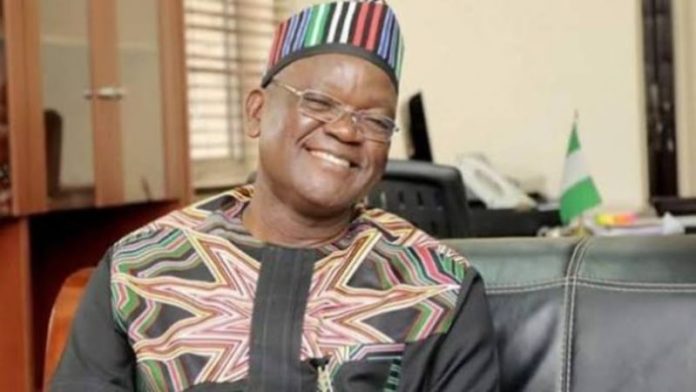




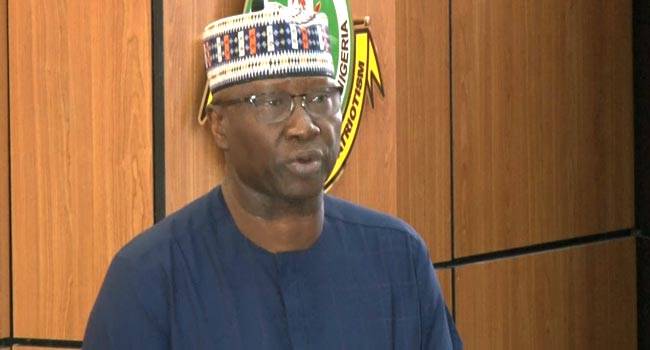
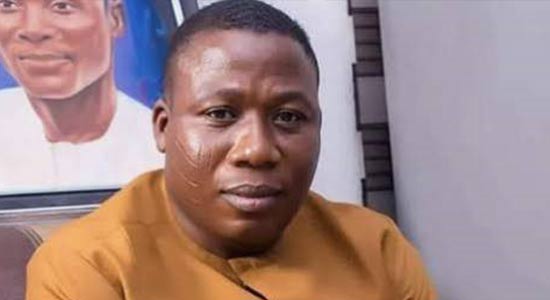

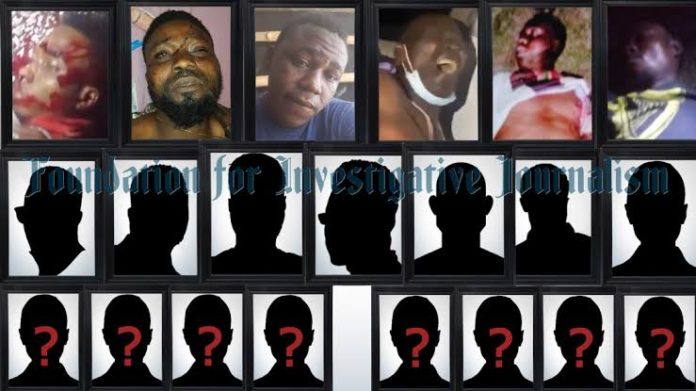
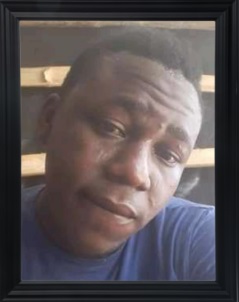
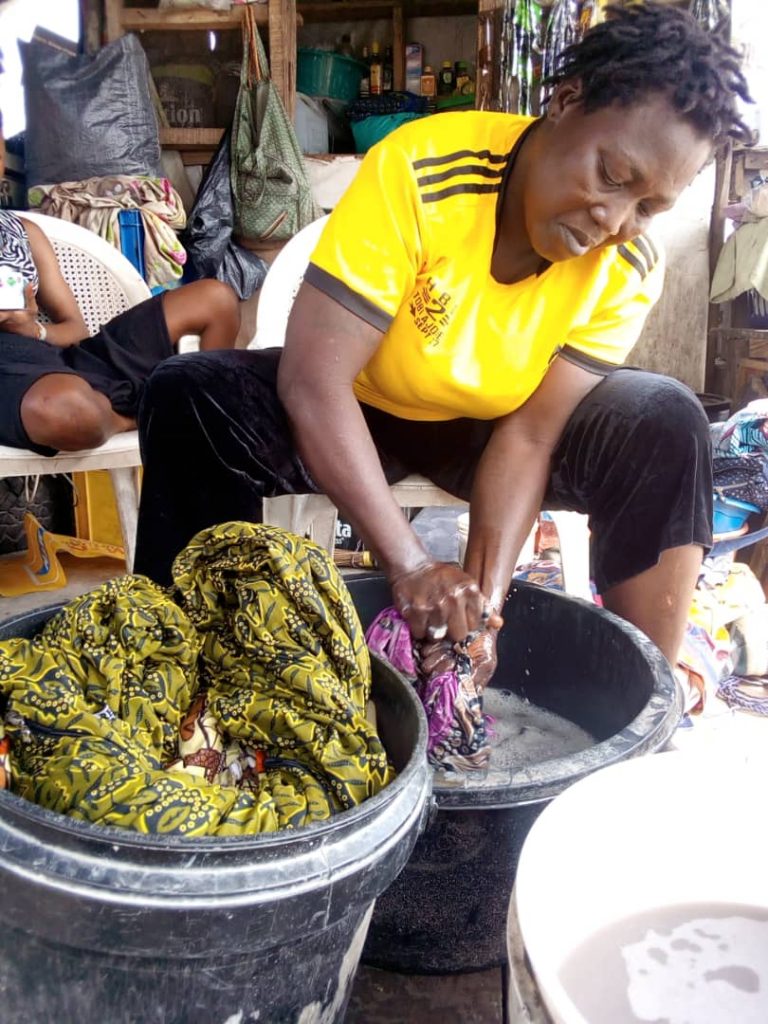
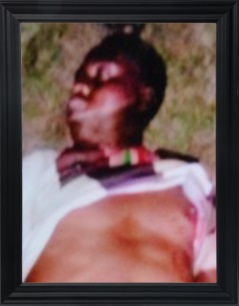 Nathaniel Solomon, 33, encouraged his brother Abouta to jettison life in their native Mubi North Local Government Area of Adamawa State for the greener pastures of Lagos. Life in the village was tough on Abouta. There was no job; his aged parents had no means of supporting him. But Nathaniel had recently opened a car wash in Lagos. If Abouta could man it, he reasoned, then half his problems were solved. Abouta agreed to come. In June 2019, he made the daylong road trip to Lagos. It turned out to be an appointment with death!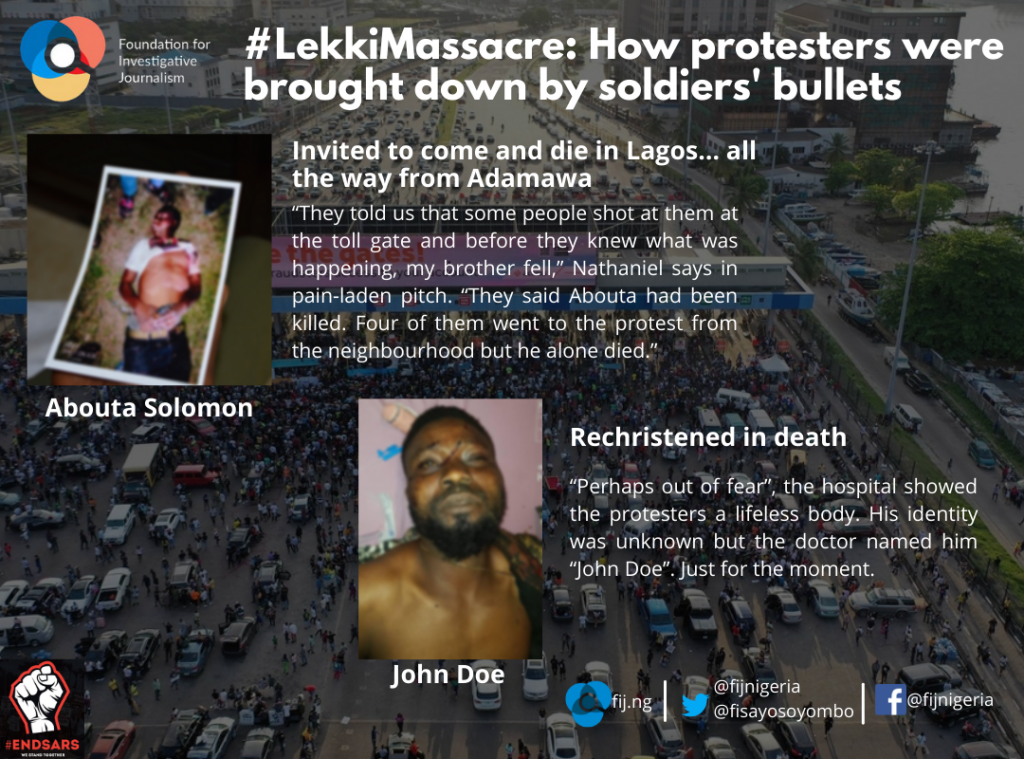
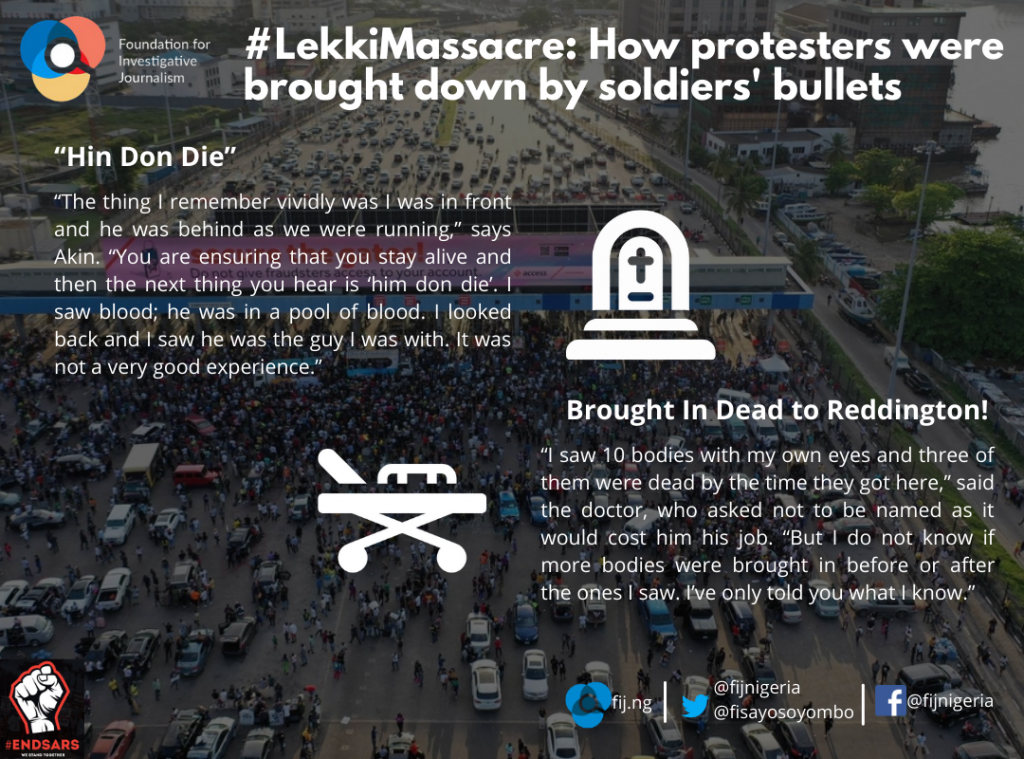

 Four years of pent-up anger pushed Freeborn Ofurie to join the Lekki Toll Gate protest four days after it kicked off. Back in 2016, Ofurie was arrested by SARS officials after “two sophisticated phones” were found on him. In his mid-thirties at the time, Ofurie had never set foot on a police station much less spend a day there. This time, he spent three.

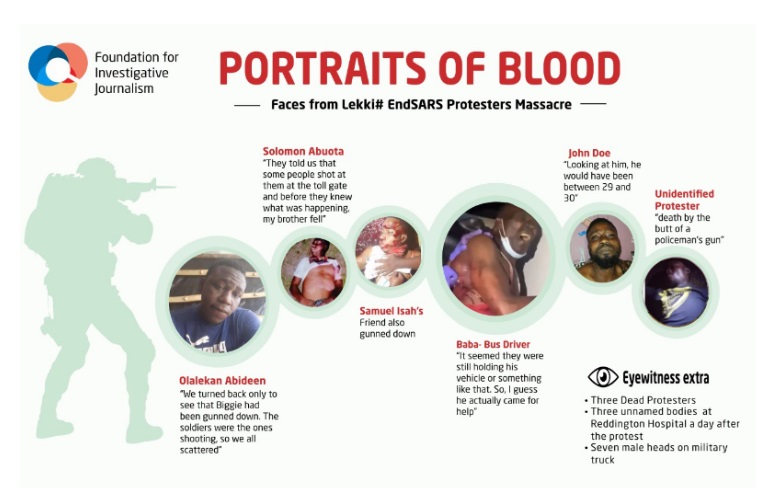

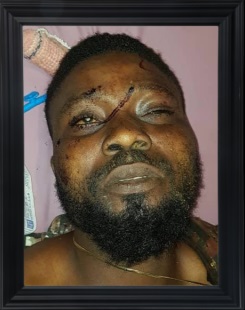 In the early hours of Wednesday October 21, Kamsi and a few other protesters laid siege to Reddington Hospital on Admiralty Way to demand the release of bodies of slain protesters. Word had gone round over the night that some dead and injured protesters were at Reddington, but the lead doctor on duty denied.
 At about 11pm in the night of October 20, after the trigger-happy soldiers had departed the toll gate, four vans bearing a horde of policemen drove into the midst of #EndSARS protesters sitting in a group on the lane leading to Victoria Island. The group dispersed as soon as it suspected it was the target of the policemen, four of whom donned SARS vests. But one young man wasn’t so lucky; they got a hold of him before he could flee. They repeatedly beat him and hit their guns on his head.
 As the protesters turned back after turning in the body to the Police, gunshots were fired in their direction by the Police. They started running but one of them was hit in the head; he dropped to the ground and died instantly, a Nigerian flag clutched in his hands.
 While Sam was at the toll gate in the night of the shooting reciting the national anthem with other protesters, he saw soldiers “pick up three bodies and throw them into their truck.” This happened close to the Customer Service Centre of LCC.