Home Blog Page 1067

An accused has a right to bail

By Usman Bukar Bwala

When an accused is charged to court he can apply to be released on bail. This is sometimes referred to as bail pending trial. At this stage an accused has been charged to a trial court for specific criminal acts. An accused is at this stage presumed to be innocent in compliance with S.36 (5) 1999 constitution as amended Adamu Muri Vs COP IGP 1957 NNLR. Bail at this stage is a basic right Paul Ochedo vs The State 1981 BNSLR 5. Section 36 (5) of the amended constitution reads: “Every person who is charged with a criminal offence shall be presumed to be innocent until he is proved guilty.” This presumption of innocence in favour of an accused works in his favour while considering his application for bail. As an accused is presumed to be innocent he should therefore be released on bail pending the determination of his case.      

Any time an accused is charged to court, courts are seized of the power to look into the issue of granting bail to him Exparte Malic 1981 1 ALL E.L.R. 249. Bail is not ordinarily granted to a person charged with murder as it is not in the interest of the public to release such a person Oladele Vs The State 1993 1 NWLR (Pt 269) 294 at 308. Bail will be denied an accused when he is charged with aggravated crime and it is in the overall interest of society to have such a person incarcerated COP vs Amalu 1982 2 NCR 299. An accused charged with murder may be granted bail where there are grounds to believe that the accused did not commit the crime and there are grounds for further inquiry Olatunde vs  COP supra.

In considering bail matters the court presumes in favour of the liberty of subjects and his innocence Adams vs AGF 2006 11 NWLR (Pt 991) 341 at 361 where it was held as follows: “Since the court presumes in favour of the liberty of the subject and his innocence until found guilty the onus is on the prosecution to show in a given case, that an accused or applicant for bail is one that should be refused bail.” See also Salami Ibrahim vs FRN 2017 NWLR (Pt 1589) 499.

All superior courts have inherent jurisdiction to grant bail to an accused pending his trial and this power continues unless it is specifically taken away by law R V Augustino 1950 1 WWR 1075. The fact that an accused is likely to commit further crime if released on bail is a ground to deny bail The State vs Gagafari 1979 13 CCHCJ 239. In recognition of S.36 of the constitution, the presumption in favour of an accused continues until the prosecution proves otherwise, that is, the accused is proved guilty The State vs Godfrey Okafor 1964 8 ENLR 96 at 97.

As we have seen bail is recognised under S.36 (5) of the Constitution as amended, Administration of Criminal Justice Act 2015 and sections 118-142 of the Criminal Procedure Act (CPA) for the South and sections 340 – 355 of the Criminal Procedure Code for the North (CPC). Section 341 (2) CPC was considered in Tarka Vs DPP 1961 NNLR 80 and held that all conditions stated in the section must be satisfied before bail can be granted an accused.

Any accused charged with an offence where imprisonment does not exceed 3 years shall be released on bail unless an accused person may jump bail if released Ariyo vs COP 1989 1 CLRN 287 at 97. Under S.34 CPC 1989 1 an accused is entitled to bail as a right Police Vs Ukaegbi 1987 NNLR 80. The onus of showing why bail should not be granted to an accused charged with offence carrying punishment of imprisonment of less than 3 years is upon the prosecution Okeke vs COP 2001 FWLR  (Pt 81) 1715 at 1724, Ochedo Vs The State supra.

Even where the conditions in the CPA and CPC in respect of bail are satisfied, a court can for sufficient reason decline to grant bail but the court must state his reasons for so declining Calabar vs COP 1971 1 UILR 59 where it was held “That the magistrate in refusing to release the accused from custody must give reasons for such refusal which he failed to do so.” In Okeke vs COP supra it was held: “if the applicant is charged with a felony the onus will be on him to show that the magistrate wrongly exercised his discretion under section 118(2) of the Criminal Procedure Ordinance, but in the case of any other offence the onus will be on the prosecutor to show cause why the applicant should not be admitted to bail.” Though in considering bail during trial it is discretionary of court to grant it, such discretion must be exercised judicially and judiciously Salami Ibrahim vs FRN 2017 NWLR (Pt 1589) 499 at 412.

In practice before bail is granted to an accused the accused must place evidence or facts upon which the court can look into so as to enable the court exercise his direction to grant or not to grant bail Emeka Ani vs The State 1970 All NLR 338. The onus is always upon the prosecution to show cause why bail was not granted an accused and the onus is discharged on balance of probability and not beyond reasonable doubt Emeka Ani vs The State supra.

An offence which carries imprisonment of less than 3 years is considered a minor offence and an accused is not likely to jump bail if released on bail Ochedo vs The State supra. In offences carrying imprisonment of less than 3 years an accused must be released on bail unless there are good reasons to the contrary this is because section 118(3) CPA and S.340 CPC uses the phrase “such person shall be released on bail.” “Shall in law means mandatory Salihu Mohammed vs The State 1982 3 NCLR 3121, Nwude vs The State 2005 1 NCC 196 at 206.

Where a crime is of high magnitude and carries long term imprisonment bail shall not be granted Olugbisi vs COP 1970 All NLR 338. In homicide and other serious offences carrying long imprisonment term bail is rarely granted R v Jamal 16 NLR 154, S.341(1) CPC, S.118 (1) CPA. Section 341 (1) CPC for the North reads as follows “Persons accused of an offence punishable with death shall not be released on bail.” S.341(2) CPC reads “Persons accused of an offence with imprisonment for a term exceeding three years shall not ordinarily be released on bail…,” section 118(1) CPA for the South reads “A person charged with any offence punishable with death shall not be admitted to bail, except by a judge of the High Court. (2) Where a person is charged with any felony other than a felony punishable with death, they may, if it thinks fit admit him to bail.”  It was clearly held in Exparte Barronet 1962 2 QB 202 as follows: “The principle has been fully laid down already that where a crime is of the highest magnitude, the evidence in support of the charge strong and the punishment the highest known to the law, the court will not admit to bail. Where either of these ingredients is wanting the court has discretion.”

The Administration of Criminal Justice Act 2015 is in line with the criminal justice in Nigeria and S.162 of the Act has spelt out conditions for granting bail in serious criminal cases in Salami Ibrahim vs FRN supra as “A defendant charged with an offence punishable with imprisonment for a term exceeding three years shall on application to the court, be released on bail except in any of the following circumstances: (a) where there is reasonable ground to believe that the defendant will, where released on bail, commit another offence (b) attempt to evade his trial (c) attempt to influence, interfere with, intimidate witnesses and or interfere in the investigation of the cases (d) attempt to conceal or destroy evidence (e) prejudice the proper investigation of the offence, or (f) undermine or jeopardise the objectives or the purpose or functioning of the criminal justice administration, including the bail system.” See also Bamaiyi vs The State 2001 8 NWLR (Pt 715) 270 at 291.

A court looks into the character and antecedent of an accused when considering the punishment to be inflicted upon him Re White House 1951 2 All E.R. 219 where it was held as follows “……obtain information as to his character and antecedent and then form an opinion that they are such that greater punishment should be inflicted.” Where a court lacks jurisdiction to entertain a criminal matter such a court would lack jurisdiction to entertain bail in respect of the case Ezekwe vs COP 1981 1 NCR 128 where it was held as follows: “As the court would not try the accused, it could not claim inherent jurisdiction to grant him bail either.”

In bail during trial certain factors are considered by a court The State vs Okafor 1964 8 ENLR 96 where it was held as follows: “(1) The cogency of the facts against the applicants (2) gravity of the offence charged (3) severity of the punishment to be meted to the accused (4) availability of the accused to stand trial should they be granted bail (5) the likelihood of the trial not being taken for a long time.” The cogency of evidence against an accused has always been a relevant factor in granting or not granting bail R vs Stephen Butler 14 Cox 530 where it was held as follows “…The more cogent the evidence, the more serious the consequence of conviction, the greater the probability that they may not appear at the trial.”

An applicant who has good conduct stands a high chance of being granted bail Edward Chavranmuttu 1930 21 Cr Ap R 184. An applicant who has once jumped bail should not be granted bail R vs Abdullahi Jamal 16 NLR 54. Where the trial of an accused will take a long time is a factor in considering the grant of a bail R vs Spilsbury 1898 2 Q.B. 615. Where there are no concrete reasons that an applicant would abscond if granted bail, bail will be granted Ariyo vs COP 1989 1 CLRN 287. It is unconstitutional to hold somebody in custody on “holding charge” as holding charge is unknown to the law Akokhia vs COP unreported M/31/83 Lagos High Court.

In bail pending trial a court is not only enjoined to look at the affidavit evidence but also should look into the contents of the proof of evidence before it Salami Ibrahim vs FRN supra where it was held as follows: “In considering an application for bail, the courts are enjoined not to restrict itself to the affidavit evidence but its consideration should include the contents of the proof of evidence.”

In granting bail sureties are important and sureties must be persons of substance Ariyo vs COP 1989 CLR 28 where it was held as follows “There is assurance that the accused/applicant is in a position to produce men of substance who will ensure his appearance at his trial as surety.” Where an accused will jump bail, bail will be refused Ogor vs COP 1983 1 NCR 342 where it was held as follows “bail can only be refused to such an accused if there is good reasons suggesting that bail should not be granted to him. Such good reason will… where an accused would likely jump bail to avoid being prosecuted for an offence said to have been committed by him.” Bail is rarely granted on medical grounds R vs Gott 16 Cr. App. R 86 where it was held as follows “This is class of case in which bail is dangerous. We must follow E. Gordon 7 Cr. Ap.R 182: 1912. In fact, a fortiori if we granted this application, we would never consistently refuse bail.” This is because every criminal will claim medical grounds as his basis for his application for bail. The medical condition of an applicant is a ground for granting bail. Where an applicant for bail requires specialist medical officer which is not available in a prison is a ground for granting bail Ajayi vs The State 1977 1FCA 1 at 3.

In Court Martial proceedings a High Court can grant bail to an applicant who has a long delay in his trial amounting to oppression R vs O/C Depot Battalion 1949 1 All ELR 242.

In all cases of bail pending trial the onus is upon a prosecutor to show cause why an applicant should not be granted bail The State vs Kawo 1980 1 NCR 21 where it was held as follows: “…as against the position before conviction but during trial where the onus is on the authorities to show cause why the accused/applicant should not be released on bail.” This is because an accused person is presumed innocent until proved guilty S.36 (5) of the constitution (as amended) as this presumption works in favour of an applicant.

Hon. Justice Usman Bukar Bwala retired as a Judge of the High Court of Borno State

Photo Credit: Naija Legal Talk

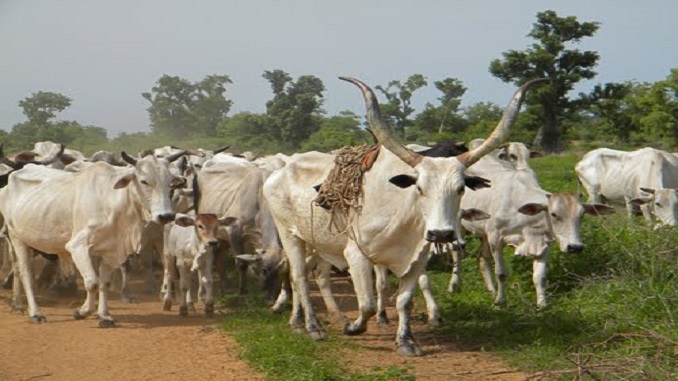
Herdsmen Destroy N6.6m Maize Farm In Ekiti

A multi-million-naira maize farm for members of the Maize Growers Processing Marketer Association of Nigeria (MAGPAMAN) have been destroyed by herdsmen in Ekiti state.

This is coming days after the state Governor Kayode Fayemi assured herdsmen in neighbouring Ondo State that Ondo is their home.

At the peacemaking parley featuring the governors of Ondo, Ekiti, Osun, Oyo, Kebbi, and Jigawa states on Monday with the national leadership of Miyetti Allah Cattle Breeders Association at the International Culture and Events Centre in Akure, Ondo State capital, Dr. Fayemi was quoted to have said: “This is your home. You’ve lived here, married and done business with us. Nobody is going anywhere. The statement by the Ondo State Government had no eviction reference.” 

The farm covering about 235 hectares of land is at the state forest reserve in Aduloju farm stead located along Ado-Ijan road in Ado local government area of the state.

Speaking with newsmen yesterday, in Ado-Ekiti, the state secretary of the association, Mr Tope Emmanuel said the herders had been terrorising the farmers in the last one week leading to the destruction of the maize farm.

He said the pastorals stormed the farm at night with dangerous weapons to feed their cows and, “all efforts to stop them have been rebuffed.”

He said that members obtained about N6.6m loan from the Central Bank of Nigeria (CBN) under the anchor borrowers’ programme in September to plant the maize, adding that the 160 members had been left with nothing to cultivate.

When contacted, the Ekiti Amotekun corps commander, Brig-Gen Joe Komolafe (retd) confirmed the incident, adding, “We are handling the situation.”

Photo Credit: Premium Times

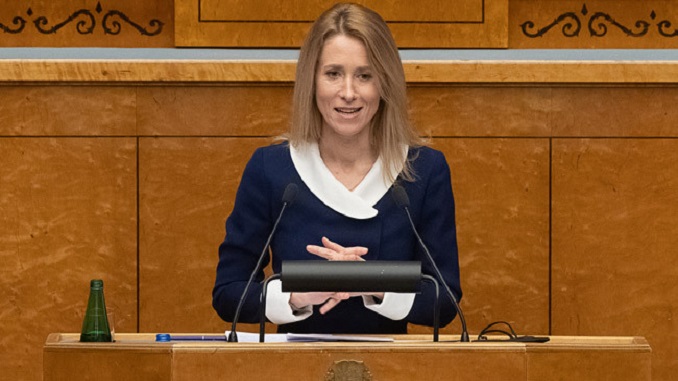
Estonia gets first female prime minister

Pro-business europhile Kaja Kallas is to be Estonia’s first female prime minister after parliament on Monday voted in her new coalition.

Kallas, a 43-year-old former MEP and leader of the Reform Party, is the daughter of the Baltic state’s former prime minister Siim Kallas.

She will govern in a coalition with the Centre Party of outgoing prime minister Juri Ratas.

Her government will command 59 seats in Estonia’s 101-member parliament and won the backing of 70 MPs in Monday’s confidence vote after garnering support from the Social Democrats.

Speaking to parliament as the small Baltic eurozone state struggles with the Covid-19 pandemic, Kallas vowed “to keep Estonia as open as possible, so that people could go to work, and children to school, and the economic activity could continue.”

She said that her “government will be like a tightrope walker over an abyss, always watching their balance” between controlling the pandemic and allowing economic activity.

The new government will be sworn in on Tuesday.

Ratas resigned earlier this month after his party came under investigation for corruption.

The far-right EKRE party which had been in coalition with Ratas is now out of government.

Kallas’s party came first in parliamentary elections in 2019 but did not win an outright majority and then failed to build a coalition.

PUNCH

Photo Credit: LindaIkeji

Abuja under siege by bandits, but DSS, Army after agitators in South-East

By Fredrick Nwabufo

Abuja is under siege. Terror lives and breathes here. Citizens are kidnapped every day from their homes but sadly, some of these tragedies escape outrage and alarm. There is a false sense of security in the federal capital territory (FCT) – the flawed assumption of safety – which has enabled the atrocities of bandits in the nation’s capital to persist without hysteria.

Security agencies – all with headquarters in Abuja – get away with non-performance as regards the FCT largely because of this false sense of security by residents. No one calls them out. Kidnappings happen and everyone carries on in the invalid hope that banditry cannot get much worse in the FCT. But these bandits have become bolder and more daring. They are inching into the heart of the city. Must we wait until Abuja and its orbiting communities become another Sambisa before the security agencies act?

As a matter of fact, these criminal onslaughts have been happening on the fringes of the city. But owing to a lack of response by security agencies; they have now metastasised like end-stage cancer. Abuja appears to be encircled by deadly outlaws who do not only steal but also extract blood from their victims to quench their vampiric thirst.

These abnormalities – banditry, kidnapping and armed robbery – have become a daily normal; more like the quotidian corollaries of city life. No one knows who the next victim will be. We are all like sitting ducks waiting for certain blitz. Abuja has never been this unsafe. The occurrences sound bizarre. Really, it is unsettling this is happening in the FCT. Bandits would go as far as Kubwa break into the house of their victim in the dead of night, kidnap them; march them all the way into the forest and demand ransom.

Some months ago, these brigands besieged the inner road of Life Camp – at the centre of Abuja! They shot at commuters and kidnapped some persons. And just a few days ago, the freebooters reigned unchecked for about three hours in an operation at Ushafa, Usman Dam area. They kidnapped at least two persons in that raid.

Last Saturday, the marauders attacked an orphanage in the nation’s capital in the cover of darkness, kidnapping seven children – all orphans. Such a painful tragedy. Who kidnaps orphans – who have no mother or father and who are all alone in this cruel world? I cannot imagine how traumatised those kids will be – the torture and the agony! And this is all because of a failed government. Yet again, no alarm, no outrage – because it happened in the FCT ‘’and all is well.’’

Last Friday, Abdullahi Sule, governor of Nasarawa, met with President Buhari. The distraught governor let out a bellow over Boko Haram’s incursion in his state. He said the terrorists were camping in Nasarawa, and that the group was using his state as a springboard to launch attacks. Nasarawa is the closest state to Abuja. In fact, much of Abuja is in Nasarawa and much of Nasarawa is in Abuja. That is how contiguous the two areas are. So, if terrorists are in Nasarawa, they are already at Abuja’s doors.

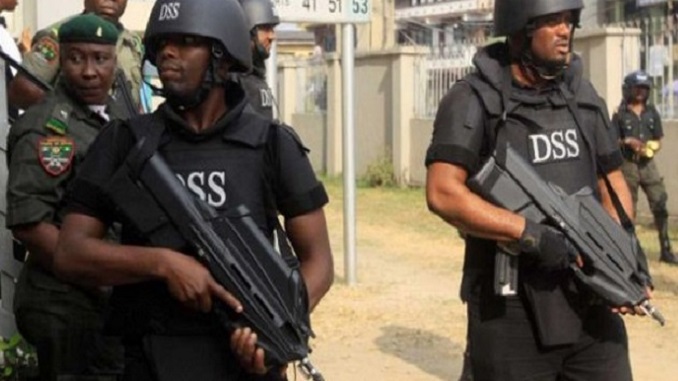
But what are the security agencies doing? Why did we allow things to deteriorate this far? Really, what is happening in the FCT calls for drastic measures. It is an emergency. Abuja is under siege. Why is the DSS which is dutiful in clamping down on protesters and agitators not alive in tackling the menace of banditry in the FCT? Why are the army and the police going after agitators in the south-east not as potent in dealing with bandits in Abuja? What is going on?
The South-East is reputed to be the most peaceful and safest region in Nigeria. In fact, it is rated to be the safest place to live in — in all of Nigeria — by the United Nations.  But it is the same region that is being garrisoned by the military, the police and the DSS. Why the fixation on the South-East?

On Monday, there was a reported collision between soldiers and some agitators in Orlu, Imo State. The facts of the brush are still inchoate so I will refrain from passing judgment. But the loss of lives and property to violence stands condemned. However, I must say, the South-East has always been treated as a region that is at war – while it is not – by the Buhari administration. Security checkpoints everywhere; this is provocative. While in the suburbs of the FCT where there are enduring criminal attacks there is no security presence. What is really going on?

The security agencies should refocus their energy where it is exigently needed. Abuja is under siege.

 
Fredrick Nwabufo is a writer and journalist
Twitter @FredrickNwabufo

Police Sacks Unmarried Policewoman for Getting Pregnant

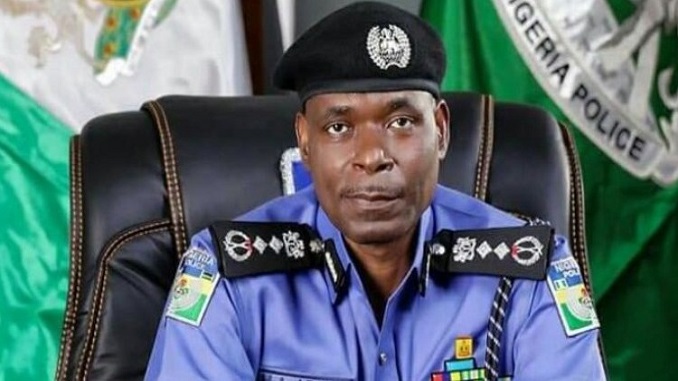
The Nigeria Police Force has sacked an unmarried female corporal, Olajide Omolola, for getting pregnant.

This is contained in a police wireless message with reference number CJ:4161/EKS/IY/Vol.2/236, DTO:181330/01/2021 which was obtained by The PUNCH.

The signal originated from the Department of Finance and Administration in Ado Ekiti and was addressed to the Divisional Police Officer at Iye Ekiti where Omolola is based.

In the document it was stated that Omolola completed police training on April 24, 2020 and was attached to Iye Ekiti.

The chief financial officer in Ekiti was asked to relay the information of her dismissal to the Integrated Personnel and Payroll Information System to ensure that her salary is stopped.

The document read, “Section 127 of the Police Act and Regulation against women police getting pregnant before marriage W/PC (woman corporal) Olajide Omolola passed out of Police Training School on 24/04/2020 attached to yours contravened above provisions.

“She stands dismissed from the Force. Dekit her. Retrieve police documents in her possession with immediate effect. O/C CFO Ekiti only. You are to relay signal to IPPIS Abuja for the stoppage of her salary with immediate effect.

“DECOMPOLS (deputy commissioners of police)/ACPOLS (assistant commissioners of police)/HODs/DPOs Ekiti State only. You are to lecture women police. Treat as very urgent.”

Investigations by The PUNCH, however, showed that the aspect of the Police Act which was being relied on to justify the sacking of the policewoman had been repealed in the amended Police Act that was signed into law by the President, Major General Muhammadu Buhari (retd.), in September 2020.‌

Part of the old law which has been repealed also made it compulsory for policewomen to seek the permission of their superiors before getting married.

Speaking with our correspondent on Sunday, a champion for police reforms in Nigeria, Dr. Innocent Chukwuma, who is also the Regional Director for Ford Foundation, West Africa, said indeed, the aspect of the Police Act which barred unmarried policewomen from getting pregnant had been repealed.

Chukwuma, however, said the law had not yet been gazetted hence the ignorance of its provisions by the police.

He said, “That aspect of the law which is discriminatory against women has been repealed. However, the law has not been gazetted but it doesn’t mean it should not be upheld. Gazetting is a mere administrative process. It entails officially publishing and making it available to all stakeholders and government establishments. Until that is done, they are usually reluctant to uphold the law.”

Human rights activists have in recent time kicked against discriminatory laws against women especially those working in security agencies.

In August 2020, the Nigerian Army dismissed a soldier for getting pregnant after she was raped by suspected bandits while travelling to Ogbomoso, Oyo State.

The rape victim was charged with one count of ‘conduct prejudicial to service discipline,’ found guilty and dismissed from the regiment.

Punch

The growing Descent to Savagery

By James Eze

When the guns fell silent on the Biafran War, West African markets were flooded by a range of household utensils generally referred to as “Igbo-made.” That was long before “made-in-Taiwan” took over briefly…and then finally came “made-in-China.”

Igbo made were products of the genius that marked the war. Forced against the wall, the Igbo responded with a stunning self-help effort that spiraled into many great inventions. You could see in that remarkable effort, the pride of a people who were bent but not broken.

Fifty years after, we are left gasping at the shocking descent to savagery by our youths. Almost every day, we watch video clips of desperate youths in embarrassing ritual observances for quick money. And you ask yourself, are these youths the heirs of those great inventors who created those wonder technologies of the war? Are they the sons and daughters of the manufactures of Igbo-made? Sadly, this affliction is a pan-Nigerian problem. Youths from every ethnic block are involved in this desperate quest for hot money or “ego mbute” as the Igbo call it.

It is painful to contemplate that while youths from other forward-looking countries are carving their ways to global economic domination through technology, Nigerian youths are obeying their primitive fantasies and going to a village stream for a ritual bath for financial success…success without work; without story! It is even sadder to realize that at a time when youths across the world are investing their time in incubation centers to find solutions to the problems of the modern world, Nigerian youths want a shortcut to success.

A few years ago, the trend was the daily spectacle of young girls thrown out of fast-moving Mercedes Benz at dawn by dark-hearted young men who may allegedly have used them for a ritual in the dead of the night.

Before that, the craze was for female panties. It was such a tragicomedy. It was alleged that female panties were worth a brand new Mercedes Benz when delivered to voodoo merchants who used them for ritual money. Once again, our women were the victims of this unrestrained greed. There were stories of commercial buses diverted to dark alleys in Lagos where female passengers were ordered to surrender their panties by hoodlums. Such absurdity! Damn!

Now, the farce has turned around. The descent to savagery is complete now. Some dirty looking prophets who can barely feed themselves are the new money trees. It is not clear whether they cast a spell on their victims but they corral their followers to a dirty village stream for a ritual bath that would turn them to billionaires overnight. As I watched their naked bodies, men and women, gleaming in the video clip the other day, I chuckled at the willful blindness of our people. I have also seen some pathetic young men eating a live chicken raw, feathers and entrails and all. I have watched video clips of half-crazed men drinking the raw blood of a ram slain in a ritual offering. All these are expected to make them billionaires.

But the story Elon Musk, the richest man on earth is clear. There’s no ritual to it. The story of Bill Gates is familiar. So is the story of Mark Zukerberg. Why do Nigerian youths not look at these stories and redirect their energies to solving a major problem in the world and getting rich out of it?

As I write this story, I am overwhelmed by the dark immensity of our people’s slide into astonishing savagery. The only bright spots I can think of are the record-setting Anambra girls who defeated America, China, Uzbekistan, Spain and Turkey at the World Technovation Fair in the Silicon Valley two years ago. Their story reminds me that the fault is not in our stars!

It may be necessary to mention that the slow disintegration of our society and the collapse of our moral fiber as reflected by the desperate money chase among our youths may have been enabled by Nigerian music and Nollywood. Our musicians sing songs that glorify crime and criminals while Nollywood appears fixated in rituals, magic and superstition. I doubt that this will end well!

Photo Credit: The Guardian Nigeria

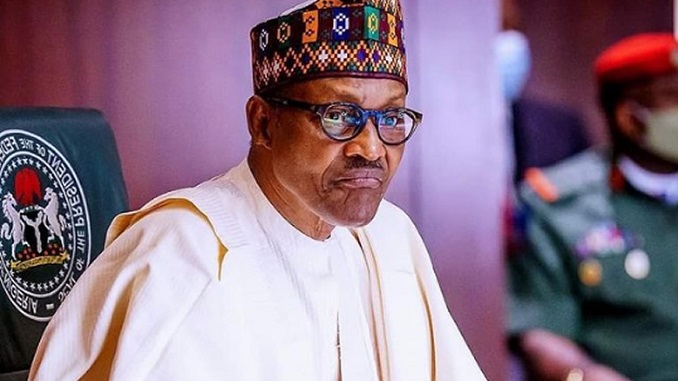
Nigerians react as Buhari appoints new service chiefs

• Ex-defence chief, minister ask Nigerians not to expect much
• YCE, security scholar laud appointment
• Wike, PANDEF, others say action belated
• Nwodo, others fault Buhari as Ohanaeze keeps mum
• Stockbrokers applaud, expect an end to terrorism, banditry
• PDP, Fayose seeks probe of former security chiefs

Nigerians yesterday expressed conflicting views as President Muhammadu Buhari finally replaced the nation’s defence chiefs. While some applauded the action, others faulted the President and his action.

The retired military top brass was Chief of Defence Staff, General Abayomi Olonisakin; Chief of Army Staff, Lt-Gen. Tukur Buratai; Chief of Naval Staff, Vice Admiral Ibok Ekwe Ibas and Chief of Air Staff, Air Marshal Sadique Abubakar.

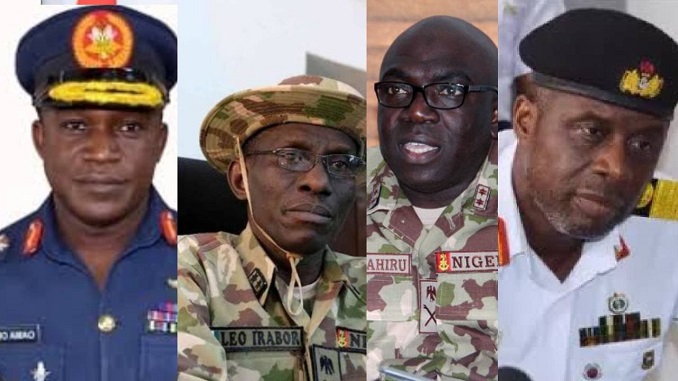
They were replaced with Major-General LEO Irabor, Chief of Defence Staff; Major-General I. Attahiru, Chief of Army Staff; Rear Admiral A.Z Gambo, Chief of Naval Staff; and Air-Vice Marshal I.O Amao, Chief of Air Staff.

The development was announced in a statement by the Special Adviser to the President on Media and Publicity, Mr. Femi Adesina.

“President Muhammadu Buhari has accepted the immediate resignation of the service chiefs and their retirement from service.

“The President congratulates the new Service Chiefs, and urges them to be loyal and dedicated in the discharge of their responsibilities,” the statement read.

The call for the sack of Nigeria’s top military leaders reached its peak as it resonated in the National Assembly at frequent intervals.

In a motion sponsored by Senator Ali Ndume at the Senate plenary on Tuesday, July 21, 2020, the Senate passed a resolution calling on President Muhammadu Buhari to fire the service chiefs.

Both chambers of the National Assembly, the Senate and House of Representatives, had in previous resolutions called on President Buhari to fire the chiefs. The latest call was triggered by the killing of rice farmers in Kantakari.

The Nigerian military has engaged in a running battle with Boko Haram insurgents and terrorists, with no evidence in sight of progress being made to quell the insurgency in the North East. Instead, there has also been a significant rise in insecurity across the states on Nigeria’s northern borders – Sokoto, Zamfara, Kaduna, Katsina, Borno, among others.

Nigeria’s military has come under severe criticism for its failings. It was also severely criticised by election observers in the recently conducted 2019 general elections for interfering with the elections. In an unprecedented move, it deployed never before seen number of soldiers, ostensibly to provide election security.

What has been howeverpuzzling to most Nigerians and observers is why President Buhari has refused to act on the calls for the sack of the defence bosses. They were overdue for retirement and had stayed beyond legally permitted time limits. It is unclear why the President persisted in retaining them apart from speculations that he feels more “secure” in their hands.

Buhari appointed Buratai and others on July 13, 2015, while the Senate under the leadership of Bukola Saraki confirmed the appointment on August 4, 2015, after hours of screening.

YORUBA Council of Elders (YCE) and a security scholar at the University of Ibadan, Professor Oyesoji Aremu, lauded the firing of the service chiefs.

Speaking with The Guardian, the YCE, through its Secretary-General, Dr. Kunle Olajide, described it as a welcome development, stressing that it portrayed the President as one that listens.

“The new appointees will bring new ideas into the Nigerian security sector,” the council stated.

Prof. Aremu said the sack was long overdue given the numerous calls for it.

He said: “It also, shows that Mr. President listens to Nigerians in spite of perceived contrary opinions.”

He, however, urged Nigerians not to rejoice yet until the new appointees, who have a lot to do in ensuring security, meet the expectations of the people.

“They would have to reappraise the entire internal security architecture with a view to rejigging operational tactics and reconnaissance. While doing this, a lot is also, expected from them to work on the morale of officers with a view to expecting them to give their best to the fatherland,” he said.

Rivers State Governor, Nyesom Wike, and the Pan Niger Delta Forum, (PANDEF) also applauded the change.

Governor Wike in a statement by the state Commissioner for Information and Communication, Paulinus Nsirim, said though the appointments came late, the President should be commended for listening to the voice of the people.

He urged the new chiefs to re-engineer the nation’s security architecture which, he said, had suffered setback in the last five years.

“ The new Service Chiefs should not politicise security by aligning with politicians.

“What the country needs now is competence and professionalism that will reduce insecurity to the barest minimum,” he stated.

Similarly, PANDEF, through its National Publicity Secretary, Ken Robinson, lamented the worsening state of insecurity and urged the new chiefs to “discharge their duties and responsibilities professionally, without biases and tendencies, in the best interest of the country.”

Apex Igbo socio-cultural organisation, Ohanaeze Ndigbo, preferred not to speak on the development.

President General of Ohanaeze Ndigbo, Prof. George Obiozor, told The Guardian the group would make its position known on a later date”. But the immediate past President General of Ohanaeze Ndigbo, Chief John Nnia Nwodo, berated Buhari for not meeting the expectations of Ndigbo.

Nwodo said: “He (Buhari) is not even pretending about his feelings for Ndigbo. I have not seen this kind of thing before. Gen Buhari, thanks for making us in Igboland feel, once more, that we are not fit to head any of the security services.”

Nwodo’s views were similarly expressed by the Chairman of Board of Trustees (BOT), World Igbo Peoples Assembly (WIPA), Mazi Chuks Ibegbu, who stated that by the appointments, the President had continued to prove himself a sectional leader.

He stated that it was disappointing that more than five years after he (Buhari) took over power, he had continued “to show that he is not a national leader and has continued to tell a part of the country that they don’t belong.”

To stockbrokers, it was a good development, though belated.

A stockbroker, sola Oni, said insecurity, which worsened in recent times, has continued to remain a major setback to achieving the nation’s growth targets.

“News reports in Nigeria are replete with dastardly killings by Boko Harams, herdsmen among others. If the new service chiefs are able to tackle insecurity headlong, it will boost investors’ confidence in the stock market and attract Foreign Direct Investments Investment,” he said.

The Vice President of Highcap Securities, David Adonrio, said the nation’s security challenges have been the dominant factor fuelling inflation and price instability in the country.

According to him, the rising inflation rates has continued to impact negatively on the operations of listed firms and ultimately depress their bottom-line.

CORRUPTION allegations against the former service chiefs should be investigated, the Peoples Democratic Party (PDP) and a former governor of Ekiti State, Kayode Fayose have said.

PDP called on the Economic and Financial Crimes Commission (EFCC) to immediately begin a comprehensive investigation of allegations of corruption against the immediate past service chiefs.

Specifically, the party asked the EFCC to beam its searchlights on alleged diversion of funds meant for the procurement of arms to fight terrorism and insurgency.

The PDP in a statement by its national publicity secretary, Kola Ologbondiyan, demanded: “an immediate inquest into the tenure of the last service chiefs to unravel the circumstances behind the security lapses and compromises as well as accusation of involvement in the alleged looting of funds meant for the equipping and welfare of our troops in the front.”

According to the party, “such must be the sure step towards sanitizing the security architecture as well as lifting the morale of those in the frontlines risking their lives for the security of our nation.”

Supporting the call for a probe, Fayose, who accused the former service chiefs of serving themselves and their pockets, described their sack as a “step in the right direction.”

He tweeted: Though coming after persistent pressure from Nigerians, President Buhari’s removal of the service chiefs and their replacement is a right step in the right direction. It is yet another victory for the people of Nigeria.

“The sacked service chiefs only served themselves and their pockets and can at best be described as “Disservice Chiefs” under whom Nigeria became completely insecure.

“It is my call to the ICC and other relevant authorities that tenure of the “sacked” service chiefs should be investigated, most importantly human rights abuses and extrajudicial killings under their watch and commands.”

MEANWHILE, a former Chief of Defence Staff, Gen. Alani Akinrinade and former Minister of Defence, Dr. Olu Agunloye have asked Nigerians not to expect much from the new service chiefs.

Akinrinade said: “I have said it before that changing the service chiefs is not our biggest challenge. What is facing the country in terms of insecurity is the Boko Haram insurgents, Fulani armed herdsmen and farmers crisis and issue of banditry. Unfortunately, Mr. President up till now has refused to take a decisive position on the Fulani herdsmen menace, which people misconstrued that he is supporting members of his ethnic groups to perpetrate crime. What exactly will any old or new service chiefs do about this?”

He said the new appointees could only achieve any goal in accordance with the mindset of the President.

In the same vein, Agunloye said the replacement of security chiefs would ultimately bring about some changes but whether it would be positive or negative change would depend on what the President wants.

“I am speaking based on my experience in government and one time Minister of Defence. There is nothing the new security chiefs can do outside what their boss, who is the president wants.”

The Guardian.ng

Intersociety lists 40 alleged sins of Buratai’s era, applauds sack of Service Chiefs

  • Says sack overdue

The International Society for Civil Liberties & Rule of Law (Intersociety) has cheered what they termed the rather over due removal of the four longest serving Service Chiefs since the advent of the 4th republic in 1999.

Intersociety noted that Lt Gen Tukur Yusuf Buratai was meant to have retired since January 2016 when he clocked 35 years in military service, but instead of exiting, he plotted with other Service Chiefs and “the Presidency” to smuggle “Section 11.09” into the “Harmonized Terms and Conditions of Service for Officers of the Nigerian Armed Forces (2017) Revised”, otherwise called “H-TACOS (2017)”.

The organisation equally expressed concern that the newly appointed Army Chief, Major Gen Ibrahim Attahiru, might not have been chosen based on competence, recalling that this same Ibrahim Attahiru was removed from the theatre of Boko Haram counterinsurgency operations for seeming crass incompetence in 2017.

Intersociety also revealed that it was the new Army Chief who ignited and supervised the systematic and ceaseless massacre of defenseless Igbo citizens when he held sway between 2015 and 2016 as the General Officer Commanding the 82 Division of the Nigerian Army in Enugu.

The statement signed by Emeka Umeagbalasi, Board Chair; Chinwe Umeche, Esq., Head, Democracy & Good Governance; Obianuju Joy Igboeli, Esq., Head, Civil Liberties & Rule of Law and Comrade Samuel Kamanyaoku, Head, Field Data Collection & Documentation also listed 40 alleged atrocities of Buratai’s era.

Here is the full text:

The Int’l Society for Civil Liberties & Rule of Law is half happy and half sad over the removal of Nigeria’s longest serving Service Chiefs since May 1999. We are half happy because of their sack or (self removal?) after over four years of sustained advocacy campaigns, featuring Intersociety as a lead-campaigner. It is reminded that Lt Gen Tukur Yusuf Buratai reached his retirement in Jan 2016 when he clocked 35 years in military service, but instead of quitting the stage, he conspired with other Service Chiefs and “the Presidency” to smuggle “Section 11.09” into the “Harmonized Terms and Conditions of Service for Officers of the Nigerian Armed Forces (2017) Revised”, otherwise called “H-TACOS (2017)”. The smuggled ‘Section 11.09” provides as follows: “the forgoing notwithstanding, the President, C-in-C reserves the prerogative to extend the tenure of a Chief of Defense Staff/ Service Chief irrespective of his age or length of service”. The ‘H-TACOS” is a non legislative instrument arranged whimsically and capriciously by ‘the C-in-C and his Service Chiefs’ and was last reviewed outside public inputs in 2017 after that of 2012.

Saddened By The Appointment Of New Army Chief Who Massacred 216 Igbos

On the other hand, we are sad because the newly appointed Army Chief, Major Gen Ibrahim Attahiru, appears to have been chosen on the basis of ‘ethno-religious sentiments’, rather than competence, unimpeachable track records and ability in modern military soldiering and technology. Apart from being the same Army officer removed from the theatre of Boko Haram counterinsurgency operations for seeming crass incompetence in 2017, he was also the same officer that ignited and supervised the systematic and ceaseless massacre of defenseless Igbo citizens when he held sway between 2015 and 2016 as the General Officer Commanding the 82 Division of the Nigerian Army in Enugu.

The hateful and unlawful killings, supervised by the new Army Chief, Major Gen Ibrahim Attahiru had included: six (6) deaths in the 30th of August 2015 protests at Awka and Onitsha, twenty-five (25) deaths in the 2nd and 17th December 2015 protest and jubilation killings at Onitsha Niger Bridgehead and environs, fifteen (15) deaths in the 18th and 29th January 2016 killings in Aba, thirty (30) deaths in the 9th February 2016 massacre at Aba National High School, one hundred and ten (110) deaths in the 29th and 30th May 2016 Biafra Heroes Day massacre at Nkpor, Ogidi and Onitsha and thirty (30) deaths in the Asaba spill over massacre of 30th May 2016; totalling 216 deaths.

Defining Direct & Vicarious Criminal Responsibilities

By direct criminal responsibility/crime perpetrators, they are perpetrators or atrocity criminals that ordered, supervised and executed the massacre or killings outside the law; facilitated or attempted to facilitate the destruction of evidence-and colluded in protecting the command structure and rank and file culprits resulting in them not being fished out and brought to justice till date. By vicarious criminal liability or cr responsibility, it is defined as the responsibility of the superiors for the acts of their subordinates or, the responsibility of any third party that had the “right, ability or duty to control the activities of a violator, but failed or declined to do same.” It is also a liability assigned to an employer or other principal for his agent’s or employee’s acts, rightly or wrongly performed in the course of employment or other duty.

40 Mortal Sins & Human Rights Atrocities Of Buratai’s Era

-The Nigerian Army under Buratai as its Chief of Staff witnessed the highest level of bastardization, polarization and demoralization, particularly on ethno-religious grounds.

-The Nigerian Army under him was reduced to ‘jihadist and ethnic militias’, to the extent that its symbol was religiously inscribed and radicalized.

-Secularity and plural soldiering were a history in the Nigerian Army under Buratai

– Desertions and sacks particularly on ethno-religious grounds characterized the Nigerian Army under Buratai

– There were series of independent reports and accusations under Buratai on cases of ‘in-service’ enemy killings and conspiracies particularly perpetrated on ethno-religious grounds.

– The Nigerian Army under Buratai was reduced to ‘an Army for Fulani-Hausa Muslims alone’, with others as makeshift and teamakers. For instance, the Army under him witnessed a high level or maddening domination and control by Fulani-Hausa Muslim officers, to the extent that in its recent promotions and postings; out of 47 Major Generals, North took 32 including 27 Muslims and South took only 15 including only 3 for the Southeast; in the case of 163 Brig Generals posted, North took 110 including 84 Muslims and South took 53 including only 10 for the Southeast.

-Accusations of ‘conflict profiteering’ rather than professional conflict management and counterinsurgency operations were rife under Buratai as Nigerian Army Chief.

– Nigerian Army under Buratai was so hateful and partisan that it was culturally named by other Nigerians particularly non Muslims of Nothern and Southern extractions as “Boko Haram” and “Fulani Herdsmen” Army

– Nigerian Army under Buratai was reduced to “Fulani and Muslim citizens’ Mai-Guards”.

-Apart from chronic citizens’ defense, protection and safety disproportionality between Muslims and Christians recorded under Buratai’s Nigerian Army, the Army was more interested in protecting Fulani Herdsmen and Northern Muslims across the country than extending same to all citizens especially those in danger irrespective of their ethnic and religious backgrounds. This is to the extent that wherever a Fulani Herdsmen settlement is sighted, there must be an Army or Military post.

– Buratai as Nigerian Army Chief played a critical role in the violent settlement of local and ‘imported’ Fulani Herdsmen/Shuwa Arabs in the bushes, forests and farmlands located in the Southeast, Southwest, South-south, North-central and Christian parts of the Northwest and Northeast.

– Nigerian Army under Buratai also provocatively crossed and exceeded its boundary of responsibilities or duties including incompetently taking over the functions of the Nigerian Police Force and abandonement of its core defense and territorial protection duties.

– Nigerian Army under Buratai also arrogated to itself the duties of Police CID, prosecutors and trial courts or judges, to the extent it abducted defenseless citizens at will, tortured them at will, disappeared them at will, setenced them to death at will, executed them at will and made away with their corpses at will.

– Nigerian Army under Buratai also had basket-loads of accusations of sexual molestations including rape and indecent assaults against young married and unmarried women, involving Christians and a mixture of Muslims and Christians in insurgency areas.

– Owing to incompetence, crude and hate soldiering, demoralization and conspiracies, the Nigerian Army under Buratai had had multiple thousands of its personnel killed or disappeared at will including victims of ‘in-service enemy killings’.

– The recruitment processes in the Nigerian Army under Buratai were brutally bastardized and polarized leading to influx of brigades of radicalized ethno-religious zealots dotted with its camouflages.

-The role of the Nigerian Army under Buratai in the democratic process especially during electioneering was horrible and worst of the worst, to the extent it had become a major poll rigging and poll violence instigator and perpetrator.

– Under Tukur Buratai as Nigerian Army Chief, the number of Islamic Jihadist groups increased from only three in June 2015 to 21 or more main and splinter groups as at Jan 26, 2021.

– Nigerian Army under Buratai contributed hugely to the country’s border porosity by looking the other side or aiding the invasion of the country by unarmed illegal aliens who later became an army of voters in the North and the armed islamic jihadists masquerading as subregional ‘cattle herders’

– Nigerian Army under Buratai was deeply involved in the formation of ‘the Association of the Defenders of Atrocity Crime Perpetrators’ or Army/Government sponsored mushroom ‘human rights’ organizations. Among them are ‘the undertakers’, rented protesters, hired columnists, malicious petitioners, and ‘Army Contractors Human Rights Organizations’, etc.

– For the first time in recent decades, Nigerian Army under Buratai had become engrossed in open corruption and other corrupt practices particularly the demand, collection and acceptance of bribes at roadblocks. In our studies of 2010 to 2014, nowhere was the Nigerian Army mentioned as partakers or perpetrators.

-The combination of crass incompetence, hate and crude soldiering by the Nigerian Army under Buratai had led to over 30,000 territorial defense and civilian safety deaths since June 2015; involving not less than 9000 victims of Jihadist Herdsmen violence (all Christians), 9000 victims of Boko Haram/ISWAP insurgency (approximately 5,000 Christian and 4000 Muslim deaths), estimated 4000 victims of Zamfara/Northern banditry in Muslim dominated States of Zamfara, Katsina, Sokoto and Northern Kaduna (about 80% Muslims), majorly targeted at indigenous Hausa Muslims; multiple hundreds killed by Ansaru Jihadists (majorly Christians and foreigners), not less than 2,500 citizens killed by the Army and Air Force including not less than 1300 defenseless Shiite Muslims and 650 Eastern Nigerian Judeo-Christian citizens (crimes against humanity), 300 rural Northern Christians (air bombing), starving to death of 240 detainees at Borno’s Giwa Barracks (AI Report 2016) and multiple thousands of other civilian deaths arising from the Nigerian Army/Military’s unprofessional and crude handling of “counterinsurgency operations” in the Northeast (war crimes). The number of defenseless civilians shot and maimed by Buratais Nigerian Army during the killings was not less than 2,300.

– There are also at least eighteen ‘Buratai’s era Army butcheries in Nigeria since August 2015; involving: (1) the 30th August 2015 massacre of 40 defenseless citizens of Judeo-Christian faith during peaceful protests in Onitsha, Enugu, Yenagoa, Uyo, Port Harcourt and Asaba; (2) 2nd and 17th Dec 2015 massacre of 30 defenseless citizens of same faith in Onitsha; (3) 14th-15th Dec 2015 massacre of no fewer than 1000 unarmed Shiite Muslims during their religious processions in Zaria (Government later admitted massacring 348); (4) 18th and 29th Jan 2016 massacre of 20 defenseless citizens of Judeo-Christian faith during peaceful protests in Aba; (5) 9th Feb 2016 massacre of 30 unarmed protesters in Aba; and (6) 29th and 30th May 2016 massacre of 140 defenseless citizens of Judeo-Christian faith during global Igbo Heroes Day in Onitsha and Nkpor (110 deaths) and Asaba (30 deaths).

– Others are (7) the 2016 starvation to death of 240 civilian detainees including 29 children with ages between newborn and five years at Giwa Army Barracks in Maiduguri, Borno State (AI Report: 2016); (8) 7th Jan 2017 military massacre (air bombing) of 236 internally displaced persons (IDPs) at Christian IDP camp in Kala-Balge, Borno State; (9) 20th Jan 2017 massacre of 20 unarmed protesters (pro-Trump rally) in Port Harcourt; (10) 4th Dec 2017 massacre (air bombing) of 50 rural Christians in Numan, Adamawa State; (11) 11th to 14th Sept 2017 massacre of over 180 unarmed and defenseless citizens of Judeo-Christians faith in Ogwe, Aba, Isiala-Ngwa and Umuahia, all in Abia State; and (12) 29th and 30th Oct 2018 massacre of 47 Shiite Muslims in Abuja.

– The rest are: (13) 29th/30th June 2020 Army massacre of 30 unarmed Tiv Christians in Taraba State; (14) 23rd August 2020 Army massacre of over 30 Judeo-Christian worshippers and sports activists in Emene, Enugu State; (15) 20th night of Oct 2020 massacre of over 20 defenseless protesters in Lekki, Lagos State; (16) Oct 2020 massacre by Army/Police of over 300 unarmed citizens across Nigeria during the EndSARS protests including over 70 killed in Lagos and 50 killed in the Southeast, (17) Oct/Nov 2020 massacre by Army of not less than 102 defenseless Igbo citizens in Obigbo, Rivers State and (18) ongoing killings by Army in Orlu, Imo State where at least ten defenseless citizens have so far been reported killed. The Orlu Army killings is led by a hateful Muslim Army commander, named ‘Brig Gen Ibrahim Tukura’, Commandant, 34 Brigade, Obinze, near Owerri, Imo State.

These, therefore, bring the number of mortal sins (see Wikipedia) and human rights atrocities under Buratai as Nigerian Army Chief of Staff to 40.

Signed

For: Int’l Society for Civil Liberties & Rule of Law

Emeka Umeagbalasi, Board Chair

Chinwe Umeche, Esq., Head, Democracy & Good Governance

Obianuju Joy Igboeli, Esq., Head, Civil Liberties & Rule of Law

Comrade Samuel Kamanyaoku, Head, Field Data Collection & Documentation

Rapture: Are you ready?

By Pastor E. A Adeboye

MEMORISE:
“Behold, come as a thief. Blessed is he that watcheth, and keepeth his garments, lest he walk naked, and they see his shame.”
Revelation 16:15

READ: Matthew 24:36-44 (KJV)

  1. But of that day and hour knoweth no man, no, not the angels of heaven, but my Father only.
  2. But as the days of Noe were, so shall also the coming of the Son of man be.
  3. For as in the days that were before the flood they were eating and drinking, marrying and giving in marriage, until the day that Noe entered into the ark,
  4. And knew not until the flood came, and took them all away; so shall also the coming of the Son of man be.
  5. Then shall two be in the field; the one shall be taken, and the other left.
  6. Two women shall be grinding at the mill; the one shall be taken, and the other left.
  7. Watch therefore; for ye know not what hour your Lord doth come.
  8. But know this, that if the goodman of the house had known in what watch the thief would come, he would have watched, and would not have suffered his house to be broken up.
  9. Therefore be ye also ready; for in such an hour as ye think not the Son of man cometh.

MESSAGE:
As Christians, we should be excited that one day. We will leave this sinful world for Heaven – a place where there is no sorrow or sickness, where there is no need to work, where the only thing we will be doing is worshiping God.

Heaven is a place of all-round enjoyment. Everyone I know who has had a revelation of Heaven did not want to return to earth because it is just too beautiful and perfect.

Now, let me ask you – are you prepared for the Rapture? If the trumpet were to sound now, would you be on your way to Heaven or would you remain here on earth? Examine your life very well: the thoughts of your heart, the words of your mouth, the things you do with your hands – are they things that will make you qualified for Heaven or will they hold you back if the Rapture takes place today?

If you have not been living holy, you are lucky that rapture has not occurred because if it had, you would either be in hell by now or left here on earth to face the Anti-Christ. If I were you, I would take the opportunity to repent now and begin to live holy.

The Rapture is not something that you should toy with; it is a matter of eternity – an era without an end. Nothing should be too precious for you to leave so you can make it to Heaven.

Jesus said in Mark 8:36: For what shall it profit a man, if he shall gain the whole world, and lose his own soul? If your hands will make you lose Heaven, it is better you cut them off than go to hell with two hands.

Imagine that you manage to squeeze through the gate of Heaven but it closes on one of your hands. You would have two options: either to cut off the hand and go in or to go back out with two good hands. Which would you take?

I am sure you would prefer to enter Heaven without that hand. In the same way, you should prefer to sacrifice the pleasure of spending stolen money, you should be able to discipline yourself from engaging in fornication or adultery and stop telling lies so that you can make it to Heaven. Nobody knows when the Rapture will take place or when they would die.

Even if the trumpet does not sound today, are you sure you will still be alive tomorrow? Remember, it is appointed unto men once to die, but after this is the judgment (Hebrew 9:27).

KEY POINT:
Nothing should be too difficult for you to drop so as to make Heaven.

BIBLE IN ONE YEAR: Genesis 37-39

Think realistically (1)

‘Don’t begin until you count the cost.’
Luke 14:28 NLT

Reality is the difference between what you wish for – and what is. If you’re a naturally optimistic person you may find it difficult to think realistically. Indeed, you may think it’s the opposite of having faith. No, faith doesn’t deny the problem, it connects you with God through whose strength you can overcome. Here are two things that thinking realistically will do for you: 1) Minimise unnecessary risks. All actions have consequences. Thinking realistically will help you determine what those consequences could be. This is particularly important when your actions affect others. The old motto, ‘expect the best but plan for the worst’, has merit. By thinking that way you minimise unnecessary risks. It gives you a goal, with a plan to reach it. Here’s the good news: you need a sense of hope in order to succeed. Here’s the bad news: hope is not a strategy. 2) Show you what needs to be changed. People who rely solely on hope for their success, rarely make change a high priority. If you only have hope, you imply that success is out of your hands. It’s a matter of luck and chance – so why bother changing. There’s nothing like reality staring you in the face, to help you see what needs to be changed. Change alone doesn’t bring growth, but you cannot have growth without change. Following Christ is the most blessed and joyful life you can live, but there’s a price to be paid for it. And Jesus was realistic about it: ‘If you do not carry your own cross and follow me, you cannot be my disciple…Don’t begin until you count the cost’ (vv. 14:27-28 NLT).

Bible in a Year: Exodus 7-8, Matthew 15:1-20

The Word for Today

TIPS