Home Blog Page 1048

“Put your head on my shoulder”: Sunday Igboho, Nnamdi Kanu tell Southerners

By Stephen Azubuike

Nigeria has been bedeviled by conflicts and security challenges for many years. Suicide bombing, kidnapping, and mass killings have been the order. Many have died as a result, and resources wasted. From Niger Delta Militants to Boko Haram and now to Fulani Herdsmen, we take a look at where we are and where we seem to be going as nation. 

Niger Delta Militants

At some point in Nigeria, the activities of Niger Delta Militants were like boils hanging on Nigeria’s balls. Former President Umaru Musa Yar’Adua (of blessed memory) was circumspect. With the oil of amnesty, he rubbed the surfaces of the boils until they ripened and the pores were reasonably drained. President Yar’Adua died on 5 May 2010. Former President Goodluck Ebele Jonathan (GEJ) ascended the throne of Aso Rock from his position as the Vice-president at the time. GEJ continued in the ideologies of President Yar’Adua in managing the Niger Delta crisis. 

Having finished the original tenure of President Yar’Adua which ended in 2011, GEJ contested and won the Presidential election. His return to office in 2011 was alleged to have been a product of high rigging and electoral malpractices. From the reports, this development made the current President Muhammadu Buhari (who lost the 2011 elections at the time) to declare that “If what happened in 2011 (alleged rigging) should again happen in 2015, by the grace of God, the dog and the baboon would all be soaked in blood.”

Boko Haram

From 2011, Nigeria witnessed an improved aggression and acts of terrorism from a sect known as Boko Haram. Boko Haram was formed in 2002 by Mohammed Yusuf (deceased) with the alleged aim to purify Islam and safeguard it from the perceived contamination of western education. The Boko Haram insurgency was said to have began in 2009 when the Group moved against the Government of Nigeria in an armed rebellion. The Group aimed at installing an Islamic State.

From 2011, Nigeria nearly became ungovernable for President GEJ. Many feared that the activities of Boko Haram was deliberately being financed by politicians. Much mysteries surround the activities of Boko Haram. Unlike the Niger Delta Militants whose agitation was clear – a better Niger Delta region allowed to enjoy and probably manage its natural resources – the mission of Boko Haram has remained incomprehensible. Christians and Muslims alike have been at the receiving end. Politicians have been alleged to benefit from the fight against Boko Haram insurgency by diverting funds meant to tackle the situation. It was once alleged that the insurgents have sympathizers at different levels of Government. 

As a matter of fact, combating Boko Haram insurgency was one of the campaign points for President Buhari in 2015. He eventually won the 2015 and also the 2019 presidential elections.

Fulani Herdsmen on the scene

Fulani is a predominantly Muslim tribe, scattered all over West Africa. A famous tribe known for their nomadic system of raising livestock, mostly cattle. In most recent times, Fulani herdsmen were always in the news for various allegations bordering on killings and kidnapping. A report by Forbes captures it succinctly:

The Fulani herdsmen, also known as the Fulani militia, are a semi-nomadic, pastoralist ethnic group living in the central regions of Nigeria, predominately in the Middle Belt. The majority of the Fulani herdsmen are Muslim. They have clashed with indigenous tribes and local, mainly Christian, farmers over grazing land over the centuries. However… the clashes intensified around the time of the 2011 and 2015 elections, and again earlier this year (2018). The regions most affected by the violence include the areas of Jama’a, Kachia, Kagarko, Kaura and Sanga in southern Kaduna. The atrocities perpetrated by the Fulani herdsmen include the destruction of houses and churches, as well as the seizure of land and properties belonging to Christian owners.

Up till date, Fulani herdsmen have remained in the news based on the same allegations. In the past, Fulani herdsmen were known for wielding only sticks. But today, guns seem to have replaced that. President Buhari acknowledges this fact. BBC once quoted him as saying:

The problem of cattle herders is a very long historical problem. Before now, cattle herders were known to carry sticks and machetes… but these ones are carrying AK-47s.

The above summarizes the opinion of average Nigerians. But we must note that there are Fulanis who raise their cattle in confined environment. They do not clash with anyone. The problem is mainly with the majority who appear to have refused to embrace any other approach aside from open-grazing. 

Central to the problem by herdsmen is the erroneous belief held by many of them which is that Fulanis own all lands in Nigeria. This belief is captured in the opinion recently expressed or reiterated by the President of Miyetti Allah, Bello Abdullahi, thus:

All the lands in this country belong to the Fulani, but we don’t have any business to do with land if it doesn’t have areas for grazing; if the land doesn’t have cow food, we won’t have any business with it…

Lands in Nigeria are generally under the administrative control of State Governors by virtue of the Land Use Act 1978. Strictly speaking, only a person who has legal or equitable rights over land may deal with the land. Any other unauthorized or unlicensed person who sets half his foot on the land of another person commits trespass. The consequence is damages. The same principle applies when you allow any animal or livestock under your control to step into another person’s land. You would be held liable in damages for trespass. Herdsmen and all cattle breeders need to acknowledge this point. 

Meanwhile, the above statement by Miyetti Allah was in reaction to the 7-day ultimatum recently issued by the Ondo State Governor, Mr Rotimi Akeredolu SAN to Fulani herdsmen to vacate Ondo forests.

Sunday Igboho and Nnamdi Kanu

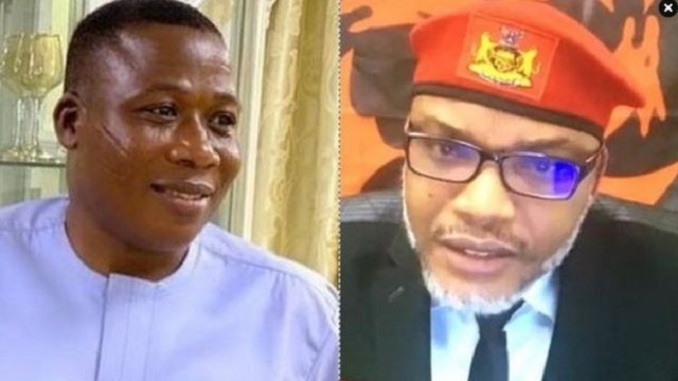
Sunday Adeniyi Adeyemo is a Yoruba man popularly known as Sunday Igboho at Igboho town, located in Oke-Ogun, Oyo State. Sunday Igboho stormed Ondo State to enforce the eviction notice by the Governor of Ondo State. Igboho was alleged to have led the attack on some Fulani settlement causing havoc to them. He has also visited Ogun State recently for the same “crusade” against herdsmen. Sunday Igboho appear to enjoy the support of the people, but not that of the Government of the Southern States in question.

Igboho also appear to enjoy the support of Nnamdi Kanu, the leader of Indigenous People of Biafra (IPOB). IPOB is a sect from the South-East of Nigeria seeking self-determination. IPOB has been at loggerheads with the Nigerian Government. Nnamdi Kanu is currently facing trial (in absentia) for treasonable felonies. Kanu recently formed a security outfit known as Eastern Security Network (ESN). Eastern Governors appear to have distanced themselves from ESN. This is unlike the South-Western Governors that collectively formed Amotekun, a local security outfit for the region.

While Sunday Igboho leads from the front (mainly because he is not under prosecution), Kanu leads from behind, in foreign land.

Sunday Igboho and Nnamdi Kanu appear to be respectively asking Southerners to “Put your head on my shoulder, and you will be safe.” 

Conclusion

Like a Silhouette, Nigeria seems to be a shadow of itself in terms of security. Has the people found a voice and a force in Igboho and Kanu in the face of rising insecurity in the country? But the activities of the duo are equally dangerous. Just like that of the herdsmen. To spark the fire of civil war could be like a stroke of matchstick. The Government at all levels must show leadership. The shoulders of persons like Igboho and Kanu may not be wide enough to accommodate the peace Nigerians seriously crave. It behooves on the Government to take active steps in resolving the lingering issues.

Featured Image Credit: BBC

First published February 4, 2021 on https://stephenlegal.ng/put-your-head-on-my-shoulder-sunday-igboho-nnamdi-kanu-tell-southerners/


Stephen Azubuike

AUTHOR: STEPHEN AZUBUIKE

Stephen is a lawyer with expertise in Commercial Dispute Resolution and Technology Law practice. He is a Partner at Infusion Lawyers. He has successfully argued cases from the High Courts of various jurisdictions to the Appellate Courts on behalf of financial institutions, other corporate bodies and multinationals. He has worked with a number of startup tech companies. He tweets @siazubuike.

Buhari flings the Constitution and the Police Act into the bin: Extends Adamu’s tenure as IGP

By STEPHEN AZUBUIKE

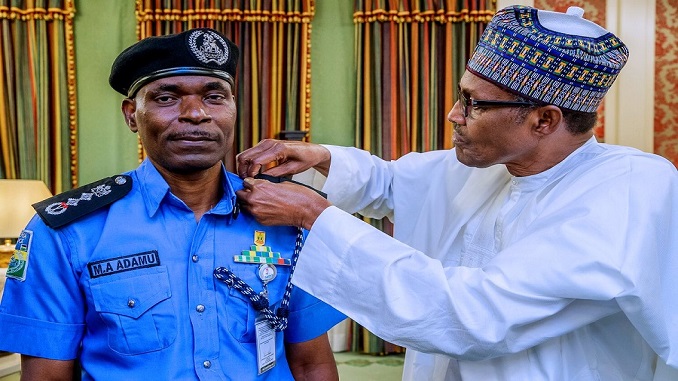
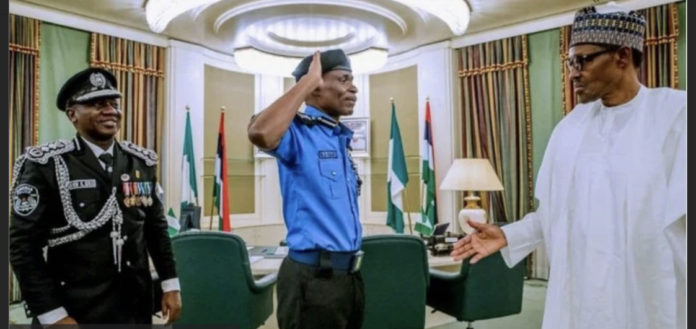
Mohammed Abubakar Adamu joined the Nigeria Police Force on February 2, 1986. He was appointed the 20th Inspector General of Police of Nigeria (IGP) by President Muhammadu Buhari on 15 January 2019. Prior to his appointment, he was an Assistant Inspector-General of Police (AIG).

Adamu’s tenure expired on 1 February 2021 when he clocked 35 years in service. He will turn 60 on 17 September 2021. The President has now extended his tenure by 3 months. The reason furnished was that the President needs some time to appoint a new IGP. According to the Minister of Police Affairs, Mohammad Dingyadi

Mr President has decided that the present IGP, Mohammed Adamu, will continue to serve as the IG for the next three months, to allow for a robust and efficient process of appointing a new IG…

The President’s decisions in matters of this nature are not drawn from his personal diary. The powers of the President are drawn from the Constitution of the Federal Republic of Nigeria 1999 (as amended) and other statutes. The affairs of the Nigeria Police Force are well-captured under the Constitution and the Police Act 2020. The Act repealed the Police Act Cap. P19, Laws of the Federation of Nigeria 2004.

Section 215 (2) of the Constitution provides that the Nigeria Police Force shall be under the Command of the IGP. Meanwhile, Section 214(2)(a) provides that the Nigeria Police shall be organised and administered in accordance with such provisions as may be prescribed by an Act of the National Assembly. Such Act is the Police Act 2020.

Section 216(2) of the Constitution directs that the President shall consult the Nigeria Police Council before making any appointment to the office of the IGP or removing the IGP from office. By virtue of Paragraph 27 of Third Schedule to the Constitution and Section 6 of the Police Act, members of the Nigeria Police Council comprises:

(a) the President who shall be the Chairman;

(b) the Governor of each State of the Federation;

(c) the Chairman of the Police Service Commission; and 

(d) the Inspector-General of Police.

The Police Council is the highest policy making body in matters concerning the affairs of the Police.

By Section 7(3) of the Police Act, the President shall appoint the IGP based on advice by the Police Council. The person to be appointed must be from among serving members of the Police Force. Section 7(2) of the Act provides:

The person to be appointed as Inspector General of Police shall be a senior police officer not below the rank of Assistant Inspector General of Police with the requisite academic qualification of not less than a first degree or its equivalent, in addition to professional or management experience.

The Police Act provides for the period of service for Police officers generally. Section 18(8) of the Act provides:

Every police officer shall, on recruitment or appointment, serve in the Nigeria Police Force for 35 years or until the age of 60 years, whichever is earlier.

By law, Adamu is currently not a serving police officer

As stated above, Adamu’s tenure expired on 1 February 2021 when he recorded 35 years in service, and will turn 60 on 17 September 2021. By Section 18(8) of the Act, Adamu clocked 35 years of service before his 60th birthday. Thus, his time as a police officer has ended. Being a police officer is the plank upon which he stood to enjoy appointment as the IGP. Now, that plank has been broken by the force of the statutory period of service. It means he is naturally ineligible to be considered or reconsidered for the office of IGP for whatever reason. Although by Section 7(6), Adamu had four years to function as IGP, the 35 years of service has put an end to his reign. His remaining two years is considered spent by operation of law. 

The Police Act in Section 9(6) provides for when a retired police officer may be re-engaged in service. The IGP has the powers to re-engage such an officer for a period of two years. Buhari cannot find support in this section because the Act never made such provision for the benefit of the IGP. Besides, there is no evidence that Adamu has been re-engaged as a police officer before we talk about being appointed as IGP. Worse still, there is nothing in the Act which empowers the President to re-engage the IGP. 

There is nothing to show that the Police Council was in concert with the President in his decision to extend the tenure of Adamu without any legal backing.

Buhari went against some objective principles of the Police Act

The objective of the Police Act is to provide for a more efficient and effective police service that is based on the principles of accountability and transparency, protection of human rights and fundamental freedoms, and partnership with other security agencies.

By extending the tenure of Adamu without any legal backing, Buhari seems to have gone against some of the objective principles of the Police Act which are accountability and transparency. The President and his advisers had ample time to prepare and shop for Adamu’s replacement.

Buhari appear to have set a precedent for statutory breaches. Bad precedent is a forerunner for retrogression. By his act, Buhari appears to have flinged the Constitution and the Police Act into the bin. It is left for the other organs of the Government like the National Assembly and the Judiciary to pick the legislations up and restore them to their pride of place.

Featured Image Credit: The Guardian Nigeria

First published February 4, 2021 on https://stephenlegal.ng/buhari-flings-the-constitution-and-the-police-act-into-the-bin-extends-adamus-tenure-as-igp/

Stephen Azubuike

AUTHOR: STEPHEN AZUBUIKE

Stephen is a lawyer with expertise in Commercial Dispute Resolution and Technology Law practice. He is a Partner at Infusion Lawyers. He has successfully argued cases from the High Courts of various jurisdictions to the Appellate Courts on behalf of financial institutions, other corporate bodies and multinationals. He has worked with a number of startup tech companies. He tweets @siazubuike.

WTO: Okonjo-Iweala thanks Nigerians, Buhari, America for support

 Former Minister of Finance, Dr Ngozi Okonjo-Iweala, has thanked Nigerians and President Muhammadu Buhari for their support following her emergence as the sole candidate for the top job at the World Trade Organisation (WTO).

She also extended her appreciation to the United States government after the country endorsed her to become the Director-General of the global trade body.

Okonjo-Iweala, who was vying for the job with the Republic of Korea’s Trade Minister, Yoo Myung-hee, showed gratitude via her verified Twitter handle on Friday.

Grateful for the expression of support from the US today for DG @WTO. Congratulations to Madam Yoo of Rep. Korea for a hard fought campaign.Thank You President Muhammadu Buhari @MBuhari &all Nigerians for your unflinching support.Thank you friends. Love to my family.Glory to God.

— Ngozi Okonjo-Iweala (@NOIweala) February 5, 2021

While the majority of the member-countries of the organisation had endorsed the Nigerian candidate, Ms Myung-hee had enjoyed the support of former U.S. President Donald Trump in their bids to become the WTO DG.

On Friday, the Korean minister announced that she was abandoning her bid to lead the international trade body, leading to Okonjo-Iweala’s emergence as the sole candidate for the job.

Following the development, the Office of the U.S. Trade Representative, in a statement, said, “The United States takes note of today’s decision by the Republic of Korea’s Trade Minister Yoo Myung-hee to withdraw her candidacy for Director-General of the World Trade Organization (WTO).

“The Biden-Harris Administration is pleased to express its strong support for the candidacy of Dr Ngozi Okonjo-Iweala as the next Director-General of the WTO.

“Dr Okonjo-Iweala brings a wealth of knowledge in economics and international diplomacy from her 25 years with the World Bank and two terms as Nigerian Finance Minister.

“She is widely respected for her effective leadership and has proven experience managing a large international organization with a diverse membership,” it added.

Okonjo-Iweala, 66, was nominated as Nigeria’s candidate to lead the WTO by President Muhammadu Buhari in June 2020.

She is a Nigerian-American economist and international development expert who has a 25-year career at the World Bank, scaling the ranks to the second top position of Managing Director, Operations.

The Delta State-born economist served two terms as the minister of finance under former Presidents Olusegun Obasanjo and Goodluck Jonathan respectively. (Sundiatapost)

Qualifications for an Inspector General of Police.

Qualifications for an Inspector General of Police. Daily Law Tips (Tip 729) by Onyekachi Umah, Esq., LL.M, ACIArb(UK)

Introduction: 

The head of the Nigeria Police force is the Inspector General of Police (IGP). A police officer cannot be an Inspector General of Police (IGP) unless the police officer is appointed as the IGP by the President of Nigeria. However, the President of Nigeria cannot appoint any police officer as an Inspector General of Police (IGP) unless the police officer has certain statutorily approved qualifications. 

Police Officers and the Qualification of an IGP: 

In exercise of constitutional powers, the President of Nigeria is to appoint an Inspector General of Police (IGP), on the advice of the Nigeria Police Council. Not every police officer in the Nigeria Police Force can be appointed as the Inspector General of Police (IGP), because of certain statutory limitation (qualifications). 

For a person to be appointed as the Inspector General of Police (IGP), the person must be a serving police officer. The person must be of the rank of an Assistant Inspector General of Police (AIG) or above. Also, the person must have an academic qualification that must be at least a first degree or its equivalent, in addition to having professional and management experience. 

Conclusion: 

Although the Inspector General of Police (IGP) must be appointed from serving members of the Nigeria Police Force, not every police office can be appointed as the Inspector General of Police (IGP). The Nigeria Police Act (a federal law made in 2020) has expressly stated the qualifications for the office of the Inspector General of Police (IGP), as shown above. 

My authorities, are:

  1. Sections 1, 2, 3, 4, 5, 214, 215 and 216 of the Constitution of the Federal Republic of Nigeria, 1999.
  2. Sections 7, 8, 9, 136, 141 and 142 of the Nigeria Police Act  2020
  3. Onyekachi Umah, “Can the Appointment of an Inspector General of Police be Extended?” (LearnNigerianLaws.com, 2 February 2021) <https://learnnigerianlaws.com/can-the-appointment-of-an-inspector-general-of-police-be-extended/> accessed 4 February 2021. 
  4. Onyekachi Umah, “Head of a Police Station Must Make Monthly Report of Arrests to a Magistrate” (LearnNigerianLaws.com, 24 August 2020) <https://learnnigerianlaws.com/head-of-police-station-must-make-monthly-report-of-arrests/ > accessed 17 November 2020. 
  5. Onyekachi Umah, “Police Stations Now Have Supervising Magistrates” (LearnNigerianLaws.com, 9 October 2020) <https://learnnigerianlaws.com/police-stations-now-have-supervising-magistrates/ > accessed 17 November 2020. 
  6. Chris Admin, “Onyekachi Umah Speaks To ChannelsTv On SARS & The New Police Act” (LearnNigerianLaws.com, 9 November 2020) <https://learnnigerianlaws.com/onyekachi-umah-speaks-to-channelstv-on-sars-the-new-police-act/> accessed 2 February 2021. 

Sabi Law Projects:

#SabiLaw

#DailyLawTips

#SabiBusinessLaw

#SabiElectionLaws

#SabiHumanRignts

#SabiLawOnBeatFm

#SabiLawLectureSeries

#CriminalJusticeMonday

#SabiLawVideoChallenge

Speak with the writer, ask questions or make inquiries on this topic or any other via [email protected], [email protected] or +2348037665878 (whatsapp). 

To receive free Daily Law Tips, join our free Telegram group, via this link: https://t.me/LearnNigerianLaws

To keep up to date on all our free legal awareness projects of Sabi Law Foundation, follow us via:

Facebook Page:@LearnNigerianLaws, Instagram: @LearnNigerianLaws and Twitter: @LearnNigeriaLaw

Please share this publication for free till it gets to those that need it most. Save a Nigerian today! NOTE: Sharing, modifying or publishing this publication without giving credit to the author or Sabi Law Foundation is a criminal breach of copyright and will be prosecuted. This publication is the writer’s view not a legal advice and does not create any form of relationship. You may reach the writer for more information.

This publication is powered by www.LearnNigerianLaws.com {A Free Law Awareness Program of Sabi Law Foundation, supported by the law firm of Bezaleel Chambers International (BCI).} Sabi Law Foundation is a Not-For-Profit and Non-Governmental Legal Awareness Organization based in Nigeria.

COVID-19 Exemption for Religious Gatherings.

COVID-19 Exemption for Religious Gatherings. Daily Law Tips (Tip 728) by Onyekachi Umah, Esq., LL.M, ACIArb(UK)

Introduction: 

On the 26 January 2021, the President of Nigeria signed a new federal regulation on COVID-19. Among other things, the new regulation signed by President Buhari criminalizes the non-use of face mask in public places. It also limited the maximum number of persons that can gather in a place to fifty (50) persons. However, the regulation made an exemption for religious gatherings in any part of Nigeria. 

The COVID-19 and Religious Gatherings:

The new federal regulations on COVID-19 (the Coronavirus Disease [Covid-19] Health Protection Regulations 2021) limits the number of persons that can gather in an enclosed space to a maximum of fifty (50) persons. Hence, any gathering in an enclosed space in any part of Nigeria with more than 50 persons is unlawful and illegal. Consequently, persons organizing such gathering and persons in attendance are in violation of the federal law. 

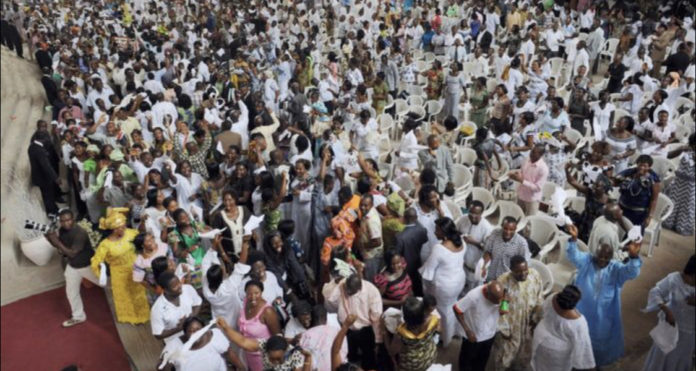
However, there is an exemption for religious gathering in any place in Nigeria. Any religious gathering in any part of Nigeria can have any number of persons in any enclosed space, so far as the gathering is not more than the fifty percent (50%) capacity of the space. So, there is no limitation of maximum of 50 persons on religious gatherings, rather any number of persons can gather in any space for a religious purpose, in as much as the gathering is not more than half of the capacity of the venue. This means that a building with fifty thousand (50,000) seating capacity can lawfully accommodate any gathering of religious persons, up to 25,000 persons at a time.   

Conclusion: 

To win the fight against COVID-19, the federal government of Nigeria made a new regulation in January 2021, relying on the Quarantine Act of 1926. The federal regulation limits the number of persons that can gather in an enclosed space to a maximum 50 persons. However, the same regulation gives an exemption for religious gathering, by allowing religious gatherings of any number of persons, so far as half of the capacity of the venue of the gathering is not exceeded. 

My authorities, are:

  1. Sections 1, 2, 3, 4, 5, 6, 318 and 319 of the Constitution of the Federal Republic of Nigeria, 1999.
  2. Sections 1, 2, 3, 4, 5, 7 and 8 of the Quarantine Act of 1926.
  3. Regulations 5, 6, 7, 8, 10, 15, 18, 24, 31, 32, 33, 34, 39, 40, 42 of the Coronavirus Disease [COVID-19] Health Protection Regulations 2021
  4. Onyekachi Umah, “Not Wearing a Face Mask Is Now A Crime” (LearnNigerianLaws.com, 29 January 2021) <https://learnnigerianlaws.com/not-wearing-a-face-mask-is-now-a-crime/> accessed 2 February 2021. 
  5. Onyekachi Umah, “Failure To Wear Nose Mask Is Not An Offence In Nigeria.” (LearnNigerianLaws.com, 28 April 2020) <https://learnnigerianlaws.com/failure-to-wear-nose-mask-is-not-an-offence-in-nigeria-daily-law-tips-tip-557-by-onyekachi-umah-esq-llm-aciarbuk/> accessed 28 January 2021.
  6. Onyekachi Umah, “Nigeria Has No Law Against Public Gathering During COVID-19 Era.” (LearnNigerianLaws.com, 14 April 2020) <https://learnnigerianlaws.com/nigeria-has-no-law-against-public-gathering-during-covid-19-era-daily-law-tips-tip-547-by-onyekachi-umah-esq-llm-aciarbuk/> accessed 28 January 2021. 
  7. Onyekachi Umah, “Is There a Quarantine Act Made in 2004, After That of 1926 in Nigeria?” (LearnNigerianLaws.com, 5 May 2020) <https://learnnigerianlaws.com/is-there-a-quarantine-act-made-in-2004-after-that-of-1926-in-nigeria-daily-law-tips-tip-562-by-onyekachi-umah-esq-llm-aciarbuk/> accessed 28 January 2021. 
  8. Onyekachi Umah, “Court That Can Try Cases On Quarantine And Lockdown In Nigeria.” (LearnNigerianLaws.com, 23 April 2020) <https://learnnigerianlaws.com/court-that-can-try-cases-on-quarantine-and-lockdown-in-nigeria-daily-law-tips-tip-554-by-onyekachi-umah-esq-llm-aciarbuk-2/> accessed 28 January 2021.
  9. Onyekachi Umah, “Punishment For Violation Of The COVID-19 Regulations Or The Quarantine Act.” (LearnNigerianLaws.com, 6 April 2020) <https://learnnigerianlaws.com/punishment-for-violation-of-the-covid-19-regulations-or-the-quarantine-act-daily-law-tips-tip-541-by-onyekachi-umah-esq-llm-aciarbuk/> accessed 28 January 2021
  10. Onyekachi Umah, “Illegality Of Covid-19 Regulations Of 2020 And The Toothless Quarantine Act Of 1926” (LearnNigerianLaws.com, 1 April 2020) <https://learnnigerianlaws.com/illegality-of-covid-19-regulations-of-2020-and-the-toothless-quarantine-act-of-1926-daily-law-tips-tip-538-by-onyekachi-umah-esq-llm-aciarbuk/> accessed 28 January 2021. 
  11. Onyekachi Umah, “How To Legally Declare State Of Emergency Over Covid-19 In Nigeria Or Any State.” (LearnNigerianLaws.com, 15 May 2020) <https://learnnigerianlaws.com/how-to-legally-declare-state-of-emergency-over-covid-19-in-nigeria-or-any-state-daily-law-tips-tip-570-by-onyekachi-umah-esq-llm-aciarbuk/> accessed 28 January 2021
  12. Onyekachi Umah, “Can “NCDC” Make Regulations For Nigeria?” (LearnNigerianLaws.com, 29 April 2020) <https://learnnigerianlaws.com/can-ncdc-make-regulations-for-nigeria-daily-law-tips-tip-558-by-onyekachi-umah-esq-llm-aciarbuk/> accessed 28 January 2021. 
  13. Onyekachi Umah, “Management and Disposal of COVID-19 Corpses in Nigeria.” (LearnNigerianLaws.com, 27 April 2020) <https://learnnigerianlaws.com/management-and-disposal-of-covid-19-corpses-in-nigeria-daily-law-tips-tip-556-by-onyekachi-umah-esq-llm-aciarbuk/> access 28 January 2021. 
  14. Onyekachi Umah, “COVID-19 and Landlords: Can Government Force Landlords Not To Eject Tenants?” (LearnNigerianLaws.com, 15 April 2020) <https://learnnigerianlaws.com/covid-19-and-landlords-can-government-force-landlords-not-to-eject-tenants-daily-law-tips-tip-548-by-onyekachi-umah-esq-llm-aciarbuk/> accessed 28 January 2021. 
  15. Onyekachi Umah, “Punishment For Price Increment During COVID-19 Lockdown In Lagos State.” (LearnNigerianLaws.com, 13 April 2020) <https://learnnigerianlaws.com/punishment-for-price-increment-during-covid-19-lockdown-in-lagos-state-daily-law-tips-tip-546-by-onyekachi-umah-esq-llm-aciarbuk/> accessed 28 January 2021.
  16. Onyekachi Umah, “Persons That Must Provide Medical Equipment For COVID-19.” (LarnNigerianLaws.com, 10 April 2020) <https://learnnigerianlaws.com/persons-that-must-provide-medical-equipment-for-covid-19-daily-law-tips-tip-545-by-onyekachi-umah-esq-llm-aciarbuk/> accessed 28 January 2021.
  17. Onyekachi Umah, “Can An Offender Be Convicted Under The Lagos State Infectious Diseases Regulations Or Other States’ Regulations?” (LearnNigerianLaws.com, 9 April 2020) <https://learnnigerianlaws.com/can-an-offender-be-convicted-under-the-lagos-state-infectious-diseases-regulations-or-other-states-regulations-daily-law-tips-tip-544-by-onyekachi-umah-esq-llm-aciarbuk/> accessed 28 January 2021.
  18. Onyekachi Umah, “The COVID-19 Laws In States Or State Of Emergency: Best Tool In Fighting Coronavirus?” (LearnNigerianLaws.com, 8 April 2020) <https://learnnigerianlaws.com/the-covid-19-laws-in-states-or-state-of-emergency-best-tool-in-fighting-coronavirus-daily-law-tips-tip-543-by-onyekachi-umah-esq-llm-aciarbuk/> accessed 28 January 2021.
  19. Onyekachi Umah, “House Rent And COVID-19: Can Landlords Evict Tenants?” (LearnNigerianLaws.com, 7 April 2020) <https://learnnigerianlaws.com/house-rent-and-covid-19-can-landlords-evict-tenants-daily-law-tips-tip-542-by-onyekachi-umah-esq-llm-aciarbuk/> accessed 28 January 2021.
  20. Onyekachi Umah, “Shooting Of Isolation Centers’ Escapees Is Unlawful And Punishable.” (LearnNigerianLaws.com, 3 April 2020) <https://learnnigerianlaws.com/shooting-of-isolation-centers-escapees-is-unlawful-and-punishable-daily-law-tips-tip-540-by-onyekachi-umah-esq-llm-aciarbuk/> accessed 28 January 2021. 

Sabi Law Projects:

#SabiLaw

#DailyLawTips

#SabiBusinessLaw

#SabiElectionLaws

#SabiHumanRignts

#SabiLawOnBeatFm

#SabiLawLectureSeries

#CriminalJusticeMonday

#SabiLawVideoChallenge

Speak with the writer, ask questions or make inquiries on this topic or any other via [email protected], [email protected] or +2348037665878 (whatsapp). 

To receive free Daily Law Tips, join our free Telegram group, via this link: https://t.me/LearnNigerianLaws

To keep up to date on all our free legal awareness projects of Sabi Law Foundation, follow us via:

Facebook Page:@LearnNigerianLaws, Instagram: @LearnNigerianLaws and Twitter: @LearnNigeriaLaw

Please share this publication for free till it gets to those that need it most. Save a Nigerian today! NOTE: Sharing, modifying or publishing this publication without giving credit to the author or Sabi Law Foundation is a criminal breach of copyright and will be prosecuted. This publication is the writer’s view not a legal advice and does not create any form of relationship. You may reach the writer for more information.

This publication is powered by www.LearnNigerianLaws.com {A Free Law Awareness Program of Sabi Law Foundation, supported by the law firm of Bezaleel Chambers International (BCI).} Sabi Law Foundation is a Not-For-Profit and Non-Governmental Legal Awareness Organization based in Nigeria.

‘Open Up The Economy’– Atiku Asks FG To Revisit CBN Directive On Crypto Trading

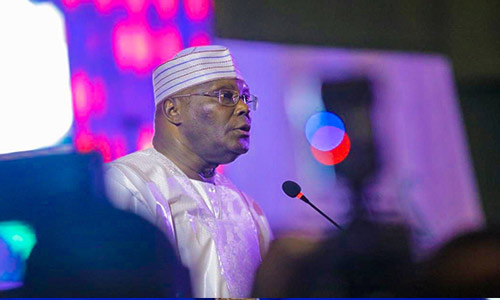
Former Vice President Atiku Abubakar has advised the Federal Government to have a rethink on its directive on cryptocurrency transactions in the country.

This advice, which was contained in a statement on Saturday, was in reaction to the directive of the Central Bank of Nigeria (CBN) to banks and other financial institutions to close accounts of any individual who transact in cryptocurrency.

The CBN had told the regulated institutions that dealing in cryptocurrencies or facilitating payments for cryptocurrency exchanges was prohibited.

But Atiku stated that it was wrong to issue such a directive at this time, saying the number one challenge facing Nigeria was youth unemployment.

He explained that youth unemployment has already become not just a challenge but an emergency that has affected the nation’s economy and was exacerbating insecurity.

According to the former Vice President, what Nigeria presently needs are jobs and an opening up of its economy following the report that foreign capital inflow into the country is at a four-year low.

He decried that the nation had already suffered severe economic losses from the border closure and the effects of the COVID-19 pandemic.

Atiku warned that introducing policies that would restrict the inflow of capital into Nigeria could harm its economy more and urge the government to revisit the policy to prohibit the dealing and transaction of cryptocurrencies.

He suggested that rather than an outright shutdown, the government could regulate the sub-sector and prevent any abuse that may be damaging to national security.

The former Vice President informed the government that there was already immense economic pressure on the youth and efforts must be made to reduce the pressure and not add to it.

He also recommended job creation, expansion of the economy, and removal of impediments towards investments as the way forward.

Read the full statement issued by Atiku below:

The number one challenge facing Nigeria is youth unemployment. In fact, it is not a challenge, it is an emergency. It affects our economy and is exacerbating insecurity in the nation.

What Nigeria needs now, perhaps more than ever, are jobs and an opening up of our economy, especially after yesterday’s report by the National Bureau of Statistics indicated that foreign capital inflow into Nigeria is at a four year low, having plummeted from $23.9 billion in 2019 to just $9.68 billion in 2020.

Already, the nation suffered severe economic losses from the border closure and the effects of the #COVID19 pandemic.

This is definitely the wrong time to introduce policies that will restrict the inflow of capital into Nigeria, and I urge that the policy to prohibit the dealing and transaction of cryptocurrencies be revisited.

It is possible to regulate the sub-sector and prevent any abuse that may be damaging to national security. That may be a better option, than an outright shutdown.

There is already immense economic pressure on our youths. It must be the job of the government, therefore, to reduce that pressure, rather than adding to it.

We must create jobs in Nigeria. We must expand the economy. We must remove every impediment towards investments. We owe the Nigerian people that much. (Thenigerialawyer)

Zamfara To Build RUGA Settlements For Repentant Bandits

The Zamfara State Government has said it is making efforts to build Ruga settlements for repentant bandits in some states.

It said it already granted amnesty to all the repentant bandits who surrendered their weapons and embraced the peace accord initiated by the governor, Bello Matawalle.

The Special Adviser to the governor on Public Enlightenment, Media and Publicity, Alhaji Zailani Baffa, said, “Following the amnesty arrangement, the state government has since last year granted amnesty to some bandits who were in detention at various correctional centres in the state just as the bandits also released some people they have kidnapped.

“Governor Matawalle has already told the world that he has chosen dialogue as a means of ending banditry in the state and has granted amnesty to many repentant bandits. Arrangements are also in top gear to provide shelter to the repentant bandits through the construction of Ruga settlements in some parts of the state.”

He added that following the tour to the state by Sheikh Ahmad Gummi; there were so many bandits willing to repent and join the governor’s peace accord.

He added, “All the state government needs from the Federal Government are deploying more security personnel to the state so that we can fight those recalcitrant bandits who are not ready to surrender.”

He stressed that the governor had constitutional rights to enter into dialogue with the bandits just as he had the right to grant them amnesty. “We have gone far in this arrangement, and it is yielding positive results,” Baffa added. (Thenigerialawyer)

Nigeria may not recover 50 years after Buhari –Fayose

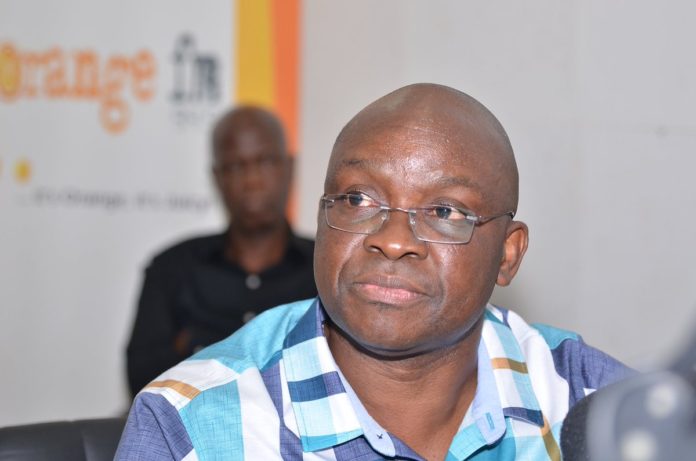
Given the dip in foreign capital flow into Nigeria which plummeted by more than half in 2020 to $9.68bn, its lowest level in four years, Former Ekiti State Governor, Ayodele Fayose, has predicted doom for the country.

Fayose in a string of tweets on Friday said Nigeria’s economy may not recover 50 years after the regime of the President, Muhammadu Buhari.

The former governor who was apparently reacting to recent report by the National Bureau for Stastistics (NBS), said the decline in foreign capital flow is an evidence of how the Buhari regime has ‘killed’ Nigeria.

“Just read that our country’s foreign capital inflow sunk to $9.68bn, its lowest in four years. That’s according to the National Bureau of Statistics.

“This is another evidence that Buhari has killed Nigeria. Economy, security and the unity of Nigeria are in trouble now.

“50 years after Buhari, this country may not recover from these economic (and) security woes. Worse still, there is hatred amongst various ethnicities.”

“Isn’t it time for leaders of thought in this country to look beyond politics and speak up to save Nigeria from going down permanently?” he queried.

The National Bureau of Statistics, in its capital importation report for the fourth quarter and full-year 2020, said the total value of capital importation into the country fell by 59.65 per cent or $14.3bn last year from $23.99bn in 2019. (newsspecng)

Anger spreads over Cryptocurrency ban by CBN

Anger has greeted the Central Bank of Nigeria (CBN) directive to Deposit Money Banks (DMBs) and other financial institutions in the country to close accounts of persons involved cryptocurrency trading.

Earlier on Friday, the CBN memo to banks to close accounts being used for trading in the virtual currency went viral on social media, though it was released since Monday.

The CBN memo

Bello Hassan,Director of Banking Supervision; andMusa Jimoh, Director of Payments System Management Department, the CBN on Monday said: “Further to earlier regulatory directives on the subject, the bank hereby wishes to remind regulated institutions that dealing in crypto currencies or facilitating payments for cryptocurrency exchange is prohibited.

“Accordingly, all DMBs, NBFIs and OFIs are directed to identify persons and/or entities transacting in or operating crypto currency exchanges within their systems and ensure that such accounts are closed immediately.”

On different social media platforms, Nigerians poured invectives on the regulatory bank for its move. (Everyday)

Bird flu disease is back, spotted in Kano and Jos; FG fears it is spreading rapidly

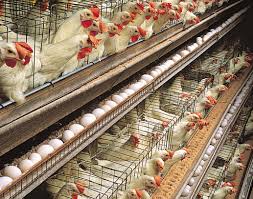
The dreaded Avian influenza, better known as Bird Flu, is in Nigeria and appears to be spreadingrapidly, the Federal Ministry of Agriculture and Rural Development has announced.

The ministry in a February 2, 2021 memo to the 36 State and Abuja Directors of Veterinary Services disclosed that after a two-year absence, the flu appears to be rapidly spreading, having been first spotted at a backyard farm in Kano, surfacing on two commercial farms in the ancient city, and then in Jos, Plateau State.

As part of pro-active measures to contain the devastating effects of the outbreak, the government has warned against inter-state movement of poultry and poultry products from affected states to those not affected.

spotted at a backyard farm in Kano, surfacing on two commercial farms in the ancient city, and then in Jos, Plateau State.

As part of pro-active measures to contain the devastating effects of the outbreak, the government has warned against inter-state movement of poultry and poultry products from affected states to those not affected.

Other measures include sensitisation of farmers and other value chain operators on basic biosecurity/hygiene measures for prevention and control of the disease

It also called for the activation of the Highly Pathogenic Avian Influenza (HPAI) Emergency Protection Plan (EPP) in states.

The flu, first spotted in China 25 years ago recurred in South East Asia 2003, struck in Nigeria three years later, leading to massive losses by farmers in about 25 States and Abuja.

Further panic set in when the flu transferred to humans.

On its website on 22nd February 2006 on the bird flu situation in Nigeria, the World Health Organisation (WHO) wrote:

The outbreak of H5N1 avian influenza in poultry, confirmed at a commercial farm in Kaduna State on 8 February, has now spread to commercial farms in several other contiguous states. No human cases have been detected to date.

Nigerian officials have confirmed outbreaks at commercial farms in the states of Kano, Plateau, Katsina, and Bauchi, and in the Abuja area. Outbreaks have also been detected at more farms in Kaduna. Outbreaks in additional states are currently under investigation.

To date, four patients with respiratory symptoms and a history of exposure to diseased poultry have been investigated for possible infection. This number includes a woman who died of an acute respiratory illness on 16 February. The three remaining patients are all in good condition.

Arrangements are being made to send samples from all four patients for testing at a WHO collaborating laboratory in the United Kingdom.

The initial outbreak in Kaduna state is now known to have begun on 10 January, raising the possibility that earlier human exposures and cases may have occurred in that area and elsewhere. At hospitals in Kaduna, Kano, and Katsina near affected farms, staff from the WHO-led teams have now examined hundreds of patient records, searching for possible cases that may have occurred earlier. No such cases have been identified to date.

The scale of the outbreak in birds is not yet fully understood. Most investigations have followed poultry deaths on large commercial farms, where outbreaks are highly visible. Little is known about the presence of the virus in small backyard flocks, where the greatest risk of human exposures and infections resides.

Nigeria has an estimated poultry population of around 140 million birds, largely concentrated in the south-western part of the country. As is the case in several affected parts of South-east Asia, around 60% of Nigeria’s poultry production takes place in small backyard flocks. Large-scale commercial farming of poultry occurs mainly in the northern states, where outbreaks have been confirmed.

Rapid spread of the virus within Nigeria has raised concern over possible spread to neighbouring countries. Borders are porous and restrictions on the movement of people and poultry are difficult to enforce. WHO staff at offices in these countries are monitoring the situation closely in collaboration with government officials. Rumours of possible human cases in neighbouring countries are also being closely monitored

On its website, the Lagos State government then reported Nigeria was the first country to report human cases of A/H5N1 in the West African Region one year after the first A(H5N1) outbreak in poultry was reported in the country.

The only human case of Avian Influenza in Nigeria was detected in Lagos State in January 2007. It was officially reported on the 17th of February, 2007. By the end of year 2006, twenty-six (26) farms had been affected by Avian flu in Lagos State. (Everyday)

TIPS