Home Blog Page 1046

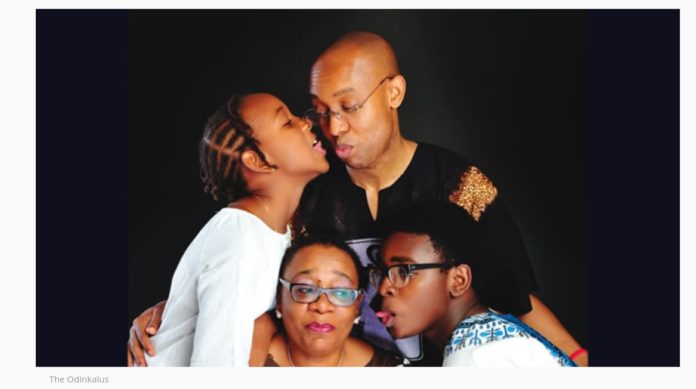
My kids don’t call anyone uncle or auntie — Odinkalu

Lawyer, activist and ex-Chairman of the National Human Rights Commission, Chidi Odinkalu, shares his fatherhood story with GBENGA ADENIJI

What does fatherhood mean to you?

Anyone can inseminate any other. Fatherhood is, therefore, for me more than the biological function of insemination. It is a very serious responsibility of trying to shape a better generation. I consider myself a father not just to my biological children but to a lot of kids in whose lives I have chosen to play a role.

What were the things that prepared you for fatherhood?

Nothing prepares you for fatherhood. In some ways, life should. You come to it as a beneficiary of the combined experience of the fatherhood skills and values of those who did it before you, watching them; learning from their mistakes; and making the best of their virtues.

What was your greatest fear before you became a father?

Uncertainty about the role and what it entailed as well as a sense of inadequacy somewhat.

When did you become a father?

Biologically, 20 years ago in 1997. But my would-be mother-in-law left me with her 11 year-old last son as she was dying in 1995 and he grew up as my first child pretty much.

How did you feel the first time you held your first child in your hands?

It was mixed emotions. Fulfillment, relief and  bewilderment. Labour was very long – over 36 hours. Mind you, I speak of labour in the technical sense of at least three centimetres of dilation. I was in the labour room through all but the first three hours of that. I needed to sign off work before getting in there. So, when the child arrived, all of us were relieved for different reasons: the medical professionals (nurses & doctors) that they didn’t have to go through with caesarean section which had already been prepared as both mother and child were showing signs of distress; the mother, that she didn’t have to endure that; and for me, I needed sleep!

Did you expect a particular gender prior to the arrival of your child?

No. I’m frankly not the type to look a gift horse in the mouth when it comes to this issue of sex of the child. I think it trifles with the value of human life to begin to think a particular sex is more useful or valuable or desirable than any other.

How do you discipline your children?

I had a dad who wasn’t averse to sometimes enthusiastic laying of hands for disciplinary purposes. So I grew up with an instinctive aversion for that. I believe children are very perceptive. I am very much against beating or spanking. My children get when I am unhappy or need something addressed with urgency. I don’t need to scream or shout about it. It’s in a bond and skill of communication. Sometimes it is unspoken indeed; at other times it’s humour. Sometimes their privileges are tampered with; at other times the tone of communication does it. Discipline also can happen in knowing when not to say anything.

What hardest punishment have you meted out to any of them?

Believe it or not, it’s keeping quiet; ignoring them. They will usually trigger a discussion. Parenting in my view is about enabling children to trust themselves, their values and their judgement. It means encouraging them to have and find voice. They can’t do that if I beat or scream it out of them.

What values did you learn from your father which you passed on to your children?

My dad’s traditional title was “Eziafakaego” – A good name is better than money. The value I took away from him more than any was honesty and integrity. The one thing I find intolerable is lying to children. That’s not allowed.

What have been your greatest challenges as a father?

In the beginning and always, it’s being able to provide for your children and giving them the best possible preparation for their own lives not for mine. Often we inflict on the children a burden of expectation for our lives instead of preparing them for their own lives.

What lessons has fatherhood taught you?

I’m not always the most patient person. So, the one thing I have learnt from fatherhood is patience. Fatherhood seasons you. Alongside that comes tolerance and forgiveness. You can’t be a father if you can’t forgive your children or indeed yourself. There is an element of audacity that comes from being a father. As I like to tell my own children: we all learn madness from our children.

What special gifts have you given your children?

If I have given them anything, I would think it is enlightenment – a liberal worldview that does not discriminate or suffer discrimination gladly as well as a voice that must insist on being heard even in the face of considerable pushback. My children are not necessarily conformist. In a society like ours, I expect them to run into problems with the types that (Oyo State) Governor (Abiola) Ajimobi would describe as “Constituted Authority” and they often do. My duty as a dad is to let them know: as long as they have not stolen, lied, or assaulted or damaged anyone, I will be there for them. Above all, therefore, if you grow up in our household, the one gift you must be able to pick up is moral courage. If you make them unhappy, they will be in your face or will subvert your claims to authority.

We believe in God but we are not invested in forms or buildings for worship. Our children know faith is important but we also recognise that they will be responsible for any decision they make as to faith. There is no established form of worship in our house but we know how to pray. It is important to enable children to grow up balanced and some of the things we can subject children to in the name of religion can be abusive. I remember I once reluctantly agreed to allow my daughter to attend some “virtuous woman” workshop for kids when she was 10. She came back on the second day and reported how they wanted them to speak in tongues and accept these models of suffering in the hands of men. I promptly withdrew her and had to call on the organiser to remonstrate with her. I don’t consider it part of my parenting role to make my daughter believe she is inferior to boys and should suffer indignity gladly or our son to believe he is superior to girls and can treat them anyhow.

What feminine roles did you assume in the house as your children were born?

I don’t know what female roles are. Obviously, I don’t have mammary glands. Terry nappies were no longer fashionable by when I became a dad, so I didn’t have to wash nappies all over again (I did that for my younger siblings). But it absolutely takes two (or more) to do this thing. The sleeplessness of early parenting can’t be borne by one person alone. It’d drive you potty!

How have you been able to teach them the essentials of good upbringing?

I don’t know whether I have been able to teach any “essentials of good upbringing.” A lot of our people in Nigeria have peculiar ideas about what is good or acceptable. For instance, my children don’t call anyone “auntie” or “uncle.” In our house, everyone has a name and when they meet you, they will find out your name and you will be called by Mr. or Mrs. or Dr. or Chief your name but not “uncle” or “auntie” etc. There is a good reason for that. A lot of child abuse is done by “uncles” and “aunties”; by people who are insinuated into the lives of the children through titles that import authority and familiarity but who should not be in those positions. In my own life also, I have come to the conclusion you can’t hold anyone accountable whom you cannot call by their name. “Uncle” is not a name, it is an institution. The burden of holding an institution accountable for abusing you is too much for a child to bear.

 The problem is, many Nigerians will think the children like mine are rude because they have not been weaned on a diet of gratuitous “auntie” and “uncle.” I get very impatient with people who want to dismantle our house rules and think they are entitled to be called “auntie” or “uncle” by my kids. But those are the rules we have agreed to bring them up with and they have worked well so far. Our kids know to look after themselves and be respectful but not to suffer slavery or enslavement. I remember when my daughter was seven, my perfectly healthy sister-in-law came to the house, finished eating, sat down and asked her to go take down the plates. My daughter quietly told her to please take her dishes down to the kitchen and wash up and that her dad had warned her against child abuse. I sat quietly through it. My sister-in-law knew better than ask me. The following morning, my sister-in-law left the house. Children deserve respect and a voice. We can’t reduce them to fetching and carrying merely to satisfy the vanities of adults.

Were there things you would have loved to do differently as a father?

Well, I would have wished to have worked fewer hours sometimes or travelled less. But on the whole, I’ve been grateful for the challenges of fatherhood.

You are a lawyer and activist, how have you been able to conveniently combine these with fatherly roles?

The children don’t and won’t remember the cases dad did or the picket lines he ran. Their memories are more prosaic and personal: the books; the meals; night time stories; embarrassing moments, school run. Children will humble you in ways you don’t predict. That’s what makes it such magic being a parent. It enables you to rediscover what matters not just the professional and other vocations.

What aspect of your career choices is any of your children showing interest?

My kids know that the only thing I ask of them is to be the best in whatever they choose to do or commit to. I am interested in helping them get the skills to be that. So language skills, inter-personal skills cross-cultural skills; skills of compassion and emotional intelligence; character assets of truthfulness, confidence, integrity, courage and values of basic decency, intellectual assets of positive curiosity and openness to inquiry. These are important. A child that has these assets and skills should make the right decisions about what or who they want to do or become.

How much of your time do you give your children?

I can’t give quantities. The one thing I have always enjoyed actually is school run. You learn a lot from it. Daddying up a daughter is a fascinating experience. In my house, it was my place to explain to my daughter what a period was and to prepare her for it. Her mum was like: no one prepared me for it but my view was, well, that was then. So she said: ‘okay then you go do it.’ We worked out a way to do it. With our son, his mother taught him how to use a condom. For us, sex education is central to living a healthy life and also to being truthful with your children. ABC is good but many people start and stop at A and simply live in denial about the fact that quite often our children will also need the C.

What is your advice to children who have no father figures?

I cannot generalise about children, even about those who have no father figures. It is ideal of course, to have the positive influences of a father and a mother in the life of a child. Often this is not possible and without knowing the reasons why this is not possible in any particular case, generalisation can be difficult. The nature of the family is changing under all manner of influences. So, I try to be case-specific rather than generalise.

What advice do you give your children about relationships?

When he was 10, my son accosted me one day at home and said: “Dad, did you say marriage is an institution?” Innocently, I said “Yes.” And he retorted, “But why would anyone want to live in an institution?” That was a question I could never have dreamed up. I had no answer to that and still don’t. In our conversations, I simply try to encourage my children to value relationships built on trust and mutual respect. And to value those who respect their dignity. In the end, it is all about trust, dignity and mutual respect. It is not about forms.

What is your take about having a favourite child?

Well, if we were speaking about tens or dozens or scores of children, may be. But I am not (yet) in that league as you can imagine. Every child is different and every child is unique. So, the idea of favourite children I guess would not arise for me.

How do you appreciate your wife?

It’s a huge sacrifice that women make in being primary carers of children, especially in the early years. Their careers, confidence, self-belief can take a bashing as a result. I think in our society, we take that very much for granted. If you had to hire a carer in enlightened society to do or help with that, you would appreciate it better just from the costs you have to incur for them.

PUNCH.               

$500m: SERAP Asks World Bank To Publish Documents On Funded Electricity Projects

Socio-Economic Rights and Accountability Project (SERAP) has urged the World Bank President Mr David Malpass “to exercise the Bank’s prerogative to release archival records and documents relating to spending on all approved funds to improve access to electricity in Nigeria between 1999 and 2020, the Bank’s role in the implementation of any funded electricity projects, and to identify and name any executed projects, and Nigerian officials, ministries, departments and agencies involved in the execution of such projects.”

The World Bank Board of Directors had last week approved $500m “to help boost access to electricity in Nigeria and improve the performance of the electricity distribution companies in the country.”

But in the application dated 6 February 2021, and signed by SERAP deputy director Kolawole Oluwadare, the organization urged the Bank to “explain the rationale for the approval of $500m to implement electricity projects in the country, despite reports of widespread and systemic corruption in the sector, and the failure of the authorities to enforce a court judgment ordering the release of details of payments to allegedly corrupt electricity contractors who failed to execute any projects.”

SERAP said: “This application is brought pursuant to the World Bank’s Access to Information Policy, which aims to maximize access to information and promote the public good. There is public interest in Nigerians knowing about the Bank’s supervisory role and specifically its involvement in the implementation of electricity projects, which it has so far funded.”

According to SERAP, “The $500m is part of the over one billion dollars available to Nigeria under the project titled: Nigeria Distribution Sector Recovery Program. We would be grateful for details of any transparency and accountability mechanisms under the agreement for the release of funds, including whether there is any provision that would allow Nigerians and civil society to monitor the spending of the money by the government, its agencies, and electricity distribution companies.”

SERAP also said: “Should the Bank fail and/or refuse to release the information and documents as requested, SERAP would file an appeal to the Secretariat of the Bank’s Access to Information Committee to challenge any such decision, and if it becomes necessary, to the Access to Information Appeals Board. SERAP may also consider other legal options outside the Bank’s Access to Information framework.”

The letter copied to Shubham Chaudhuri, World Bank Country Director for Nigeria, read in part: “SERAP believes that releasing the information and documents would enable Nigerians and civil society to meaningfully engage in the implementation of electricity projects funded by the Bank, contribute to the greater public good, and enhance the Bank’s oft-stated commitment to transparency and accountability.”

“The World Bank has been and continues to be involved in overseeing the transfer, disbursement, spending of funds on electricity projects in Nigeria. The Bank also reportedly approved a $750 million loan for Nigeria’s electricity sector in June 2020 to cut tariff shortfalls, protect the poor from price adjustments, and increase power supply to the grid. As such, the World Bank is not a neutral party in this matter.”

“SERAP is seriously concerned that the funds approved by the Bank are vulnerable to corruption and mismanagement. The World Bank has a responsibility to ensure that the Nigerian authorities and their agencies are transparent and accountable to Nigerians in how they spend the approved funds for electricity projects in the country, and to reduce vulnerability to corruption and mismanagement.”

“SERAP also believes that the release of the requested information and documents is of paramount important to the public interest in preserving the legitimacy, credibility and relevance of the Bank as a leading international development institution. The Bank ought to lead by example in issues such as transparency and public disclosure raised in this request.”

“It would also demonstrate that the Bank is willing to put people first in the implementation of its development and governance policies and mandates, as well as remove any suspicion of the Bank’s complicity in the alleged mismanagement of electricity projects-related funds.”

“The information is also being sought to improve the ongoing fight against corruption in the country and the provision of regular and uninterrupted electricity supply to Nigerians as a fundamental human right.”

“The information requested is not affected by the “deliberative” “corporate administrative matters” or “security and safety” exceptions under the Policy. The information requested is crucially required for Nigerians to know how the funds released to the authorities to improve electricity supply in the country have been spent, and monitor how the funds are being used.”

“SERAP’s report, titled: From darkness to darkness: How Nigerians are paying the price for corruption in the electricity sector documents widespread and systemic corruption in the electricity sector, and reveals how about N11 trillion electricity fund was squandered by successive administrations in Nigeria since the return of democracy in 1999.”

“This report raises specific questions of public interest, and the World Bank ought to be concerned about how Nigerian authorities are addressing reports of widespread and systemic corruption in the electricity sector, and to seek some answers from the authorities on the problems.”

“However, as the report shows, the Bank’s funding of the electricity sector has not resulted in corresponding access of Nigerians to regular and uninterrupted electricity supply. Successive governments have failed to provide access to regular and reliable electricity supply to millions of the citizens despite budgeting trillions of naira for the power sector.”

“Millions of Nigerians still lack access to free pre-paid meters. Authorities continue to use patently illegal and inordinate estimated billing across the country, increasing consumer costs, and marginalizing Nigerians living in extreme poverty, disproportionately affecting women, children and the elderly.”

SERAP, therefore, urged Mr Malpass to:

1. Disclose and release information and documents relating to spending of funds approved and released to Nigeria between 1999 and 2020 to improve access to regular and uninterrupted electricity supply, including copies of supervision reports, periodic reviews and other appropriate reports on the Bank’s role in the spending and disbursement of the funds, as well as specific projects on which the funds have been spent;
2. Disclose implementation status and results and completion reports on the electricity projects that the Bank has so far funded in Nigeria;
3. Disclose information on the of level of involvement of World Bank in the implementation of electricity projects between 1999 and 2020;
4. Disclose information on agreements and the mechanisms the Bank is putting in place to ensure transparency and accountability in the spending of all funds on electricity projects in Nigeria;
5. Disclose the terms and conditions of all electricity projects related funds that have been approved for Nigeria between 1999 and 2020.

Thenigerialawyer

Pregnant Unmarried Policewoman: Ekiti AG Sues IGP

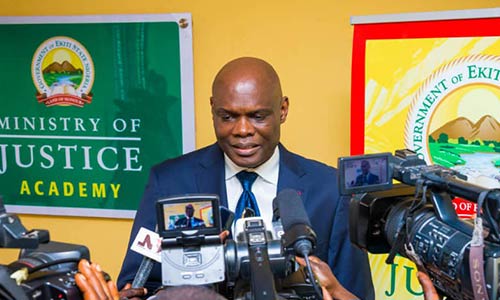
The Ekiti State Attorney-General and Commissioner for Justice, Olawale Fapohunda has instituted a civil suit against the Inspector General of Police seeking an order of court declaring Section 127 of the Police Act and Regulations which provides for the discharge from the Police Force, women police officers who become pregnant while unmarried unconstitutional.

Joined as co-defendants in the suit are the Ekiti State Commissioner of Police and the Police Service Commission.

Fapohunda in the suit ( FHC/ AD/ CS/ 8/ 2021) filed in the Federal High Court, Ado Ekiti is asking the court to determine among others, whether the provisions of Section 127 of Police Act and Regulations are not in violation of the combined provisions of Sections 37 and 42 of the Constitution of the Federal Republic of Nigeria 1999 (as amended), and Articles 2,3, 5 18(3) and 19 of the African Charter on Human and Peoples Rights and therefore unconstitutional, null and void.

The suit also seeks an order nullifying Section 127 of Police Act and Regulations as well as an order of perpetual injunction restraining the Inspector General of Police, the Ekiti State Commissioner of Police and the Police Service Commission from implementing the regulation.

It will be recalled that recently, the Nigeria Police purportedly acting under Section 127 of the Police Act and Regulations dismissed an unmarried policewoman, an indigene of Ekiti State from the services of the Nigeria Police Force on the ground of getting pregnant before marriage.

Section 127 of the Police Act and Regulations provides that “an unmarried woman police officer who becomes pregnant shall be discharged from the Force, and shall not be re-enlisted except with the approval of the Inspector-General”. (Thenigerialawyer)

Why We Rejected Reopening Of Lekki Toll Gate — #EndSARS Protesters

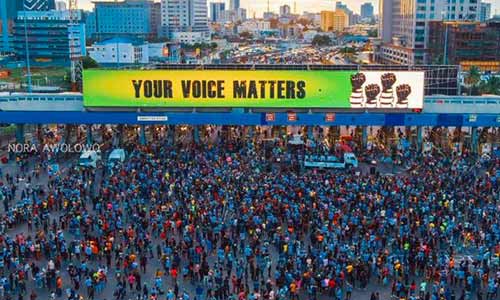
A member of the Lagos State Judicial Panel of Enquiry and Restitution for Victims of SARS related abuses and other matters, Bolatito Oduala has spoken out on why representatives of #EndSARS protesters opposed the reopening of the Lekki Toll Gate.

TheNigeriaLawyer had reported that Judge emeritus Doris Okuwobi, alongside four of the nine members of the panel, upheld the LCC’s application to repossess the plaza after taking arguments from counsel.

Oduala and Temitope Majekodunmi, who are representatives of #EndSARS protesters at the panel, objected to the reopening as a result of LCC’s inability to provide access to their CCTV servers for the forensic expert employed by the panel to authenticate the footage they submitted.

In a series of tweets, Oduala said: “Let it be known that today, I and @TemiOanu, dissented to the reopening of the Lekki Toll Gate on the Lagos Panel.

“This, as a result of LCC inability to provide access to their CCTV servers for the forensic expert employed by the panel to authenticate the footage they submitted

“Also, we are of the view that the investigations into the Lekki Toll Gate incidence have barely begun, and so the Lekki Toll Gate should remain shut until full investigations are concluded by the Panel.

“Also the ruling that Lekki Toll Gate should be reopened cannot hold, as a quorum wasn’t formed today with the youth representatives absent. It is also pertinent to note that 5 of 9 can’t form a proper quorum.

“It should also be noted that the ruling did not include our dissenting opinions as members of the panel. This stand is also taken by Ebun Adegboruwa SAN and Ms. Patience Udoh, members of the Civil society group.” (thenigerialawyer)

Don’t Raise Retirement Age Of Supreme Court Justices To 75 — Justice Ayo Salami Tells Senate Against

— Says Judges aren’t healthy enough to work the extra years
— Living condition in Nigeria does not encourage working extra years

A former President of the Court of Appeal, Justice Isa Ayo Salami, on Saturday advised the Senate against increasing the retirement age of justices of the Supreme Court and the Court of Appeal from 70 years to 75 years.

He said some of the judges are not healthy and they regularly travel abroad for treatment.

He also claimed that some of them forget easily in addition to memory challenges.

Some of the judges, he told The Nation, do not know their actual age and have been using declaration of age affidavit.

He said the nation can fill the vacancies from a pool of qualified, experienced and healthier professionals.

Salami shared his views on the proposed amendment to the 1999 Constitution to increase the age of judges at the apex court from 70 years to 75 years.

He said: “It’s understood that it’s being contemplated to raise the tenure of the Supreme Court justices and possibly those of the Court of Appeal to 75 years within the next couple of weeks. To be precise, before the end of March.

“The profession is ominously silent over it.

“I could remember that the same issue was brought up by the Senate during my screening for the President of the Court of Appeal which was persuaded by my reasoning.

“I contended that very few of us had birth certificates. Invariably we rely on declaration of age, which is generally inflated because they are inferred from incidences or occurrences the happening of which we were not sure of.”

He said it is dangerous and unproductive for the nation to increase the age of judges it is unsure of.

He said: “So to be increasing age which is predicated on unsure parameters could be dangerous merely because their counterparts elsewhere retire at about that age without taking into account the faulty starting point.

“The living conditions in those countries as well as their health facilities are in no manner comparable with ours.”

Salami said some of the judges in the apex court are no longer strong as they used to be.

He added: “Many of them are not healthy. They regularly travel abroad for treatment, and some of them forget easily in addition to memory challenges.

“In the circumstances, some of the justices would only be there as passengers to fulfill statutory conditions without ability to make meaningful contribution. This is a condition that could easily be exploited by dishonest members of the court.

“It’s my humble opinion that the present retirement age is adequate for any sincere hardworking member of the court. It’s not only consuming but also tasking emotionally, physically and mentally.”

He said “there is a pool of qualified, experienced and healthier professionals from which vacancies created by their respective retirements can be filled.”

Salami said what should be paramount to the nation now is the output of the judges at old age.

He said: “We should have in mind their output at old age. The interest of the nation and not preference of the justices should be paramount on the minds of the senators.

“The employer and not the labourer determines the duration of the contract. It’s the people who make a constitution for themselves and not an institution thereof.

He cautioned against any act of lawlessness which would make it look as if the Judiciary is out to fashion a constitution and impose a constitution amendment on the rest of Nigerians.

“It’s in this act of lawlessness that an individual forced National Industrial Court on the rest of us. I think it’s only Executive Bill that could bring about constitutional amendment(s),” he said. (Thenigerialawyer)

Intriguing Facts/Question’s About Receivership

By Emmanuel Agherario

Have you ever questioned the meaning of a ‘receivership’ the implications and duties of the receiver/manager? Do you know if the owner’s rights are preserved or not?

Over the years many companies have entered into receivership and as such the phrase is not new. In 2017one of the Air giants in Nigeria Aviation Industry Ark Air entered into receivership due to its inability to pay workers and creditors.[1]This led to the Nigerian government taking control of the company via the state-owned ‘bad bank’ Asset Management Corporation of Nigeria, known as AMCON.[2] This precarious situation led many then and even now those whose properties and companies have entered into receivership to the question, who is a receiver and what are the limits to a receiver’s power. Below are answers to the intriguing facts/questions about receiver/manager and receivership.

Who is a “receiver” and under what circumstances are they appointed.

The concept of receivership is very important in corporate practice. Though not defined in the Companies and Allied Matters Act or AMCON Act[3], it however states in section 650 of CAMA state that “receiver includes manager.” While the Blacks Law Dictionary[4] defines the term receiver to mean person appointed by court for the purpose of preserving properties of a debtor pending an action against him, or applying the property in satisfaction of a creditor’s claim whenever there is danger that in the absence of such appointment, the property will be lost, removed or injured. Simply put a Receiver is a person appointed as custodian of a property, finances, general assets, or business operations.[5]

Receivers may be appointed in two ways; that is by the debenture holders where the debenture provides so[6]or by the court on the application of an interested person.[7] When a receiver is appointed, a company is said to be “in receivership.”

Duties of a Receiver

  1. To realize the debt on behalf of the person who appoints him.[8]
  2. To manage the company over which he has been appointed, in the interest of the

company, and for the benefit of all interests concerned.[9]

  1. Duty of care and skill.[10]
  2. Duty to institute and defend actions.[11]
  3. Take possession of the security
  4. Receive income, Pay outgoing service, taxes and rates
  5. He must act in good faith
  6. Must act within his scope of authority
  7. Avoid collusion
  8. Duty to give account. Etc

Given the duties and powers assigned to a receiver, some intriguing questions as stated below may arise. They are:

Whether a receiver can be held to be liable for trespass where he deals with the assets of a company not in receivership

A receiver is merely accountable for assets of the bankrupt debenture holder. As such where he deals with the assets of the company not in receivership he would be liable in trespass. This was illustrated in the case of Re Goldburg[12], it was held that where a receiver is appointed by a debenture holders he and the debenture holders are liable as trespassers if he deals with the assets which are not property of the company because it was through the act of the debenture holder that he came in possession of the assets of the company.

Whether the directors of a company in receivership have the right to deal with the assets of the company during Receivership?

The directors of a company are not by virtue of receivership rendered functus officio for all purposes. A company by mere fact of receivership does not loose its identity or its title to her goods in receivership. The right of the directors of the company in receivership to deal with its assets not in receivership and other matters not suspended are not affected by the appointment of a receiver over the assets in receivership. This was the position in Robinson Printing Co Ltd vs Chic Ltd,[13] where the court held that the directors of a company are at liberty to deal with the assets of the company not in receivership.

Whether a company will have the locus standi to sue where it has entered receivership?

No Company has any locus standi to sue where it has entered receivership. It is the Receiver/Manager, who, by operation of law, should sue on behalf of the Company. Indeed the powers of the Directors of the Company become paralyzed because of the appointment of the Receiver /Manager. The Assets of the Company remain with the Receiver/Manager and he alone has the right to deal with these assets as long as he remains the Receiver Manager.

Whether a Receiver/Manager can maintain an action in his own name

In general a Receiver/Manager cannot maintain an action in his own name to recover goods or money to the possession of which he is entitled by virtue of his appointment as a Receiver.[14]

A receiver can only sue in the name of the company under the receivership to recover the property charged.

Whether a judgment creditor can levy execution against the properties of the judgment debtor already in receivership?

A judgment creditor cannot levy execution against the properties of the judgment debtor already under receivership.[15]This is so because a debenture holder already exercises her right over such assets/properties.

Difference Between Receivership and Liquidation?

Receivership simply is a debt restructuring process, a process wherein a neutral third-party (professional) is appointed to manage the company’s assets in other to repay creditors or debenture holders and for the company to resume profitable operations.[16]

Liquidation on the other hand is the process of selling the assets.  That is a process in which a liquidator collects and sells the company’s assets and then distributes the proceeds among the creditors to pay off debts owed.[17]

Difference Between Receiver and a Receiver/Manager?

The only real difference between a receiver and a receiver/manager lies in the extent of their power. Under general law it is when the appointee, whether court-appointed or appointed under an instrument, is given a power to manage the business of the company that the appointee is called a “receiver and manager”. A receiver and manager, who is a receiver with extended power, is to be distinguished from a person called a “manager” who may be appointed by a secured party/debenture holder to act for the secured party when the secured party itself takes possession of the secured property, either because it has the legal title or the security agreement gives power to take possession.[18]

Usually, a receiver is appointed where the loan agreement is secured by a fixed charge; while a receiver/manager is appointed when the loan agreement is secured by charges including a floating charge over a part or the whole of the company’s assets.

Conclusion

The work has successfully examined receivership, duties, implications, and took a look at several intriguing questions as it relate to receivership.

By Emmanuel Agherario Esq, Email: [email protected]Phone No. 08065757650  

[1]Uwadiae A. 2017 Arik: Fixing the wings of a giant bird. Feb 23, 2017 Business day Newsretrievedon August 18, 2017 from https://businessday.ng/opinion/article/arik-fixing-wings-giant-bird/

[2]Summerfield R. 2017 Arik Air enters receivership April 207 Financier Worldwide Magazine retrieved from https://www.financierworldwide.com/arik-air-enters-receivership#.XzudqUDgums

[3] See Section 48 of the AMCON Act, 2010 as amended by Section 6 of the AMCON (Amendment) Act, 2015 empowers AMCON to either act as a receiver or appoint a receiver for a debtor company whose assets have been charged, mortgage or pledge as security for an eligible bank asset acquired by the Corporation.

[4]Bryan A.,G., Blacks Law Dictionary 9th Edition (USA:West Publishing Co.(2009) P.1383

[5]UWAKWE v. ODOGWU(1989) 5 NWLRPT.123 AT 562 AT 579

[6]See section 209 (1) (b) Companies and Allied Matters Act 2020 (CAMA)

[7] See section 389 (1) Companies and Allied Matters Act 2020 (CAMA)

[8] See Section 393 Companies and Allied Matters Act 2020 (CAMA)

[9]See Section 390 Companies and Allied Matters Act 2020 (CAMA)

[10] See Section 390(2)Companies and Allied Matters Act 2020 (CAMA)

[11]See Section 393(3) refers to Schedule 11 to CAMA as indicative of the powers and duties conferred on a receiver. Paragraph 5 of that Schedule provides that the receiver/manager has the power to bring or defend any legal proceedings in the name and on behalf of the company.

[12](No.2) Ex parte Page (1912) 1 K.B606

[13](1905) 2 Ch. D 123

[14] See In Re Satori’s Estate, (1892) 1 Ch. 11 at p.14 and D. Owen & Co. v. Cronk; (1895) Q.B. 265

[15]See: Krans v. Bright Oridami, reported in Digest of Supreme Court cases 1956 – 84 Vol.9 pages 474; Lancaster Motor Co. (London) Ltd.v. Bremith Ltd. (1941) 1KB 675, Spence v. Coleman (1901) 2 KB 199.

[16] https://www.firstreport.co.uk/Difference-Between-Liquidation-and-Receivership.aspx

[17]https://www.dottoreco.com/blog/what-is-the-difference-between-receivership-liquidation-19813

[18] https://www.navado.com.au/sydney/lawyers-solicitors/bankruptcy-and-insolvency-law/a-receiver-or-manager.htmll

Thenigerialawyer

#lekki Shooting: Segun Awosanya Joins Four Others To Reopen Toll Gate In Controversial 5-4 Judgement

— Lekki Toll Plazas Hand Over Was Based on Sound Evidential Grounds, Not Emotions.

Social media activist, Segun Awosanya, popularly known as Segalink, has explained why he threw his weight behind the reopening of Lekki tollgate plaza.

Four out of the nine members of the Lagos State Judicial Panel of Inquiry probing alleged killing of #EndSARS protesters by soldiers at the Lekki tollgate have faulted the report of the forensic experts hired to comb the scene for evidence.

The four members, mainly representatives of #ENDSARS protesters, also rejected application by the Lekki Concession Company, operator of the Lekki tollgate, to take possession of the facility, which had been shut down since the probe of the shootings started.

They were two representatives of the civil society – Mr Ebun-Olu Adegboruwa (SAN) and Ms. Patience Udoh as well as the two youth representatives on the panel – Rinu Oduala and Temitope Majekodunmi.

But the chairman of the panel, retired Justice Doris Okuwobi, and four other members of the panel acceded to LCC’s request to repossess the tollgate.

The chairman was backed by Segun Awosanya (popularly known as Segalink); Oluwatoyin Odusanya (Director, Citizens Rights)’; DIG Taiwo Lakanu (retd.) (representing the police) and Lucas Koyejo (from the National Human Rights Commission).

This, however, resulted in some youths accusing Segalink of sabotaging their efforts to end police brutality in the country.

In a series of tweets, the social media activist explained that it would be unjust to keep the tollgate shut because the incident happened there.

He tweeted: “I’m not the enemy, by the time you figure that out it may be too late already. Society may have frustrated any rationality in doing good or taking responsibility for the sake of the collective. We’re our own problems & we’ve refused to take responsibility but point fingers.

“It is futile making logical sense when emotions are running wild. Where in the world do you deploy sentiments and injustice to obtain justice? Is the panel an opinion panel or a judicial panel? Have you taken out time to read the ruling? Did this nullify the cases? Is this the end?

“How many scientists do you find staying perpetually by the microscope without leaving to work on his findings? Recall that people work in the establishment too? We all use that road. Imagine locking the whole road under claims of an ongoing investigation without the need to visit.

“There are always other routes to ensure justice without becoming the demons we fight. We need not make life harder for others just to prove a point. Everyone is entitled to fairness, equity and presumption of innocence until proven guilty. An investigation is done, cases are ongoing.

“Imagine shutting down police and Army in the name of an ongoing investigation. This to me is not in the spirit of justice. Read the ruling and if it errs on the ground of Law, Justice, and Equity then we can look into that. Thus, far there’s no such claim

“Who will you call when armed robbers strike after shutting down those instituted to curb this due to claims of investigation, especially when it can work concurrently with their operation? Think deeply about those misleading you to think you have been betrayed. You’re being used.

“Think for a bit if we agreed with the obviously biased group seeking to use the panel to settle an old score with LCC, you don’t think LCC will appeal such decision and still take back their property having established that we no longer have anything to do there?

“Where does that leave the cases of an alleged victim before the panel? Do you ever think any institution of state will ever appear or honor the summons of a tainted panel? Think while it is still legal. Justice must be fair to all. I have no personal interest in this.” (thenigerialawyer)

Endless Turnaround Maintenance: Outrage, Anger Over NNPC’s $1bn Loan For Refineries

The Federal Government may soon be on a collision course with Nigerians over its plan to seek a US$1 billion loan for the rehabilitation of the 210,000 barrels per day (bpd) Port Harcourt Refinery.

Nigeria has four refineries located in Port Harcourt, Warri and Kaduna with a combined name plate capacity of 445,000 barrels per day. Regrettably, over the years the refineries have consistently failed to meet the local consumption demand of Nigeria.

In 2019, the refineries lost N167 billion ($439.47 million), and only Warri processed any oil. In April 2020, they were all shut down pending rehabilitation.

Nigeria has struggled with the poorly maintained units for decades. Successive chief executives of the Nigeria National Petroleum Corporation (NNPC) and politicians had announced series of unsuccessful plans to revamp, privatise or expand the refineries.

NNPC abandoned a similar attempt in 2019 to partner with oil traders, producers and engineering firms to fund refinery revamps after more than a year of talks, saying it would fund the projects itself.

The barely functional plants leave Nigeria completely dependent on imports, and subsidy schemes also cost the country billions of dollars. Nigeria says it eliminated subsidies, but the state’s NNPC is effectively the sole gasoline importer, using some 300,000 barrels per day of oil to swap for fuel.

In December 2020, NNPC opened a bid round for a contract to rehabilitate the Port Harcourt complex. NNPC GMD, Mele Kyari, had said last year that private companies would run the refineries once they were rehabilitated.

In July 2020, global energy trader, Vitol and Nigerian firm, Matrix, backed by banks agreed to lend NNPC $1.5 billion to support its upstream arm, NPDC, although the discussions that led to the deal predated COVID-19.

Currently, all the refineries are out of production, leaving Nigeria to import 100 per cent of its petroleum product needs.

Indeed, more worrisome to observers is the endless turn around maintenance (TAM) of the refineries that has gulped trillions of Naira in years past without yielding the expected results.

But in a bid to ensure that the refineries come back on stream, the Nigerian National Petroleum Corporation (NNPC), the owners and managers of the refineries had two weeks ago unveiled plans to seek loan for the Port Harcourt refinery rehabilitation.

Sources close to the deal had reportedly disclosed that the NNPC was in high level discussion to raise about $1 billion in a prepayment with trading firms to refurbish its largest refining complex in Port Harcourt, Rivers State.

If the financing is concluded, the long overdue rehabilitation of the refinery is expected to reduce Nigeria’s heavy fuel import bill.

The move according to the report would also mark Nigeria’s second oil-backed financing since the COVID-19 pandemic that has added to the difficulty in finding investors as fuel demand is sapped by lockdowns with renewable energy gaining ground over fossil fuel.

The money according to sources close to the deal would be repaid over seven years through deliveries of Nigerian crude and products from the refinery once the refurbishment is complete. Cairo-based Afreximbank is reported to be leading the financing deal.

Though NNPC declined to comment, sources close to the deal said discussions were taking place with a range of foreign and Nigerian trading houses, including some who have previously worked with Nigeria, and who asked not to be named.

Apart from the problems of the pandemic and increased investor preference for carbon-free energy, defaults and fraud in commodity trading, mainly in Asia, have reduced the appetite of foreign banks for exposure to commodity trade finance.

A source at one foreign bank, who pleaded not to be named, said it was unlikely to participate in Nigeria’s latest effort because of lower credit availability and increased reluctance to take out exposure in a high risk country.

Commenting on the development, Executive Director, Socio-Economic Rights and Accountability Project (SERAP), Adetokunbo Mumuni, in a telephone interview with Sunday Sun said the idea of borrowing to fix the refinery should not be the way to go, saying that the government has failed to account for what it had so far spent on the refineries without getting the expected result.

The SERAP Executive Director warned the Federal Government against reckless spending and borrowings which have failed to impact the quality of lives of Nigerians.

‘‘Government cannot just embark on a borrowing spree without carrying Nigerians along. Nigerians deserve to know how their monies are spent, especially what it spent on past TAMs and the results achieved.’’
Mumuni said he doubts the capacity of NNPC to manage the refineries, saying similar efforts by the corporation had failed the country.

He advised that the NNPC should engage those that are vast in refinery management, stressing that the move to borrow $1 billion would go the way spending on previous TAMs went.

Also speaking, an oil and gas expert who is vast in transaction matters in the sector, Mr. Dele Anifowoshe, in an email response to Sunday Sun inquiry, said the first point is to enquire what happened to the initial loans that were obtained. ‘‘Were these loans actually obtained? Were they actually used for the purpose they were obtained and who were the companies that undertook the TAM? What exactly did they do? Was there any independent third party supervision or certification that the TAM was done? If so, who verified and what were the findings? If satisfactory answers are not provided to the foregoing questions, then there is a strong likelihood that the current arrangement too will not lead to any appreciable progress. Nothing will change, effectively,” he said.

Details from the first-ever audited accounts and financial statements of the companies published by NNPC last year, indicate that three of Nigeria’s four refineries gulped N1.64 trillion in cumulative losses recorded in their operations since 2014,

Two of these refineries are the 210,000 barrels per day capacity Port Harcourt Refining and Petrochemical Company Limited and 110,000 barrels per day Kaduna Refining and Petrochemical Company Limited.

The audit reports showed that combined losses from the two refineries were N208.6 billion in 2014; N252.8 billion in 2015; N290.6 billion in 2016; N412 billion in 2017, and N475 billion in 2018.

The five-year audited account details for 125,000 barrels per day Warri Refining and Petrochemical Company Limited were, however, removed from the published details by the NNPC.

A review of the published details showed cumulative losses from the operations of the four refineries in 2017 and 2018 stood at about N412.8 billion.

Critics say the humongous losses, which epitomise the level of rot and decay in the four refineries, counters the logic in the federal government’s avowed commitment to sink more public funds in their rehabilitation before selling them to private investors.

Both the Minister of State for Petroleum Resources, Timipreye Sylva, and the Group Managing Director of the NNPC, Mele Kyari, have spoken variously about the government’s plan to rehabilitate the four refineries before considering privatisation.

A further review showed the bulk of the losses were from the operating costs and administrative expenses accumulated by the companies despite the fact that some have since been shut down or operating at grossly below installed capacities.

Findings showed all the refineries spent huge earnings on administrative expenses, which included head office overhead funding, public relations and publicity, staff training expenses, local/international travels and hotels, employee benefits, director’s remuneration, and consultancy fees.

The worst details are in the financial statement by Haruna Yahaya & Co. and Oye Abioye Quaye & Co., the chartered accountants that conducted the audit on the Kaduna Refining and Petrochemical Company Limited.

The report showed that the refinery did not realise any revenue in 2018 through processing fee due to the shutdown of the plants and ongoing turnaround maintenance.

But, the total comprehensive loss for 2018 was about N64.3 billion, as against N111.9 billion in the previous year, total equity loss put at about N423.4 billion, up from N359.2 billion in 2017.

The expenses that contributed to the losses included auditor’s remuneration N50 million in 2018 and N30 million in 2017; employee benefits N13.9 billion, down from N27.3 billion in 2017; refinery assets N11.4 billion and

N73.4 billion in 2017; staff bus N90.7 million and N85.1 million in 2017.

Similarly, operating losses for 2018 dropped by 42 per cent from N112 billion in 2017 to N64.6 billion in 2018, while administrative expenses grew from N21.7 billion in 2017 to N39.995 billion in 2018.

Details of the administrative expenses include NNPC head office overhead (N14.1 billion) in 2018, and N1.3 billion in 2017; Public Relations and publicity N45.1 million in 2018 and N58.5 million in 2017; maintenance N102. 8 million and N567.7 million in 2017.

But observers are hopeful that when operational, the 650,000 Dangote refinery will put an end to the poor refining capacity of the country.

This claim was however faulted by the Nigerian Labour Congress (NLC), saying government’s energy policy was defective.

Secretary-General of NLC, Dr. Peter Ozo-Eson, had far back as 2017, warned the Federal Government against allowing the Dangote Group to monopolise the oil refining sector.

According to Ozo-Eson, the Dangote Group currently monopolises the cement sector. He said that such must not be allowed to happen in the oil refinery sector.

He said the Federal Government failed to pursue a comprehensive policy that could improve local crude oil refining capacity.

It stated that the government was pursuing a wrong policy in the energy sector.

The congress, which said it had warned the Federal Government earlier about its policy, stated that the government failed to listen because it was only interested in increasing the fuel pump price without putting in place the necessary measures that would keep the price stable.

Ozo-Eson stated that the Federal Government did not think its energy policy through, noting that the country would continue to have energy crisis anytime there was a rise in the international prices of crude oil and fluctuations in the exchange rate.

He said, “The government did not think its policies through. We pointed out this danger. If you say you have removed subsidy and you now allow the market to determine the price, when the underlying parameters change, whether it is the international prices of crude oil or the exchange rate of the naira, when you run all these through the template, you are going to face a situation like this.

“What they did was only half-policy, they did not a have a comprehensive policy. If you have a comprehensive policy and you want to maintain a price at a level and you don’t want to pay subsidy, what you should have is price modulation scheme that would build up the funds initially or create funds which would provide a support window to allow you to mediate in the parameters.”

He warned the government against allowing the country to depend on Dangote Refinery, stressing that the firm would exploit Nigerians.

Ozo-Eson explained that every member of the Organisation of Petroleum Exporting Countries has refineries.

He noted that the government would be failing in its responsibility if it allowed Aliko Dangote to have monopoly in the downstream sector.

He said, “A monopoly in the oil refinery sector will kill Nigerians; a recent survey showed that prices of cement in Nigeria are the most expensive anywhere in the world.”

He also said the NLC did not see any sense in increasing fuel price after what Nigerians had gone through.

But two civil societies organisations – SERAP and the Centre for Anti-Corruption and Open Leadership – had, however, criticised the NLC for its warning about impending monopoly in the oil refinery sector.

They said that more Nigerians, who have the wherewithal, could approach the government and acquire the licence.

Mumuni said, “I don’t think the NLC is serious. About 18 licences were issued to people to construct refineries more than two years ago and those who were given the licences failed to commence any work. So, it is not a question of Dangote monopolising the sector, it is a question of who has the wherewithal and commitment to commence work.

“Let the NLC suggest other people that have shown their wherewithal to also construct refineries. The Goodluck Jonathan-led administration issued licences to 18 companies but no one has yet to build. Let the NLC do its work properly and stop giving Nigerians the wrong information. This is the way I see it.”

Also, the CACOL Director, Debo Adeniran, said, “The way the NLC is going about this issue is reactionary. Being labour bureaucrats, they were there when the licences to build refineries were being auctioned and how much agitation did they put forward? Did the labour confront the Federal Government? Will the NLC be fair to now stop those investors, who have paid so much money to purchase the licences, from operating? It is unfortunate that it is this time that the labour is asking the government to stop the operation.”

On his part, an industrialist and President, Azikel Group of Companies, Dr. Azibapu Eruani, said recurring fuel scarcity and acute unemployment would be reduced to the barest minimum when privately-owned refineries commence operations.

The industrialist, who decried the yearly scarcity of petroleum products across the country, particularly during festivities, said the phenomenon had become embarrassing as it had crippled virtually all economic activities in the country.

Eruani noted that the scarcity of the products persisted because of the low production capacity of existing refineries and the country’s penchant for totally depending on fuel imports for local consumption.

He, however, lauded the Buhari-led Federal Government for taking pragmatic steps to address low supply, importation of fuel and price hike by issuing licences to private refineries.

He noted that Azikel Petroleum had achieved 65 per cent completion, stressing that it would soon begin operation.

He expressed confidence that when all licensed privately-owned refineries began to dispense fuel, the development would shore up production capacity and fuel scarcity and inadequate supplies would be a thing of the past.

Culled from Sun

Enforcement of COVID-19 protocols, Ojukwu advocates respect for human rights

The Executive Secretary National Human Rights Commission (NHRC) Tony Ojukwu, Esq., has called for

respect for human rights of everyone living in Nigeria while enforcing the COVID-19 protocols.

Ojukwu made this call while receiving in audience a delegation from the Taipei Trade Office in Nigeria, led by the representative of the Trade office to Nigeria, Andy Yih-Ping Liu.

The Executive Secretary who expressed gratitude at the visit by the delegation said “we must begin to learn to live and work with COVID for now, as such basic human rights should be respected while ensuring that the COVID-19 protocols are respected and duly followed”.

Ojukwu took the opportunity of the visit to appreciate the government of Taiwan for donating face masks to the Commission at the peak of the pandemic in 2020.

He described the gesture as one that was critical to the work of the Commission, noting that wearing the masks enhanced staff members’ strict compliance with the use of non-pharmaceutical preventive measures against the pandemic which is ravaging the world.

Speaking further, Ojukwu said shared experience with other countries in the field of human rights would not only strengthen the work of the Commission, but would also emphasise shared humanity, adding that the fight for the entrenchment of human rights and fundamental freedoms was a common goal of every one regardless of colour or creed.

Earlier, the leader of the delegation, Andy Yih-Ping Liu, who was accompanied by his wife, spoke on the long-term relationship that exists between Nigeria and Taiwan.

While stressing the need to sustain the mutual bilateral relations Yih-Ping Liu expressed the readiness of his country to assist Nigeria in advancing the course of human rights through exchange programmes and other areas of interest. (Theconclaveng)

Gumi’s verdict: Agitators for Biafra, Oduduwa Republics are not different from Boko Haram terrorists

A renowned Islamic scholar, Sheikh Ahmad Gumi, has said those agitating for Biafra and Oduduwa Republics are not different from the Boko Haram sect terrorists.

Gumi stated this in an interview with BBC Pidgin on Saturday while reflecting on the insecurity situation in the country.

The cleric said it would be unfair to claim Nigerians wanted the country divided because of the activities of some “miscreants” who were only pushing their own different ideologies and interests.

The cleric claimed that a majority of Nigerians wanted a united nation where peace and equity reigned.

He said: “I usually give an example of General Murtala Mohammed, the former head of state from Kano that was assassinated by the Buka Suka Dimka-led group.

“He married a Yoruba wife. So, where do you want his children to go if the nation is divided?

“Are they going to be with the Yorubas or Hausas in the North?

“Look, let’s forget these useless youths. They’re no more different from these herdsmen.

“These people agitating for Ododuwa, Biafra or Arewa are all the same group of people with Boko Haram.

“Majority of Nigerians want to stay with Nigeria. And if they are in doubt, let’s conduct a referendum.

“Look at elections for instance, millions of votes from all the states, whether from APC or PDP.

“This means that Nigerians are ready to stay with a united Nigeria. That is an indirect referendum which shows that the people are ready.

“So, all these youths that are making noise, whether Abubakar Shekau of Boko Haram, Nnamdi Kanu of IPOB and their Ododuwa counterpart, they are just a tiny minority of Nigerians using ethnic, archaic and retrogressive sentiments to destabilise the nation.

“But l can vouch that Nigerians really want to stay together in peace. But in peace and equity. Not any segment of Nigeria is cheated.”

Gumi said the fact that Yoruba and Igbo leaders did not endorse such calls for secession showed they were unpopular opinions championed by a few disgruntled persons.

“I’m in Sokoto now, there still are many Igbo traders here who don’t want to go back home, so why do you tell me they want Biafra?

“Biafra is a nuisance just like Boko Haram. You think every northerner is a Boko Haram [militant]?

“Most Nigerians don’t want these ethnic or religious groups. They simply want peace and [to] live together as nation.

“If truly the Yorubas are agitating for Oduduwa, why are their leaders not talking about it? Why are Igbo leaders also not talking about Biafra?” he queried, in the interview monitored transcribed and published by Daily Trust newspaper.

He said it had become imperative for Yoruba and Igbo leaders to prevent such groups from fanning embers of war in their regions.

Gumi said he had already teamed up with some stakeholders in the North to ensure deadly groups such as Boko Haram and Bandits ravaging the region lay down their arms through dialogue and rehabilitation.

“What we expect is for Yoruba leaders and Igbo leaders to take care of their miscreants as we handle herdsmen and Boko Haram which are miscreants in the North. Every leader should take the words to their people. Only the miscreants are fuelling this,” he stated.

The cleric also called on the federal government to grant amnesty to bandits across the country just like it did for Niger Delta militants.

He said bandits emerged due to government’s failure to provide for their basic needs. (theconclaveng)

TIPS