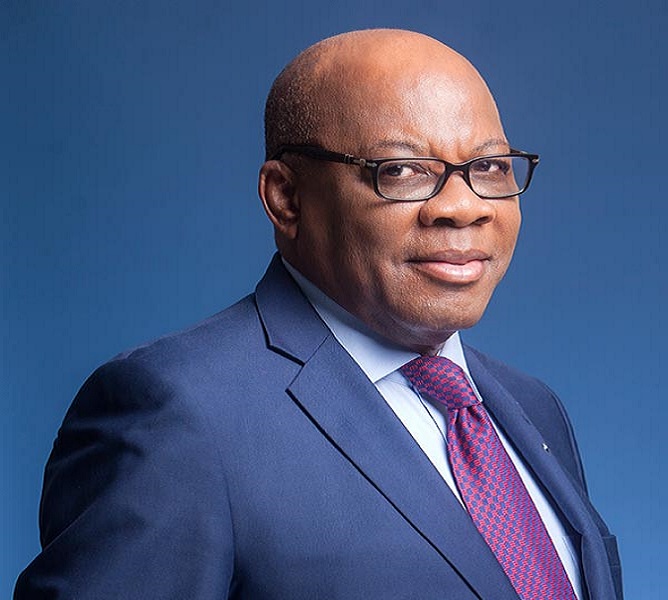
Senior Advocate of Nigeria and former President of the Nigerian Bar Association (NBA) Olisa Agbakoba has kindled a fresh national debate over government waste, missing public revenues and Nigeria’s escalating debt crisis with a provocative policy paper asking a question many frustrated citizens have long whispered in anger: Where is the money?
At a time when millions of Nigerians are grappling with crushing inflation, rising taxes, soaring fuel prices and deteriorating public services, Agbakoba’s intervention strikes at the nerve of growing public frustration over how Africa’s largest economy continues to generate trillions in revenue while basic infrastructure remains broken.
The report, titled “Where Is Our Money? Nigeria’s Federation Account Crisis and the Case for Reform,” paints a damning portrait of systemic leakages, opaque financial management and a political culture critics say is defined by waste and elite opulence even as ordinary Nigerians sink deeper into hardship.
Despite years of loans from the World Bank and other global lenders, alongside aggressive taxation and record oil earnings, roads remain dilapidated, hospitals underfunded, electricity unreliable and public universities chronically unstable.
Yet Nigeria’s political elite continue to attract criticism for extravagant lifestyles, bloated government spending, luxury convoys and costly foreign trips in a country where millions struggle to survive.
Agbakoba’s report argues that the crisis is not merely about insufficient revenue, but about what happens to the money after it enters government hands.
According to the document, ₦14.94 trillion in federation revenue was deducted in 2025 before it ever reached the Federation Account, the constitutional pool where revenues are meant to be shared among the federal, state and local governments.
That figure represents nearly 39 percent of Nigeria’s total federation revenue for the year.
“Out of every ₦1 the federal government earned last year, almost 70 kobo went to paying back loans,” the report stated, warning that Nigeria is increasingly borrowing to fund services that existing revenues should already be able to cover.
The report also revived concerns about transparency at NNPCL, Nigeria’s largest revenue-generating institution.
According to the paper, NNPCL was expected to remit ₦1.1 trillion into the Federation Account in 2024 but reportedly paid only ₦600 billion, leaving a ₦500 billion shortfall.
It also referenced an ongoing Federation Account Allocation Committee investigation into allegations that the oil company under-remitted $42.37 billion between 2011 and 2017.
At current exchange rates, that figure is estimated at roughly ₦12.91 trillion, more than Nigeria’s entire 2024 federal budget.
“These are just the leakages we know about,” the report warned.
The intervention comes as President Bola Ahmed Tinubu continues defending his administration’s borrowing strategy amid growing public concern over Nigeria’s mounting debt burden.
Tinubu recently argued that borrowing itself should not be demonized if the funds are used for productive national development.
“If we have to borrow, we borrow. Borrowing is not leprosy,” the president said while defending infrastructure spending and major projects under his administration.
The presidency has repeatedly maintained that borrowing is necessary to close budget deficits and finance long-term infrastructure projects, arguing that even advanced economies rely on debt financing.
But Agbakoba’s report is likely to intensify incisive probe over whether Nigerians are seeing meaningful returns from the loans, taxes and revenues flowing into government coffers.
Nigeria’s total public debt climbed to ₦159.27 trillion by the end of 2025, according to figures cited from the Debt Management Office.
Recent projections suggest the country could spend nearly $11.6 billion servicing debt in 2026 alone, consuming close to half of projected government revenues.
Critics warn that the combination of rising debt, weak transparency and extravagant public spending is pushing Nigeria toward a dangerous fiscal cliff.
The report further argues that weaknesses in Section 162 of the 1999 Constitution created loopholes that enabled decades of unauthorized deductions, hidden accounts and weak oversight mechanisms around the Federation Account.
Even reforms like the Treasury Single Account introduced under former Finance Minister Ngozi Okonjo-Iweala failed to fully address the deeper structural problems, the paper argued.
For many Nigerians watching their purchasing power collapse while political officeholders continue to display wealth and privilege, Agbakoba’s question is becoming impossible to ignore.
If Nigeria keeps borrowing trillions while internally generated revenues remain shrouded in controversy and leakages, citizens are increasingly asking whether the country has a revenue problem or a leadership and accountability crisis.
The full paper reads:
I want to ask Nigerians one simple question, and I want us to actually answer it together: WHERE DOES OUR MONEY GO?
The money you collectively earn as a country, every kobo of oil revenue, every customs duty, every company tax, every regulatory fee, and every court fine. The money that supposedly funds our roads, schools, hospitals, and police.
Most Nigerians do not know this, so let me start with something that may shock you: Nigeria has a special bank account. It is called the FEDERATION ACCOUNT. The 1999 Constitution created it in Section 162. Every kobo of revenue the federal government collects on behalf of Nigeria is supposed to flow into that one account. Then it is shared among the federal government, the 36 states, and the 774 local governments according to a sharing formula.
That is the law. That is what the Constitution actually says.
In 2025 alone, according to the World Bank’s Nigeria Development Update, ₦14.94 TRILLION of federation revenue was “deducted” before it ever reached the Federation Account. That is 39% — nearly two-fifths — of what Nigeria earned, gone before any state or LGA saw a single kobo.
In 2024, NNPCL — Nigeria’s biggest revenue generator — was supposed to remit ₦1.1 trillion to the Federation Account. It remitted ₦600 billion. Where is the ₦500 billion?
There is currently an active FAAC investigation into allegations that NNPCL under-remitted $42.37 BILLION between 2011 and 2017. At today’s exchange rate, that is roughly ₦12.91 trillion. For perspective, that is more than our entire 2024 federal budget. From one company. Over six years. And remember, these are just the leakages we know about.
MEANWHILE, WE ARE DROWNING IN DEBT
Nigeria’s total public debt at the end of 2025 was ₦159.27 TRILLION (Debt Management Office, February 2026). In 2023, debt service consumed 78% of federal revenue. In 2024, it consumed 69%. The IMF and World Bank recommend countries keep debt service to 30–40% of revenue. We are nearly double that benchmark. Out of every ₦1 the federal government earned last year, almost 70 kobo went to paying back loans. That leaves 30 kobo for everything else: hospitals, schools, roads, police, military, civil service salaries, infrastructure, and security— for 220 million Nigerians.
And what are we borrowing for? In large part, we are borrowing to fund services that our OWN revenues — if they actually reached the Federation Account — should be funding. Let that sink in. We are borrowing money, at interest, to replace money we already earned but never collected properly.
This is why fuel is expensive. This is why school fees doubled. This is why your salary buys less every month. This is why hospitals have no drugs. This is why universities are always on strike. This is not corruption in the abstract. This is a constitutional account that has been broken for 25 years.
Section 162 of the Constitution created the Federation Account in 1999. But the Constitution did not say:
* Who is supposed to keep the account safely?
* How quickly money must be remitted after collection
* Who audits the account?
* What happens if you steal from it?
* Whether the public is allowed to see the records
Twenty-five years of silence on these questions has allowed every kind of administrative trick to take root. Agencies deduct “management fees” before remitting. NNPCL retains “costs” before paying in. Some agencies open unauthorised sub-accounts. Some collect cash and never remit. The 2023 House of Representatives investigation found that ₦8.7 trillion passed through the Treasury Single Account but agencies had proliferated unauthorised parallel accounts the whole time.
The Minister of Finance HERSELF admitted in 2024 that until August of that year, the federal government could not fully see its own balance sheet. Read that line again. In 2024, the people running the country could not see all the money the country had.
I know somebody will ask this in the replies, so let me address it now.
The Treasury Single Account was introduced in 2015 by Dr. Okonjo-Iweala as Finance Minister. It was a well-intentioned reform — consolidate government accounts, reduce leakage. And for a few years, it helped reduce the number of MDA bank accounts.
But here is the problem: the TSA is NOT in the Constitution. It was an executive memo. A circular. It can be undone tomorrow by any President. And worse, it covers Federal Government cash management — it does NOT solve the constitutional problem of revenues belonging to states and LGAs being deducted before they reach the Federation Account. The TSA addressed symptoms. It did not cure the disease. Hence ₦14.94 trillion still vanished in 2025 — a decade after the TSA was introduced.
Dr Olisa Agbakoba (SAN) released a policy paper this month titled “Where Is Our Money? Nigeria’s Federation Account Crisis and the Case for Reform.” I have read it. You should read it too.
The proposed fix is honestly so straightforward that it is almost insulting that we have not done it already.
Source: Dr Olisa Agbakoba Legal Policy Paper, April 2026 — “Where Is Our Money? Nigeria’s Federation Account Crisis and the Case for Reform.