- Seek continental legal reforms as Navy confirms participation in Cape Verde conference
“Our greatest challenge today is no longer piracy. It is illegal fishing and the legal gaps that allow offenders to escape justice.”
By Lillian Okenwa
ABUJA – The African Bar Association (AFBA) and the Nigerian Navy have called for stronger and harmonised maritime laws across Africa to tackle illegal fishing, protect the continent’s marine resources and deepen regional security cooperation.
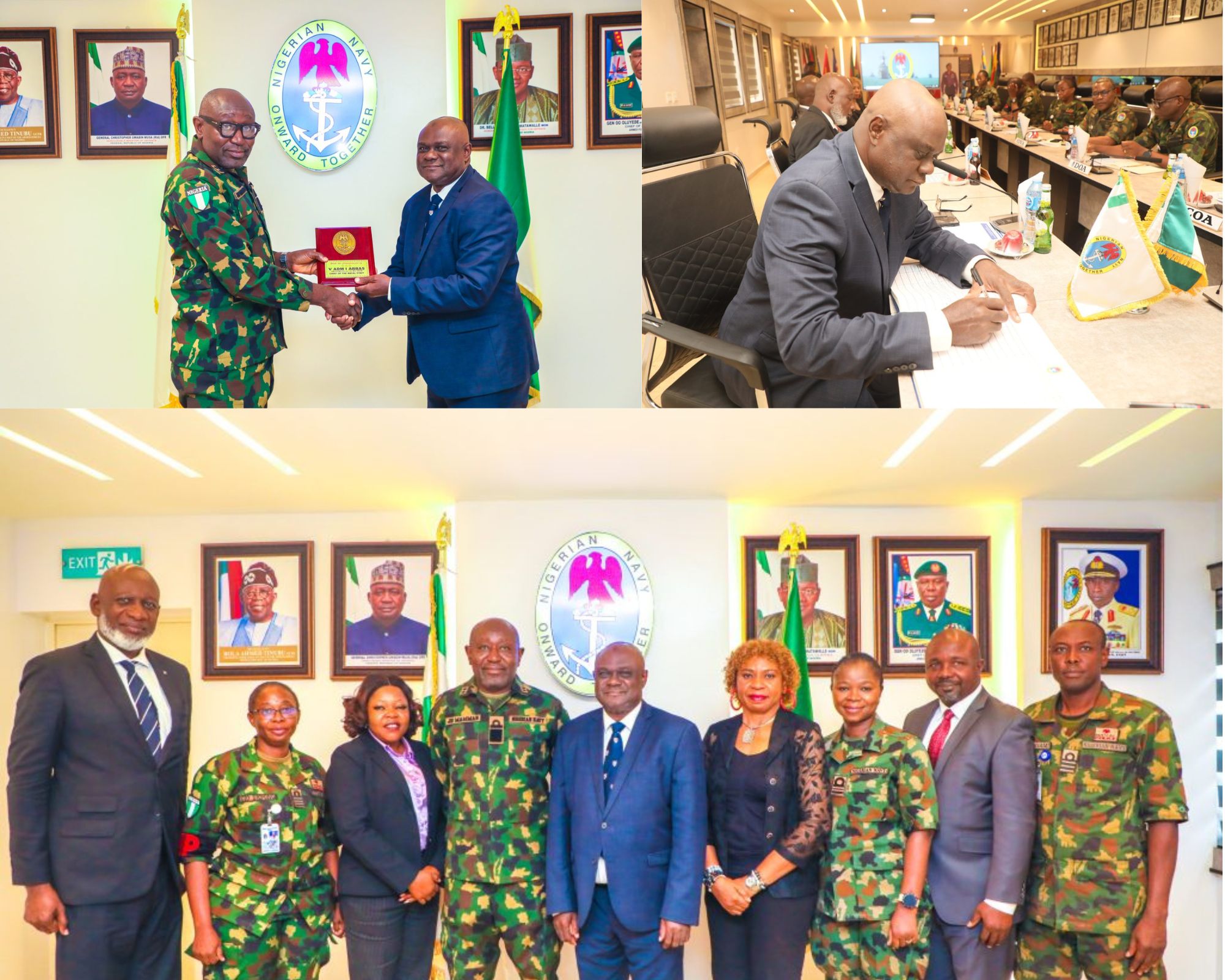
The call came during a courtesy visit by the President of the African Bar Association, High Chief Ibrahim Eddy Mark, to the Chief of the Naval Staff (CNS) at the Naval Headquarters, Abuja, where both institutions agreed that legal reforms must complement military operations in securing Africa’s maritime domain and sustaining economic growth.
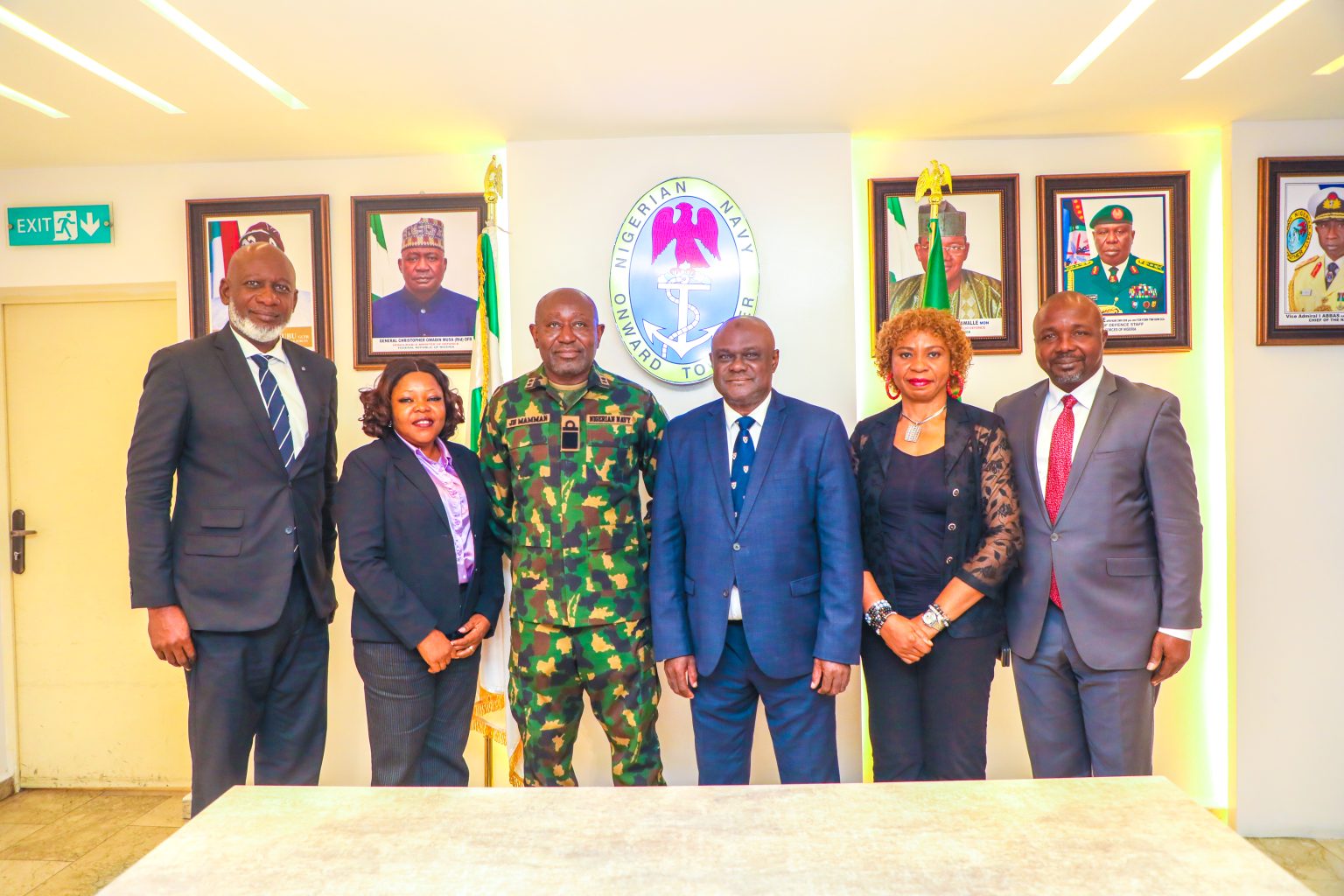
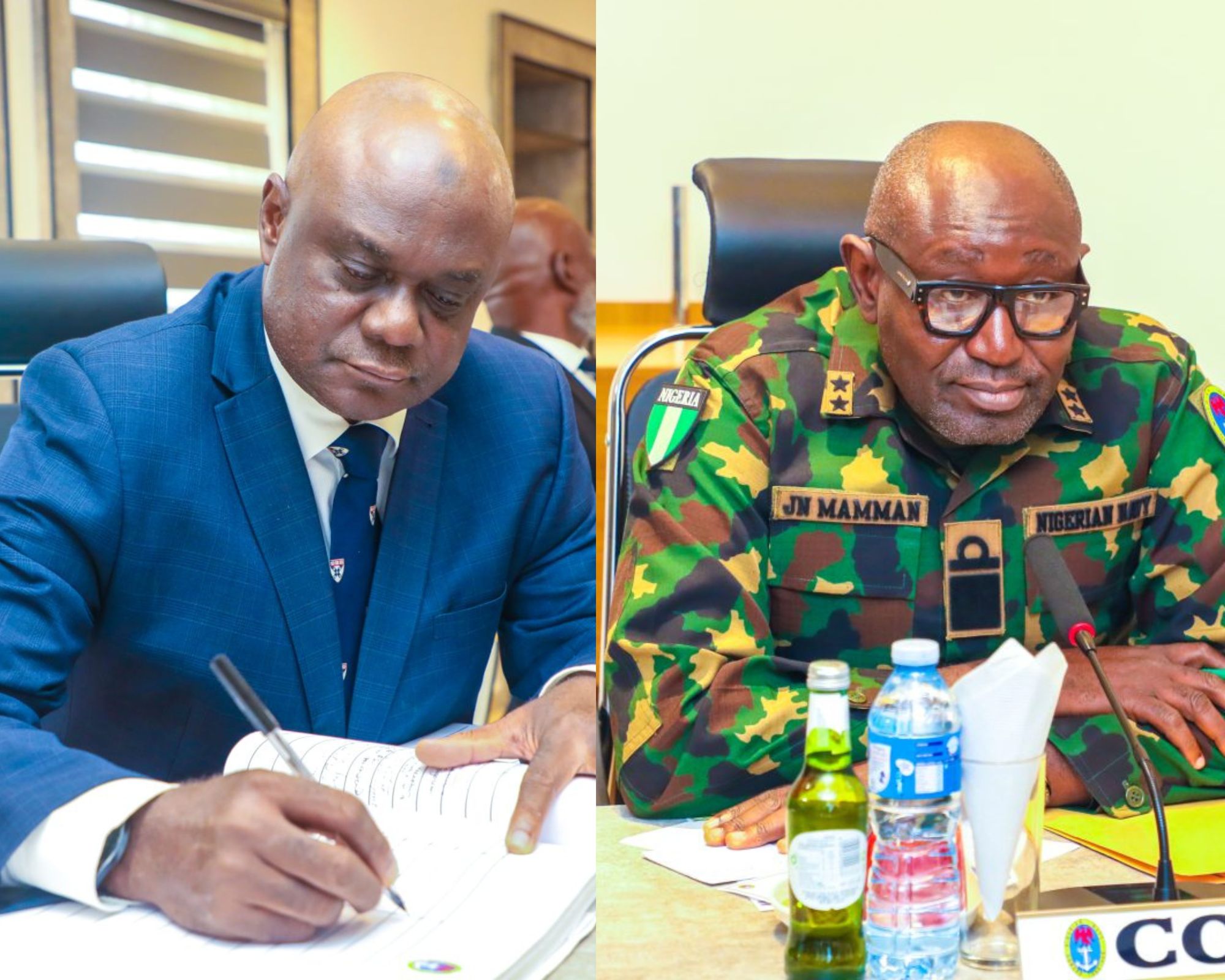
The Chief of the Naval Staff, Vice Admiral Idi Abbas, who was away on official assignment, was represented by Vice Admiral J. N. Mamman, alongside senior naval officers including Rear Admirals A. J. Siyanbade and R. Taofeek, Captains G. I. O. Ukpong and H. B. Yusuf, Commander M. M. Mayami, and Lieutenant Commander D. C. Nwaorji.
Members of the AFBA delegation included Afam Okeke, Steve Emelieze, Teyojesam Eko, and Lillian Okenwa.
Cape Verde conference
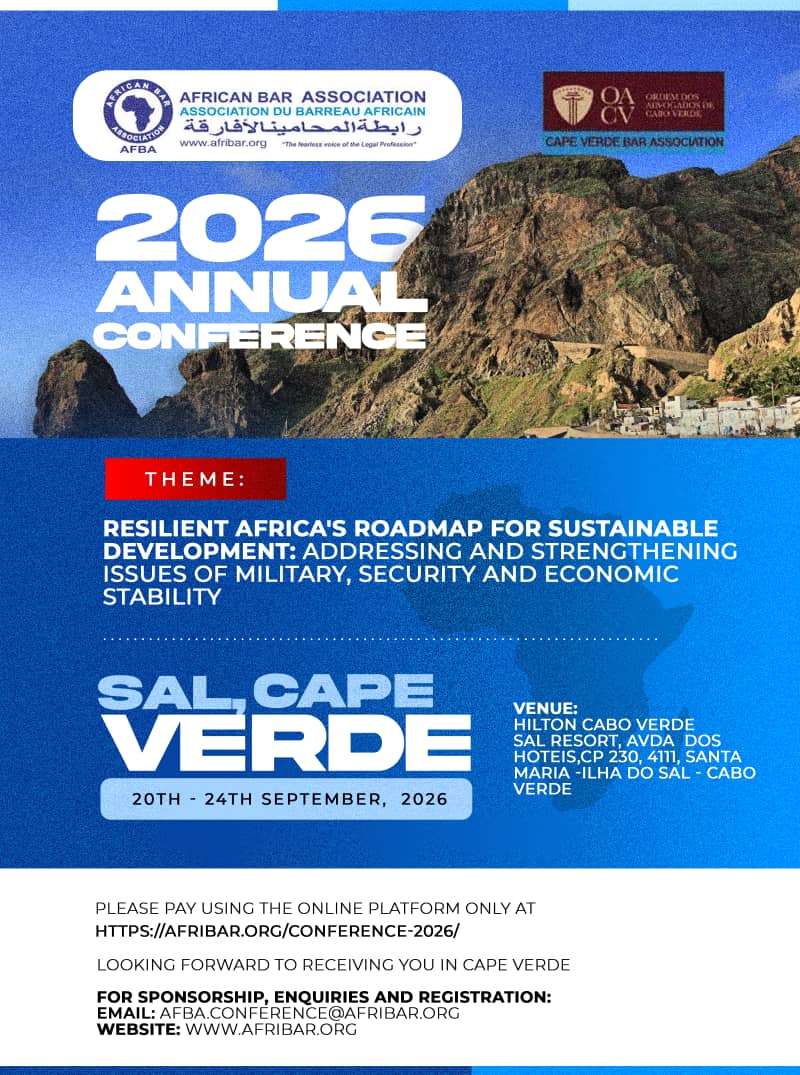
Speaking during the visit, Mark formally invited the Nigerian Navy to partner with AFBA for its 2026 Annual Conference, scheduled to hold from September 20 to 24, 2026, at the Hilton Cabo Verde Sal Resort in Santa Maria, Sal Island, Cape Verde.
The conference, being organised in collaboration with the Cape Verde Bar Association, will focus on the theme:
“Resilient Africa’s Roadmap for Sustainable Development: Strengthening and Addressing Issues of Military, Security and Economic Stability.”
Former Ibrahim Agboola Gambari is expected to deliver the keynote address.
Mark said the conference would bring together leading lawyers, judges, policymakers, academics, security experts, business leaders and development partners from across Africa to examine emerging legal and governance challenges confronting the continent.
He said AFBA was seeking the Nigerian Navy’s partnership and encouraged the service to sponsor its officers who are lawyers to participate in what he described as one of Africa’s foremost legal gatherings.
“We believe the military has an important story to tell about Nigeria’s security journey. We want to create a dedicated session where military leaders can share practical experiences in confronting insurgency, piracy and other security threats. It will also provide an opportunity to reassure investors and the international community that Nigeria is making significant progress in stabilising their security environment,” he said.
Mark also commended the Nigerian Navy for its achievements in protecting critical national assets and improving maritime security in the Gulf of Guinea.
Navy confirms participation
Responding, Vice Admiral Mamman disclosed that the Navy had already begun arrangements for officers to attend the conference.
He welcomed AFBA’s initiative, describing the conference theme as timely, particularly at a period when Africa is confronting complex security, economic and governance challenges that demand stronger collaboration between legal institutions and security agencies.
He noted that the conference would provide an important platform to share Nigeria’s experiences in combating maritime crime and addressing broader national security challenges.
Nigeria no longer piracy hotspot
The Navy said Nigeria has recorded remarkable progress in maritime security, noting that sustained operations have led to the country’s removal from the global list of piracy-prone nations.
“There has been no major piracy incident within Nigeria’s maritime domain for about five years,” Mamman said.
He added that naval operations had also expanded beyond coastal waters, with personnel supporting efforts to tackle insecurity in inland communities.
At a Glance: AfBA 2026 Conference
- Venue: Cape Verde (Hilton Cabo Verde Sal Resort, Santa Maria, Sal Island)
- Date: September 20–24, 2026
- Theme: Resilient Africa’s Roadmap for Sustainable Development: Strengthening and Addressing Issues of Military, Security and Economic Stability
- Keynote Speaker: Ibrahim Agboola Gambari
- Hosts: African Bar Association in collaboration with the Cape Verde Bar Association
Illegal fishing now biggest concern
Despite the gains against piracy, the Navy identified illegal, unreported and unregulated fishing as one of the greatest threats to Nigeria’s blue economy.
According to naval authorities, foreign vessels continue to enter Nigerian waters illegally to harvest fish and other marine resources before escaping into neighbouring jurisdictions whenever enforcement operations begin.
“Our greatest challenge today is illegal fishing. It is depriving Nigeria and other African countries of enormous economic resources,” he said.
He lamented that existing laws are often inadequate to sustain successful prosecutions, while penalties imposed by the courts are sometimes too lenient to discourage repeat offenders.
Legal reforms urgently needed
The Navy recounted a case involving a vessel intercepted for illegal fishing.
Although the vessel had allegedly violated Nigeria’s maritime regulations, its owners successfully challenged the seizure in court after arguing that no specific legislation empowered the Navy to detain the vessel under those circumstances.
The court consequently awarded damages against the Navy.
The officers said the decision underscored the urgent need for stronger legislation criminalising illegal fishing and empowering maritime enforcement agencies across Africa.
They also urged courts to support legitimate maritime enforcement efforts while lawmakers work towards strengthening existing laws.
A continental challenge
Illegal, unreported and unregulated fishing is estimated to cost African countries billions of dollars annually, depleting fish stocks, threatening food security, undermining coastal livelihoods and weakening national revenues.
With maritime crimes increasingly crossing national boundaries, both AFBA and the Nigerian Navy agreed that fragmented national laws are no longer sufficient.
They advocated harmonised maritime legislation across Africa to ensure offenders cannot evade justice simply by fleeing to neighbouring countries.
Mark said AFBA remains committed to working with governments, legal institutions and security agencies to strengthen the rule of law and develop legal frameworks capable of responding to the continent’s evolving security and economic realities.
The visit ended with the presentation of a commemorative plaque by the Nigerian Navy to the AFBA President, followed by a group photograph to mark what both parties described as the beginning of deeper institutional collaboration.