The gravest threat to African democracy may no longer arrive in combat fatigues. It may come draped in electoral legitimacy.
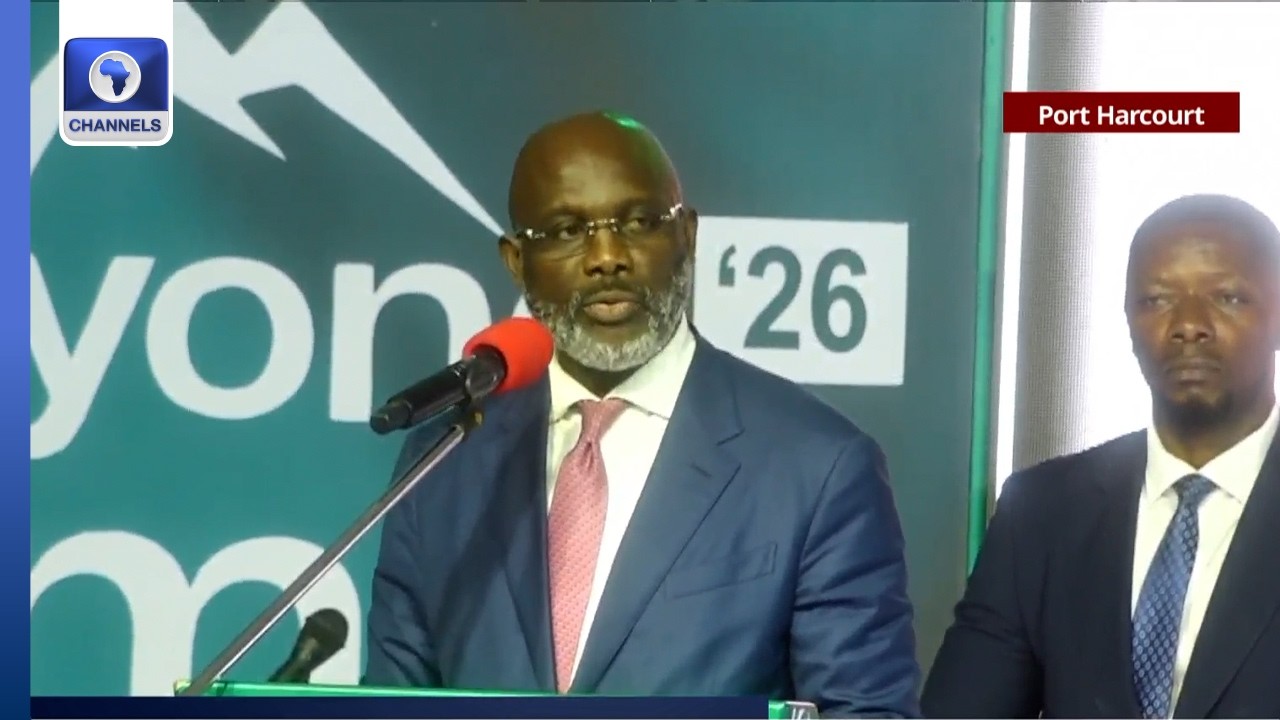
PORT HARCOURT — Former Liberian President George Weah delivered one of the most memorable speeches at the opening of the Nigerian Bar Association’s 2026 Annual General Conference on Sunday, warning that democracy in Africa is increasingly endangered not only by military coups but by elected leaders who gradually dismantle the institutions meant to restrain them.
Speaking before hundreds of senior lawyers, judges, public officials and international delegates gathered in Port Harcourt for the conference themed “Beyond Limits,” Weah argued that constitutional government is most vulnerable when leaders who emerge through the ballot begin to govern as though they are beyond it.
“The danger is not only that soldiers might seize power in the night or that a defeated candidate might refuse to leave office,” he said.
“It is also that a leader who arrives in office through free and fair elections can, over time and often gradually, come to govern like the very dictators that ballot was meant to guard against—leaning on the judiciary until it bends to his will and strong-arming the legislature until it becomes an echo chamber rather than a check on his power.”
Then came the line that drew one of the loudest reactions of the morning.
“A tyrant with a certificate of return is still a tyrant.”
The remark resonated with a legal audience that has, in recent years, watched democratic institutions across parts of Africa come under growing political pressure despite regular elections.
Why He Conceded Before the Votes Were Counted
Weah, who governed Liberia from 2018 until January 2024, used his own political defeat to illustrate what he described as the true test of democratic leadership.
He recalled telephoning his successor, President Joseph Boakai, to concede defeat in the November 2023 presidential election before the final tally had been completed—a decision that surprised many of his supporters.
“There were those around me who advised patience,” he said. “They believed the sitting president should challenge every figure until the last ballot was certified.”
Instead, he chose a different course.
“I have always believed, and still believe, that the will of the people must stand above the ambitions of any one man.”
The concession was widely praised at the time as helping to preserve Liberia’s democratic stability, particularly in a country whose modern history includes years of civil conflict and political upheaval.
Democracy Is More Than Elections
Throughout his address, Weah returned repeatedly to a central theme: elections alone cannot sustain democratic government.
“Democracy does not survive on the strength of elections alone,” he said, arguing that independent institutions—not powerful personalities—are what keep constitutional government standing.
He urged lawyers and judges to defend judicial independence against political interference, warning that executive control over court finances and judicial administration weakens the rule of law long before constitutional crises become visible.
“We have seen nations where the judiciary’s own budget must first pass through the executive it is meant to hold accountable,” he observed.
“A court decision must mean what it says without any political permission.”
For Weah, the legal profession occupies a unique place in protecting constitutional democracy.
When courts lose their independence, he suggested, elections alone cannot prevent democratic decline.
A Message Beyond Nigeria
Although delivered at Nigeria’s premier gathering of legal practitioners, Weah’s speech reached beyond the country’s borders.
Across West Africa, constitutional democracies have been tested by military takeovers, disputed elections, constitutional amendments extending presidential tenure, and recurring debates over judicial independence. Weah’s intervention reflected a growing concern among African democratic leaders that the continent’s greatest constitutional challenge may increasingly come from elected governments weakening institutions from within rather than from soldiers overthrowing them outright.
It was a message carefully calibrated for an audience of lawyers.
The courts, he argued, must remain capable of checking executive authority without fear or political dependence.
The Bar, he added, must continue to defend constitutional principles regardless of who occupies political office.
As delegates filed into the opening sessions of the week-long conference, Weah left them with a warning that lingered long after the applause had faded: democracy rarely collapses in a single dramatic moment. More often, it is weakened piece by piece until the institutions designed to restrain power no longer have the strength—or the independence—to do so.