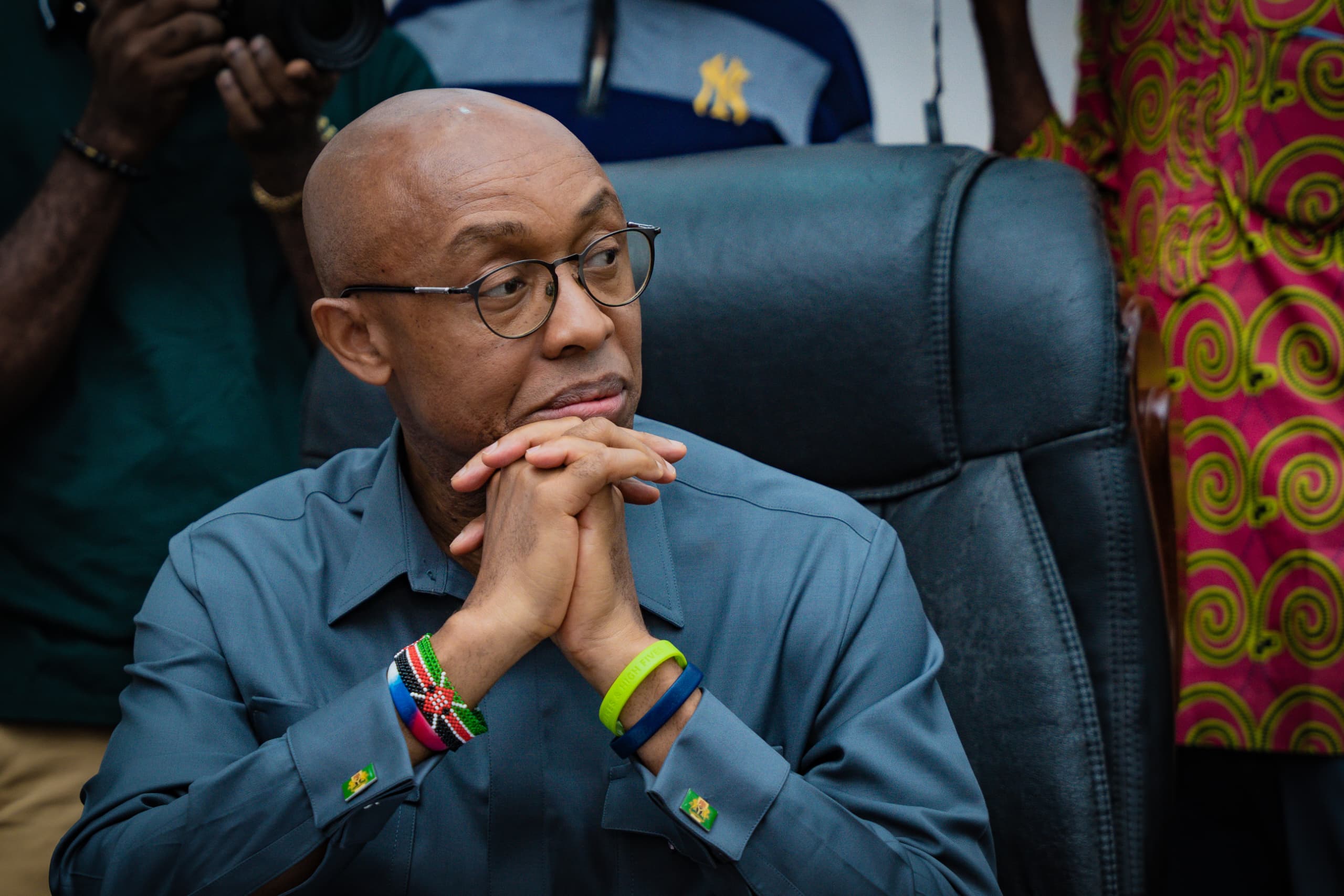
Twenty-four years after the gruesome murder of former Nigerian Bar Association (NBA) Onitsha Branch Chairman, Barnabas Igwe, and his pregnant wife, Abigail, former Chairman of the National Human Rights Commission (NHRC), Prof. Chidi Odinkalu, has reignited one of Anambra State’s darkest unresolved cases by asking why a man identified in official commission records as the alleged leader of the operation is today serving as Governor Chukwuma Soludo’s Special Adviser on Security.
Speaking during an interview with Noble Nigeria, an online media platform, Odinkalu disclosed that Ken Emeakayi’s name featured prominently in records reviewed by the Anambra State Truth, Justice and Peace Commission, which he chaired, and whose report was submitted to Governor Soludo in March 2024.
According to Odinkalu, the Commission concluded that critical questions surrounding Emeakayi’s alleged role in the killings remained unanswered and recommended that the state government reopen investigations and pursue accountability.
Instead, seven months after receiving the report, the governor appointed Emeakayi as his Special Adviser on Security.
For Odinkalu, the appointment represents what he described as “a terrible blot” on Soludo’s administration.
“Ken Emeakayi, on the basis of the report of the Truth, Justice and Peace Commission, has questions that remain unanswered,” Odinkalu said.
“Regrettably, in October 2024, the governor appointed Ken Emeakayi his security adviser. That is one of the issues I find difficult to let go of.”
A Murder That Shook Nigeria’s Legal Community
The killing of Barnabas and Abigail Igwe on September 1, 2002, remains one of the most brutal assassinations in Nigeria’s democratic history.
The couple had just returned from the Nigerian Bar Association’s Annual General Conference in Ibadan when they were ambushed by armed attackers in Onitsha.
Barnabas Igwe, then Chairman of the NBA Onitsha Branch, had emerged as one of the fiercest critics of the administration of former Governor Chinwoke Mbadinuju, particularly over prolonged salary arrears owed to public workers.
Human rights groups and lawyers had repeatedly warned that outspoken critics of the government were receiving threats before the attack.
According to accounts cited by Odinkalu, the assailants hacked the couple with machetes, shot them and allegedly drove over their bodies with their vehicle.
Abigail Igwe was pregnant.
They left behind three young children at the time.
Commission Reopened the File
Odinkalu said the Truth, Justice and Peace Commission revisited the case because earlier criminal proceedings had collapsed before reaching a conclusion.
Drawing from records personally reviewed by him, he alleged that Emeakayi—then associated with the Bakassi Boys security outfit operating in Anambra—had previously been arrested and detained on murder charges connected with the case.
According to him, the prosecution was disrupted after the court handling the matter ceased to function and a prison break led to Emeakayi’s escape from custody.
“The court was sacked and there was a prison break in which he was freed,” Odinkalu recalled.
“But the trial did not end, strictly speaking. It’s just that the records kind of vanished.”
He argued that the disappearance of those records contributed significantly to the collapse of the prosecution, making it necessary for the Truth, Justice and Peace Commission to reconstruct the case decades later.
Odinkalu stressed that the Commission did not pronounce Emeakayi guilty.
Rather, he said, it found sufficient unresolved issues to warrant renewed criminal investigation and possible prosecution.
“On the basis of the records I reviewed personally, he led the operation.”
Questions the Report Says Must Be Answered
The former NHRC Chairman said the Commission recommended that the Anambra State Government reopen the investigation and ensure that those allegedly involved in the killings account for their actions.
Instead, he said, one of the individuals identified in the Commission’s review was elevated to one of the state’s most sensitive security positions.
“I cannot speak for the governor,” Odinkalu said.
“He has his reasons, and I’m not privy to them.
“But the report tells him Ken Emeakayi has questions to answer.”
Odinkalu further disclosed that records examined by the Commission suggested that Abigail Igwe recognised Emeakayi during the attack because he had reportedly been a client of the family’s law firm.
According to him, she attempted to run towards him moments before she was fatally struck.
A Case That Refuses to Disappear
For Nigeria’s legal community, the Igwe murders have long symbolised the dangers faced by lawyers who challenge political power and the enduring weakness of the country’s criminal justice system in resolving politically sensitive killings.
More than two decades after the murders, no court has delivered a final judgment establishing responsibility for the killings.
The Truth, Justice and Peace Commission’s recommendations remain publicly unimplemented, while renewed attention generated by Odinkalu’s remarks has revived questions over whether the state will act on the report it commissioned.
For many lawyers who remember Barnabas Igwe’s fearless advocacy, the issue is no longer simply about one appointment.
It is whether one of the country’s most notorious unresolved political assassinations will ever receive the full measure of justice promised by the rule of law.