By Sonnie Ekwowusi
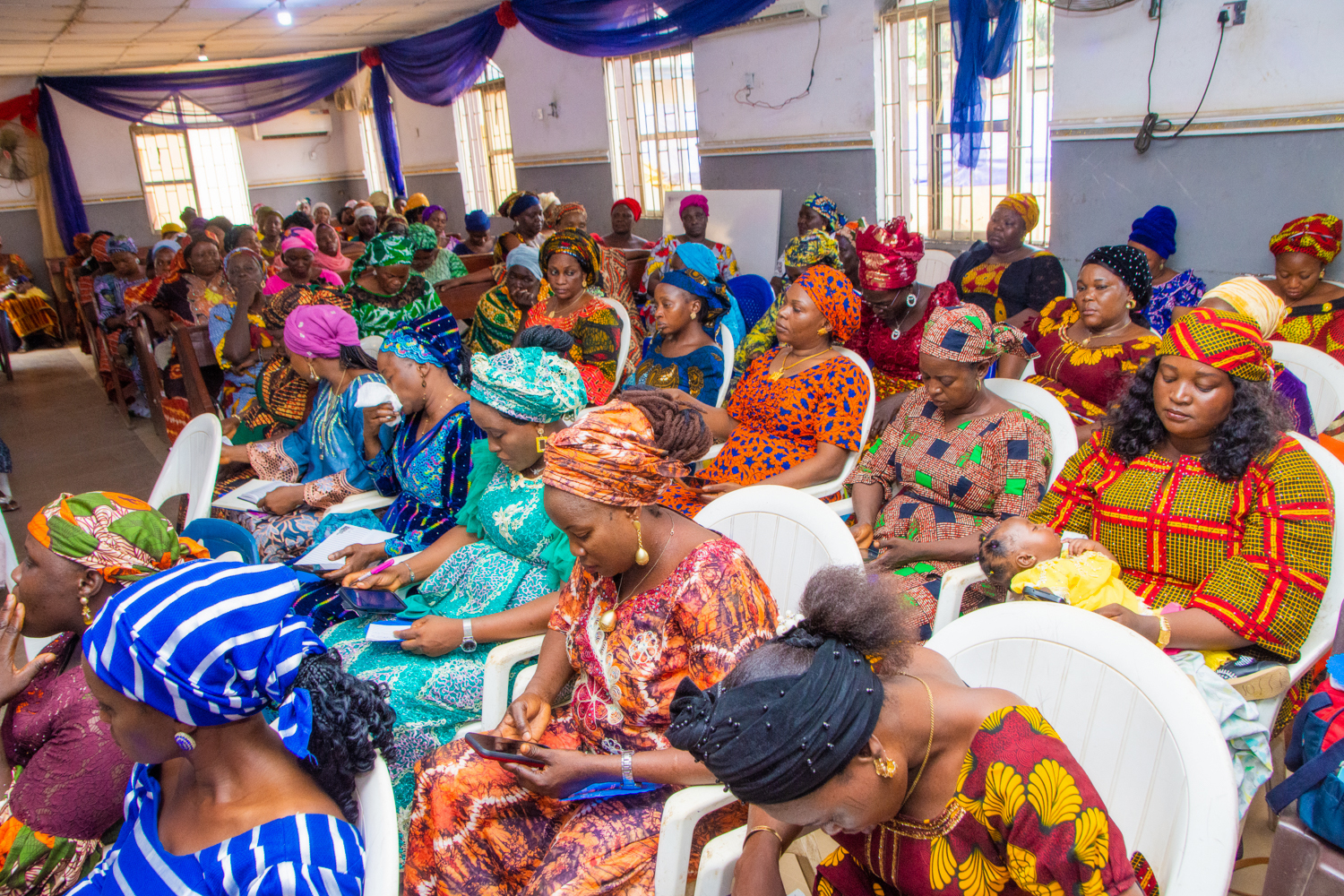
It is unfortunate that despite the clear and unassailable pronouncements and of our law courts, widows in many towns across Igboland are still treated as the property of their deceased husbands. Flowing from this warped logic, many widows in Igboland and their children are barred from fixing the burial date or organizing the burial of their late husbands and fathers.
As soon as a man dies, his brothers often emerge from their various hideouts to confront his widow and children, insisting that they alone have the exclusive right to dictate how their deceased brother should be buried, including the exclusive right to print obituary posters and conduct the entire funeral rites.
As I write this, some people in a town in Anambra State are embroiled in a life-threatening altercation over who has the right to conduct a deceased person’s funeral. In this particular case, a woman lost her husband a few months ago. About three weeks ago, the widow and her children released a funeral poster announcing the burial rites of the deceased.
This obviously did not go down well with the late man’s brothers and relatives. Bitterly opposing the actions of their brother’s widow, his brothers, relatives, and other idle troublemakers in the town confronted the widow, warning her to desist from organizing the funeral on the unfounded allegation that local custom requires them—and not the widow or her children—to organize their brother’s burial. In response, the widow has been asserting that it is her and her children’s right to bury her husband as they deem fit. However, the deceased man’s brothers and relatives have ganged up and sworn that under no circumstance should the widow or her children announce the burial date or organize the funeral.
What then is the position of Nigerian law on this matter?
Before answering this question, it is pertinent to note that Igbo society is traditionally patrilineal, meaning that the husband’s family—especially his brothers, uncles, or eldest male relatives—play a central role in burial arrangements. They are regarded as custodians of the man’s lineage and ancestral rites. While the widow in Igboland is expected to observe mourning rites and may be consulted, she often has limited decision-making power. In many Igbo communities, she cannot unilaterally choose the burial date or location, especially if the husband died intestate (without a will). Ikwa ozu(burial rites) is not merely a family affair but a communal and spiritual event. These rites of passage must be performed to ensure that the deceased properly joins the ancestors, and they are usually coordinated by the husband’s kindred.
However, in urban areas such as Lagos, or among more progressive families—especially where the widow is financially independent or where the husband left a will—she may have greater influence over burial arrangements. This, however, varies widely by community and family dynamics.
There are no widely reported Nigerian court cases that specifically address a widow’s right to fix her husband’s burial date within Igbo culture.
However, broader legal discussions and judgments have challenged harmful widowhood practices and upheld widows’ rights under Nigerian law. These harmful widowhood practices in Igboland have been criticized as discriminatory and unconstitutional by virtue of Sections 37 (right to private and family life), 38 (right to freedom of thought), 39 (right to freedom of expression), and 42(1) (right to freedom from discrimination) of the 1999 Constitution.
Therefore, cultural practices in Igboland—including widow marginalization or the disallowance of widows from choosing the burial date or conducting the burial of their late husbands—violate the aforesaid constitutional provisions and are consequently illegal and unconstitutional.
Lest we forget, the 1999 Constitution is the supreme law of the land. Hence, any Igbo custom or tradition that conflicts with the provisions of the Constitution is, to the extent of its inconsistency, null, void, and unenforceable.
While Igbo customs may traditionally restrict a widow’s role in burial planning, Nigerian law increasingly supports her right to fix a date for her husband’s burial, her right to dignity, and her right to participate fully in the burial of her husband.
Therefore, Igbo widows can challenge their exclusion from fixing the burial date of their husbands through civil litigation or by filing petitions under the Violence Against Persons (Prohibition) Act (VAPP Act).
In some cases, families resolve burial disputes through dialogue with elders, religious leaders, or local chiefs. However, the position of Nigerian law is clear: widows in Igboland cannot be treated as the property of their deceased husbands, nor can they be lawfully disallowed from fixing the burial date or organizing the funerals of their late husbands.
The recent judgment of the Lagos High Court, Ikeja Division, which held that wives are joint owners of property with their husbands, represents yet another resounding triumph of justice for Nigerian women. The Lagos High Court in Ikeja, presided over by Hon. Justice Dorcas T. Olatokun, made this pronouncement in a case between Mr. Pius Aina and his wife, Caroline, over a property located at Festac Town, Lagos. The property was acquired by the husband while he was employed with the Federal Housing Authority (FHA) in the early 1980s.
Succinctly put, Mr. Pius Aina and his wife had been married for thirty-five years. They lived in the Festac property with their three children for more than thirty years. After his retirement in 2018, Mr. Aina sold the property for ₦20 million and relocated to his hometown in Ondo State. However, his wife, Mrs. Aina, challenged the sale, claiming that as his wife and joint owner, her husband could not sell the property without her consent. Consequently, she sued her husband, asking the court to void the sale. The purported buyer of the property and two other defendants—agents who facilitated the sale—were also joined in the suit.
In her claim before the court, Mrs. Aina alleged that she jointly owned the house with her husband. She further stated that after her husband’s retirement on July 4, 2001, his employer, the Federal Housing Authority (FHA), offered him the right of first refusal to purchase the property at a price of ₦400,000. She claimed that she contributed ₦200,000 toward the purchase, while her husband paid the balance of ₦200,000. She also alleged that she had been making other direct and indirect contributions as a wife to the marital property, entitling her to a share in the proceeds of the sale.
However, in his defense, Mr. Aina contended that the property was solely his, by virtue of the private contract between him and the FHA. He argued that his wife was not a party to the contract and therefore could not challenge his right to transfer the property to any other person as he deemed fit. He further alleged that the statutory marriage between him and Mrs. Aina was contracted in 2001 during the subsistence of a valid customary marriage between him and his first wife, which Mrs. Aina was aware of. He claimed that he consulted both wives before deciding to sell the house and retire to his hometown in Ondo State, and that both had consented. He further alleged that, in equity and good conscience, after selling the house, he purchased a three-bedroom flat at Block 147, Flat 2, Amuwo Odofin Low-Cost Housing Estate, Mile 2, Lagos, for Mrs. Aina and her children, which she graciously accepted.
While setting aside the sale of the property, Hon. Justice Dorcas T. Olatokun held that a valid marriage existed between Mr. and Mrs. Aina, and that both had made financial contributions to the marriage and the acquisition of the property. Therefore, both were joint owners of the property in equity. The court further held as follows:
“Where joint ownership of property exists, it means that each party has an equal proprietary right of ownership in the said land, notwithstanding the weight of contribution made by each party, and can jointly exercise such right in respect of the property. The position of the law is settled that where a property is jointly owned, the consent of the other is required before disposing of the property.”
I heartily applaud the judgment of the Lagos High Court, Ikeja. Not only is it in consonance with the landmark decisions of Nigerian courts—especially the case of OKERE V AKALUKA (2014), where the court held that it would be unconscionable to deprive a woman and her children of rights to a property to which she contributed substantially in its acquisition and development—but the judgment is also consistent with domestic and international human rights instruments and covenants.
I equally commend Mrs. Aina for gallantly pursuing her case in court. There is no doubt that she has charted an unprecedented course in the struggle for women’s human rights in Nigeria. Men and women are complementary beings. Women are not objects of pleasure for men or properties to be used as men please. Indeed, women possess the same intrinsic worth as men.
However, beyond the euphoria of the current Lagos High Court judgment, the impediments to the enforcement of women’s inheritance rights that persist in various states across the federation should be removed to pave the way for their effective implementation in favor of Nigerian women. Governments, NGOs, members of civil society, and other stakeholders should rally to the assistance of oppressed women and widows who lack access to justice.
Traditional rulers and community leaders should also embark on effective mass enlightenment on the importance of upholding women’s inheritance rights in their rural communities.
The law in Nigeria today is clear: any Igbo custom that seeks to treat women as inferior to men or as the property of their husbands cannot stand the test of civilized times. This position aligns with the judgments of the Supreme Court of Nigeria in JULIE NEZIANYA & OTHERS V. ANTHONY OKAGBUE, NZEKWU V. NZEKWU, MOJEKWU V. MOJEKWU, AND UKEJE V. UKEJE.
The Supreme Court judgment in UKEJE V. UKEJE, endorsed the right of Nnewi Igbo women to inherit family property and estates. It is, to say the least, a resounding triumph of justice for Igbo women. The Supreme Court’s decision arose from a suit filed by one Gladys Ada Ukeje at the Lagos High Court, in which she claimed that, as the daughter of her late father, she was entitled to administer and inherit his property. The Lagos High Court ruled in favour of Gladys Ukeje, prompting appeals to both the Court of Appeal and the Supreme Court. Both appellate courts respectively affirmed the judgment of the Lagos High Court in her favour.
In upholding the decisions of the High Court and the Court of Appeal, the Supreme Court held that the Igbo customary law which bars an Igbo female child—regardless of the circumstances of her birth—from inheriting or partaking in the sharing of her father’s property and estate, is, among other things, a violation of her right to freedom from discrimination as enshrined in Section 42(1) and (2) of the 1999 Constitution.
I applaud the aforesaid judgment of the Supreme Court. Not only is it in consonance with the earlier landmark decisions of Nigerian courts in JULIE NEZIANYA & OTHERS V. ANTHONY OKAGBUE & ANOTHER, NZEKWU V. NZEKWU, AND MOJEKWU V. MOJEKWU and others, it is also consistent with domestic and international human rights instruments and covenants.
There is nothing more morally reprehensible than treating women with contempt and denying them the right of inheritance or the right to jointly own property with their husbands and the right to organize the bural of their husbands.. Joint ownership of property promotes shared decision-making between spouses. It allows both partners to have a say in matters related to the property, including maintenance, renovations, and financial decisions. This fosters a sense of partnership and equality within the marriage.
In sum, the Constitution of the Federal Republic of Nigeria, 1999 (as amended)—as I earlier stated, is the supreme law of the land. It is founded on the principles of equality and justice. It guarantees the right of every person to acquire and own property in Nigeria. Section 42 expressly provides that “every citizen, whether male or female, has the right not to be discriminated against on the basis of sex, ethnic group, place of origin, religion, or political opinion.”
Therefore, any custom or tradition in any part of Igboland that is in conflict or inconsistent with the 1999 Constitution is, as I earlier stated, to the extent of the conflict or inconsistency, null and void and of no effect whatsoever.
The views expressed by contributors are strictly personal and not of Law & Society Magazine