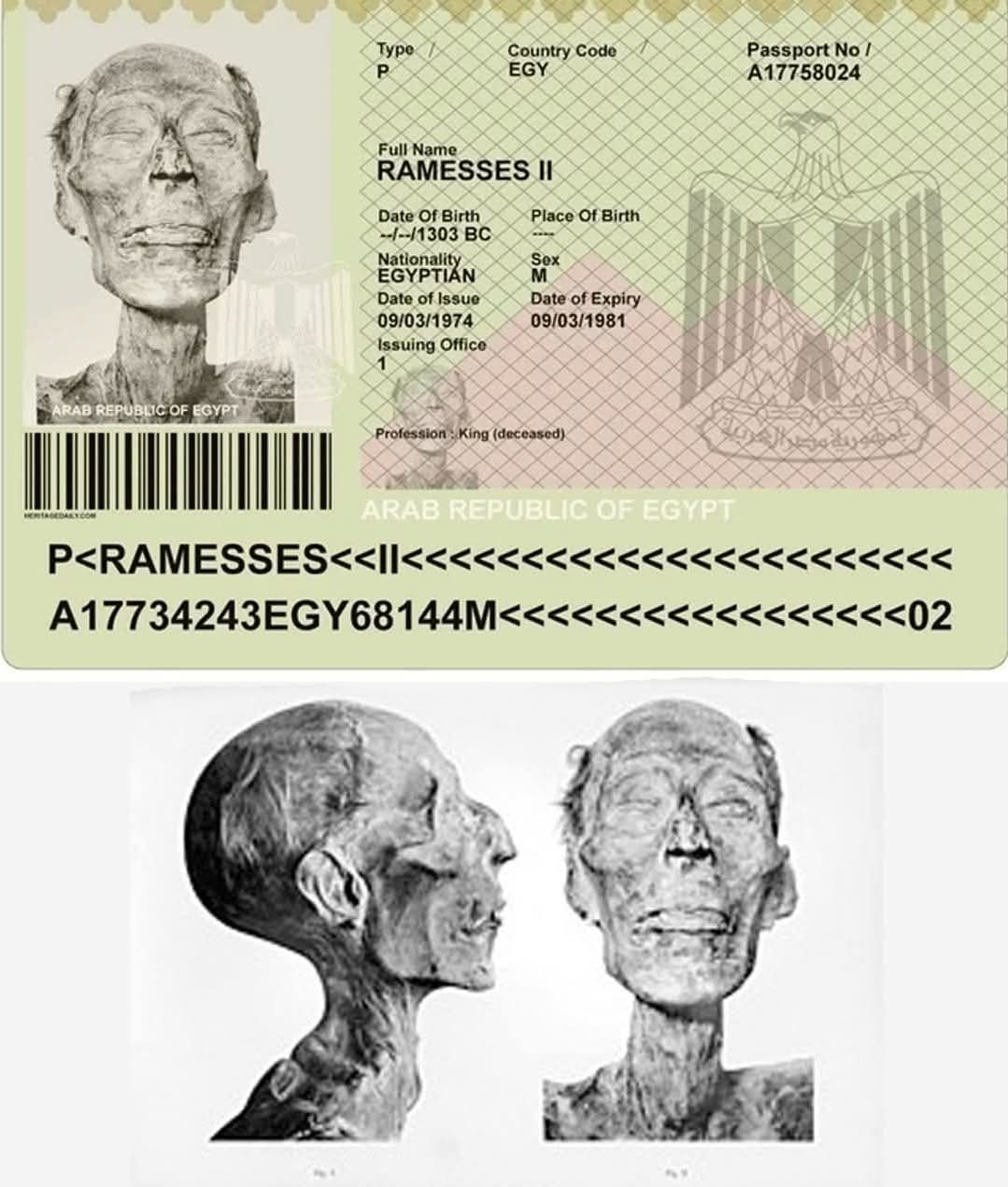
In 1974, Egypt faced an unusual diplomatic problem: how to legally transport a 3,000-year-old pharaoh across international borders. The solution was as astonishing as it was symbolic — officials issued a modern Egyptian passport to Ramesses II, complete with his photograph, nationality, and the unforgettable occupation line: “King (deceased).” Though centuries had passed since his reign, bureaucracy still demanded that even a mummified monarch carry proper documentation. It remains one of the most extraordinary passports ever issued in history.
The purpose behind this unprecedented move was preservation, not ceremony. Ramesses II’s mummy had begun to show signs of deterioration, and French experts were considered the most capable of diagnosing and treating the damage. To transport him legally to Paris, Egypt had no choice but to grant him the same paperwork required of any traveler. Thus, the ancient ruler was formally prepared for a journey across the Mediterranean — thousands of years after his last.
When his plane touched down in Paris, France treated the moment with a level of respect rarely extended to a historical artefact. A full military honour guard awaited the arrival of the royal mummy, standing at attention as though welcoming a living head of state. Soldiers saluted, officials gathered, and the atmosphere carried a quiet reverence befitting a figure whose legacy had shaped human civilisation.
The French government’s gesture wasn’t merely diplomatic courtesy; it was recognition of Ramesses II’s enduring significance. The pharaoh who had once commanded armies, expanded Egypt’s borders, and built monumental temples was being honored again — not for his power, but for his monumental place in world heritage. In that moment, history, archaeology, and modern statecraft intertwined in a way no one had ever imagined.
Ramesses II’s trip to Paris remains one of the most captivating intersections of ancient past and modern protocol. It demonstrated not only the deep respect nations hold for the remnants of human history but also how far the world will go to preserve them. A king who reigned in the 13th century BCE was once more treated as royalty, proving that some legacies remain too great to fade, no matter how many millennia pass.
Read Also: Paris Mounts Honor Guard For a Mummy, The New York Times