


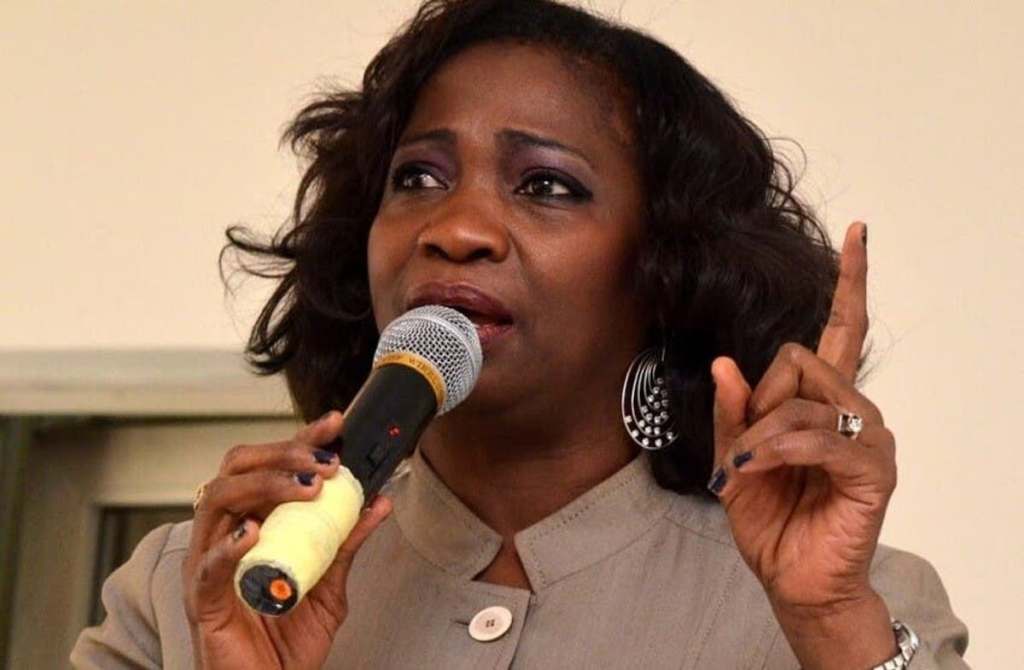
By Tony Omagbemi
The recent actions of Abike Dabiri-Erewa, Chairman of the Nigerians in Diaspora Commission (NIDCOM), have ignited a firestorm of controversy and brought a critical issue back to the forefront: the normalisation of ethnic bigotry by public officials. By reposting a social media message that used vile, dehumanising language to describe the Igbo people, Dabiri-Erewa did more than just share a post; she appeared to endorse a culture of hatred and division. Her use of laughing emojis alongside the derogatory remarks has been widely seen as a blatant display of contempt, sparking outrage and earning her the moniker “grandmother of bigotry” from many Nigerians.
This incident is not just about a single social media post. It’s about a pattern of behaviour that many critics argue is part of a larger, troubling trend of tribal favouritism and bias.
Prominent activist Aisha Yesufu condemned the action, stating that Dabiri-Erewa continually “finds a new low” and highlights how the bigotry displayed online has support from leaders.
This perspective is echoed by the Ohanaeze Ndigbo socio-cultural group, which has called for her removal, accusing her of consistently promoting ethnic profiling against the Igbo.
The outrage is not an overreaction; it’s a gut-level response to the casual cruelty of a public servant whose role is to unite, not divide.
The demands for her removal and a formal ethics investigation are a testament to the public’s unwillingness to tolerate such actions from those in power.
The silence from the Presidency on this matter has been particularly deafening. In a diverse and pluralistic society, leaders are expected to be beacons of unity and tolerance. When they remain silent in the face of blatant bigotry from one of their own, it sends a dangerous message of tacit approval.
As one X user noted, “Any decent person would be appalled by Abike Dabiri-Erewa’s behaviour and react with strong disapproval. But then, what can one expect from her boss whose views she was clearly expressing. Otherwise, why the silence if not approval?”
This lack of response is perceived by many as a failure of leadership, undermining the very principles of national unity and mutual respect that Nigeria desperately needs.
Ultimately, this controversy is a stark reminder of the urgent need for a national dialogue on ethnic tolerance. The foundation of a strong, prosperous nation is built on respect, empathy, and inclusivity.
When public figures—who should be held to the highest standards—engage in behaviour that promotes division and hate, they corrode the very fabric of society.
It is up to all of us to demand better from our leaders and to actively work towards creating a more just and equitable Nigeria for everyone.
Mrs Dabiri-Erewa’s journey to amplifying the anti-Igbo slant began on Monday when she posted a video of a trafficked girl she identified as Mercy, who was rescued from Libya.
In reaction to Mrs Dabiri-Erewa’s post, an X user, Wale Akere, posting via @akerele_s, lauded the NIDCOM boss for her work while berating Igbos as “monkeys, children of gorillas and bustards.”
“My sister you are doing well allow those monkeys to continue to make unnecessary noises they are born to be ungrateful people. Those animals tagging you they are children of gorilla history told us about them. Kudos to you madam @abikedabiri. @Voiceofigbos see what my sister has done omo ale jatijati,” @akerele_s posted.
In apparent approval of @akerele_s’s toxic post, Mrs Dabiri-Erewa reposted it with memes of laughter, amplifying the message. On Mrs Dabiri-Erewa’s timeline, the post has been viewed by over 15,000 people, gathering more than 53 reposts and over 100 comments.
Of course, following the backlash, Wale S Akerele@akerele_s has pulled down the post and Dabiri-Erewa’s anti-Igbo support reaction.
This is not the first time Dabiri-Erewa, an indigene of Lagos State, former star journalist with the Nigerian Television Authority (NTA) and ex-member of the House of Representatives, has been criticised for anti-Igbo slants.
The Nigerians in Diaspora Commission had been drawn out by a group, Igbos in Diaspora, who accused the Commission of bias in handling hate speech incidents, personally expressing their disapproval that Mrs Dabiri-Erewa delayed her response to comments made by Kingsley Ugiagbe, who had threatened to kill Nigerians of Igbo extraction in Austria, compared to the hate speech made by Amaka Sonnberger, who advocated for the poisoning of Yorubas and the people of Benin, in Canada.
Again, in late April 2023, following the rescue of Nigerians trapped in Sudan at the outbreak of the Sudanese civil war, an Igbo group, Coalition of South East Youth Leaders, (COSEYL), demanded that the chairperson of Nigerians In Diaspora Commission be sacked and prosecuted for displaying wickedness and inhumanity against Igbo population who were among those trapped in the war-torn country.
The group, in a statement by its President, Goodluck Ibem said it was “alarmed over the inhuman and wicked treatment meted out to Nigerians of Igbo origin by Dabiri-Erewa wherein she and her team ordered all the Igbos who had entered the rescue bus sent by the Federal government to Sudan to come down while conveying Nigerians who are not of Igbo origin. This is barbaric and wickedness of the highest order against humanity and we condemn it in its entirety.”
They expressed regret that Abike Dabiri-Erewa, who is paid by taxpayers’ money, which Igbos are among, will segregate against the same people contributing to her salaries and allowances, stating that “this evil and unpatriotic act against fellow Nigerians, which she was employed to serve must never go unpunished.”
On Sunday August 3, 2025, Mrs Dabiri-Erewa, in an interview on Arise TV, said 20 of the 21 citizens on death row in Indonesia were from a State in South East Nigeria.
Speaking on the interventions of her agency in the recent protests against Igbos in Ghana, Mrs Dabiri-Erewa responded: “The tribe you mention will ask if it’s because of us. No. Like I said, crime has no federal character.”
Citing her experience in Indonesia as an example, Mrs Dabiri-Erewa said, “We had 21 Nigerians on death row. We went to the Indonesian prison and begged them; they said, ‘No, our law is law.’ Four were executed.”
She added, “You know what? I’ve said it before, and I’ll say it again. Out of 21 of them, 20 were from one state in the South-East. The other one is from Edo State. But that does not mean you should generalise that everyone from that state is a criminal.”
The views expressed by contributors are strictly personal and not of Law & Society Magazine.






Leaders should never normalize hate; silence from the Presidency only deepens mistrust and division.