Communities in Nigeria’s northwestern Kaduna State say they sold thousands of bags of maize to pay ransom demanded by kidnappers. Yet, several abducted residents remain in captivity weeks after payment, highlighting deepening insecurity and humanitarian strain in the region.
Elders of Gidan Waya community in Lere Local Government Area told reporters they sold more than 3,000 bags of maize to raise ₦40 million demanded by kidnappers who abducted 13 villagers during a late-night raid in November. More than three weeks after the money was delivered, none of the captives has been released.
“We sold our food to free our people,” said Mallam Rabo Sambo, chairman of the Gidan Waya Elders Forum. “Now we are hungry—and our people are still in captivity.”
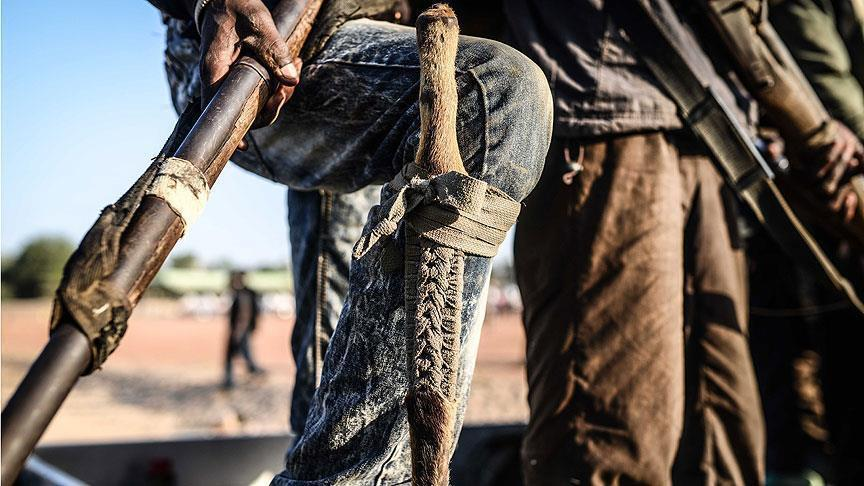
According to Sambo, gunmen invaded the community between 11 p.m. and midnight, killing four residents and injuring several others before abducting five men and eight women. The attackers wore face masks and encountered no resistance.
The ordeal has played out alongside a much larger abduction in nearby Kajuru, where worshippers were seized from three churches during services. The Arewa Consultative Forum (ACF) says at least 166 people remain in captivity.
But in the crucial hours after the attacks, Nigerian security agencies publicly denied that any mass abduction had occurred—despite eyewitness accounts, community reports, and appeals from families.
That initial denial has since become a focal point of outrage.
“This was not just failure—it was a betrayal of public trust,” said Prof. Joy Ezeilo, a Senior Advocate of Nigeria and former UN Special Rapporteur on Trafficking in Persons. She called the attempt to downplay the abductions “an unacceptable act of concealment” and urged Nigeria’s National Assembly to open a full investigation.
According to Ezeilo, denying the incident squandered critical response time and may have directly undermined rescue efforts. “Without accountability,” she warned, “state actors risk enabling criminal impunity.”
Prominent human rights lawyer and former National Human Rights Commission chairman Prof. Chidi Odinkalu went further, suggesting that the scale of the abductions points to systemic failure—and possibly official complicity.
“Kaduna is one of the most militarised states in Nigeria,” Odinkalu wrote in a widely circulated statement. “It takes some form of official complicity for this to happen without resistance.”
He criticised the police for maintaining their denial for more than 48 hours without investigation, arguing that the delay allowed kidnappers to disappear with their captives and neutralised any early rescue window.
While the ACF has urged swift action, calling the continued captivity “a national emergency,” affected communities say government presence on the ground remains minimal.
Sambo said local authorities and the Kaduna State government appeared unaware—or uninformed—of the full scale of the crisis. “We don’t know if the governor even knows what happened to us,” he said, appealing publicly for intervention.
Beyond the trauma of abduction, the economic consequences are compounding the suffering. With grain reserves sold to raise ransom, families now face hunger, displacement, and uncertainty.
“We are mourning, afraid, and hungry,” Sambo said. “We paid everything we had.”
Several civil society and socio-political groups have accused the federal government of suppressing information to avoid international scrutiny, particularly amid growing concern over targeted attacks on religious communities.
A Yoruba socio-political group, Ìgbìnmó Májékóbájé Ilé-Yorùbá, alleged that families of abducted worshippers were warned to remain silent and accused authorities of prioritising “narrative management” over rescue operations.
In a statement, the group said kidnapping in Nigeria has evolved into an organised industry, with armed groups abducting citizens openly, negotiating ransoms freely, and operating without fear of arrest.
“Families are selling everything they own to rescue their loved ones,” the group said. “The state is absent. The criminals are in control.”
As entire villages across Kaduna, Katsina, Benue, Sokoto and other states empty out under the weight of repeated attacks, critics warn that Nigeria is sliding into a ransom-driven shadow economy—one where survival depends not on citizenship, but on the ability to pay.
For the families still waiting, the questions are becoming sharper and more dangerous:
If security forces denied the attacks when they happened, who was being protected, and who was abandoned?