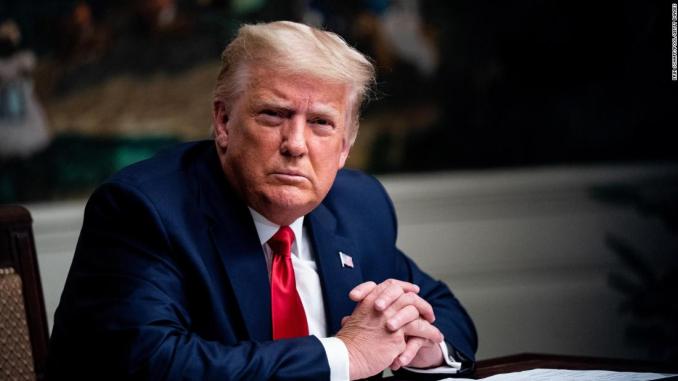
For years, the Supreme Court was one of President Donald Trump’s most reliable institutional allies. On Friday, it became his target.
In a 6–3 decision, the Supreme Court struck down Trump’s sweeping use of emergency powers to impose broad global tariffs—ruling that his administration had exceeded its legal authority. The decision did not just curb a trade policy. It clipped one of Trump’s most aggressive tools of executive power.
Within hours, Trump lashed out.
“I’m ashamed of certain members of the court—absolutely ashamed,” he said in a hastily arranged White House appearance. He called the ruling “a disgrace to our nation.”
The rebuke was particularly striking because two of the justices in the majority—Amy Coney Barrett and Neil Gorsuch—were appointed by Trump himself. They joined Chief Justice John Roberts and the court’s three liberal justices to form the ruling bloc.
For a president who reshaped the judiciary and frequently benefited from its conservative majority, the moment marked a rare public rupture.
A Court That Often Sided With Him
The Supreme Court has repeatedly delivered victories central to Trump’s political survival and expansion of executive authority. From immigration powers to presidential immunity, the court’s conservative majority often validated his expansive reading of presidential power.
But trade policy proved different.
Legal analysts say the ruling sends a clear institutional message: emergency powers do not grant a blank check.
“This is a decisive statement,” said Michael Strain of the American Enterprise Institute. “On trade policy, the administration clearly exceeded its authority.”
Trump had framed the case in existential terms in the weeks leading up to the ruling, warning that invalidating his tariff regime would “literally destroy” the country. At one point, he described the stakes as “LIFE OR DEATH.”
On Friday, he shifted from fury to defiance.
“Other alternatives will now be used,” he said. “In fact, I can charge much more than I was charging.”
Doubling Down: A New 10% Global Tariff
The White House quickly announced a new 10 percent across-the-board tariff under a separate legal authority that allows duties of up to 15 percent for 150 days without congressional approval.
The maneuver buys time—but not certainty.
Unlike the emergency powers struck down by the court, this authority is narrower and temporary. Any extension beyond 150 days would require Congress to act.
“It’s a little more complicated,” Trump acknowledged. “But the end result is going to get us more money.”
Behind the scenes, administration officials have been planning fallback options for months. Some are slower, more procedurally complex pathways that would rebuild parts of the tariff structure piece by piece.
What they cannot replicate, trade experts say, is speed.
The ability to impose sweeping tariffs overnight—often used by Trump as geopolitical leverage—is now sharply constrained.
Billions in Refunds—and Legal Chaos
The ruling raises immediate financial questions.
Companies that paid billions under the invalidated tariffs are preparing to seek refunds. The court offered no guidance on how repayments should occur.
Trump declined to commit to returning the money.
Instead, he suggested the matter could become tied up in years of litigation—potentially freezing billions in economic limbo.
The uncertainty rattles businesses already adjusting supply chains to accommodate Trump’s trade war, which critics argue has increased consumer prices and complicated global alliances.
Political Fallout Before a Major Address
The timing could hardly be worse for the White House.
Trump is preparing a major national address next week designed to project economic strength ahead of midterm elections. Instead, he now faces renewed questions about the durability of his economic strategy.
Vice President JD Vance joined the president in attacking the court, calling the ruling “lawlessness” despite the court’s conservative majority.
Trump, for his part, seemed to relish the confrontation.
As for the justices who ruled against him—many of whom once formed the backbone of his legal victories—he signaled little interest in reconciliation.
“They’re barely invited,” he said of their expected attendance at his speech. “Honestly, I couldn’t care less if they come.”
A Test of Executive Power
Beyond tariffs, the ruling represents something larger: a boundary test.
The same court that expanded Trump’s view of presidential authority in other arenas has now drawn a line on trade.
Whether that signals a broader recalibration—or simply a narrow statutory interpretation—remains to be seen.
What is clear is that Trump is not retreating.
If anything, he is escalating.
The president who once relied on the Supreme Court as a legal shield is now openly challenging it—vowing that his trade war, and his aggressive use of executive power, are far from over.