Nigeria’s spiralling security crisis deepened this week after suspected jihadist fighters massacred residents of two rural communities in Kwara State, killing more than 160 people in one of the deadliest attacks recorded this year and intensifying pressure on President Bola Tinubu’s administration to confront growing insurgent threats beyond the country’s traditional conflict zones.
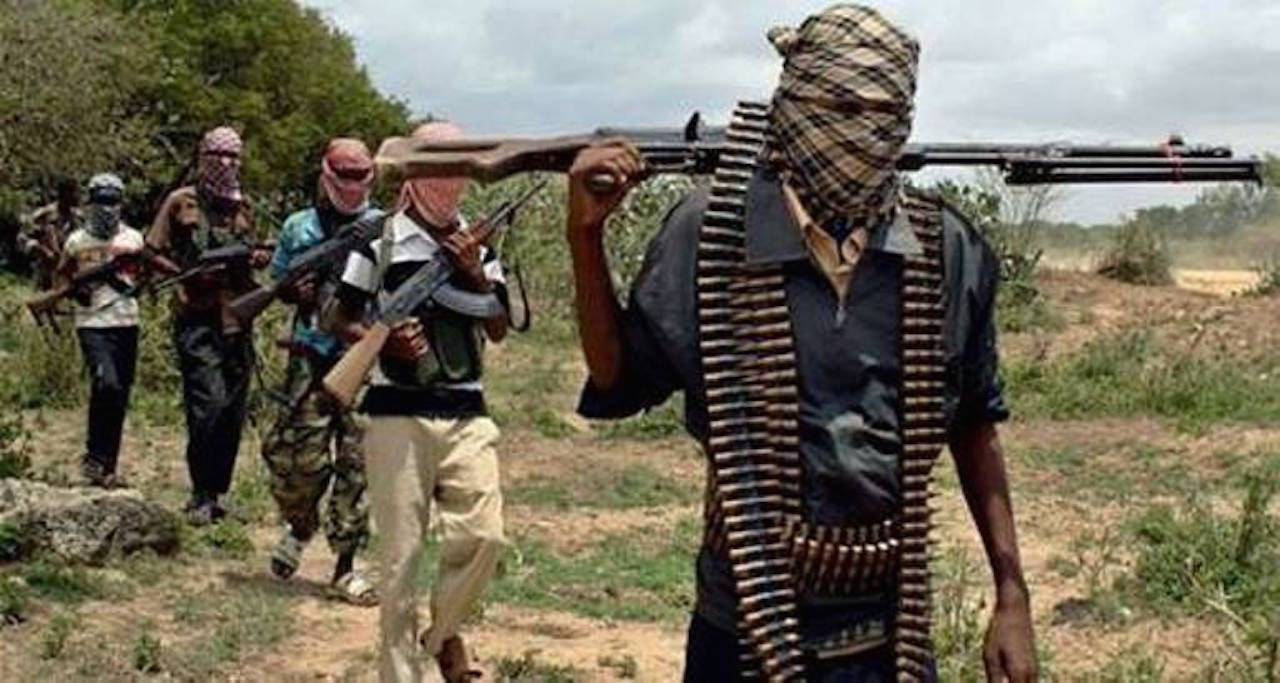
The coordinated assault struck Woro and neighbouring Nuku in Kaiama Local Government Area on Tuesday evening, near the edge of Kainji National Park—a vast forest corridor increasingly exploited by armed groups. Gunmen reportedly arrived on motorcycles, surrounded the villages, and unleashed hours of sustained violence marked by executions, arson, and abductions.
While the Kwara State government initially confirmed 75 fatalities, lawmakers, residents, and rights groups say the toll is far higher. Amnesty International put the death count at more than 170, while Mohammed Omar Bio, a member of parliament representing the area, told the Associated Press that at least 162 people had been killed by Wednesday afternoon.
“This was not a random attack—it was systematic,” Bio said. “Entire families were wiped out.”
‘They Shot Anyone Who Tried to Escape’
Survivors described a meticulously planned operation that began around 5:00 p.m. and continued into the early hours of Wednesday.
“They surrounded the community completely and started shooting from all directions,” said Ali Umar, a younger brother of Woro’s traditional ruler. “Anyone who tried to escape was killed.”
Those who surrendered, he added, were rounded up, tied, and shot near the palace of the district head. The attackers abducted women and children, including the wife, mother, and three children of the traditional ruler. The ruler himself remains missing.
Homes, shops, and the district palace were burned. A vehicle belonging to the district head was reportedly seized and used to transport abductees into the forest.
By Wednesday night, hundreds of displaced residents were still hiding in surrounding bushland, many wounded and without access to medical care.
Warnings That Went Unheeded
Community leaders say the massacre followed months of ignored intelligence.
According to a senior member of the Kwara Emirate Council, the militants—believed to be Lakurawa fighters affiliated with Islamic State’s Sahel Province—had earlier sent letters to local leaders announcing plans to “preach” extremist ideology in the area.
The letters were reportedly forwarded to authorities in Ilorin, prompting a brief military deployment that was later withdrawn when no immediate attack occurred.
“They even preached in a neighbouring village weeks ago and warned of future attacks,” the leader said. “Then they came back with guns.”
Residents told Reuters the attackers demanded that villagers renounce allegiance to the Nigerian state and submit to extremist rule. When locals resisted during a sermon, the militants opened fire.
Human rights groups say the attack highlights a recurring pattern: early warnings, slow response, and catastrophic consequences.
Governor Orders Emergency Relief, Deployments Intensify
Kwara State Governor AbdulRahman AbdulRazaq visited Kaiama in the early hours of Thursday, arriving around 2 a.m. to assess the devastation firsthand. He commiserated with survivors, the Emir of Kaiama, Alhaji Muazu Sheu Omar, and families of the victims.
Following the visit, the governor directed the Kwara State Emergency Management Agency (KWASEMA) to immediately mobilise relief materials, medical assistance, and humanitarian support for displaced residents.
“The injured have been taken to hospitals, and support is being activated for affected families,” AbdulRazaq said, condemning the killings as “a cowardly expression of frustration by terrorist cells under pressure.”
He confirmed that President Bola Ahmed Tinubu had approved the deployment of a full army battalion to the area under a new counteroffensive dubbed Operation Savannah Shield.
Abuja Under Pressure
Despite the reinforcements, the scale of the massacre has reignited public anger over the federal government’s handling of Nigeria’s widening security crisis.
Critics say repeated claims by Abuja that insurgents are being “degraded” stand in stark contrast to the reality on the ground, where armed groups continue to overrun communities, exploit forest sanctuaries, and carry out mass killings with impunity.
Amnesty International described the attack as “a damning indictment of Nigeria’s security architecture,” noting that warning signs had existed for more than five months.
“This did not happen in a vacuum,” the group said. “Failure to act on intelligence cost lives.”
The Speaker of the Kwara State House of Assembly, Yakubu Danladi-Salihu, called for intensified military operations along the Niger border, warning that as pressure mounts elsewhere, armed groups are pushing into new territories.
A Conflict Spreading Southward
Security analysts warn that the violence in Kwara signals a dangerous geographic expansion of jihadist activity into Nigeria’s north-central region, long considered a buffer between the insurgency-ravaged north and the south.
The Lakurawa group, an offshoot of Islamic State networks in the Sahel, has grown increasingly active since political instability in neighbouring Niger following the 2023 military coup.
Nigeria is already battling multiple, overlapping crises: Boko Haram and ISWAP insurgencies in the northeast, banditry and kidnappings in the northwest, and communal violence in central states.
As mass graves are dug in Woro and Nuku, many Nigerians are asking the same question: how many warnings, deployments, and promises will it take before communities are no longer left to face terror alone?