By Lillian Okenwa
Justice Faruk Hassan Bunza spent nine days in the hands of kidnappers after being taken from his home. Weeks later, Nigeria assembled thousands of security personnel for the Osun governorship election. Between those two events lies a troubling question about the priorities and capacity of the Nigerian state.
There is one detail in Justice Faruk Hassan Bunza’s account of his kidnapping that says more about Nigeria’s security crisis than the number of men who eventually came looking for him.
His captors were afraid.
They had taken a sitting High Court judge from his home in the middle of the night and led him into the bush. They had guns, local knowledge and people who could provide information about their intended victim. They knew the terrain and had a hideout where they could keep a hostage for days. Yet they were sufficiently worried about being discovered to warn Bunza against coughing loudly because, he said, they feared the sound might expose their position.
It is an extraordinary detail. The men holding the judge were not confident enough to believe that the state had disappeared; they were simply confident enough to believe that it would not find them.
According to Bunza, fewer than 20 bandits were at the Dutsen Bandan camp in Kebbi State. Five armed men had taken him from his residence shortly after midnight on July 26. They made him walk roughly 25 kilometres barefoot before moving him another 24 kilometres by motorcycle to the camp, where he remained for about nine days.
The kidnapping was therefore not the work of some enormous armed formation overwhelming a heavily defended position. A handful of men were able to enter the home of a sitting judge, remove him without interception and transport him deep into territory they understood better than the authorities pursuing them.
Bunza’s account suggests that information was central to the operation. His captors appeared to know about him, his work and his circumstances, and he said they had informants around the area. They monitored news reports and social media and understood enough about their surroundings to remain at the camp while keeping watch for signs that security forces might be closing in.
That is where the story moves beyond the kidnapping of one judge.
The issue becomes the reach of the Nigerian state: its intelligence, its deployment of personnel, its ability to maintain a presence in vulnerable communities and, ultimately, its choice of where to concentrate the resources available to it.
The contrast with what happened in Osun is difficult to miss.
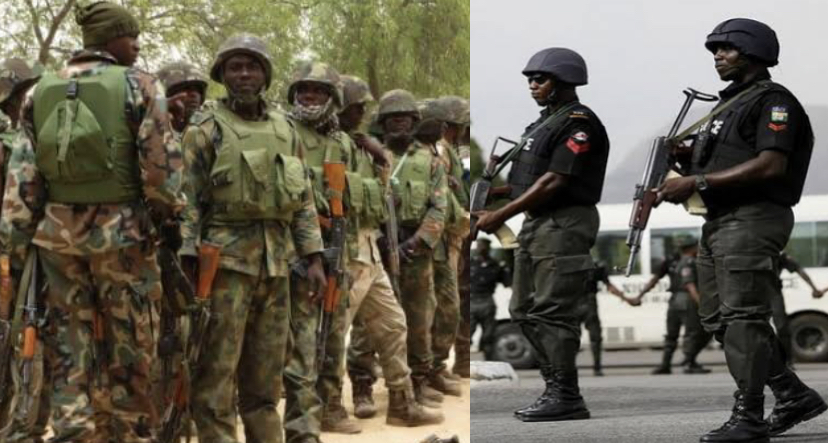
For the August 15 governorship election, the Nigeria Police Force deployed more than 15,000 personnel across the state. Thirty Commissioners of Police were assigned to the state’s 30 local government areas, alongside deputy commissioners, assistant commissioners, Mobile Police units and other formations. A Deputy Inspector-General coordinated the operation, while helicopters and drones were deployed for surveillance. The Army was also assigned roles around the state’s borders.
There is a perfectly legitimate reason for such a deployment. Elections are vulnerable moments in a democracy. Political violence, intimidation and disruption can alter the result before a single ballot is counted, and voters should be able to go to polling stations without having to negotiate with armed groups or political thugs.
But the contrast raises a disturbing question.
Nigeria was able to assemble an extraordinary concentration of security personnel around a single governorship election, yet a sitting High Court judge whose work included cases involving kidnapping and banditry was vulnerable enough to be taken from his home.
The significance lies not in suggesting that the two deployments were interchangeable. They were not. An election is a planned national event with a fixed date, identifiable locations, known participants and a defined security operation. A kidnapping is sudden, dispersed and unpredictable.
The significance lies in what the comparison reveals about the state’s ability to mobilise when it considers something an immediate national priority.
The judge who became a target
Bunza had spent years inside the criminal justice system before he became its victim.
He had served as a magistrate and chief magistrate before his elevation to the High Court. His courtroom work included cases involving banditry and kidnapping, putting him in direct contact with the criminal networks responsible for some of the most serious threats in northern Nigeria.
He told reporters that his security arrangements changed as his judicial career progressed. As a magistrate and chief magistrate, he said, he had permanent security at his residence. As a High Court judge, security was provided on a shift basis.
His experience now gives that distinction a disturbing significance.
Bunza said his captors appeared to know that he handled serious criminal cases and had information about his personal circumstances. He believes his professional responsibilities may have contributed to his selection as a target.
That should prompt a broader examination of the protection available to judges whose work puts them in the path of organised criminals.
A judge who presides over a kidnapping case is not simply another government employee. He or she may sign warrants, remand suspects, convict offenders and impose sentences that can have consequences for people with the resources and networks to retaliate.
The courtroom may be insulated from the violence outside it, but the judge who leaves the courtroom is not.
Bunza’s experience exposes that gap in the most direct way possible.
The difference between numbers and intelligence
The scale of the Osun deployment inevitably invites a discussion about numbers.
Nigeria needs more police officers. It needs better equipment. It needs more specialised units and stronger communications. Those are longstanding deficiencies.
But Bunza’s experience suggests that the problem cannot be reduced to manpower.
The kidnappers did not defeat the state by assembling a force larger than the police. They avoided a direct confrontation altogether. Their advantage was information: where to find their target, how to move him, where to take him and how to remain hidden afterwards.
That is a different kind of contest.
An armed criminal group does not have to control a town to create insecurity. It needs only enough knowledge of the roads, communities, forests and people around it to move with confidence while the security agencies are working with incomplete information.
Bunza’s captors apparently had that advantage.
They were few enough to remain mobile, familiar enough with the terrain to disappear and connected enough to obtain information about the man they intended to abduct.
The state had more personnel.
The kidnappers had better knowledge of the immediate environment.
That imbalance is at the heart of much of Nigeria’s insecurity.
When security becomes an event
The Osun operation also illustrates the way security is often organised around political events.
An election provides a timetable. There is a known polling date, a defined geographical area, a list of polling units, political parties and candidates, collation centres and likely flashpoints. Commanders can plan weeks ahead and move personnel into place before voting begins.
The result can be seen on the streets: senior police officers arrive, tactical units are deployed, surveillance is expanded and borders can be controlled.
Ordinary insecurity does not offer that convenience.
A judge goes home after court.
A farmer travels to his field.
A family sleeps in its house.
A witness prepares to testify.
A child returns from school.
These are not national events, yet they are the moments in which citizens depend on the state most directly.
Security that appears in large numbers for a political event but is difficult to sustain in vulnerable communities leaves a gap that criminals learn to exploit.
The problem is not that Nigeria secures elections too heavily. The problem is that the exceptional capacity displayed during elections can make the everyday absence of security elsewhere even harder to explain.
The price of concentrating power
The Osun deployment also raises the issue of what happens outside the state when security resources are concentrated there.
Festus Adedayo, writing in Premium Times, questioned the scale of the deployment and reported that large numbers of senior police officers—including Commissioners of Police, Deputy Commissioners and Assistant Commissioners—had been moved into Osun, raising concerns about the effect on police commands elsewhere.
The argument deserves consideration beyond the politics surrounding the election.
Police resources are finite. Senior officers are finite. Specialised units are finite. Surveillance equipment and operational capacity are finite.
Whenever large numbers are moved from one part of the country to another, there is a consequence, even if it is not immediately visible.
That consequence matters in a country where kidnapping and banditry do not pause because an election is taking place somewhere else.
The police can justify concentrating resources around Osun. The voters of Osun have a right to security. But the communities from which those resources are drawn have the same claim.
This is where questions about national security become questions about national priorities.
Protecting the people who protect the law
The vulnerability of judges deserves particular attention because the judiciary is one of the institutions on which the security response itself ultimately depends.
Police arrest suspects.
Prosecutors bring charges.
Judges determine whether evidence is sufficient and whether the law has been breached.
When a judge convicts a kidnapper or imposes a sentence on a member of a criminal gang, the decision is an exercise of state authority. If the people exercising that authority become targets without adequate protection, the authority of the state becomes easier to challenge.
Bunza’s kidnapping therefore has implications beyond his personal ordeal.
It raises questions about whether judges handling high-risk criminal cases should automatically receive enhanced protection; whether judicial residences should be subjected to formal security assessments; whether intelligence agencies routinely evaluate threats against judicial officers; and whether the protection given to judges is designed around their actual risk or simply inherited from a general system of police deployment.
These are administrative questions, but they have constitutional consequences.
Judicial independence means little if a judge can be intimidated physically, threatened through his family or made to fear the consequences of performing his judicial duties.
Bunza has said that his experience has not weakened his commitment to the bench. That is a testament to his personal resolve.
It should not, however, become an excuse for the state to rely on the courage of judges to compensate for institutional shortcomings.
A state of surges
The Osun election showed how quickly the Nigerian state can produce a large, coordinated security presence when the circumstances demand it.
The kidnapping of Bunza showed how different the experience can be when insecurity is dispersed across ordinary communities.
That contrast is more revealing than either number on its own.
Fifteen thousand officers in Osun do not mean that Nigeria has 15,000 spare officers who could simply have been sent to Kebbi. The demands of election security are different from those of counter-kidnapping operations, and numbers alone cannot substitute for intelligence, investigation and sustained presence.
But neither should the availability of thousands of personnel for an election obscure the weaknesses exposed by Bunza’s captivity.
The Nigerian state has repeatedly demonstrated an ability to surge.
What remains less convincing is its ability to sustain.
A surge can secure a polling station for a day. It cannot dismantle a kidnapping network that has operated in the same area for months or years. It can protect a political rally for several hours. It cannot provide permanent security to judges, witnesses and communities living under threat.
That requires something less visible and more difficult: intelligence built over time, cooperation between agencies, reliable local networks, rapid response, proper investigation and a security presence that does not disappear when the immediate event is over.
The real test of the state
Bunza’s ordeal began at home, not at a political rally or a battlefield.
His captors came in the middle of the night, took him away and moved him through terrain where they believed the state could not reach them. They held him for nine days before he eventually found his way out of captivity and back to his community.
Weeks later, another part of the Nigerian security machinery was operating at a very different scale in Osun, where thousands of officers had been assembled to ensure that an election could proceed peacefully.
Neither event, by itself, tells the whole story.
Together, however, they expose a fault line in the way Nigeria protects its citizens.
The country can mobilise large numbers of security personnel when an event is politically important, nationally visible and fixed on the calendar. The more difficult task is providing the intelligence, protection and persistent presence required when there is no election to secure, no dignitary to protect and no television camera waiting to record the operation.
That is where the capacity of a state is ultimately tested.
Not only in how many men it can put on the streets when the country is watching, but in whether an ordinary citizen can go home at night and reasonably expect the state to be there if someone comes for him.
Justice Bunza was a judge when he was taken.
His kidnappers knew it.
The state should have known what that meant, too.
And that leaves Nigeria with a question that goes well beyond Osun, Kebbi or one judge’s ordeal: When the Nigerian state has to choose where its power will be seen, where does it choose to put it—and what happens to everyone else?