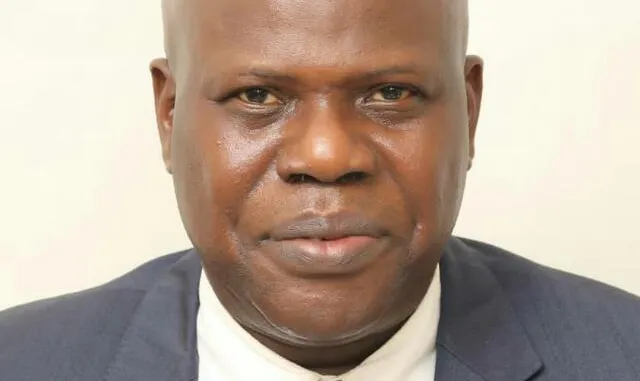
By Kachi Okezie, Esq
The recent article by Richard Akinnola II, titled “Release of Drug Convicts and Murderers – Blame the Committee, Not the President,” advances the proposition that where a Committee on the Prerogative of Mercy recommends the release or pardon of certain convicts, and such recommendations turn out to be ill-advised or embarrassing, responsibility should primarily rest with the committee, and not with the President who merely “assents” to its advice. With great respect to the author, that position is legally untenable. The Constitution of the Federal Republic of Nigeria vests the prerogative of mercy solely and exclusively in the President of the Federal Republic of Nigeria, not in any committee, council, or advisory body.
To adumbrate the purport of this assertion, the Constitutional text is worth a visit. The relevant constitutional provision is Section 175(1) of the 1999 Constitution (as amended), which provides that:
“The President may—
(a) grant any person concerned with or convicted of any offence against any law of the Federation a pardon, either free or subject to lawful conditions;
(b) grant to any person a respite of the execution of any punishment imposed on that person;
(c) substitute a less severe form of punishment for any punishment imposed on that person; or
(d) remit the whole or any part of any punishment imposed on that person or any penalty or forfeiture otherwise due to the State.”
By its express language, the section states that “the President may” — not that the President shall act on the recommendation of a committee. The power is clearly personal, discretionary, and non-delegable. It is an executive power vested in the Head of State as a matter of constitutional prerogative, not bureaucratic procedure.
The nature of the prerogative of mercy itself is equally worth exploring. In particular, it is worth noting that though rooted in common law traditions, the prerogative of mercy, has been constitutionalised in Nigeria. It is not an administrative act to be executed by proxy; it is a sovereign function to be exercised with circumspection, informed discretion, and a full sense of responsibility.
Historically, the prerogative of mercy originates from the royal prerogatives of the English Crown — a discretionary, personal power of the monarch to temper justice with mercy. In de Smith’s Constitutional and Administrative Law (7th ed., 2021), the prerogative of mercy is described as “a personal act of grace, legally unfettered but politically accountable.” The same principle holds in Nigeria’s republican context: while the President may be assisted by advisory mechanisms, the constitutional act of pardon remains his alone.
This whole episode raises the question of delegation and non-delegation of Constitutional powers in Nigerian law. Under Nigerian constitutional jurisprudence, where the Constitution expressly vests a power in a specific office, that power cannot be delegated unless the Constitution itself provides for such delegation. The Supreme Court has affirmed this principle in a line of cases, including AG Bendel State v. AG Federation (1981) 12 NSCC 314, where it was held that constitutional powers must be exercised strictly in accordance with the provisions that create them.
Similarly, in Enefe v. State (1997) 3 NWLR (Pt. 492) 257, the Court emphasised that the prerogative of mercy “is a special and personal power of the President or Governor, exercisable at their discretion within constitutional limits.” Thus, while committees may advise, their recommendations have no binding legal force until and unless the President personally exercises his discretion under Section 175.
From the foregoing, the role of the Advisory Committee on the Prerogative of Mercy is brought into sharp focus. The establishment of such committees is purely administrative, not constitutional. Their role is strictly advisory, and they exist to assist in the collation and review of petitions, to ensure due process and fairness in the consideration of clemency applications. However, their recommendations do not and cannot constitute an act of pardon.
To suggest that the President merely “signs” the recommendations of the committee is to fundamentally misunderstand the constitutional structure. The President cannot be a rubber stamp for a body that lacks constitutional personality. The act of signature is not perfunctory; it is constitutive of the pardon itself. Once signed, the responsibility — moral, legal, and political — attaches to the President, not to the committee.
A cardinal feature of constitutional democracy is accountability, specifically, the principle of executive accountability. By vesting the prerogative of mercy in the President, the Constitution ensures that there is a single point of responsibility. It is for this reason that Section 175(3) requires that the President, in exercising this power, “shall act in accordance with the advice of the Council of State.” But even here, the Council’s role is advisory, not determinative. The framers anticipated that the President may be guided by others, but not governed by them.
Thus, the President cannot validly disclaim responsibility for the consequences of his own constitutional act. Once he has granted a pardon, the decision becomes an executive act of the Presidency, not a bureaucratic misstep. The Constitution provides him the power — and with it, the burden of its use.
The prerogative of mercy is a profound constitutional power — one that combines justice with compassion, and discretion with accountability. It is not a committee function, nor can it be converted into one without violating both the spirit and letter of the Constitution. To argue that “the blame should go to the committee and not the President” is to invert constitutional responsibility. Committees may err; advisers may mislead; but the President decides, and therefore, the President bears responsibility. The Constitution did not say collective mercy; it is presidential mercy.
Ultimately, the power to forgive — like the power to punish — belongs to the sovereign, and in a constitutional democracy, that sovereign act resides in the President alone. So, when the President, Governors and of late, even Local Government Chairmen, relish attaching the additional prefix of “Executive” to their already loaded titles, it should be borne in mind that it carries a cost.
Kachi Okezie, Esq is a legal practitioner, chartered mediator and consultant.
The views expressed by contributors are strictly personal and not of Law & Society Magazine.