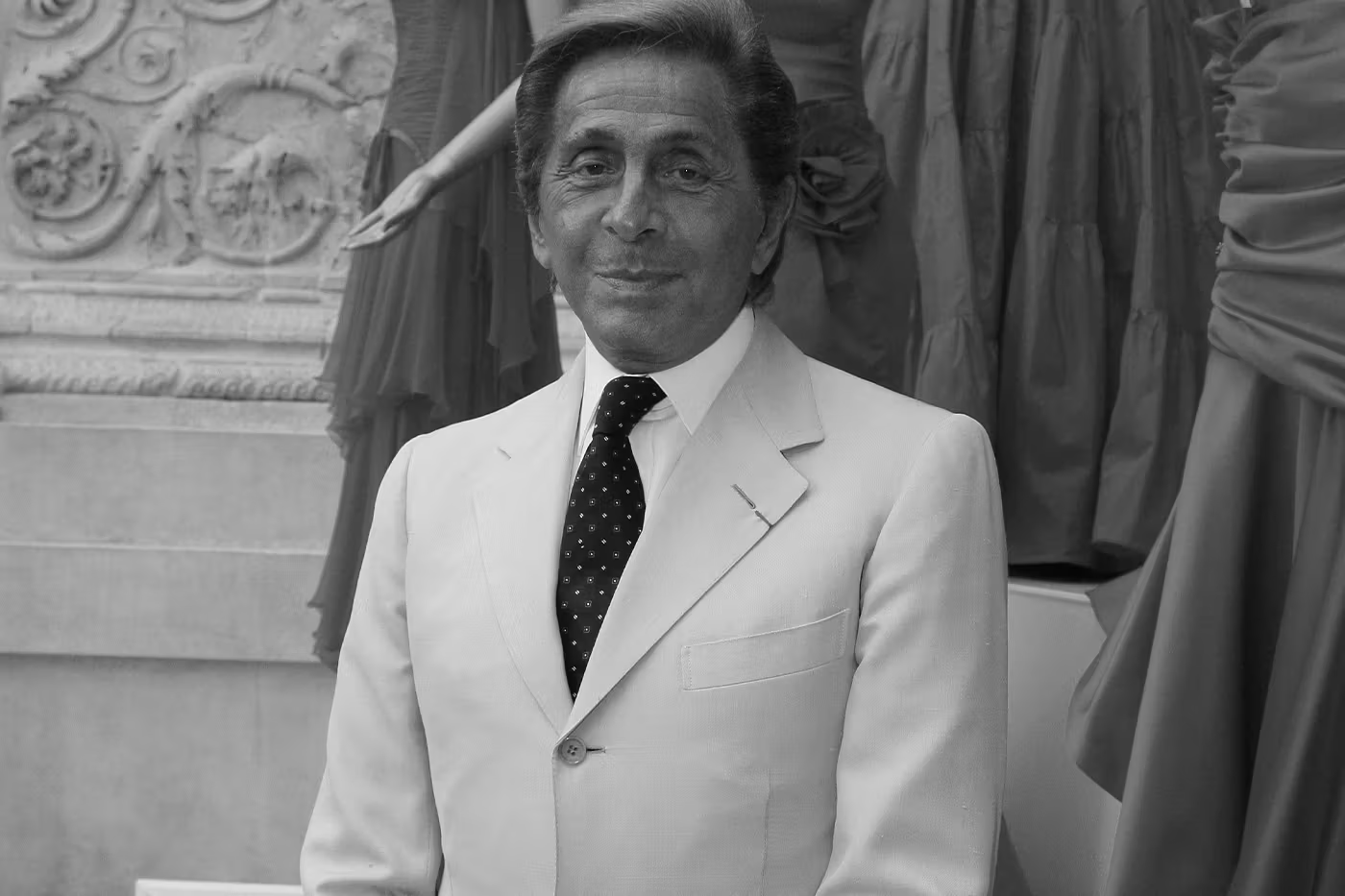
Valentino Garavani, the last of the great 20th-century couturiers whose designs clothed royalty, Hollywood icons and global high society, has died at the age of 93.
His death was announced Monday by the Fondazione Valentino Garavani e Giancarlo Giammetti, which said the designer passed away peacefully at his home in Rome, surrounded by family.
Often referred to simply as “Valentino,” Garavani ranked alongside Giorgio Armani and Karl Lagerfeld at the pinnacle of global fashion. His creations were worn by some of the most famous women of the last century, including Elizabeth Taylor, Jacqueline Kennedy Onassis, Nancy Reagan, Julia Roberts, Sharon Stone, Gwyneth Paltrow and Cate Blanchett.
The foundation said Valentino will lie in state at Piazza Mignanelli from January 21 to 22, with his funeral scheduled for January 23 at the Basilica of Saint Mary of the Angels and Martyrs in Rome.
Born in Lombardy in May 1932, Valentino moved to Paris at just 17 to study at the Chambre Syndicale de la Couture Parisienne. He later worked under fashion legends including Jacques Fath, Cristóbal Balenciaga, Jean Dessès and Guy Laroche before founding his namesake fashion house in 1960 alongside his longtime business partner and confidant, Giancarlo Giammetti.
Valentino quickly became synonymous with luxury, opulence and elegance, building a global empire defined by structured silhouettes, lavish fabrics and his signature hue—“Valentino red.” Inspired by a trip to Spain, the colour became the house’s defining symbol and cemented its place in fashion history. For his final runway collection in 2007, every model appeared in red for the closing finale.
His work bridged aristocracy and celebrity at a time when monarchy was fading and mass media was rising. He dressed Jacqueline Kennedy for her marriage to Aristotle Onassis in 1968, designed the outfit Farah Diba wore while fleeing Iran after the fall of the Shah in 1979, and created the gown Bernadette Chirac wore when her husband was sworn in as French president in 1995.
Valentino’s designs also became etched into pop-culture history: Elizabeth Taylor’s feather-trimmed column gown at the Rome premiere of Spartacus in 1960, Julia Roberts’ black-and-white Oscar gown in 2001, and Cate Blanchett’s one-shouldered yellow silk taffeta dress when she won an Academy Award in 2005.
Dubbed “the Sheik of Chic” by fashion editor John Fairchild and “the last emperor” in a 2008 documentary of the same name, Valentino cultivated an image of unapologetic glamour. Perpetually tanned, impeccably groomed and often trailed by a retinue of aides and pugs, he embodied the La Dolce Vita ideal that defined postwar Italian elegance.
“In Italy, there is the Pope — and there is Valentino,” Walter Veltroni, then mayor of Rome, famously said in 2005.
Unlike designers driven by provocation or trend-setting, Valentino remained devoted to beauty and discipline. “I always look for beauty, beauty,” he told Charlie Rose in 2009. “I try to make my girls look sensational,” he said in a 2007 interview with The New York Times.
Beyond couture, Valentino and Giammetti helped secure Italy’s place in the elite world of Parisian fashion, paving the way for brands such as Armani and Versace. The Valentino label became the first designer brand listed on the Milan Stock Exchange and achieved what few fashion houses manage—a graceful transition beyond its founder’s time on the runway.
In December 2023, Valentino was honoured with the Outstanding Achievement Award at the British Fashion Awards at London’s Royal Albert Hall, a final public tribute to a man whose vision shaped global fashion for more than half a century.