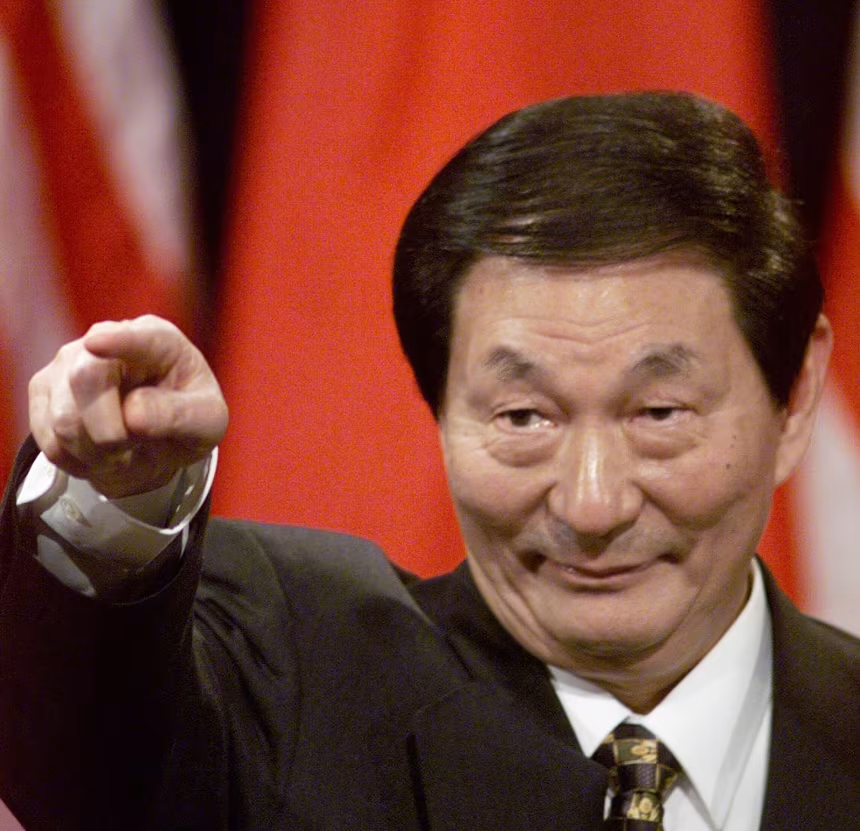
When former Chinese Premier Zhu Rongji passed away at the age of 97, the world lost the single most decisive architect of China’s modern economic rise. As premier from 1998 to 2003—and as economic czar alongside President Jiang Zemin throughout the 1990s—Zhu’s uncompromising, high-wire structural engineering transformed a stagnant, bureaucratic state into the undisputed “factory of the world.”
Where previous technocrats tinkered at the margins of state planning, Zhu wielded a surgical scalpel. Confronted with a bloated, debt-ridden public sector, staggering inflation, and rampant corruption following the 1989 Tiananmen Square crisis, he imposed a punishing regime of market discipline that reshaped global commerce.
┌─────────────────────────────────────────────────────────────────┐
│                  THE ZHU RONGJI STRUCTURAL REVOLUTION           │
├───────────────────────────────┬─────────────────────────────────┤
│ Core Economic Pillar          │ Global & Domestic Impact        │
├───────────────────────────────┼─────────────────────────────────┤
│ SOE Restructuring & Layoffs   │ Dismantled "Iron Rice Bowl"     │
│ 2001 WTO Accession            │ Integrated China into World Trade│
│ Fiscal Tax-Sharing Reform     │ Centralized Beijing's Revenue   │
│ Housing Privatization         │ Created Nation's Wealth Engine  │
└───────────────────────────────┴─────────────────────────────────┘
The “Iron Chancellor”: Breaking the Iron Rice Bowl
Zhu’s ascent was anything but ordinary. Branded a “rightist” during Mao Zedong’s anti-rightist campaign in the 1950s after criticizing economic mismanagement, Zhu was purged, expelled from the party, and sent to rural exile for manual labor. He was purged a second time during the Cultural Revolution. Yet, his sharp administrative genius made him indispensable when Deng Xiaoping initiated the “reform and opening up” era.
Known for his fierce temper and zero-tolerance stance on corruption—famously declaring he had “prepared 100 coffins: 99 for corrupt officials and one for myself”—Zhu earned the moniker “Boss” and the “Iron Chancellor.”
Upon taking command of the macroeconomy, he executed reforms that few leaders before or since had the appetite to touch:
- Massive Privatization & Layoffs: He dismantled China’s guaranteed lifetime employment system—the “Iron Rice Bowl.” By shutting down, selling off, or merging tens of thousands of inefficient state-owned enterprises (SOEs), over 30 million state workers were laid off.
- Tax-Sharing Fiscal System (1994): He centralized fiscal revenue in Beijing, giving the central government the financial war chest needed to fund mega-infrastructure projects across the nation.
- Pioneering Private Housing: He ended state-allocated housing, allowing urban workers to buy their homes. This single move birthed China’s multi-trillion-dollar real estate market and unleashed generational wealth for the middle class.
       [ Pre-1990s Command Economy ]
                    │
                    ▼
      [ Zhu's Shock Therapy Reforms ]
                    │
    ┌───────────────┴───────────────┐
    │                               │
    ▼                               ▼
[ Domestic Restructuring ]     [ Global Market Entry ]
  • Privatized Housing           • 2001 WTO Accession
  • 30M+ SOE Layoffs             • Low Tariffs & FDI Surges
  • Bank Debt Cleanups           • Export Superpower Built
    │                               │
    └───────────────┬───────────────┘
                    │
                    ▼
     [ 2000s–2010s Hyper-Growth Era ]
Gambling on Global Integration: The 2001 WTO Deal
Zhu’s crowning achievement—and his greatest political gamble—was negotiating China’s 2001 entry into the World Trade Organization (WTO). Facing fierce internal opposition from party conservatives who feared foreign capital would swallow domestic industries, Zhu pushed through painful concessions. He reduced import tariffs, opened internal sectors to foreign investment, and bound China to international trade rules.
The gamble paid off spectacularly:
- Hyper-Growth: China’s GDP expanded at double-digit rates through much of the 2000s, peaking at over 14% growth in 2007.
- Global Footprint: Foreign direct investment poured in, transforming China into the primary manufacturing engine for multinational corporations and propelling it past Japan to become the world’s second-largest economy by 2010.
The Mixed Legacy and Modern Paradox
While Zhu’s reforms created the foundation for China’s modern prosperity, they also sowed seeds for the structural hurdles Beijing navigates today. The tax-sharing system left local governments starved for tax revenue, forcing them to rely heavily on land sales—a model that ultimately fueled the ongoing real estate debt slump. Furthermore, the rapid dismantling of social safety nets exacerbated regional and income inequality.
In an era where state control over the economy has re-tightened, Zhu Rongji stands out as a singular figure: a devout party loyalist who possessed the audacity to expose state institutions to ruthless market forces. His legacy endures in every supply chain that girds the global economy.
For direct commentary and historical footage detailing former Premier Zhu Rongji’s historic economic overhaul and global legacy, view the coverage below:
Former Chinese premier Zhu Rongji dies aged 97
This broadcast breaks down Zhu Rongji’s transformative role as China’s top economic planner, highlighting his decisive drive to secure WTO entry and modernize state industry.