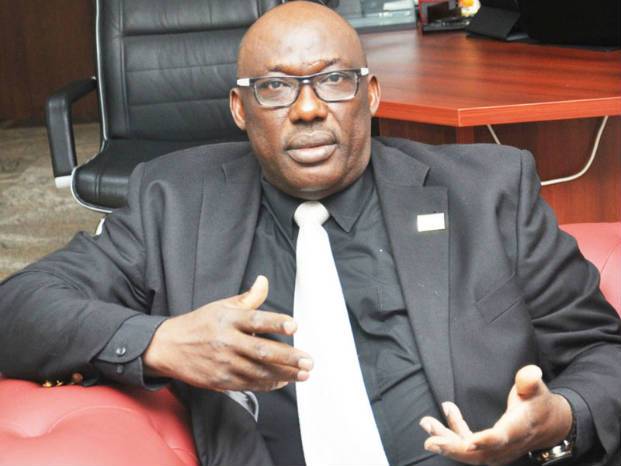
When the Legal Practitioners Disciplinary Committee (LPDC) handed down a three-year suspension to Chief J-K Gadzama, SAN—one of Nigeria’s most prominent legal figures—the public narrative seemed instant and simple: a high-profile legal titan punished for professional misconduct.
Yet beneath the alarming headlines lies an intricate, decade-long legal quagmire involving a ₦41.8 billion human rights judgment, an ₦8 billion consent compromise, competing retainerships, and a battle over professional fees that morphed into a devastating disciplinary process.
The Origin: A Tragedy in Benue and a ₦41.8 Billion Judgment
The roots of the controversy trace back to October 2001, when military operations devastated communities across four Local Government Areas in Benue State. In 2003, fourteen plaintiffs launched a consolidated fundamental rights suit against the Federal Government and the Nigerian Army.
By 2007, the Federal High Court ruled in favor of the victims, awarding a colossal ₦41.8 billion in damages.
However, as the case dragged through the appellate courts for years, the execution of the judgment ground to a halt—setting off a chain reaction of shifting legal representation and conflicting strategies.
The ₦8 Billion Compromise and the Battle for Representation
While initial counsel Mr. Ocha P. Ulegede pursued garnishee proceedings, several judgment creditors—frustrated by years of delay—formally debriefed him and briefed Chief J-K Gadzama, SAN, to take over the recovery process.
Upon stepping into the matter, Gadzama discovered a startling revelation: an ₦8 billion consent judgment had been entered in February 2015 to compromise the original ₦41.8 billion debt. Crucially, records indicated that none of the 14 judgment creditors had signed the settlement terms, raising fierce legal questions:
- Who authorized the compromise of a ₦41.8 billion judgment down to ₦8 billion?
- Which legal counsel held the true authority to act for the judgment creditors at each phase of recovery?
     [2001: Benue Army Attack]
                 │
     [2007: ₦41.8 Billion Judgment Awarded]
                 │
   ┌─────────────┴─────────────┐
   ▼                           ▼
[Original Counsel:          [Frustrated Creditors Brief
 Ocha Ulegede]               Chief J-K Gadzama, SAN]
   │                           │
   ▼                           ▼
[2015: ₦8 Billion           [Discovers Compromise;
 Consent Judgment Filed]     Challenges Authority & Filings]
   │                           │
   └─────────────┬─────────────┘
                 ▼
 [Competing Fee Claims & 2019 High Court Garnishee Order]
                 │
                 ▼
 [Disciplinary Complaint Filed Before the LPDC]
Misconduct or Fee Dispute? Unpacking the Key Contradictions
Documentary records reveal that the underlying dispute did not stem from allegations of stolen client funds, fraud, or client deception. Instead, it emerged as a bitter turf war between legal practitioners over legal representation and fee entitlement.
| Parameter | Headline Impression | The Documentary Record |
| Nature of Complaint | Serious client fraud or unethical client poaching. | Dispute between legal counsel over retainership, authority, and recovery fees. |
| LPDC Complainant | A direct client wronged by counsel. | An associate (Mr. Alashi) with no prior professional relationship with Chief Gadzama. |
| Prior Professional Review | Unexamined new violation. | The NBA previously reviewed the same 2015 complaint by Mr. Ulegede and did not sustain allegations of misconduct. |
| Judicial Orders | Unauthorized interference with funds. | Actions taken pursuant to explicit 2019 Federal High Court directives requiring funds to be paid into a court account. |
A Precedent with Far-Reaching Implications for the Bar
The LPDC decision raises fundamental questions for the Nigerian Bar Association and the legal profession at large. Is the disciplinary process at risk of being weaponized to settle complex inter-counsel retainership and fee disputes?
While decisions of statutory disciplinary bodies demand institutional respect, legal analysts argue that public confidence in the legal system requires separating genuine ethical breaches from layered civil disputes over representation.
As the matter proceeds through higher judicial channels, the case of Chief J-K Gadzama, SAN, stands as a stark warning: In complex legal recoveries, the boundary between a retainership feud and professional misconduct remains perilously thin.