A suspected improvised explosive device (IED) detonated early Wednesday at the Bayelsa State Secretariat Complex in Yenagoa, triggering a swift security response and the arrest of a 60-year-old suspect.
The explosion occurred at approximately 6:00 a.m. on February 11, 2026, according to the Bayelsa State Police Command.
Police spokesperson DSP Musa Muhammed confirmed the incident in a statement, describing it as a “suspected IED explosion” within the state secretariat premises.

“The Commissioner of Police, CP Iyamah Daniel Edebor, immediately led the Explosive Ordnance Disposal (EOD) Unit, Special Drone Unit and other tactical teams to the scene,” Muhammed said.
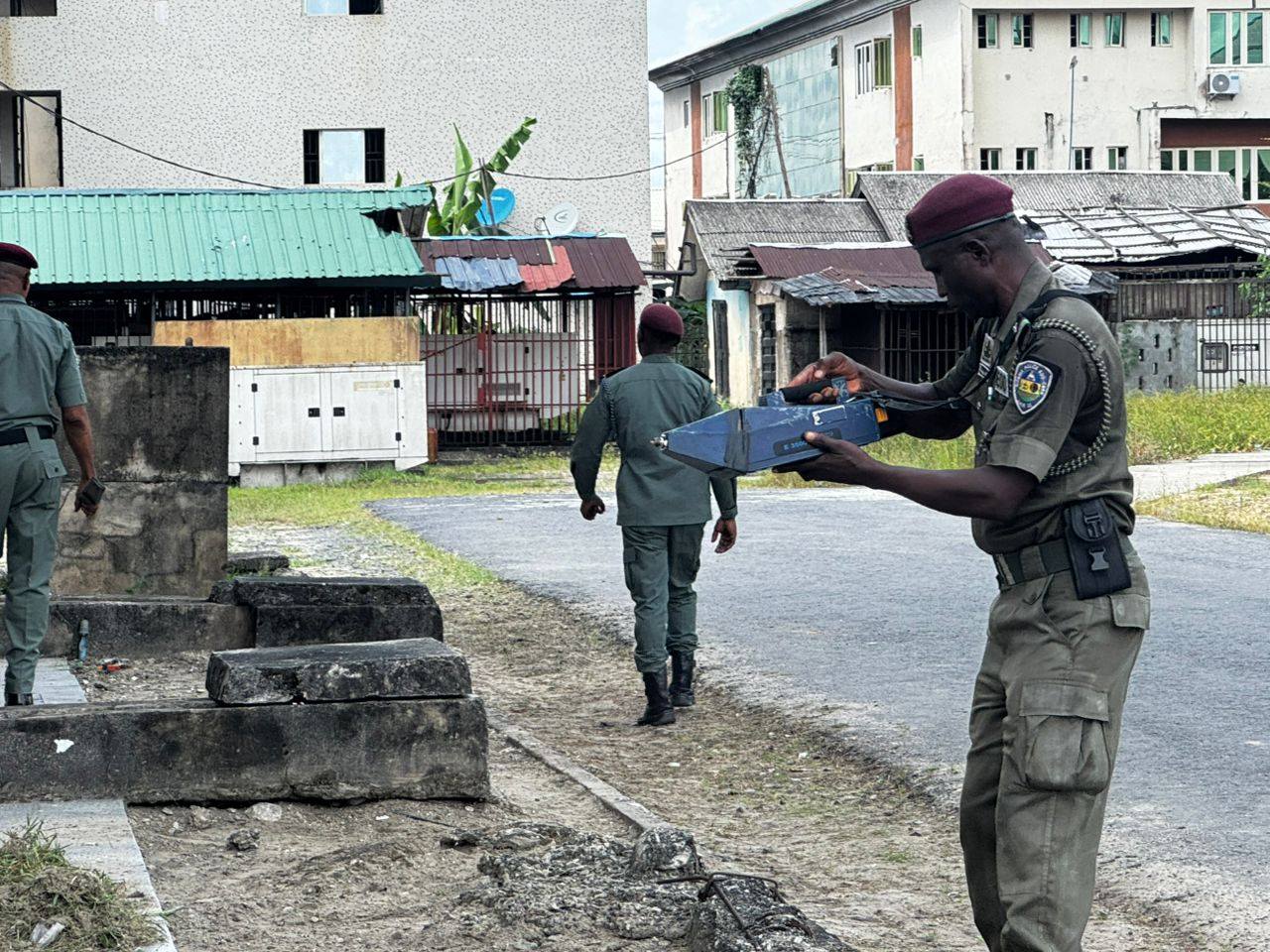
Authorities said the area was cordoned off upon arrival. Bomb disposal experts identified and rendered safe an additional unexploded device found at the site.

“No life was lost and no property was destroyed,” the statement added.
Police identified the suspect as Pentecost Elijah, a 60-year-old man from Otuan Community in Southern Ijaw Local Government Area of Bayelsa State. He was arrested at the scene and is currently being interrogated at the State Criminal Investigation Department. Police say he will be charged in court upon conclusion of investigations.
The command assured residents that the situation is under control and urged the public to remain calm.

In response to the explosion, the Bayelsa State Government ordered a temporary four-hour suspension of work at the secretariat as a precautionary measure. The directive was issued by Head of Service Dr. Wisdom Ebiye Sawyer. Security operatives, including anti-bomb squads, blocked access roads to the secretariat and the Government House while safety sweeps were conducted.
Conflicting Accounts Over Alleged Explosive in Abia Church
The Bayelsa incident comes amid heightened anxiety in Abia State, where conflicting accounts have emerged over the alleged discovery of an explosive device at the United Evangelical Church, Ehere/Umuola, in Ogbor Hill, Aba.
Eyewitnesses claim that on January 30, 2026, laborers excavating a foundation for a perimeter fence unearthed a metallic object buried less than a foot underground. The work followed a government directive requiring the church to adjust its structure due to road expansion.
However, the Abia State Police Command denied that any explosive device was recovered.
“I can authoritatively confirm that no bomb or explosive was recovered from the said area,” Police Public Relations Officer DSP Maureen Chinaka said, maintaining that soldiers merely removed an iron rod from a church pillar during compliance with construction directives.
Church leaders strongly dispute that account.
Associate Pastor Eleazar Onyenweaku told reporters that he immediately recognized the object as an explosive device, citing prior experience living in Northern Nigeria.
“The safety ring was still intact,” he said.
Onyenweaku said he contacted soldiers at a nearby military base, who allegedly examined and evacuated the device in a military vehicle, warning that additional explosives could be buried in the area.
He said he bypassed the police because he believed the military was better equipped to handle such devices. He also dismissed speculation that the object was a relic of Nigeria’s Civil War, arguing that it appeared relatively new.
The Army has not publicly confirmed the church’s account. Captain Mazinho Attah, Assistant Director of Army Public Relations for the 14 Brigade Ohafia, said he would respond to inquiries but had yet to issue a statement as of press time.
Hours after local media reports surfaced, Abia State Commissioner of Police Danladi Isa reaffirmed the police position, stating that no bomb was found and describing the pastor as “not an expert in bomb detection.” He said a search by Explosive Ordnance personnel confirmed the area was safe and noted that no formal complaint had been lodged.
The pastor pushed back, accusing the police of misrepresenting events and insisting that officers later visited the church and were informed by Army personnel that an explosive had indeed been evacuated to a military facility in Asa, Ukwa East.
Government Confirms Device, Downplays Threat
Breaking days of official silence, Abia State Security Adviser Navy Commander MacDonald Ubah (retd.) acknowledged that an explosive device had been excavated but described it as an “antiquated, expended 96mm propelled grenade round.”
“It was not live ammunition. It had been detonated before and must have been there for a long time,” Ubah said, urging residents not to panic.
Still, the conflicting narratives have fuelled public concern.
Civil society organizations and security experts have called for a transparent investigation to clarify how the device ended up on church grounds and whether additional risks exist.
Mrs. Amaka Biachi, Executive Director of the African Centre for Human Advancement and Resource Supports, urged authorities to address the contradictions decisively. FENRAD Executive Director Comrade Nelson Nwafor criticized what he described as premature conclusions, warning that such disputes erode public trust.
Retired senior security officials, including former Army operations chief Gen. Ijioma N. Ijioma and former Deputy Inspector-General of Police Godwin Nwobodo, also called for thorough investigations and improved coordination among security agencies.
As the Army remains publicly silent, key questions linger: How did the device get there? Was it isolated? And were official statements issued before investigations were fully concluded?
The incidents come amid growing national anxiety over security, with concerns about the movement of armed groups across regions. For residents in both Bayelsa and Abia, reassurance may depend less on official denials and more on transparent, coordinated action.