By Ladidi Sabo
Nigeria’s commercial capital is now being compared, uncomfortably, with cities across the Global South accused of using urban development as a weapon against the poor, as human rights lawyer Femi Falana, SAN, accuses the Lagos State Government of openly defying court orders while demolishing waterfront communities.
In a statement issued January 24, 2026, Falana said the ongoing destruction of homes in Makoko, Oko-Agbon, Sogunro, Iwaya and other waterfront settlements amounts to executive lawlessness, warning that Lagos risks sliding into the same category as cities where courts exist on paper—but bulldozers rule in practice.
A Pattern Seen Across the Global South
From Rio de Janeiro’s favelas, where residents were forcibly evicted ahead of the 2016 Olympics, to Mumbai’s slum clearances, and Cape Town’s apartheid-era spatial legacies, urban experts say Lagos now mirrors a familiar pattern: informal communities erased to free land for elite investment, often in defiance of domestic courts and international human-rights standards.
In Brazil, mass evictions triggered condemnation from the UN Special Rapporteur on Adequate Housing. In India, the Supreme Court has repeatedly clashed with state governments over slum demolitions carried out without resettlement. In South Africa, constitutional litigation forced authorities to adopt “meaningful engagement” with affected communities before evictions.
In Nigeria’s case, Falana argues, the courts have already spoken—yet the demolitions continue.
Courts Ruled. Lagos Bulldozed Anyway.
A landmark 2017 Lagos High Court ruling declared the state’s mass waterfront evictions unconstitutional after more than 30,000 people were displaced, awarding compensation and ordering a halt to further demolitions. That judgment alone could have shielded over 270,000 residents.
In August 2025, the Federal High Court reinforced the ban, restraining Lagos authorities and the police from demolishing Makoko, Oko-Agbon, Sogunro and Iwaya communities, citing residents’ “continuous fear of imminent demolition.”
Yet according to Falana, homes, schools and medical centres have since been flattened—sometimes overnight—leaving families homeless and livelihoods destroyed.
“This is not urban renewal,” Falana said. “It is state-enabled dispossession.”
Supreme Court Authority Undermined
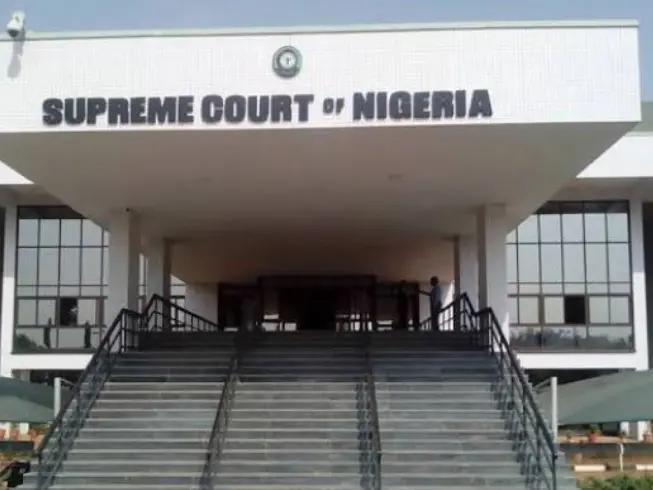
Beyond housing rights, Falana says Lagos is defying Nigeria’s apex court. In January 2024, the Supreme Court ruled that only the federal government, through the National Inland Waterways Authority (NIWA), has legal control over inland waterways—where most waterfront communities are located.
The ruling stripped Lagos State of any authority to regulate, seize or demolish structures on navigable waters.
“Any demolition carried out by Lagos State on the waterfront is not just illegal—it is contemptuous of the Supreme Court,” Falana said.
Legal scholars warn that when sub-national governments ignore apex court rulings, it weakens constitutional federalism and erodes public trust in the judiciary.
Protest, Policing and the Criminalisation of Dissent
On Wednesday, civil society groups staged a protest at Ikeja Underbridge, accusing the Lagos government of clearing poor communities to make way for luxury estates, hotels and commercial developments.
Placards read: “Lagos Is Not for the Rich Alone” and “Homes Before Hotels.”
The demonstration was met with heavy police deployment; a response critics say reflects a broader trend in which housing justice protests are securitised rather than addressed—a pattern documented in cities from Nairobi to Jakarta.
A Human Rights Issue, Not a Local Dispute
Under international law, including the International Covenant on Economic, Social and Cultural Rights, forced evictions without consultation, compensation or resettlement are prohibited. Nigeria is a signatory.
Urban justice advocates warn that Lagos’ actions could expose Nigeria to international scrutiny, particularly as the country positions itself as a regional leader on governance and rule of law.
“Cities are judged globally by how they treat their poorest residents,” said one housing rights advocate. “When courts are ignored, investors may come—but legitimacy leaves.”
‘If Soldiers Obeyed Courts, Why Can’t Civilians?’
Falana invoked the landmark case of Military Governor of Lagos State v. Ojukwu, where a military regime complied with a Supreme Court order and restored seized property.
“If a dictatorship could obey the courts,” Falana said, “there is no excuse for a democracy not to.”
As demolitions continue and protests grow, Lagos now stands at a crossroads—between becoming a global city anchored in law, or another case study in how development, unchecked by justice, becomes displacement by design.