The Times
Thursday, October 30 2025
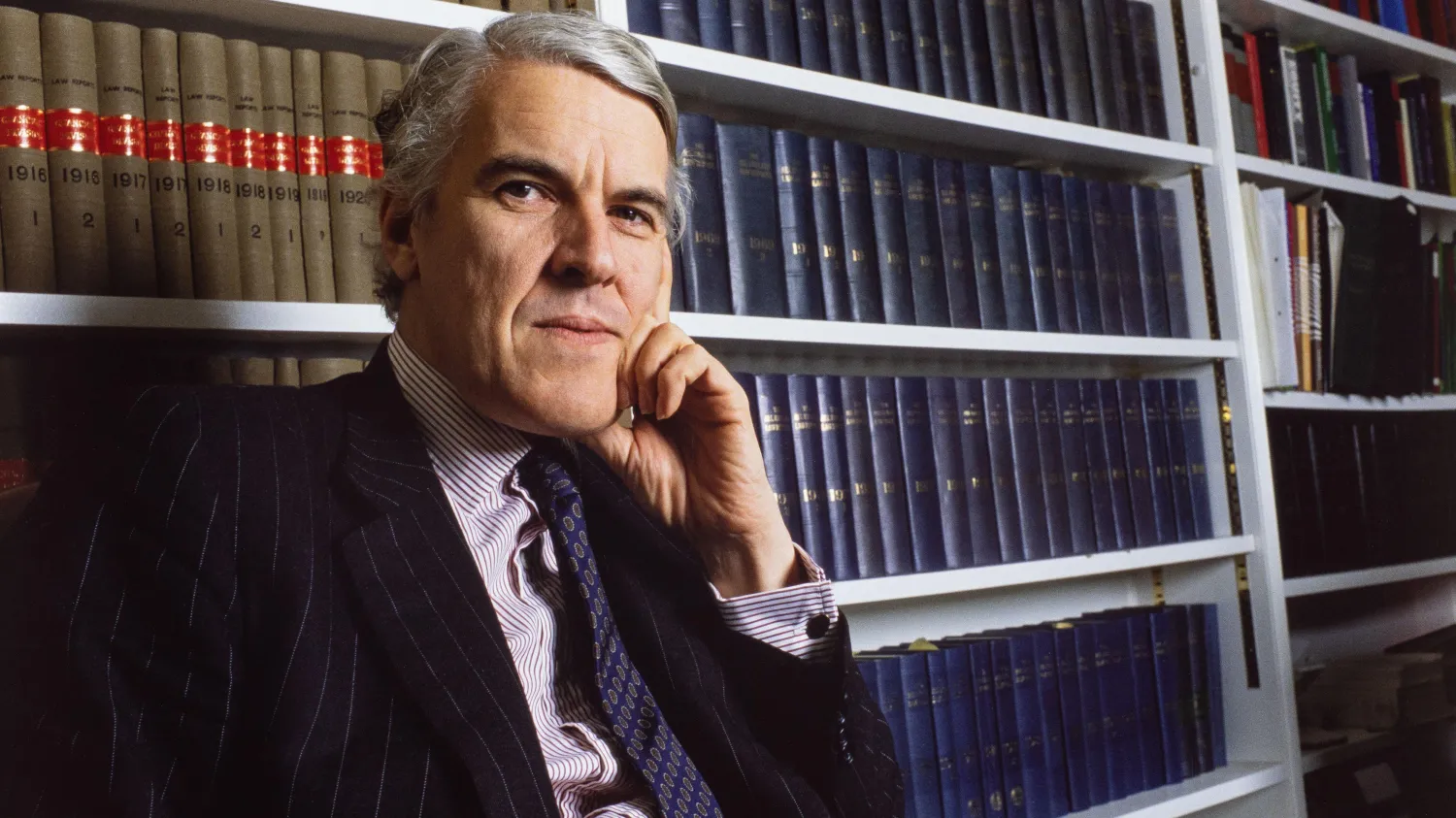
In November 2000, Peter Cresswell, then a High Court judge, delivered a legal ruling that condemned the operations of the Lloyd’s of London insurance market and devastated more than 200 investors known as “Names”.
He gave his decision in a 600-page judgment at the end of a vast legal undertaking that was typical of a man who was both brutally logical and in possession of a moral compass underpinned by firm Christian values.
Cresswell attacked Lloyd’s, which had won the case. “The catalogue of failings and incompetence in the 1980s by underwriters, managing agents, members’ agents and others is staggering,” he said, “and brought disgrace on one of the City’s great markets.”
At the same time, he reached out to the Names, who had lost the hearing and, in many cases, faced financial ruin. “I recognise that no words can adequately describe the devastation that has been caused to many individuals in financial and personal terms,” he said, adding that many Names were “innocent victims” who had “suffered enormously”.
After overseeing litigation for three years between 1993 and 1996 and hearing a case that lasted six months in 2000, Cresswell rejected claims that Lloyd’s had defrauded the investors.
Each of the Names had pledged their own wealth with unlimited personal liability to underwrite insurance policies, each providing capital to a Lloyd’s syndicate to share in its profits — and losses.
As the 1980s wore on, however, losses mounted exponentially, eventually reaching £8 billion. Half of them arose out of asbestos claims in the United States; others from a series of disasters, including an explosion on the Piper Alpha oilrig in the North Sea, and damage caused by an earthquake in San Francisco and ferocious storms in northern Europe.
The 230 Names alleged that they had signed up to Lloyd’s under false pretences. They claimed that those running the insurance market were all too aware of the build-up of asbestos-related claims and had made misrepresentations to encourage new underwriters to join the market. The system was widely known as “recruit to dilute”.
Of the 34,000 underwriters who lost money as a result of the crisis, the vast majority settled when Lloyd’s offered a deal that vastly reduced their liabilities after the litigation presided over by Cresswell. Most Names agreed to pay back £100,000 each. Others reached agreement later; 230 held out.
As well as the cost to the Names, the case took a heavy toll on the judge, who was an intensely private man. He faced criticism both in the media and among some of those involved in the insurance market, including many Names. His critics included people he knew well.
According to those close to him, Cresswell was “deeply hurt” by the criticism. He “felt isolated” and “lost confidence”.
Yet he found support among colleagues in the High Court and, in 2002, the Court of Appeal unanimously upheld his findings.
A former judge who specialises in financial law said: “The litigation by the Lloyd’s Names went to the heart of London as a global insurance sector. Mr Justice Cresswell managed the case with a sure hand, and although the Names were ultimately unsuccessful, his criticisms of Lloyd’s led to fundamental reforms which put the market on a sustainable basis.”
Lloyd’s introduced significant structural changes. A new company was founded to deal solely with historic losses. Rules were established to ensure that underwriting was backed by liquid assets. Limited liability was introduced for Names.
A tall, imposing man with chiselled good looks, Cresswell was called to the Bar at Gray’s Inn in 1966 and in his early years undertook criminal as well as commercial work. He built a highly successful practice in financial disputes. He became a QC in 1983 and appeared in cases such as the landmark Libyan assets litigation. Three years later, he became a recorder.
At the same time, Cresswell stood out as an increasingly influential figure in the legal profession. He became a member of the Senate of Inns of Court and Bar in 1981, and chairman of the Common Law and Commercial Bar Association four years later.
In 1990, he was elected chairman of the General Council of the Bar in what Frances Gibb, then legal correspondent of The Times, called “one of the most critical years” in its history. He was 45, one of the youngest men to head the Bar.
In an interview at the time, Gibb wrote of Cresswell: “His style is quietly forceful and tough; not a man to have on the other side of the negotiating table.”
At the time, the Bar was facing a Conservative government determined to introduce more competition into the legal profession, reform rights of audience and end the monopoly enjoyed by barristers in the higher courts.
Although the Courts and Legal Services Bill passed into law, Lord Mackay of Clashfern, the lord chancellor, made several compromises to safeguard the position of barristers and the independence of the Bar. Much of the credit for this was handed to Cresswell.
According to Sir William Blair, who was often Cresswell’s junior in his cases: “He built a relationship of trust with Lord Mackay. The Bar in general opposed expanding the rights of audience to solicitors in the High Court and above. He understood, however, that these reforms were inevitable and focused on achieving a sensible result. With hindsight, we can see that these reforms developed the role of advocacy and, rather than threaten the Bar, the removal of restrictive rules raised standards generally.”
Cresswell also used his position to pursue one of his great causes — access to justice for all. He wanted to see an expansion of legal aid and called for “renewed emphasis on the importance for those joining the Bar of doing legal aid work, and the need to represent individuals in difficulty in the civil and criminal courts”.
After his year as chairman of the Bar, Cresswell was appointed a judge in the High Court in 1991 when he received the customary knighthood. He was put in charge of the Commercial Court two years later.
Blair said: “He pioneered case management techniques in the most complex litigation of its day. In emphasising the value of mediation over pursuing cases to trial, he was ahead of his time. He believed in consensus rather than conflict. Sometimes mistaken for weakness, this was fundamental to the way he served as a judge.”
He retired from the High Court in 2008 and became an arbitrator and mediator in domestic and international legal disputes involving commerce and business, with a high rate of settlement.
Cresswell also acted as a judge in the Grand Court of the Cayman Islands and the Qatar International Court. He was a founding editor of the Encyclopaedia of Banking Law.
Peter John Cresswell was born in St Helens on Merseyside in 1944, but grew up in Iver in Buckinghamshire. He was the only son of Madeleine Cresswell and her husband, Jack, who was an Anglican vicar. They also had a daughter, Gillian. The household was austere. His mother and father instilled in him “a quiet faith and unshakeable belief in the family”. He was a committed Anglican throughout his life.
Peter was given an assisted place at a private school, St John’s in Leatherhead, where, according to the family, he had a “very tough time”.
He later gained a place at Queens’ College, Cambridge, where he studied law, gained a reputation as a “wheeler-dealer” and pursued two great passions: fishing and golf.
He had been taught to fly fish by his mother during holidays in the Lake District and later in life became something of a legend among fly fishermen. At the same time, he became an authority on the lifecycle of the salmon and developed an active interest in the conservation of rivers.
With other like-minded fishermen, he took over a run-down property in the Outer Hebrides, which involved a three-hour walk to the river, and transformed it into a renowned sporting estate. He introduced a 100 per cent catch-and-release policy long before this became the norm. He also fished on the Spey and managed a beat near his home at Wherwell on the Test in Hampshire.
Amassing a huge collection of old salmon flies, he bought boxes of them from antique shops and vintage outlets around the country, often keeping only a solitary fly and selling the rest through an anonymous intermediary on eBay. He became president of the Flyfishers’ Club in 2003.
When he proposed to his future wife, Caroline Ward, whom he had known since childhood, she accepted his hand in marriage on condition that he pursued only one of his great, time-consuming hobbies; the other had to go. The casualty was golf.
The couple were married in 1972 and had two sons, Oliver and Mark. Both parents carried the recessive gene for cystic fibrosis. Oliver was born with the disease and died in 1986 at the age of 13. Cresswell later worked with the Cystic Fibrosis Trust, becoming a trustee, then a member of the board. His wife, who worked for Christie’s, the auction house, developed spinal cancer and died in 2003. His son Mark, who is a fund manager, survives him.
Peter Cresswell and his grandson Felix sitting on rocks by the River Spey.
Cresswell on the banks of the Spey with his grandson Felix
After being buffeted by personal loss and difficulties in the aftermath of the Lloyd’s case, Cresswell finally found a new lease of life with the birth of two grandsons, Felix and Jack. He also found a new partner, Pamela Montgomery, a Canadian who is an international art teacher. They met in the Cayman Islands.
When he died, his son received letters of condolence from many judges — and even more from ghillies.👏🏽
Sir Peter Cresswell, High Court judge, was born on April 24, 1944. He died of cancer on September 10, 2025, aged 81