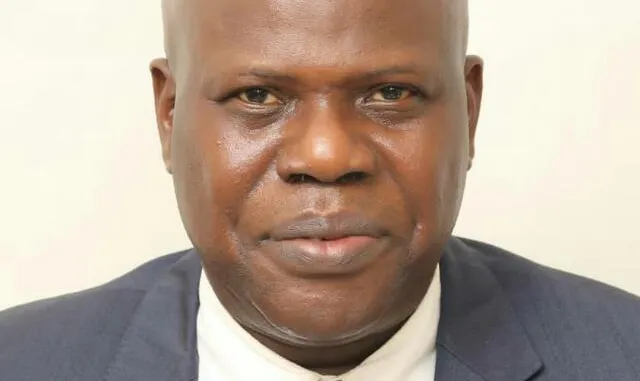
By Joseph Onu Silas
INTRODUCTION:
During the Senate screening of the newly appointed Chairman of the Independent National Electoral Commission (INEC) on 16th of October, 2025, I noticed the passion with which the President of the Nigerian Senate spoke about the need for changes in our Electoral Act for more transparent elections in the future. This is in addition to statements from his office that a new Electoral Act could be ready by December of 2025.
As a lawyer with a bias for Constitutional law, this caught my complete attention and moved me to share my thoughts on the proposed amendments to the existing Electoral Act, 2022, and even consequential Constitutional amendments that will strengthen our elections and democracy.
The Nigerian electoral history has been dominated by cries of cheating, rigging, and judicial manipulation of the laws to favour certain players. I have been a counsel in two Presidential Election Petitions representing the Peoples Democratic Party and His Excellency, Atiku Abubakar in both the 2019 and 2023 Presidential Elections Courts and Appeals to the Supreme Court. I have also earned personal experience in election participation as the candidate of the Peoples Democratic Party for the Ebonyi South Senatorial Bye-Election that took place on 3rd of February, 2024, and a Petitioner from the outcome of the same election. Therefore, I have the dual experience of a Counsel and a Petitioner in Nigeria’s electoral matters.
The Nigerian elections are basically bedeviled by three key fundamental issues, which are replete in all election cases. These issues form the basis on which almost 100% of elections are challenged in Nigeria. The question of whether a person is qualified to contest an election is first on this list. This has remained very thorny in Nigeria’s electoral disputes, with multiple standards deployed in resolving the question.
Another pertinent challenge is the question of the conduct of election. The processes laid down by law and how the electoral umpire carries out this responsibility is responsible for many election cases in Nigeria. Then comes the big one, which every politician now desires to have a grip on. The election cases themselves and the role of courts. Judges have become the sole determinants of every election in Nigeria. As a matter of fact, if the outcome of an election is not determined by a judicial pronouncement one way or the other, even the winner will not rest easy. The judiciary now certifies the outcome of an election before it is taken as completed.
These three issues are the focus of this document, and I will proffer recommendations on how the trio of challenges can be dealt with and the integrity of our elections enhanced.
- QUALIFICATIONS:
Today, the question of qualification in Nigeria’s electoral jurisprudence is both a pre-election and a post-election ground for litigation. It is as if the framers of the Constitution intended that qualification should be a subject matter of confusion that should be litigated and completely be left to the discretion of a court to determine what amounts to qualification to hold office in Nigeria. It is more so when you consider why the framers will make a provision for qualification in the constitution and then make another separate provision for disqualification in the same document. Ordinarily, it should be that when a provision for qualification is made in a document, anyone who is unable to meet that requirement is disqualified, without more. If a minimum of a primary school certificate is a requirement for qualification, a confusing word like “its equivalent” should be deleted so that everyone know that a primary school certificate is the minimum academic qualification required to contest an election in Nigeria. That is quite straightforward as it leaves no room for imaginative interpretations as to what is a minimum academic qualification needed for qualification to run for an election in Nigeria. That should not be a difficult task for the National Assembly to accomplish. Same is the case with provisions in the disqualification provisions of the constitution where the list of disqualifying items are provided for, leading to confusion as to whether a person is disqualified under the qualification provisions or only under the disqualification provisions or both. Courts have been giving the judgment on qualifications based on their particular interest in a given case. The jurisprudence is confusing as there are multiple conflicting decisions on what amounts to qualification or disqualification under the Nigerian constitution. My argument is that the provisions of the Constitution on qualification should be simple and straightforward, stating what qualifies a person to contest election in Nigeria, with anything to the contrary amounting to disqualification. If having a criminal record is a disqualifying factor, it should be listed under qualification as “whoever has a criminal conviction on any criminal charge, is not qualified to contest election in Nigeria”.
Another question that arises on qualification, mostly in litigation, is whether qualification is a pre-election matter or a post-election matter. As stated in the opening of this sub-heading, I do believe that qualification is both a pre-election and post-election ground for questioning an election as clearly provided for in the grounds for questioning an election. As a post-election ground, this question can be raised only by another candidate who participated in the election before an Election Petition Tribunal or Court. The tricky aspect of qualification is the pre-election part. Here, only co-aspirants in the primary elections of a political party can question the qualification of another. In Nigeria today, at the pre-election level, what is obtainable is that a person who is ab initio not qualified, may successfully participate in the general election if he/she is able to ensure that none of the co-aspirants file any challenge on qualification or even emerge unopposed. Once such a person makes it to the general election and emerge successful, the chances of removing such a winner at the election tribunal are almost non-existent as law rarely dictate the decisions of election tribunals. My argument on this point is that the question of qualification should be made a pre-election matter only and the locus be extended beyond being a party affair. Constituents who are the ultimate employers of politicians should and ought to have the constitutional right to question the qualification of anyone who desires to represent them in any political office, whether in the executive arm or legislature. Such cases are to be filed only in High Courts within the constituency that the aspiring politician intends to represent and should be dispensed with in accordance to the time specifications for pre-elections cases.If this becomes the case, there will be no need for qualification being questioned after a general election. Nigeria should not be a nation where elected officials are dragged to court on questions of qualification. It is a national embarrassment and should be dealt with before anyone even emerge as his or her party’s candidate. I believe that the essences of INEC’s publication of nomination 150 days before the day of election is to allow public scrutiny of nominees and therefore provisions such as S.84 (3) needs to grant members of the public in the relevant constituency, the locus to question the qualification of aspirants from all political parties seeking to be elected therefrom. This will enhance the quality of leadership recruitment and improve citizens participation in our democratic process. Electoral processes should not be only about the political parties, citizens are always at the receiving end of leadership decision, good or bad. - CONDUCT OF ELECTION:
This is at the heart of all elections globally, as it entails the processes and procedures of conducting elections. In Nigeria, this is the most troubling aspect of our electoral history, as election planning are and have always been beautifully and wonderfully organized until the election day itself. In the past, the most troubling challenge faced on elections day was the snatching of ballot boxes and stuffing of same. In recent elections, with the introduction of technologies such as the Card Reader and recently the Bimodal Voters Accreditation System (BVAS) and the undermined Electronic Transmission of Results, together with the Irev, snatching of ballot boxes aren’t fashionable in rigging elections. The conduct of elections in recent times is now undermined by the processes itself. The Electoral Act contains some desire for reforms and transparent election, but is a self-defeating piece of legislation.
Recent elections have shown that the conduct of election at the polling unit level are almost 100% credible because voters are able to monitor the processes in their respective polling units. The only cases of irregularity at polling units’ levels are those permitted by the voters in such polling units. Therefore, there is now a good measure of elections at the polling units, unless if violence is deployed to frustrate voting by an unpopular candidate or the problem of votes buying which is a growing problem caused mainly by poverty of the mind that pervades the Nigerian voting population because of the weaponization of poverty be the leading political class. So, having established that voting at the polling unit level have attained some level of comfort in a fledgling democracy like Nigeria, what then is the challenge in the conduct of elections? In today’s Nigeria, the only challenge in the conduct of election is the COLLATION system.
i. Collation: This is the compilation of election results from the polling units to the wards (Registration Areas), from the wards to the local government areas, from the local government areas to the State and from the States to National Collation center. This is currently provided form in S. 25 and only open to a limited number of persons with clearance to participate in the process.
The paper trail collation system is recognized as a problem and in the 2022 Electoral Act, an attempt was made to compliment this process and enhance transparency. The Electronic Transmission of results was required in the Election Guideline made pursuant to INEC’s powers in the Electoral Act and it was a good timely effort towards credible elections in Nigeria. It is my believe that the result contained in that system for the 2023 General Elections, which has not been made public till date (even the glitched version), contains the untampered authentic outcomes from all the polling units across Nigeria.
The paper trail step-by-step collation of results is the one and only problem in the conduct of elections in Nigeria today. Before collation, polling unit’ results are mutilated and figures changed to favour the defeated candidates and then these mutilated polling unit results with changed figures are admitted in court as the true reflection of the election. Mutilation and alteration of figures are considered to be criminal allegations at the tribunal or court, thereby making it practically impossible to proof within the time-line for election petition. So, politicians know that there are no consequences for mutilating polling unit results and by ensuring that those who are allowed into the collation venue are willing participants in changing the polling unit results, the entire exercise at the polling unit that was substantially credible, becomes wasted and the election stolen through the process of collation. I am arguing that to deal with this menace, all election results from polling units are to be automatically uploaded onto a blockchain electronic collation system directly from the polling units dispensing with Sections 25, 64 (4)(5)(6)(7)(8)(9) and 70 of the Electoral Act dealing with paper trail collation and step-by-step recording of polls. This is to be without alternative as that only paper trail in election should be the polling unit result sheet (EC8A series). Also, the need for declaration of result should be limited only to the results declared at the polling units, dispensing with the need for Returning Officers at multiple levels of election by deleting sections 71 and 72(1) of the Electoral Act and simply replacing them with “a candidate with the highest votes is elected. A combination of these two reforms will cut down the cost of conducting election in Nigeria as printing of unnecessary electoral materials would be reduced by more than 90% and the engagement of collation/returning officers who are usually paid for their services, will be needless and money saved for the nation. If the provisions that require step-by-step recording of election results and paper collation are dispensed with, and results are transmitted onto a blockchain electronic collation system, our elections will not only be transparent, it will cut down the cost of conducting election and ensure that results are turned in early. Thereby strengthening voters’ confidence and develop our democratic experiment. - LITIGATION:
This has to come last because it undermines everything electoral and democratic. Elections in a democratic setting entail that the people are able to freely elect their representatives without any form of interference or hinderance. In contemporary Nigeria, the fact is that all elections are determined and confirmed by the judiciary. Our elections have become very litigious and anyone who has good relationship with heads of courts, especially the Court of Appeal and Supreme Court, seem likely to emerge victorious in all kinds of election.
Nigerian elections have become so problematic that the politicians (legislature) had to hand over the entire electoral process to the judiciary be virtue of enacting Sections 285 and 286 in the Constitution. Ordinarily, rules of election litigation should not be contained in nation’s constitution. Such provisions ought to be in the Electoral Act, to allow easy changes whenever the situation or circumstances demands. Today, by virtue of S. 286, the President of the Court of Appeal is in a position to determine who becomes a legislature across Nigeria, both in State Houses of Assembly and the National Assembly. The President of the Court of Appeal enjoys the privilege of constituting the tribunal (court of first instance) and the Appeal panel at the Court of Appeal to hear appeals from the Tribunal, and their decision is final. So, the entire election case for legislative elections begins and ends at the desk of the President of Court of Appeal.
That is not my main concern. My main concern is that the judiciary should play a very limited role in political cases, guided by clear rules on what they can do in every given circumstance. Today, elections petition tribunals have become a big business and judges even lobby to be made members of one. We have read and seen how rich many of them become simply by membership of one election petition tribunal. This is so because the judges have replaced the electorates and are now determining the winners of elections in Nigeria. Instead of allowing judges determine the outcome of election, the Electoral Act can make specific provisions on how election cases are to be determined by the court. But firstly, the need to remove sections 285 and 286 from the Constitution is urgent and imminent, if we must reduce judicial dependence for validity in our electoral process. The sections should be added into the Electoral Act with modifications. The modifications should be the total abolition of Election Tribunals. This tribunals have corrupted our judiciary and created more problems for democratic elections. A fairer legal system can be guaranteed if cases election cases are done in the jurisdictions where the cause of action arose. An example is a case of a Presidential Election. If in a Presidential Election, non-compliance is observed at a particular polling unit, ward or LGA, the legal team of the political party/candidate are to file an action at the High Court covering such a polling unit, ward or LGA without waiting for any tribunal to be set up. At the Court, the rules contained in the current S.285 of the Constitution (to be in the Electoral Act) regarding timing, should apply. Where a complaint is filed at the High Court, the Court is bound to only cancel results that have been shown not to be in compliances with the Electoral Act. Where 10% (or any other agreed percent) of the total Presidential Election Result across the country is cancelled by various courts, by law the entire election should be reconducted. This formula is to be replicated at the State level, and legislative elections. When candidates, political parties and INEC are assured that bad elections will be repeated, everyone will adjust and ensure that both the process and outcome are credible. This will also see that the judiciary is only playing a perfunctory role, which does not even require them to declare a re-run as parties will compute the total of cancelled results and if it hits the threshold for re-run, it automatically takes effect without a court order. No more money for election petitions and we will have credible elections. - RECOMMENDATIONS:
As the National Assembly embarks on amending the current Electoral Act, it is my candid submission, based on the above arguments that the following recommendations will be helpful in enhancing our electoral system towards credible elections, eliminate judicial interference in politics and restore the confidence of electorates in the process.
i. Make the question of qualification a pre-election matter and grant citizens the right to question and challenge in court, anyone who seek their vote in an election upon the publication of nominees by INEC.
ii. Qualification should not be a ground for challenging the outcome of an election.
iii. Amend the provisions of Section 65 of the constitution on the qualification for election to the National Assembly to make specific provisions on what amounts to qualification such as “minimum academic qualification to be PRIMARY SCHOOL CERTIFICATE and deleting the term “or its equivalent”.
iv. Incorporate the disqualifying provisions in Section 66 of the constitution into the qualification provision by itemizing all that are required for a person to be qualified and then emphasizing that anyone who falls below the requirements is not qualified.
v. Amend the provisions of Section 106 of the constitution on the qualification for election to State House of Assembly to make specific provisions on what amounts to qualification such as “minimum academic qualification to be PRIMARY SCHOOL CERTIFICATE and deleting the term “or its equivalent”.
vi. Incorporate the disqualifying provisions in Section 107 of the constitution into the qualification provision by itemizing all that are required for a person to be qualified and then emphasizing that anyone who falls below the requirements is not qualified. - vii. Amend the provisions of Section 131 of the constitution on the qualification for election to the office of the President of the Federal Republic of Nigeria to make specific provisions on what amounts to qualification such as “minimum academic qualification to be PRIMARY SCHOOL CERTIFICATE and deleting the term “or its equivalent”.
viii. Incorporate the disqualifying provisions in Section 137 of the constitution into the qualification provision by itemizing all that are required for a person to be qualified and then emphasizing that anyone who falls below the requirements is not qualified.
ix. Amend the provisions of Section 177 of the constitution on the qualification for election to the office of a Governor of a State to make specific provisions on what amounts to qualification such as “minimum academic qualification to be PRIMARY SCHOOL CERTIFICATE and deleting the term “or its equivalent”.
x. Incorporate the disqualifying provisions in Section 187 of the constitution into the qualification provision by itemizing all that are required for a person to be qualified and then emphasizing that anyone who falls below the requirements is not qualified.
xi. Amend Part IV of the Electoral Act, 2022 by deleting Sections 25, 64 (4)(5)(6)(7)(8) and (9) and amending section 62 of the Electoral Act to dispense with the need for paper collation of election result.
xii. Replace the deleted sections with provisions that allows only Electronic Collation of Results directly from Polling Units, without options or alternatives. This provision cannot be at INEC’s discretion or matter for guidelines; it has to be a core provision in the Electoral Act.
xiii. Delete Section 70 of the Electoral Act to dispense with the requirement for step-by-step recording of election results, leaving only electronic transmission.
xiv. Delete Sections 71 and amend Section 72 (1) to dispense with the need for Returning Officers, leaving the result electronically transmitted as the sole determining faction for issuing a certificate of return. The result declaration at polling unit is the only return needed.
xv. Delete sections 285 and 286 from the constitution and abolish Election Tribunals.
xvi. The Provisions of section 285 regulating time line for election cases, pre and post elections, are to apply in the regular High Courts that are to hear election cases arising within their respective jurisdictions.
xvii. Make provision in the Electoral Act that all election cases are to be heard by High Courts within the jurisdiction where the cause of action arose and parties are allowed to file multiple cases across various jurisdictions specific to the court covering that judicial division.
xviii. Make provision in the Electoral Act that no court can cancel an election that is held outside the court’s territorial jurisdiction. All Elections cases are to be filed at the State High Court covering the area where dispute arose.
xix. Make provision that where 10% (or any other percent to be agreed) of the total election for any office is cancelled by the court, the said election is to be automatically re-conducted for non-compliance. This will deal with the discretionary confusion caused by what constitutes substantial compliance or non-compliance.
- CONCLUSION:
Finally, I do believe that if we are truly desirous of having credible elections and advancing our democracy as a nation, there is no other way to go but apply these necessary and important changes. The changes will shake tables but stabilize our nation. We must sacrifice selfish interest for our collective interest as a nation. Partisanship must give way to nationalism and patriotic determination to make Nigeria the pride of Africa. A new Nigeria is achievable.
Thank you!
JOSEPH ONU SILAS, ESQ.
Abuja – Nigeria.
Friday 17 October, 2025.
The views expressed by contributors are strictly personal and not of Law & Society Magazine.