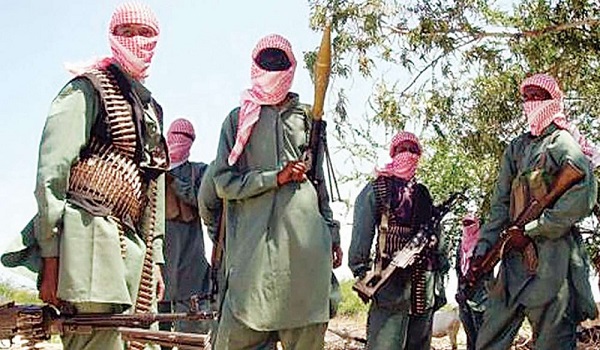
Renewed violence across Northern Nigeria has left communities reeling, with scores killed and dozens abducted in coordinated attacks spanning multiple states within just 72 hours.
The fresh wave of bloodshed comes amid heightened debate over the recent deployment of United States military personnel to support Nigeria’s security architecture, raising urgent questions about whether foreign-backed training efforts can stem a crisis that appears to be deepening.
Mosque Attack in Kebbi
In Kebbi State, gunmen stormed a mosque in the Dadinkowa community of Maiyama Local Government Area on Wednesday night, opening fire during a Qur’anic Tafsir session held alongside Taraweeh prayers.
The Kebbi State Police Command confirmed that five worshippers were killed and three others injured.
Police spokesperson Bashir Usman described the attack as a suspected terrorist reprisal, adding that joint security operatives had been deployed to restore calm and track the perpetrators.
Residents, however, say fear has already taken root.
“They came heavily armed and shot indiscriminately,” one local source said. “People ran in all directions.”
Adamawa: A Governor’s Hometown Hit Again
In Adamawa State, the hometown of Governor Ahmadu Fintiri—Madagali Local Government Area—was attacked for the fourth time in five months.
Local sources said suspected Boko Haram insurgents invaded Kirchinga village around midnight on Tuesday, killing at least 24 people, though official casualty figures are still being compiled.
The Adamawa State Police Command confirmed the attack but declined to give final numbers.
Madagali has now endured assaults on October 1, November 19, December 8, 2025, and most recently February 24, 2026—an alarming pattern that underscores the fragility of security gains in the North-East.
Sokoto and Kwara: Abductions Expand the Frontline
In Sokoto State, suspected bandits raided Rabah Local Government Area under cover of darkness, firing sporadically before abducting several residents. The exact number of victims remains unclear.
The assault came barely a week after gunmen kidnapped 16 people in the same area, reportedly demanding N20 million and three motorcycles as ransom—terms residents described as crippling.
Further south in Kwara State, four members of a single family were abducted on farmland in Babanla community, Ifelodun Local Government Area, after armed men opened fire at dawn.
The chairman of Ifelodun LGA, Femi Yusuf, questioned why residents ventured out early despite security risks—remarks that have sparked criticism among locals who argue that farming is their only means of survival.
Meanwhile, youths under the Coalition of Kwara North Youths staged protests at Government House in Ilorin, alleging that recent attacks in Kaiama LGA claimed between 162 and 200 lives in just two days—figures yet to be officially confirmed.
“Our communities are bleeding,” said coordinator Usman Haruna. “Silence would amount to complicity.”
Plateau and Zamfara: Violence Spreads
In Plateau State, at least 30 people have reportedly been killed in a series of attacks across Barkin Ladi, Riyom and Bassa local government areas over the past week.
Governor Caleb Mutfwang convened an emergency security council meeting in Jos as nine victims of a prior attack were laid to rest in a mass burial.
In Zamfara State, residents of Dan Jibga and Keta communities in Tsafe LGA say armed bandits have effectively laid siege to their towns. Locals told reporters that a bomb detonated between the two communities during a recent security operation, killing and injuring operatives attempting to gain access.
Elsewhere in Kebbi’s Ngaski LGA, bandits reportedly demanded N100 million from residents of Utouno community, threatening mass violence if the ransom is not paid.
The U.S. Factor: Expectations vs. Reality
The spike in violence coincides with the arrival of U.S. military personnel tasked primarily with training and capacity building.
Security analyst and retired Major Muhammad Bashir Galma cautioned against expecting immediate results.
“They are here for training,” he said. “Training involves skills, strategy and possibly technical support. These are processes that take time.”
He emphasised that the U.S. presence is not a direct combat deployment but a long-term effort to enhance Nigeria’s operational capacity.
Even so, the optics are stark: communities are under attack while international assistance is still in its preparatory phase.
A Region at Breaking Point
From mosque shootings to farmland abductions, the attacks reveal a widening geographic spread and evolving tactics among insurgents and bandits.
For many residents, the distinction between insurgency, banditry and communal violence matters less than the immediate reality: survival.
Critics argue that beyond military hardware and foreign partnerships, deeper structural issues persist—intelligence gaps, alleged political interference, weak local policing structures and delayed response times.
While officials urge patience, communities are demanding protection now.
This is because for those burying loved ones or fleeing ancestral homes, the question is no longer whether international training will eventually yield results, but whether Northern Nigeria can withstand the violence long enough to see them.