Nigeria faces a looming hunger crisis as the Red Cross issues a stark warning.
The organisation says over 33 million Nigerians may face severe hunger by 2026 without urgent action.
This alert was delivered in Abuja during the launch of its Nutrition Advocacy Plan.
The event also honoured Ambassador Layla Ali Othman as the group’s new Nutrition Ambassador.
The Red Cross said her role will strengthen awareness and mobilise nationwide support.
Othman expressed gratitude and pledged commitment to the anti-hunger mission.
However, experts argue that the hunger crisis is part of a deeper economic breakdown.
Kunle Oshobi, head of strategy and planning at the Narrative Force, says Nigeria now stands at a devastating economic crossroads.
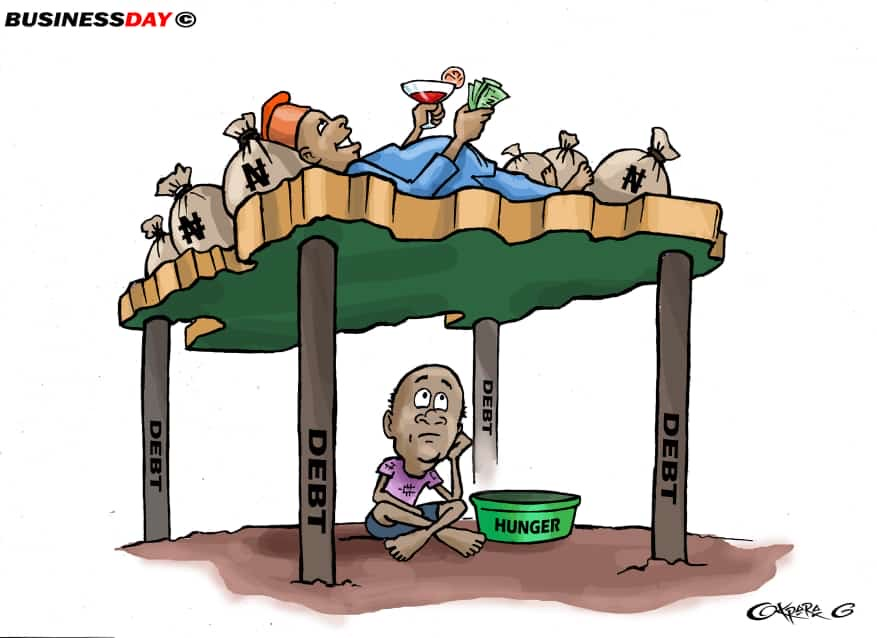
He notes that 139 million citizens live in poverty, up sharply from 87 million in 2023.
He warns that poor households spend up to 70 percent of their income on food.
Food prices have risen fivefold since 2019, worsening hardship across the country. Yet, despite public suffering, he says the government has intensified tax reforms.
Oshobi argues that heavy taxation cannot create prosperity in a collapsing economy.
He says taxing digital assets and adding new levies only widens national hardship.
He explains that increased taxation during mass poverty is economically destructive, warning that 33 million Nigerians already face food insecurity next year.
Oshobi cites inflation and violence in food-producing regions as key drivers.
He says new taxes hit citizens at the worst possible time.
He adds that deficit financing has pushed Nigeria into dangerous territory.
Nigeria’s 2025 budget carries a deficit of N13.08 trillion.
Most of this deficit will be financed through new borrowing.
Oshobi warns that public debt could exceed N180 trillion by year’s end, and that debt servicing now consumes over one-third of the national budget.
He adds that this leaves little for investment in productive sectors, while arguing that Nigeria is stuck in a cycle where borrowing fuels more borrowing.
He describes the situation as a debt trap that threatens future generations.
Oshobi says the real failure is choosing revenue extraction over wealth creation.
He argues that heavy taxes reduce purchasing power and stifle business growth.
He warns that businesses cancel investments when taxes rise and credit shrinks.
He says this triggers capital flight and shrinks the tax base even further.
According to him, true prosperity requires supporting productive enterprises.
He says Nigeria must first create wealth before expanding its tax net.
He proposes massive investment in agriculture, manufacturing and SMEs.
He notes that these sectors generate jobs and drive inclusive growth.
He argued that supporting MSMEs would create jobs and expand tax revenue naturally.
Oshobi says such stimulus would generate nationwide ripple effects.
He explains that productive loans fuel hiring, purchasing and economic activity.
He contrasts this with the current model that taxes the poor while borrowing heavily.
He says the present system creates no new wealth and worsens suffering.
He says proper infrastructure reduces business costs and multiplies wealth creation.
He notes that infrastructure is not an expense but an economic catalyst.
Oshobi argues that Nigeria still has vast untapped revenue potential.
He says the nation holds assets worth nearly N100 trillion that lie unused.
He argues that monetising these assets would ease pressure on citizens.
He says the government instead chose the easier option of borrowing and taxation.
He calls for suspending new taxes until economic stability returns.
He urges borrowing only for productive investments and not recurrent spending.
He advocates a national SME stimulus programme to drive wealth creation.
He calls for monetising abandoned assets instead of increasing taxes.
He says reducing the cost of doing business must become a priority.
He insists social protection must be strengthened during the economic crisis.
He argues that success must be measured by how much wealth Nigerians create.
Oshobi concludes that Nigeria faces a decisive economic choice.
He says one path leads to deeper poverty and endless debt.
He says the other path builds wealth and lifts millions out of hardship.
He warns that time is running out for leaders to make the right choice.