As rents soar into tens of millions of naira and entire low-income communities disappear under bulldozers, a troubling question hangs over Nigeria’s commercial capital: who can still afford to call Lagos home?
By Law & Society Magazine Analysis
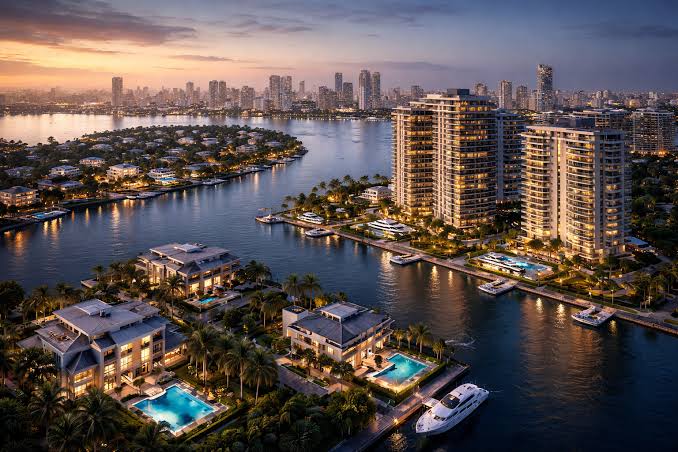
Frank Edoho’s recent remarks struck a chord because they articulated what millions of Lagos residents have known for years: The city’s housing market is drifting steadily beyond the reach of ordinary earners. The former Who Wants To Be A Millionaire? host questioned how property prices in parts of the city had climbed to levels that invite comparisons with luxury assets overseas, including private islands reportedly owned by football icon Cristiano Ronaldo.
Whether the comparison was exact mattered less than the sentiment behind it. Thousands of Nigerians who struggle each month to pay rent saw in those comments a reflection of their own reality—a housing market that increasingly appears detached from the incomes of the people it is meant to serve.
Fresh figures from the Lagos Island Residential Market Report 2026 suggest that this frustration is rooted in more than perception. The report places the average annual rent for a two-bedroom apartment at ₦17.25 million in Ikoyi, ₦15 million in Victoria Island, ₦10 million in Lekki Phase 1, and ₦8.5 million in Ikate, with every one of those markets recording dramatic increases since 2022. In Ikate alone, average rents have risen by more than 183 per cent in just four years. Analysts attribute the surge to familiar pressures—persistent inflation, the depreciation of the naira, escalating construction costs, limited land supply and sustained demand for premium housing—but the figures also point to something that extends well beyond economics.
They raise troubling questions about the direction in which Lagos is evolving and about the place of ordinary Nigerians within that future.
Every weekday, long before sunrise, teachers, nurses, journalists, police officers, junior lawyers, engineers, bankers and civil servants begin journeys that can last several hours simply to reach the offices, schools, hospitals and institutions that keep Lagos functioning. While they work in Victoria Island, Ikoyi and Lekki, many actually live far beyond those districts, commuting daily from Ikorodu, Iyana Ipaja, Badagry, Epe, Mowe and neighbouring Ogun communities because accommodation closer to work has drifted beyond their financial reach.
What used to be an inconvenience has gradually become a defining feature of working life in Nigeria’s commercial capital, draining both time and income from households already grappling with a harsh economy.
The burden does not end with the advertised rent. Prospective tenants are routinely confronted with demands for one or two years’ rent in advance, agency fees, legal fees, agreement charges, caution deposits and service charges that can inflate the total amount payable by millions of naira before a single piece of furniture enters the apartment. For many middle-income earners, securing accommodation has become one of the largest financial decisions they will ever make, often requiring loans, family contributions or years of savings.
Few people would argue that Lagos should stop modernising. As one of Africa’s fastest-growing cities, investment in roads, bridges, commercial centres and new residential developments is both necessary and inevitable. Yet modernisation carries difficult social questions when it proceeds without making room for those displaced by it. Across the state, communities such as Otodo-Gbame, Ilubirin, Tarkwa Bay and parts of Makoko have experienced demolitions or mass evictions over the years, frequently in the name of urban renewal or environmental enforcement. Human rights organisations have repeatedly criticised many of those operations, arguing that thousands of residents were removed without adequate consultation, compensation or meaningful resettlement, leaving families to rebuild their lives elsewhere with little support.
That contrast has become increasingly striking. While luxury developments continue to rise across parts of Lagos Island, affordable replacement housing has failed to emerge on anything close to the scale required. The city appears to be producing homes, yet many of them are designed for a market that excludes those on average incomes.
This dilemma is hardly new. Nigeria’s housing deficit has featured in policy debates for decades, and successive governments have acknowledged the scale of the challenge while unveiling ambitious housing programmes intended to bridge the gap. Lagos State has delivered several public housing estates and entered partnerships with private developers, but population growth has consistently outpaced those efforts. As more people move into the city each year, demand continues to race ahead of supply, leaving affordable housing perpetually beyond reach for millions of residents.
The market itself has also changed. Housing is increasingly viewed not only as shelter but as an investment class. Developers understandably concentrate on projects that promise the strongest returns, while investors channel capital into luxury apartments aimed at expatriates, multinational corporations, diaspora buyers and high-net-worth individuals. In many cases, premium developments generate higher yields through short-let accommodation than through conventional residential leases, reinforcing the commercial logic behind building for wealth rather than affordability.
From a business perspective, the calculations are understandable.
From a public policy perspective, the consequences are becoming harder to ignore.
Young professionals delay buying homes because ownership has slipped beyond their reach. Newly married couples postpone plans to start families while they search for accommodation they can sustain. Employers struggle to retain skilled workers who spend four or five hours each day travelling across the city, and businesses absorb the hidden costs of declining productivity, fatigue and staff turnover. What begins as a housing problem steadily spills into economic performance, family stability and quality of life.
Reducing the debate to supply and demand therefore tells only part of the story. Housing occupies a place unlike almost any other commodity. It provides shelter, certainly, but it also shapes educational opportunities, determines access to healthcare, influences productivity and underpins family life. International human rights instruments, including the Universal Declaration of Human Rights and the African Charter on Human and Peoples’ Rights as interpreted by regional bodies, recognise adequate housing as an essential component of human dignity. When decent accommodation becomes unattainable for large sections of the working population, the consequences extend beyond the property market into the wider social fabric.
Cities around the world have wrestled with similar pressures and have responded in different ways. Some have introduced inclusionary zoning policies requiring developers to allocate portions of new projects to affordable housing. Others provide tax incentives for lower-cost developments, expand public housing programmes or strengthen tenant protections in overheated markets. None of those measures offers a perfect solution, but they reflect an understanding that housing cannot be left entirely to market forces when the market itself consistently rewards only the highest returns.
Lagos stands at a similar crossroads. The city has every reason to celebrate its remarkable economic growth, expanding infrastructure and growing international profile. Its skyline reflects ambition, resilience and investment on a scale unmatched in much of West Africa. Yet the measure of a great city has never rested solely on the height of its buildings or the value of its real estate. It also rests on whether the people who educate its children, patrol its streets, treat its sick, argue its cases in courtrooms, report its stories and keep its businesses alive can still afford to build their lives there.
Frank Edoho’s comments attracted attention because they sounded dramatic. The rental figures now emerging suggest they reflected something far more significant than a passing social media observation. They exposed a widening disconnect between the value of property and the earning power of ordinary Nigerians.
Unless affordable housing begins to receive the same urgency devoted to commercial development and luxury real estate, Lagos risks becoming a city admired for its prosperity while steadily becoming inaccessible to the very people whose labour sustains it.
A commercial capital that cannot house its workforce comfortably is not merely experiencing a property boom; it is confronting a profound question about equity, inclusion and the future of urban life in Nigeria.