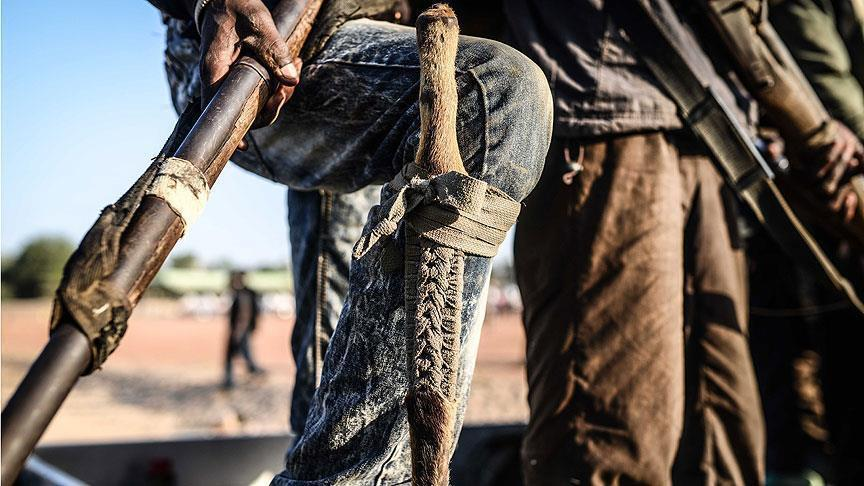
Nigeria’s spiralling security crisis took a grim turn last Wednesday as at least 34 people were killed in coordinated terror attacks across rural communities in Kebbi State, just as outrage mounted over a cleric’s controversial call for bandits to “pause” kidnapping during Ramadan.
The attacks, blamed on suspected Lakurawa terrorists, unfolded on February 18 in villages across Arewa Local Government Area, including Bui and several neighbouring settlements. Survivors described a calculated, multi-pronged assault in which heavily armed gunmen stormed remote border communities and opened fire indiscriminately.
Security sources confirmed a grim toll: 16 killed in Mamunu, five in Awashaka, three in Masama, and two each in five other villages. Entire families fled into the bush as attackers torched homes and gunned down residents in what officials described as an unprovoked massacre.
“Heartless Terrorists”
When contacted, Kebbi State Police Public Relations Officer SP Bashir Usman confirmed the incident.
Reacting on behalf of the government, the Special Adviser to Governor Nasir Idris on Communication and Strategy, Alhaji Abdullahi Idris Zuru, condemned the attackers as “heartless terrorists” and insisted the violence was “the last kick of a dying horse.”
According to Zuru, the militants, many described as spillovers from neighbouring Niger Republic and Sokoto—have no permanent base in Kebbi and are being tracked in joint operations involving the Nigerian military.
“The Kebbi State Government is committed to deploying all available resources to secure lives and property,” Zuru said, adding that survivors would receive immediate assistance.
Security forces have since been deployed to secure affected communities, assist displaced residents, and block potential escape routes as tracking operations continue.
Hostages on Camera: “Please Help Us”
Even as Kebbi reeled from the bloodshed, a disturbing video surfaced online showing two young women abducted more than a month ago by bandits operating across forest corridors straddling Zamfara and Sokoto states.
The visibly traumatized captives—clothes soiled, faces swollen, voices trembling—were seen crying and pleading for rescue.
“Please help us. Help us out,” they repeated, struggling to contain their emotions as an armed man speaking Hausa taunted them from behind the camera, coercing them to speak louder about their ordeal.
Mrs. Aisha Al-Mustapha, a teacher who shared the footage on X, identified one of the victims as her friend, Maryam, who was reportedly abducted while traveling from Zamfara to Sokoto to resume school.
“My friend Maryam has been in captivity for the past one month. Her only sin was travelling to go to school,” she wrote. “It really pains me how banditry has been normalised and human beings are being priced like animals.”
The circumstances of their abduction remain unclear, but their captivity underscores a grim pattern: students, commuters and rural dwellers have become prime targets in the North-West’s entrenched kidnapping-for-ransom economy.
“Pause Kidnapping for Ramadan?”—Backlash Erupts
The carnage has been compounded by controversy surrounding remarks attributed to Muslim cleric Sheikh Musa Asadu, who reportedly urged bandits to suspend kidnapping activities during Ramadan.
The statement ignited fierce backlash nationwide. Critics argued that urging criminals to “pause” violence during a holy month dangerously frames kidnapping as a negotiable vice—wrong only when religious observance demands restraint.
Columnist Lasisi Olagunju sharply questioned what he described as “seasonal morality,” asking whether the cleric’s logic implied that abductions would become tolerable once Ramadan ends.
Quoting Qur’an 5:32, “Whoever kills a soul… it is as if he has killed all mankind”—Olagunju challenged religious authorities to confront violent actors with the same zeal often directed at minor public infractions during fasting.
He further cited a Hadith recorded in Sahih al-Bukhari and Sahih Muslim defining a Muslim as one “from whose tongue and hand the people are safe,” asking when such teachings would be applied to those orchestrating mass killings across Kebbi, Zamfara and beyond.
A Region Under Siege
North-West Nigeria, particularly Zamfara and Sokoto states, has endured years of escalating banditry, mass abductions and village raids. Despite repeated military offensives and government assurances, armed groups continue to exploit forested terrain and porous borders to stage attacks with alarming frequency.
Residents describe a climate of normalized fear, where ransom negotiations have become routine and entire communities sleep with one eye open.
For families in Kebbi burying their dead, and for Maryam and countless others still trapped in captivity, Ramadan has brought not peace—but mourning.
As security forces intensify tracking operations, the pressing question remains: can Nigeria’s embattled northern corridor break the cycle of bloodshed, or is the region bracing for yet another chapter in a crisis that shows little sign of ending?