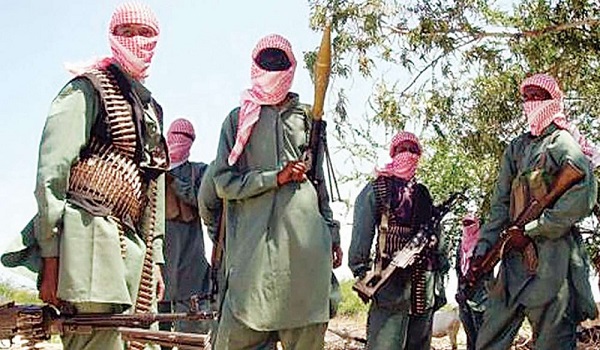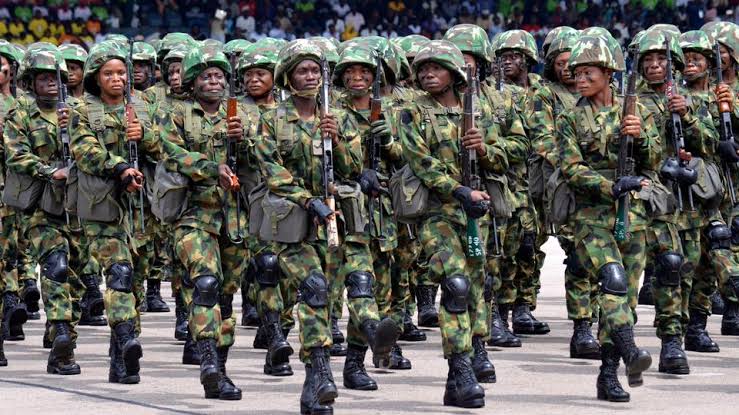
At a time when terrorists and bandits are brazenly attacking military formations, kidnapping soldiers, and even abducting and killing a serving general, the Nigerian Army has quietly trained 60 newly recruited soldiers, not for deployment to the embattled North, but to protect oil installations in the Niger Delta.
The move has triggered outrage among public affairs analysts who describe it as a stark symbol of the Nigerian state’s skewed security priorities.
Across Northern Nigeria, from Zamfara to Kaduna, Niger to Katsina, bandits and jihadist factions have intensified attacks on communities and military bases. Villages are razed. Schoolchildren are kidnapped. Farmers are driven from their lands. Soldiers are ambushed. In one of the most chilling episodes, a Nigerian general was abducted and killed, an act that underscored the boldness of armed groups and the fragility of state control.
Read Also: Army Major Killed as ISWAP Launches Pre-Dawn Assault on Borno Military Base
Read Also: Benue killings: New tears as FG exhumes Yelewata’s 105, By Ikeddy Isiguzo
Yet, while insecurity spirals, the Army’s latest training cycle has focused on safeguarding pipelines.
Fresh Recruits, Oil Mandate
The 60 soldiers, drawn from the 89 Regular Recruit Intake, completed their seven-week training barely two months after passing out from the Nigerian Army Depot. The exercise took place at the headquarters of the 3 Battalion in Delta State and was monitored by the Commander of 63 Brigade, Morounfolu Shonibare, alongside the Commanding Officer, Abdulaziz Haruna.
The curriculum: crowd control, peace enforcement, anti-terrorism drills, all tailored primarily toward protecting oil and gas infrastructure in the Niger Delta.
At the graduation ceremony, Shonibare described the programme as foundational to their careers and aligned with the Chief of Army Staff’s philosophy of building a “professional, adaptable, combat-ready” force.
Haruna reinforced the message, stressing the importance of defending oil installations and maintaining synergy with other security agencies and private surveillance firms such as Tantita Security Services Limited.
The message was unmistakable: oil remains a national priority.
Meanwhile in the North: Bandits Fund Themselves With Gold and Lithium
Armed bandit networks have seized control of gold and lithium-rich areas in states including Zamfara, Niger, Kaduna, and Katsina. These groups:
- Use armed force to expel legitimate artisanal miners
- Tax local operators or force them to work under duress
- Receive sponsorship from politically connected elites
- Collaborate with foreign actors to smuggle minerals out of Nigeria
Over 80 percent of Nigeria’s artisanal mining sector remains unregulated. Attempts at bans have largely failed, leaving abandoned sites that are quickly taken over by armed groups.
Security sources and regional officials have warned that illegal mining has become a major funding artery for banditry — financing weapons procurement, recruitment drives, and sustained attacks on civilians and military targets.
In some areas, bandits have reportedly turned mining zones into “no-go territories,” laying explosive devices and mounting armed patrols to deter military incursions.
The result: billions of naira in lost government revenue, environmental devastation, humanitarian displacement, and a conflict economy that perpetuates insecurity.
The Constitutional Question
Section 14(2)(b) of Nigeria’s Constitution is unequivocal: “The security and welfare of the people shall be the primary purpose of government.”
Yet critics argue that what Nigerians are witnessing is the prioritisation of economic infrastructure over human security.
Oil theft undeniably drains national revenue and destabilises the Niger Delta. But analysts question whether the optics, and perhaps the reality, suggest that protecting crude output ranks above protecting lives in rural communities under siege.
Northern governors have called for a six-month suspension of mining activities to disrupt the financial lifeline of bandits. Implementation remains uncertain.
Meanwhile, communities continue to fall. Military formations are attacked. Soldiers are kidnapped. Civilians are massacred.
And in Delta State, 60 young recruits stand ready, not for Zamfara’s forests or Kaduna’s troubled highways, but for pipeline corridors.
A Security Strategy Under Scrutiny
Defenders of the deployment argue that oil remains Nigeria’s economic backbone and that revenue protection is critical to national stability. Without oil income, they say, funding security operations elsewhere becomes even more difficult.
But critics counter with a blunt question: What is the value of protecting infrastructure if the citizens who own it are unprotected?
As insecurity deepens, Nigeria’s security architecture faces a defining test, whether it is structured primarily to defend state revenue streams or the lives of the people the Constitution compels it to protect.
For many Nigerians in the North, the answer already feels painfully clear.