The controversy revives unresolved tensions from the 2023 presidential election won by Bola Tinubu, whose victory was challenged up to the Supreme Court by rivals Atiku Abubakar and Peter Obi.
A resurfaced video featuring former chairman of the Independent National Electoral Commission, Mahmood Yakubu, is reigniting a fierce national debate over the reliability of election technology—just as lawmakers push controversial changes to Nigeria’s electoral framework.
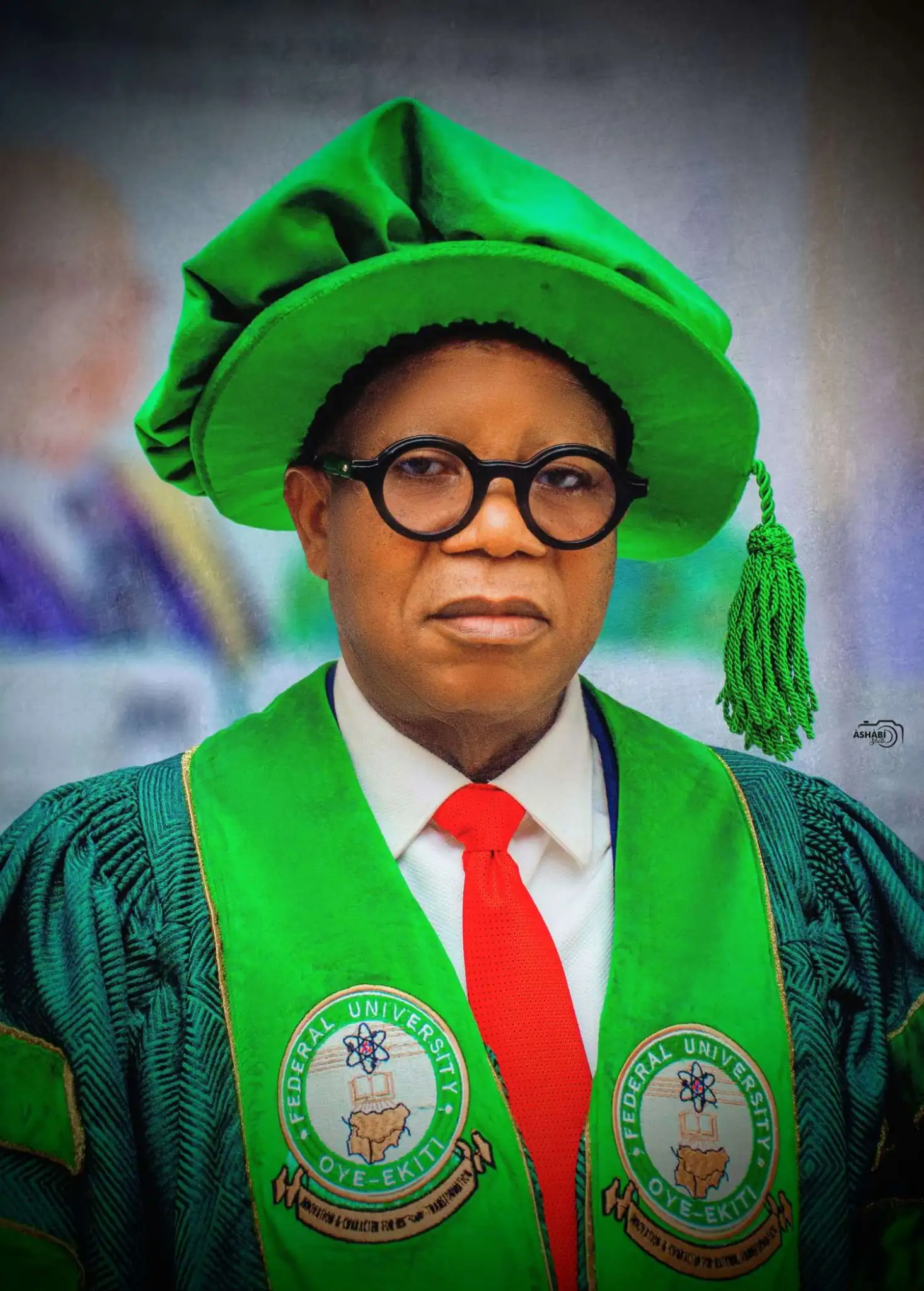
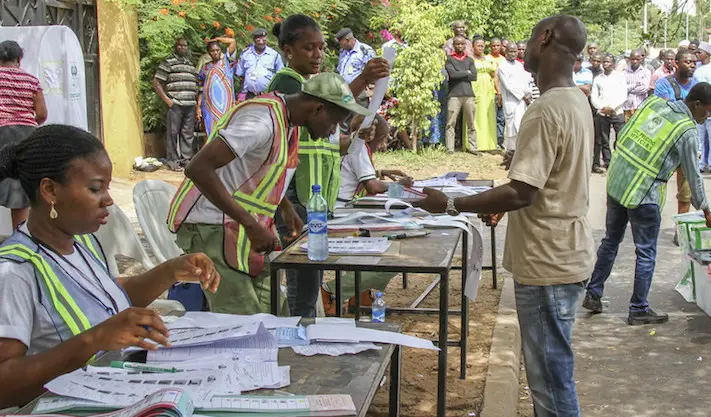
In the widely circulated clip, Yakubu explains that the Bimodal Voter Accreditation System (BVAS), introduced to strengthen credibility at the polls, operates without internet connectivity during voting.
“The machine on election day does not require internet for upload; it works offline,” he said.
According to him, network access only becomes necessary when scanned polling unit results are transmitted.
“When it comes to transmission of results, that’s where it needs network. But if there is no connectivity in the immediate vicinity, the image will be transmitted once officials move to an area with coverage,” Yakubu added, noting that the commission has worked with telecommunications providers to address coverage blind spots.
Timing That Raises Questions
The video’s renewed circulation comes at a politically sensitive moment, with the Nigerian Senate recently amending the Electoral Act to mandate electronic transmission of results—while simultaneously allowing manual result sheets to prevail whenever technology fails.
The revision was adopted during a plenary presided over by Senate President Godswill Akpabio, triggering backlash from civic groups and opposition figures who argue that the clause risks reopening pathways for manipulation.
Under the amended provision, presiding officers must transmit results electronically to the INEC Result Viewing Portal. However, if transmission proves impossible due to technical or communication failures, the manual Form EC8A becomes the primary basis for collation and declaration.
Critics say that a single caveat could determine the credibility of future elections.
Street Protests and Elite Pushback
Public anger has already spilled into the streets. Activists under the #OccupyNASS banner gathered at the National Assembly complex in Abuja, joined by former presidential candidate Omoyele Sowore.
Sowore accused the political establishment of engineering electoral rules that favour manipulation.
“These people cannot win in free and fair elections,” he warned. “But the people have a duty to demand processes that guarantee transparent polls.”
Civil Society Warns of “Dangerous Ambiguity”
A coalition including the Centre for Media and Society, International Press Centre and Yiaga Africa welcomed the Senate’s partial reversal on e-transmission but cautioned that vague language could weaken reforms first introduced in the 2022 Electoral Act.
The groups described the phrase “provided if it fails and it becomes impossible to transmit” as dangerously undefined.
“In the absence of clear safeguards, this clause risks creating a loophole that could undermine the very purpose of electronic transmission,” the coalition said.
They further warned that granting greater legal weight to manual results could dilute the audit trail meant to deter fraud.
“Electronic transmission is not symbolic reform—it is a structural safeguard,” the statement stressed.
Echoes of the 2023 Election Battle
The controversy revives unresolved tensions from the 2023 presidential election won by Bola Tinubu, whose victory was challenged up to the Supreme Court by rivals Atiku Abubakar and Peter Obi.
In a unanimous ruling led by Justice Inyang Okoro, the court held that electronic transmission was not mandatory under the Electoral Act and dismissed the appeals.
Yet the justices acknowledged that failure to upload results in real time could erode voter confidence.
“The truth must be told that the non-transmission of results… may reduce the confidence of the voting population,” the court observed.
More than two years later, that warning appears increasingly prescient.
Kukah’s Stark Warning: “Africa Will Not Wait”
Adding moral weight to the debate, the Catholic Bishop of Sokoto Diocese, Matthew Hassan Kukah, issued a blunt appeal for credible elections.
“By God, by whatever means, give us clean and credible elections,” he declared at a major policy conference in Abuja.
Kukah cautioned that Nigeria risks geopolitical irrelevance if democratic credibility continues to wobble while other African nations advance.
“A roadmap to make Africa great again cannot proceed without Nigeria—but the rest of Africa will not wait for us,” he said.
In a thinly veiled reference to past controversies, he warned against allowing technical debates over transmission methods to overshadow the core obligation of transparency.
“We must not surrender to confusion. We must get it right.”
Reform or Regression?
The Senate’s refusal to make electronic transmission fully mandatory has once again placed a spotlight on INEC’s discretionary powers—long a fault line in Nigeria’s electoral politics.
For reform advocates, real-time transmission represents more than technological progress; it is seen as a psychological contract with voters increasingly sceptical of official results.
Expectations had been high that the latest reform cycle would hardwire transparency into law. Instead, critics fear the compromise risks preserving the very uncertainties the reforms sought to eliminate.
Still, civil society leaders say the Senate’s partial reversal demonstrates that sustained public pressure can shape legislation—while warning that vigilance remains essential.
“The details matter,” the coalition said. “The credibility of future elections depends on getting this right.”
As Nigeria edges toward another electoral cycle, the collision between technology, law and political trust suggests one reality: in a democracy where perception can be as powerful as outcome, even the mechanics of result transmission may ultimately decide whether voters believe the system works at all.