Former National Human Rights Commission Chairman and legal scholar, Professor Chidi Odinkalu, has rejected widespread reports claiming that dozens of applicants for judgeships at Nigeria’s Federal High Court failed integrity tests, describing the narrative as false and damaging.
In a post on his verified X account, Odinkalu said that most of the 34 candidates reportedly dropped from consideration were not disqualified on integrity grounds, but because they lacked political or judicial backing within the Federal Judicial Service Commission (FJSC).
According to him, “the main ground on which most candidates were excluded at the level of the FJSC was that they did not have insider leverage, godfather or godmother. It had nothing to do with absence of integrity in most candidates.”
Odinkalu described the circulating claims of mass failure at the integrity screening stage as “criminal propaganda being used to tarnish the candidates.” He acknowledged that integrity petitions were filed against one or two applicants and were upheld, but stressed that “that did not affect any number remotely approaching double digits.”
Allegations of Manipulation
The rights advocate said several unsuccessful candidates have alleged that the judicial appointment process was manipulated, with claims that some shortlisted candidates failed the qualifying examination while higher-scoring applicants were excluded.
According to Odinkalu, some candidates alleged that individuals on the final shortlist of 28 scored as low as 25 or 30 percent in the computer-based and aptitude tests, while the highest-scoring candidate was reportedly dropped. The excluded candidate is alleged to be from a South-East state.
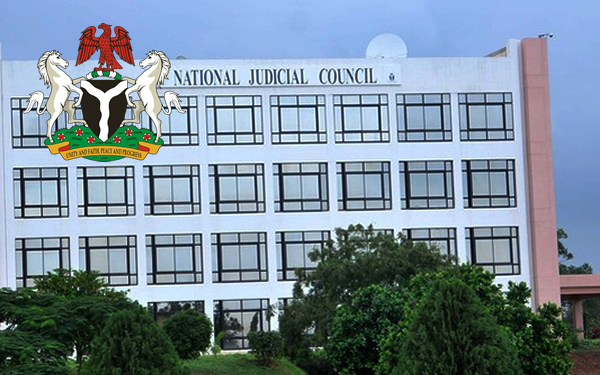
Odinkalu said such claims cannot be dismissed, noting that the FJSC and the National Judicial Council (NJC) have consistently declined to publish candidates’ scores.
“As long as the FJSC and the NJC remain unwilling to publish the scores of all the candidates, it is impossible to discount these allegations,” he said.
A History of Controversy
The FJSC recently shortlisted 28 candidates for appointment to the Federal High Court bench following a recruitment process that included a computer-based test and an aptitude assessment. While candidates are scored at each stage, the results are not made public.
Odinkalu argued that the opacity of the process has repeatedly fueled controversy. In a separate commentary, he said the current shortlist reflects entrenched favouritism, alleging that it includes children of serving or retired senior judges, some of whom were involved in the appointment process.
“It is difficult not to look upon the shortlist that the NJC committee will be interviewing next month as anything other than an advertisement of nepotism and favouritism,” he wrote.
He further claimed that judicial appointments in Nigeria have become “largely performative,” designed to legitimise outcomes determined in advance, often favouring family members or protégés of powerful insiders. Odinkalu described recent reforms announced by the NJC in April 2025 as cosmetic, arguing that publishing only the names of recommended candidates does little to address deeper credibility concerns.
Call for Transparency
Odinkalu urged Chief Justice of Nigeria, Justice Kudirat Kekere-Ekun, to use the current Federal High Court recruitment exercise to restore public confidence in the judiciary.
As a first step, he said, the CJN should order the publication of all candidates’ scores at every stage of the process.
“That will reassure the public about her commitment to liberating judicial appointments in Nigeria from continuing abduction by the forces of capture, conjugality and abuse of power,” Odinkalu said.
He concluded by urging media organisations to independently verify claims about integrity failures, warning that unsubstantiated reports risk further damaging both candidates and public trust in the judicial system.