


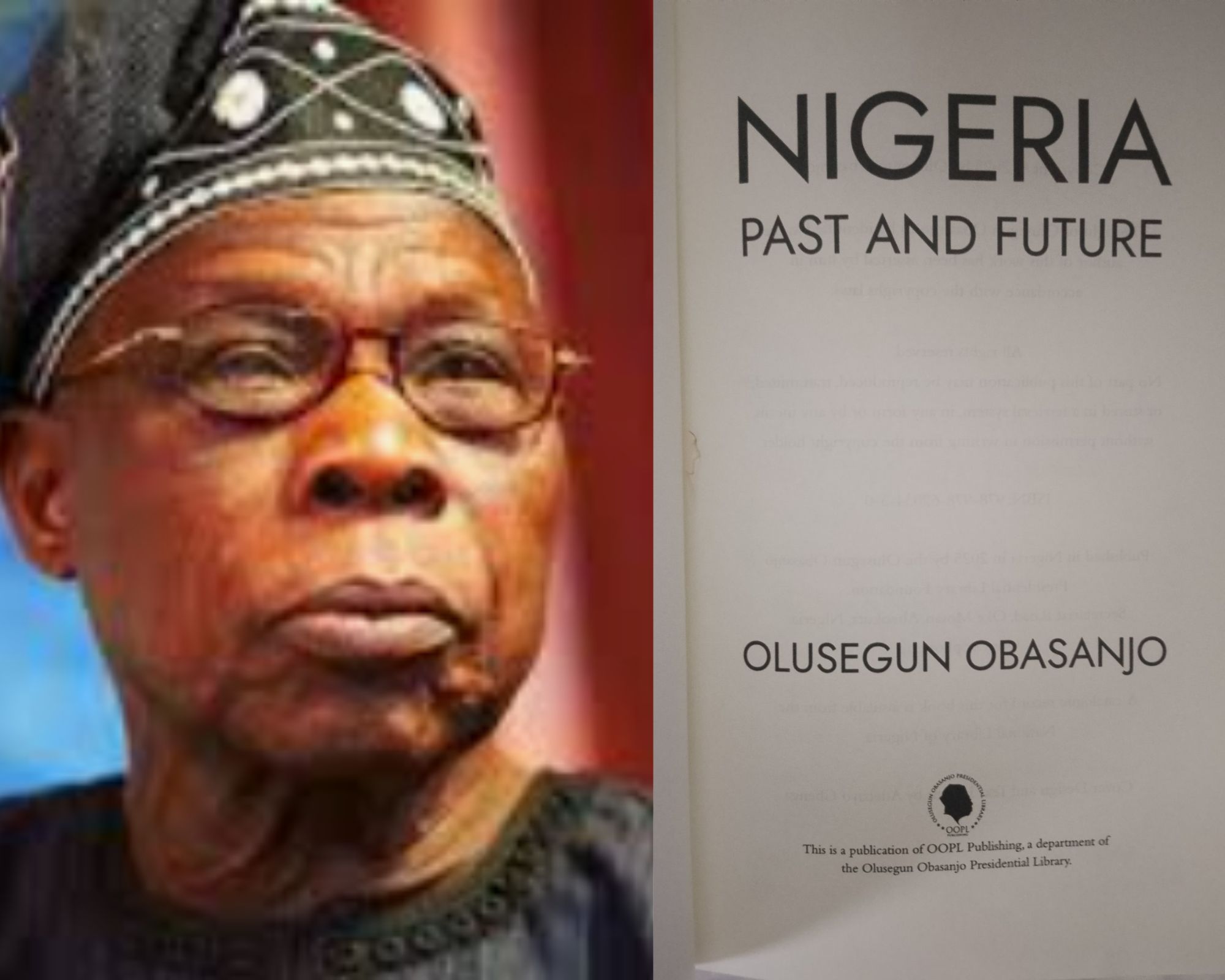
- The judiciary has steadily declined, reached a lamentable state —Obasanjo
Following the publication of former President Obasanjo’s new book, Nigeria: Past and Future, in which he criticised Nigeria’s judiciary, citing corruption and political interference as factors eroding public trust, a piqued X user (formerly Twittter) @Ikemchingy remarked that “Obasanjo had 8 years to prevent these events but the myopic nature of the average Nigerian politician came into him. He thought he would be president forever.”
In the book published by OOPL under the Olusegun Obasanjo Presidential Library, the ex-president uncovered what he calls the judiciary’s “precipitous fall” from independence to the current Fourth Republic.
Asserting that the reputation of the judiciary has steadily declined over decades, reaching a “lamentable” state in today’s democracy, he cautioned that when justice is available only to the highest bidder, society faces “despair, anarchy, and violence” instead of fairness and order.
Drawing on personal observations, he recalled visiting a northern state about ten years after leaving office, where a governor pointed out six duplexes allegedly built by a judge using funds acquired as chairman of election tribunals. Such examples, he claims, explain why politicians often distrust the electoral process.
Taking to his X handle, Chidi Odinkalu, author of the recently published The Selectorate, a book about ‘When Judges Topple the People’, observed that “President Olusegun Obasanjo’s latest book has some choice offerings on the Nigerian judiciary….”
And while many X users are clamouring for copies of the book, @JUSTINON14 said: “I’m not a fan of what’s going on currently but permit me to write that OBJ himself is no Saint. Morris Iwu’s actions/inactions during his time are still there for all to see.”
For @Eric69627227. “Obasanjo had his shortcomings and is not adduced a saint but if the past leaders can turn to a new narrative that will encourage the emergence of a better Nigeria, may be there will be a hope rekindled. Else, election fraud with Nigeria’s INEC will keep thriving unabated unchecked.”
Obasanjo directly criticised Professor Mahmood Yakubu, head of the Independent National Electoral Commission (INEC), accusing the agency of prioritizing the chairman’s will over the people’s. He further alleged that tribunal judges, appellate justices, and even the Supreme Court have in multiple cases “corruptly overridden the will of millions of voters.”
The ex-resident also claimed that former President Muhammadu Buhari benefited from such judicial favoritism, rewarding judges involved in his election disputes with appointments regardless of rank or age. He concluded sharply that courts often serve as “courts of corruption rather than courts of justice.”
Obasanjo’s remarks underscore widespread concerns about the credibility of Nigeria’s elections and the integrity of its judiciary, a matter of persistent anxiety for both citizens and international observers.





Obasanjo’s concerns are valid, but many Nigerians see it as hypocrisy since he had the chance to fix the system and failed.