With the Supreme Court having closed the direct appellate route from the disciplinary committee, Chief J-K Gadzama, SAN, is asking the Federal High Court to bring the decision against him into its own courtroom—and quash it.
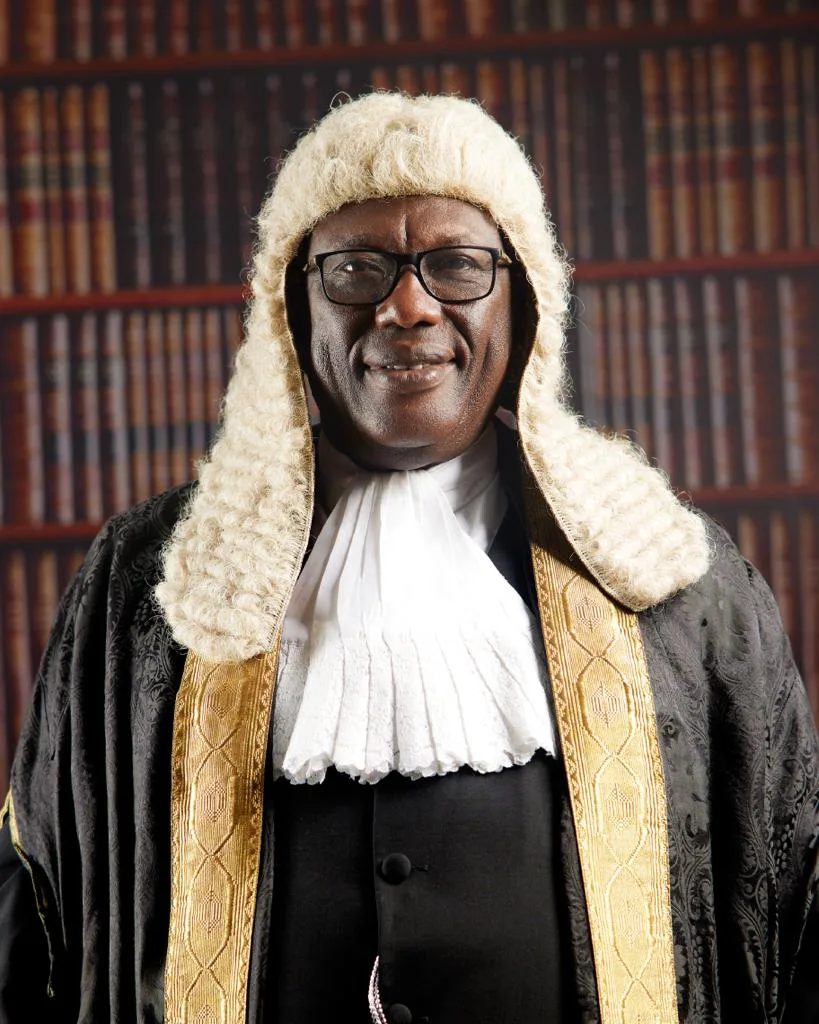
ABUJA — Chief Joe-Kyari Gadzama, SAN, has opened a new front in his battle against the Legal Practitioners Disciplinary Committee, securing permission from the Federal High Court in Abuja to challenge the committee’s July 29 decision that suspended him from legal practice for three years.
Justice Obiora-Atuegwu Egwuatu, in an order made in Suit No. FHC/ABJ/CS/1954/2026, granted Gadzama leave to apply for judicial review and to seek an order of certiorari bringing the LPDC’s Direction into the Federal High Court for the purpose of having it quashed. The court directed that the substantive application be filed within seven days.
The order does not quash the LPDC Direction and does not amount to a finding that the disciplinary committee acted unlawfully. It permits Gadzama to bring he challenge. The substantive arguments, and the response of the respondents, will come later.
In its 70-page decision, delivered on July 29 in Complaint No. BB/LPDC/1314/2024, the committee found Gadzama guilty of professional misconduct under Rules 1, 27(1) and 29(1)(b) of the Rules of Professional Conduct for Legal Practitioners 2023 and ordered his suspension for three years. Ocha P. Ulegede, the other lawyer involved in the complaint, was suspended for two years.
The disciplinary proceedings grew out of a dispute over representation of victims of the 2001 military operations in Zaki-Biam, Benue State, and the eventual recovery of compensation arising from the litigation.
What began as a fight over who had authority to represent judgment creditors eventually became a professional misconduct case. It has now become a test of the machinery by which Nigerian lawyers themselves are disciplined.
The case behind the suspension
The origins of the dispute go back to two suits arising from the military operations in Zaki-Biam.
According to the LPDC’s Direction, Ocha Ulegede was originally briefed by Dr Alexander Gaadi to pursue claims against the Nigerian Army and other defendants over the destruction of property during the military operation. The two suits were eventually consolidated, and the Federal High Court awarded a total of N41.8 billion to the judgment creditors—N31.8 billion in one suit and N10 billion in the other.
Years later, the judgment became the subject of negotiations that eventually produced an N8 billion settlement.
It was in the aftermath of the original judgment that Gadzama became involved. The LPDC recorded that one of the judgment creditors approached him in 2008 and retained him to represent himself and four other judgment creditors. Gadzama subsequently filed notices of change of counsel in the proceedings.
The move was opposed by Ulegede and other parties who maintained that the judgment creditors were already represented.
That disagreement over representation became the foundation of the disciplinary complaint.
The LPDC ultimately found that Gadzama had improperly taken over clients already represented by another lawyer, acted for some judgment creditors who later denied having instructed him, and continued taking steps after some of those individuals had expressly disowned him.
The committee also relied on an earlier Court of Appeal decision, which criticised Gadzama’s conduct in the underlying litigation and referred to the role he played in the dispute over representation.
Gadzama has rejected those findings.
In his response after the Direction was delivered, he said the allegations that he had taken another lawyer’s brief, solicited clients or wrongfully appropriated professional fees were unfounded. His position was that he had been retained directly by judgment creditors through written letters of instruction and had acted throughout in accordance with those retainers. He also argued that the complaint fundamentally concerned a dispute over representation and professional fees rather than professional misconduct.
The LPDC itself declined to determine the question of Gadzama’s professional fees, saying that issue was outside its jurisdiction and could be pursued before the regular courts.
That part of the Direction could become significant in the proceedings now before the Federal High Court.
Why Gadzama has gone to the High Court
Gadzama’s new case is not simply an appeal against the LPDC’s findings.
He is invoking the judicial-review jurisdiction of the Federal High Court and asking for certiorari, a supervisory remedy through which a court may bring the decision of a body exercising judicial or quasi-judicial powers before it and, where appropriate, quash an unlawful decision.
The order granted by Justice Egwuatu specifically permits Gadzama to apply for that remedy under Order 34 of the Federal High Court (Civil Procedure) Rules.
The full grounds of his challenge should become clearer when the substantive application and the Statement filed pursuant to Order 34 are before the court.
For now, it would be premature to say that the Federal High Court has found any defect in the LPDC proceedings. It has not. The court has simply allowed the challenge to proceed.
That distinction will become increasingly important as the parties begin to argue the case.
The timing could hardly be more significant
Gadzama’s judicial-review application comes at a particularly awkward moment for the disciplinary system because the Supreme Court has only recently altered the legal position on appeals from the LPDC.
In Ben Mene-Ejegi, Esq. v. Nigerian Bar Association & Legal Practitioners Disciplinary Committee, the Supreme Court considered the long-running confusion over the route by which a lawyer sanctioned by the LPDC could challenge the decision.
The confusion had its roots in competing versions of the Legal Practitioners Act. The Supreme Court concluded that the 1994 amendment, which made the LPDC a standing committee of the Body of Benchers and provided for a direct appeal to the Supreme Court, was the operative law. But it then held that the provision allowing a direct appeal from the LPDC to the Supreme Court was inconsistent with the Constitution and therefore void to that extent. The Court overruled its earlier decision in Okike v. LPDC on that point and struck out the appeal before it for want of jurisdiction.
The consequence is unusual.
The Supreme Court has effectively closed the direct route to itself, while the statutory route through the Court of Appeal has not been created. As Law & Society Magazine reported in an analysis of the judgment by Eyimofe Atake, SAN, the result is a gap in the disciplinary appeal structure that the National Assembly must address.
That gap gives judicial review renewed importance.
The Supreme Court itself recognised the continuing supervisory jurisdiction of the courts over the legality of disciplinary proceedings, including questions concerning jurisdiction and fair hearing.
Gadzama’s application therefore arrives at a moment when the profession is confronting a basic problem: a disciplinary body can impose a serious sanction on a lawyer, yet the ordinary statutory route for challenging that decision has been thrown into constitutional uncertainty.
The profession’s uncomfortable paradox
The irony is difficult to overlook.
The legal profession has built an elaborate system for disciplining lawyers whose conduct falls below professional standards. The LPDC can suspend a practitioner, strike a name from the Roll and direct that the sanction be formally communicated to courts, government authorities and other institutions.
In Gadzama’s case, the LPDC directed the Chief Registrar of the Supreme Court to effect the suspension and make the appropriate notation against his name on the Roll. It also ordered publication of the sanction and notification of a wide range of judicial and government authorities.
Yet the legal profession is now operating within a system in which the ordinary appellate destination for an aggrieved practitioner has been declared constitutionally unavailable.
That is not a problem peculiar to Gadzama.
A disciplinary regime commands public confidence only when it is capable of enforcing standards and equally capable of correcting its own errors. The right to challenge an adverse decision is not an indulgence reserved for lawyers who have been sanctioned; it is part of the architecture of lawful adjudication.
The Supreme Court’s decision in Mene-Ejegi has exposed the gap. Gadzama’s case may now test what can be done while the legislature decides how to fill it.
The next battle is likely to be about process
The Federal High Court has fixed the matter for September 4, 2026, and Gadzama is required to file the substantive application within seven days of the August 20 order.
The significance of the hearing will depend largely on the grounds contained in that application and the record of the LPDC proceedings.
The court is not being asked simply to decide whether it agrees with the committee’s assessment of the evidence. Judicial review ordinarily concerns the legality of the decision-making process: jurisdiction, observance of the law, procedural fairness and the limits of the power exercised by the body concerned.
That makes the forthcoming proceedings different in character from a conventional appeal on the merits.
The Federal High Court will have to determine the scope of the challenge before it, the powers available to it under its judicial-review jurisdiction and the relationship between those powers and the statutory disciplinary framework governing legal practitioners.
The respondents will have their opportunity to defend the LPDC’s decision and challenge the maintainability or merits of the judicial-review proceedings.
For the moment, the three-year suspension remains the LPDC’s decision.
But it is no longer the last word.
From Zaki-Biam to a constitutional question
There is something striking about the route this dispute has taken.
It began with the suffering of communities in Zaki-Biam and the long struggle to obtain compensation. It passed through an N41.8 billion judgment, an eventual N8 billion settlement, competing claims of representation and a dispute between lawyers over who was entitled to act for the judgment creditors.
The disciplinary machinery then took over, producing a three-year suspension for Gadzama and a two-year suspension for Ulegede.
Now the Federal High Court has been asked to examine the legality of the disciplinary decision itself.
Behind the personalities and the professional rivalry lies a question that will matter to every Nigerian lawyer who may one day find himself or herself before the LPDC:
When a professional disciplinary body exercises the power to suspend or remove a lawyer from practice, what is the proper judicial route for testing the legality of what it has done?
The Supreme Court has closed one route. Parliament has yet to construct the route the Constitution appears to contemplate.
Gadzama has now asked the Federal High Court to open another.
The September hearing may therefore be about much more than one Senior Advocate’s suspension. It could become an early test of the legal profession’s disciplinary system after Mene-Ejegi—and of the courts’ role in supervising a body whose decisions can determine whether a lawyer remains entitled to practise at all.