By Lillian Okenwa
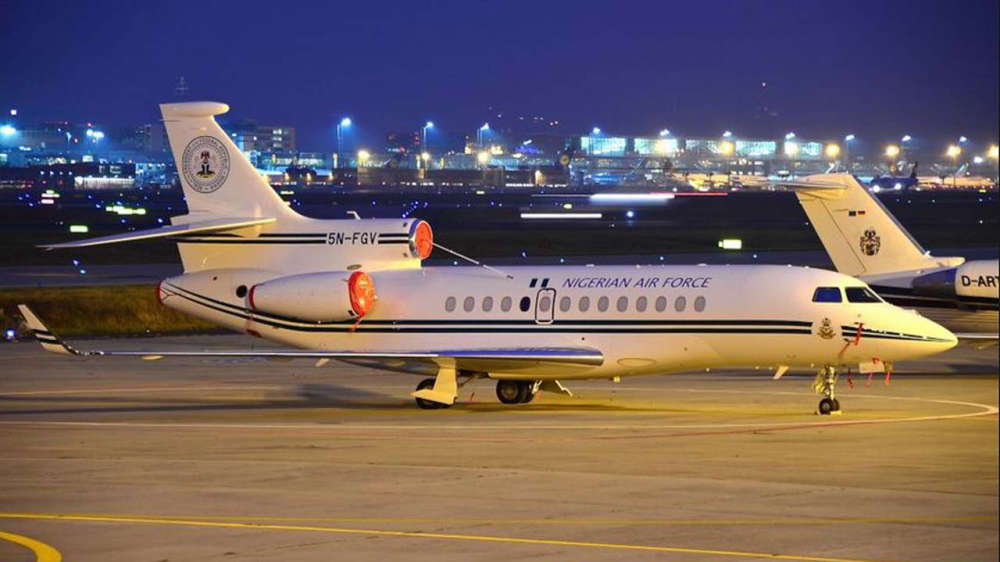
As Nigeria’s government asks lawmakers for more money to tackle national security threats, fresh scrutiny is falling on the escalating costs and opaque management of the country’s Presidential Air Fleet.
At a Senate budget defence session on Wednesday, Mohammed Sanusi, Permanent Secretary at the Office of the National Security Adviser (ONSA), confirmed that maintenance costs for the fleet have “risen significantly,” citing foreign-based servicing and exchange rate pressures.
The admission comes amid growing public debate over spending priorities during one of Nigeria’s most difficult economic periods in decades.
Billions in Disbursements
Public expenditure data show that between July 2023 and May 2024, approximately N14.77 billion was disbursed for the maintenance of the Presidential Air Fleet. Separate reports indicate total maintenance and operational costs may have reached N19.43 billion between July 2023 and September 2024.
Budget allocations for the fleet have increased dramatically over the past decade, rising from N4.37 billion in 2017 to N20.52 billion in 2024 — a roughly 370 percent increase.
Under former President Muhammadu Buhari, N62.47 billion was reportedly spent on fleet operations and maintenance over eight years, despite pledges to streamline government costs.
Yet ONSA did not disclose the full 2025 maintenance expenditure nor provide a detailed breakdown of charter arrangements or foreign servicing contracts.
The $100 Million Airbus and the Charter Controversy
In 2024, the federal government acquired a refurbished Airbus A330-243 for approximately $100 million to replace the ageing Boeing 737 Business Jet (5N-FGT), which had served as Nigeria’s primary presidential aircraft since 2005.
The purchase followed a high-profile technical incident in April 2024, when the Boeing 737 experienced an oxygen leak during a trip to the Netherlands, forcing President Bola Tinubu to complete his journey to Saudi Arabia aboard a chartered Falcon 8X.
Government officials defended the Airbus acquisition as a cost-saving long-term upgrade, describing it as more fuel-efficient and cheaper to maintain than the older Boeing.
However, subsequent aircraft movements raised new questions.
Flight tracking data indicated the use of a Luxaviation-chartered Boeing 737 registered as T7-NAS for presidential travel, even after the Airbus returned to Nigeria. Meanwhile, the former Boeing 737 BBJ (5N-FGT) was reportedly re-registered in San Marino as T7-ZMK.
No official disclosure has clarified whether the aircraft was sold, leased, or retained under alternative arrangements. Nor has the government publicly detailed the cost of chartering foreign-registered aircraft for presidential use.
Security analysts note that chartered aircraft typically lack the hardened communications systems and classified infrastructure built into state-owned presidential platforms.
Supplementary Funds Sought Amid Security Emergency
Sanusi’s appearance before lawmakers was primarily to defend ONSA’s 2026 budget and request supplementary funding, citing operational shortfalls, foreign exchange volatility and irregular overhead releases.
“With the recent declaration of a state of emergency on national security, adequate funding should be provided,” he told lawmakers.
Committee Chairman Yahaya Abdullahi described 2026 as a “critical year” for Nigeria’s democracy, warning that inadequate funding for security agencies could pose risks as the country approaches another election cycle.
The request for additional funds, however, coincides with intensified scrutiny of capital spending on executive assets, including the proposed procurement of two additional aircraft, reportedly estimated at over $600 million.
Safety vs. Spending Optics
Presidential adviser Bayo Onanuga has defended aircraft acquisitions as essential for national security and presidential safety, arguing that no responsible government would compromise on the head of state’s welfare.
Opposition figures counter that timing and transparency are central concerns, particularly as Nigerians grapple with inflation, subsidy removal and rising debt levels.
Aviation experts remain divided. Some argue that ageing aircraft inevitably require expensive upkeep and that fleet modernisation reduces long-term risk. Others stress that fiscal discipline and public accountability are equally critical components of national stability.
With Nigeria’s fixed-wing and rotary presidential fleet reportedly numbering around 11 aircraft, the debate is no longer simply about maintenance — but about oversight, disclosure and fiscal priorities in a reform-driven economy.
As lawmakers prepare their budget recommendations, questions remain: how much is being spent, under what terms, and with what long-term strategy?