- Says, “Women do the work, men hold the power”
Nigeria’s chronic leadership crisis is not rooted in a lack of capable women, but in a deliberate failure to empower them, gender rights advocate Dr Abiola Akiyode Afolabi said at a major national gathering this week.
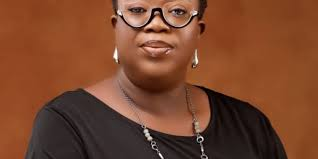
Speaking at the 39th Annual Conference and Rally of the National Governing Body of Inner Wheel Clubs in Nigeria, Afolabi—executive chair of the Women Advocates Research and Documentation Centre (WARDC)—delivered a blunt diagnosis of the country’s gender imbalance in leadership and governance.
“Nigeria does not suffer from a lack of brilliant women,” Afolabi said. “Nigeria suffers from a refusal to fully trust, include, and empower them.”
Her keynote address, titled “Step Up and Lead,” challenged political institutions, cultural norms and even women themselves to confront what she described as entrenched systems of exclusion that continue to sideline women from power, despite their dominance in community, economic and caregiving roles.
Women Lead Everywhere—Except Where Power Is Decided
Afolabi pointed to prominent Nigerian women such as Ngozi Okonjo-Iweala, Oby Ezekwesili, Ibukun Awosika, Amina Mohammed and former Chief Justice Aloma Mukhtar as proof that women succeed when barriers are removed.
“These women did not wait for society to be comfortable,” she said. “They stepped into spaces not designed for them—and delivered excellence.”
Yet she warned against celebrating a handful of success stories while thousands of capable women remain blocked by poverty, violence, cultural restrictions and political gatekeeping.
A Stark Gender Gap in Power
Despite making up nearly half of Nigeria’s population, women hold just 4.5 percent of seats in the 10th National Assembly, with only four female senators out of 109. At the state level, women occupy fewer than five percent of seats in Houses of Assembly nationwide. At the grassroots, the picture is bleaker: only 41 of 811 local government chairpersons are women.
By contrast, the judiciary, where promotion is more structured, shows higher female representation, with women serving as chief judges in 15 states and occupying nearly one-third of appellate court seats.
“This tells us something important,” Afolabi said. “Where systems are transparent, women rise.”
Girls Shut Out Before Leadership Begins
Afolabi warned that exclusion begins early. Nigeria has the highest number of out-of-school children globally, with more than 10.5 million affected—over 60 percent of them girls. In northern Nigeria, nearly half of girls are married before age 18, often ending their education permanently.
“These are not statistics,” she said. “They are futures interrupted.”
She linked poor access to education, child marriage and maternal mortality—Nigeria accounts for nearly 20 percent of global maternal deaths—to a broader national failure to prioritise women’s lives.
Politics Designed to Keep Women Out
Drawing from gender audits of Nigeria’s elections since 2007, Afolabi said women are often mobilised as voters and campaigners but denied party tickets and decision-making power.
“Participation is permitted. Leadership is withheld,” she said.
High nomination fees, political violence, intimidation and patriarchal party structures continue to deter women from contesting elections. Over time, Afolabi said, systemic exclusion produces internalised self-doubt that keeps many women from stepping forward.
“The system thrives when women self-exclude,” she warned.
Migration, Desperation and Lost Hope
Afolabi also linked women’s exclusion to rising migration, noting that young Nigerian women risking dangerous journeys abroad are not lacking ambition—but opportunity.
“No society should force its daughters to gamble with death just to have a future,” she said.
From Advocacy to Action
Afolabi highlighted WARDC’s work supporting more than 2,000 women with legal aid, standing with survivors of domestic and sexual violence, and challenging laws and practices that normalise abuse.
“When women gain access to justice, they heal,” she said. “They rebuild. They lead.”
A Moral Test for Nigeria
Afolabi concluded with a stark warning: Nigeria’s democratic future depends on whether women are allowed not just to survive—but to lead.
“Step up and lead is not a slogan,” she said. “It is a moral demand. History will not ask whether we were comfortable. It will ask whether we were brave.”
Below is the full text of the Keynote Address.
STEP UP AND LEAD BY EXAMPLE
A Keynote Address by Dr. Abiola Akiyode Afolabi
The Executive Chair of Women Advocates Research and Documentation Centre (WARDC)
On the 39th Annual Conference and Rally of the National Governing Body of Inner Wheel Clubs in Nigeria
Distinguished members of the National Governing Body, members of the Local Organizing Committee, award recipients, colleagues, sisters and brothers; thank you for this honour and for this moment.
I stand before you today not only as the Executive Chair of WARDC, but as a woman who has spent over 25years listening to women whose voices were ignored, whose pain was normalized, and whose leadership was discouraged.
The title of my speech is “Step Up and Lead.”
And I want to say this clearly from the beginning:
“Nigeria does not suffer from a lack of brilliant women.
Nigeria suffers from a refusal to fully trust, include, and empower them.”
“Step Up and Lead” is not a motivational slogan; it is a call to action grounded in lived realities. Across Nigeria, women have consistently demonstrated competence, resilience, and leadership capacity in homes, communities, civil society, business, and public service. Yet, when leadership spaces, especially political and decision-making spaces are defined, women remain largely absent or deliberately excluded.
The issue is not women’s readiness to lead. The issue is the structural, cultural, political, and psychological barriers that continue to constrain women’s leadership and participation.
When Women Step Up, Nations Change: We all know the names.
- Ibukun Awosika.
- Oby Ezekwesili.
- Ngozi Okonjo-Iweala.
- Amina Mohammed.
Ibukun Awosika
Ibukun Awosika stepped up in a corporate Nigeria that was deeply male-dominated. She began her career as a young entrepreneur when women were rarely taken seriously in boardrooms. She faced skepticism, exclusion, and the constant pressure to “prove herself twice over.” Yet she persisted. Through competence, integrity, and consistency, she became the first female Chair of First Bank of Nigeria, one of the country’s most powerful financial institutions. She did not just break the glass ceiling she redefined leadership as ethical, people-centred, and inclusive.
Oby Ezekwesili
Oby Ezekwesili stepped up by choosing truth over comfort. As a former Minister of Education and later Vice President of the World Bank for Africa, she confronted corruption and inefficiency head-on. Her insistence on accountability made her unpopular in powerful circles. She paid the price for speaking truth to power politically and socially. Yet she emerged as one of Nigeria’s strongest moral voices. From the #BringBackOurGirls movement to governance reform advocacy, Oby Ezekwesili shows us that leadership is not about being liked, but about being right.
Ngozi Okonjo-Iweala
Ngozi Okonjo-Iweala stepped up in moments of national economic crisis. As Nigeria’s Finance Minister, she pushed through debt relief negotiations and economic reforms under intense political pressure. She faced public criticism, personal attacks, and even threats. Still, she delivered results helping Nigeria secure historic debt relief. Today, as the first woman and first African Director-General of the World Trade Organization, she stands as proof that African women can lead at the highest global levels without compromising excellence or integrity.
Amina Mohammed
Amina Mohammed stepped up quietly but powerfully. As Nigeria’s former Minister of Environment and now Deputy Secretary-General of the United Nations, she has worked across national and global systems to advance sustainable development, climate justice, and gender equality. She navigated male-dominated international spaces with patience and strategic clarity. Her leadership reminds us that transformation does not always come with noise, sometimes it comes with persistence, coalition-building, and unwavering commitment to justice.
Justice Aloma Mariam Mukhtar
Justice Aloma Mukhtar stepped up within Nigeria’s judiciary one of the most conservative and hierarchical institutions in the country. In 2012, she became Nigeria’s first female Chief Justice, after decades of service marked by discipline and integrity. She inherited a judiciary facing credibility challenges and moved decisively to restore public trust, sanction judicial misconduct, and assert independence. Her leadership proved that women can lead firmly, fairly, and without fear even in the most rigid systems.
These women did not wait for society to become comfortable with women’s leadership. They stepped into spaces that were not designed for them corporate boardrooms, global financial systems, international diplomacy and they delivered excellence.
“But let us be honest with ourselves: Why do we keep celebrating the same few women?
Because for every woman who breaks through, thousands are held back by culture, violence, poverty, and silence.”
- The Reality of Gender Inequality
Gender inequality in Nigeria is not theoretical. It is lived daily in women’s bodies, homes, classrooms, and workplaces.
Nigeria is responsible for nearly 20% of global maternal deaths, with an estimated 512 maternal deaths per 100,000 live births (World Health Organization [WHO], 2023). These are women who die not because solutions do not exist, but because their lives are not prioritised.
Across our universities, especially in law faculties, the very places where justice is taught, women remain severely underrepresented. Out of approximately 240 law professors in Nigeria, only 44 are women. That means fewer women shaping legal thought, mentoring students, and influencing the future of justice.
“So I ask a painful but necessary question:
Why are we seeing these things so clearly, yet failing to change them?”
- Girls, Education, and Child Marriage
Vanguard newspaper (2024), According to UNESCO, as of 2023, 129 million girls are out of school, a staggering figure that highlights the deeply rooted inequalities in educational access. The crisis is particularly alarming in sub-Saharan Africa, where cultural barriers, poverty, and insecurity disproportionately affect girls. Nigeria has the highest number of out-of-school children in the world with about 10.5 million children are out of school, with more than 60 percent of them being girls. For these girls, education is often interrupted by early marriage and the pressing need to contribute to their family’s survival.
According to the National Bureau of Statistics, NBS, 45.7 percent of girls in Northern Nigeria are married before the age of 18, often marking the end of their formal education.[1]
In Northern Nigeria, many girls are still forced into child marriage, ending their education and exposing them to early pregnancy and lifelong poverty. UNICEF reports that over 44% of Nigerian girls are married before the age of 18 (UNICEF, 2021).
“These are not just statistics. They are futures interrupted.”
Most of these girls are in the North-East and North-West, where poverty, insecurity, child marriage, and deep-rooted gender norms continue to limit their futures. Girls from the poorest households are the least likely to return to school, often pushed instead into early marriage or domestic labour. These figures are not abstract; they are a call to conscience. When girls are kept out of school, communities lose leaders, families remain trapped in poverty, and the nation’s progress is delayed. This is where organisations like Inner Wheel must continue to step up because educating a girl is one of the most powerful acts of leadership and service.
- Cultural Inhibitions and the Fear of Women’s Leadership
Let us speak honestly.
Because of cultural inhibitions, it is not easy for women to step up and lead.
Women are taught to endure, not to challenge.
To sacrifice, not to demand.
To survive quietly, not to lead boldly.
When a woman speaks out, she is called difficult.
When she leads, she is questioned.
When she insists on justice, she is told to be patient.
But patience has cost women their lives.
- Young Women, Migration, and Desperation
We must also confront another reality that is often ignored.When young Nigerian women between the ages of 18 and 35 are boarding boats, risking their lives, becoming returnees from Germany and other countries, it is not because they lack ambition.
It is because opportunity is unequal. It is because leadership spaces are closed. It is because hope has been denied.
No society should force its daughters to gamble with death just to have a future.
- Women’s Participation and Leadership in Nigeria: The Reality
Women constitute nearly half of Nigeria’s population, yet their representation in political leadership and high-level decision-making remains abysmally low. From elective offices to appointive positions, Nigeria consistently ranks among the lowest globally in women’s political representation. This gap is not accidental, it is systemic.
Allow me to begin with a personal recollection that illustrates this intersection.
Many years ago, I participated in a political process where democratic participation appeared open and inclusive. Women were present mobilizing voters, strengthening party networks, sustaining grassroots structures. Yet when decision-making authority was exercised, it occurred elsewhere. Quietly. Strategically Participation was permitted. Leadership was withheld.
This experience reflects what feminist political theorists describe as the distinction between descriptive participation and substantive power, where presence does not translate into influence. Scholars such as Anne Phillips and Iris Marion Young have long argued that democratic legitimacy requires more than representation; it requires access to decision-making authority itself. Without such access, inclusion remains symbolic rather than transformative.
This insight underscores why stepping up cannot be interpreted merely as individual ambition. Stepping up is structural engagement. It involves challenging institutional norms that define leadership through historically masculine paradigms and redefining authority in inclusive terms.
Gender inequality in leadership is not incidental. It is historically embedded. Feminist institutionalism as articulated by scholars including Mona Lena Krook demonstrates that formal rules often coexist with informal norms that sustain exclusion. These norms shape recruitment pathways, define acceptable leadership behaviours, and determine legitimacy. As a result, leadership systems frequently reproduce themselves by privileging continuity over diversity.
Nigeria’s leadership story is one of contrasts: with significant contributions by women across key sectors on the one hand, and persistent under-representation at decision-making tables on the other. Women sustain families and communities and play active roles in entrepreneurship and frontline services. However. their presence thins out in politics, corporate boardrooms, and senior government positions. At the federal level, women occupy only a fraction of political leadership positions.
In the 10th National Assembly. 21 of 469 seats are held by women, representing just 4.5 percent. This includes four senators and seventeen members of the House of Representatives, one of the lowest rates in Africa and far below the global average of 27.2%’. The federal cabinet reflects a similar imbalance: 8 of 48 ministers are women. alongside 10 of 34 presidential advisers.
These appointments are important but still fall short of the 35 percent benchmark set by Nigeria’s National Gender Policy.
The data across the states shows the same pattern. Women hold just 49 of 988 seats in the Houses of Assembly nationwide, less than five percent overall. Notably, six women currently serve as Deputy Speakers, signaling that opportunities exist where political will aligns. State cabinets provide another important avenue for women’s leadership.
Here, Kwara stands out, with women making up 46 percent of cabinet positions, surpassing the national quota. Ekiti, Oyo, Taraba, Anambra, and Kaduna record more balanced cabinets, though most states still hover in the single digits, with many barely appointing one or two women.In contrast, the judiciary stands out as one of the more inclusive arms of government.
Fifteen of Nigeria’s 36 states currently have women serving as Chief Judges, and the Chief Justice of Nigeria is a woman. At the Supreme and Court of Appeal, women occupy close to one-third of the seats. This is a reminder that where transparent career progression and tenure-based promotion exist, women are more likely to rise into senior roles.
At the grassroots, where governance is closest to the citizens, women remain almost entirely absent from leadership. Out of 811 Local Government Chairperson position? nationwide, only 41 are occupied by women just five percent. Councillorship seats tell a similar story: of 8,773 Councilors profiled, only 604 are women, representing less than seven percent. Regional disparities are stark. Southern states perform better, with Akwa Ibom leading at 34 percent female councillors, followed by Cross River (24 percent). Ekiti (22 percent), and Lagos (20 percent). Many northern states, by contrast, record no women at all. This gap at the local level weakens service delivery but also cuts off the pipeline of women leaders who would otherwise rise to higher positions. In the private sector. progress is evident. though significant gaps remain. Across the fifty most capitalised firms on the Nigerian Exchange (NGX), women hold 31 percent of board seats. This represents gradual improvement, however, only five of the 50 companies have a woman as board chair. The financial sector has taken the lead, driven by the Central Bank of Nigeria’s Sustainable Banking Principles and governance codes that promote diversity. By contrast, sectors like oil and gas, technology. and utilities show far slower progress, with women holding barely a quarter of leadership positions or even less. In the education and health sectors. women dominate at the frontline but are few at the top. Women account for more than half of the teachers at secondary level and are majority of the nurses, mid-wives, and community health workers. But only 12 of 270 Vice Chancellors in Nigerian universities are women, and professional associations across health and education remain overwhelmingly led by men. This reflects the “XX paradox”: where women deliver most of the services yet rarely shape the decisions.
Finally, cultural norms continue to shape outcomes. Leadership is still widely coded as male in Nigeria. Research shows women leaders are often penalised for being either too soft or too tough, creating a double bind that limits their progression. This outcome goes beyond equity concerns, undermining institutional performance and limiting national development
Women’s participation in economic productivity, community organization, and social service delivery is extensive. Yet representation diminishes sharply within formal decision-making spaces. Legislative representation remains low; executive appointments fall short of national policy benchmarks; leadership distribution across governance levels remains uneven.
5.1 A Political Scenario: The 2007 Gender Audit
The 2007 Gender Audit of Nigeria’s elections revealed glaring disparities in women’s participation across all stages of the political process. Women were largely absent as candidates, marginalized within political parties, and often sidelined during primaries where real power negotiations occurred.
Despite women’s active roles as campaign mobilizers, voters, and party supporters, very few were given party tickets to contest elections. Where women showed interest, they were discouraged sometimes subtly, other times aggressively through intimidation, financial barriers, and patriarchal gatekeeping. This audit exposed a hard truth: women were present, but not empowered.
5.2 It Is Not That Women Are Not Ready to Lead
From the Gender Audit of Nigeria’s elections from 2007-2023, there are glaring disparities in women’s participation across all stages of the political process. Women were largely absent as candidates, marginalized within political parties, and often sidelined during primaries where real power negotiations occurred. Yet, leadership opportunities remain unequal, not because women are unqualified, but because the system is designed to exclude them.
Despite women’s active roles as campaign mobilizers, voters, and party supporters, very few were given party tickets to contest elections. Where women showed interest, they were discouraged sometimes subtly, other times aggressively through intimidation, financial barriers, and patriarchal gatekeeping. This audit exposed a hard truth: women were present, but not empowered. What does 2027 hold for women in politics?
Reasons for Exclusion: Understanding the Barriers
Women’s exclusion from leadership in Nigeria is driven by interconnected internal and external factors. Addressing one without the other limits progress. The “What”: Major Challenges Facing Women in Leadership.
Below are six major challenges shaping women’s leadership exclusion in Nigeria:
- Patriarchal Political Structures: Nigeria’s political system is deeply patriarchal. Political parties, electoral processes, and leadership norms are built around male dominance, reinforcing the idea that leadership is a “man’s space.”
- Economic and Financial Barriers: Politics in Nigeria is capital-intensive. High nomination fees, campaign costs, and patronage systems exclude many women who lack access to financial networks controlled by men.
- Violence, Intimidation, and Political Harassment: Electoral violence disproportionately affects women physically, psychologically, and reputationally. Many women are forced to withdraw for safety reasons.
- Discriminatory Legal and Institutional Practices: Even within formal institutions, discrimination persists.
- Example: Qualified female judges have been denied elevation to Chief Judge positions because they were “married to another indigene,” despite constitutional guarantees of equality. These practices reinforce institutional bias against women’s leadership.
- Cultural and Social Norms: Cultural expectations position women as caregivers first, leaders second. Women who assert leadership are often labeled aggressive, immoral, or neglectful of family duties.
- Internalized Suppression and Self-Doubt: Years of exclusion produce internal barriers self-doubt, fear of backlash, and the belief that leadership is “not meant for me.”
5.3 The “Why”: Why Women’s Exclusion Persists
Women’s exclusion persists because external barriers are reinforced by internal suppression.
- External systems tell women they do not belong
- Over time, women begin to question themselves
- This internalized doubt limits participation even when opportunities arise
The system thrives when women self-exclude because of fear, discouragement, or lack of confidence.
5.4 Internal vs External Barriers: The Leadership Battle
Internal Barriers: Internal barriers are the silent ones:
- “Am I good enough?”
- “What will people say?”
- “Can I survive the backlash?”
These thoughts are not natural, they are learned responses to exclusion.
External Barriers: External barriers include:
- Party gatekeeping
- Legal discrimination
- Violence and intimidation
- Cultural resistance
The Key Insight: The most effective way to confront external barriers is to first confront internal suppression. When women develop internal confidence, political consciousness, and leadership identity, they are better equipped to challenge exclusionary systems.
6. The “How”: How These Challenges Affect Women
These barriers result in:
- Low political ambition among young women
- Tokenism instead of meaningful inclusion
- Burnout among women leaders
- Loss of competent leadership for Nigeria
The nation loses diverse perspectives, inclusive policies, and sustainable development outcomes.
7. What Must Be Done: The Way Forward
a. Strengthen Internal Leadership Capacity
- Leadership development and mentoring
- Political education and consciousness-raising
- Safe spaces for women to unlearn internalized suppression
b. Reform Political and Institutional Structures
- Enforce gender quotas in parties and governance
- Reduce nomination fees for women
- Sanction discriminatory practices
c. Protect Women in Politics
- Address political violence
- Provide legal and psychosocial support
- Strengthen accountability mechanisms
d. Shift Social and Cultural Narratives
- Normalize women’s leadership
- Challenge stereotypes
- Engage men as allies
e. Build Solidarity and Collective Power
- Women supporting women
- Cross-sector coalitions
- Strong feminist and civic movements
Those of us who have access to education, platforms, and power must not keep quiet. Silence protects the system. Action changes it.
We must:
- Invest in women’s leadership
- Protect survivors of violence
- Mentor young women
- Demand accountability from institutions
9. From Silence to Action: What WARDC Has Done
At WARDC, we decided that silence was not an option.
Over the past few years:
- We have supported over 2,000 women with legal aid, helping them escape violent relationships and seek justice.
- We have stood with survivors of domestic and sexual violence and returnees when the system failed them.
- We have challenged laws, institutions, and cultural practices that normalize abuse and inequality.
- The GIZ project
We have seen what happens when women are given access to justice: They heal. They rebuild. They lead.
Conclusion: Step Up and Lead
“Step up and lead” is not a motivational phrase. It is a moral demand.
It means recognizing that women’s leadership is not a favor, it is a right. It means addressing both the internal battles women fight dailyand theexternal systems designed to exclude them.
It means choosing courage over comfort. Speaking even when your voice shakes. Acting even when the system resists.
Nigeria cannot achieve democratic governance, justice, or sustainable development without women fully stepping up and being allowed to lead. Nigeria’s future depends on whether women are allowed not just to survive but to lead.
History will not ask whether we were comfortable. It will ask whether we were brave.
Thank you.
[1] https://www.vanguardngr.com/2024/10/uncertain-future-out-of-school-children-hits-10-5m-in-nigeria/