LAW & SOCIETY MAGAZINE SPECIAL REPORT
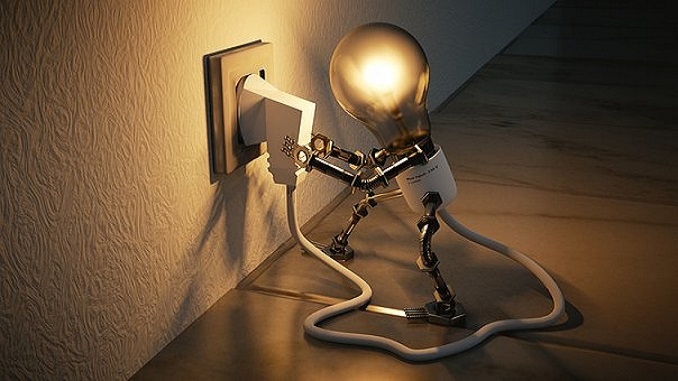
As REA predicts solar could account for half of Nigeria’s electricity supply by 2029, the bigger question is why abundant energy resources and sweeping legal reforms have yet to translate into reliable power for millions of Nigerians.
When the Rural Electrification Agency (REA) announced this week that solar energy could provide as much as half of Nigeria’s electricity supply within the next few years, the projection sounded like the kind of breakthrough many Nigerians have waited decades to hear.
The agency says solar already contributes about 20 per cent of the country’s electricity mix. Manufacturing plants are springing up around the Lagos-Sagamu industrial corridor, while private investors are putting more money into renewable energy than ever before.
On the surface, the signs are encouraging.
Yet for millions of Nigerians, the daily reality remains stubbornly familiar. Shops still fall silent when generators run out of fuel. Manufacturers continue to spend a sizeable portion of their operating costs producing electricity for themselves. Families plan their evenings around power outages rather than the clock.
It is a contradiction that has defined Nigeria for decades.
The country has some of Africa’s largest natural gas reserves. It receives abundant sunshine across much of its territory, particularly in the North, where solar generation has enormous potential. Rivers capable of supporting hydroelectric projects flow across several states. Coal deposits remain largely untapped in places such as Enugu and Kogi.
Few countries possess such a broad mix of energy resources.
Even fewer have struggled for so long to convert that wealth into dependable electricity.
The irony has become even more striking since the Electricity Act came into force in 2023.
The legislation fundamentally altered Nigeria’s electricity sector by allowing states to establish their own electricity markets, issue licences and develop generation, transmission and distribution projects within their jurisdictions. It was one of the most significant reforms in the industry’s history, ending decades in which electricity development was concentrated almost entirely at the federal level.
The expectation was straightforward: states with comparative advantages would begin exploiting them.
Enugu, whose identity has long been tied to coal mining, could build an integrated energy economy around its coal reserves while taking advantage of expanding gas infrastructure. Niger State, home to some of the country’s largest hydroelectric assets, could deepen its role as a power-producing state. Northern states blessed with intense year-round sunshine could become centres of solar generation. Oil-producing states with abundant gas could develop embedded power plants to serve industries and households closer to where the fuel is produced.
Instead, progress has been uneven.
Some states have begun establishing electricity regulatory commissions and drafting market rules. Others are negotiating with private investors or developing mini-grid projects. But in many parts of the country, the legal reforms have yet to produce the visible improvements consumers expected.
That is because Nigeria’s electricity challenge extends well beyond generation.
Power experts have long argued that the country suffers from weaknesses across the entire value chain. Even where generation capacity exists, electricity often cannot be transmitted efficiently because of ageing infrastructure and limited grid capacity. Distribution networks in many areas remain poorly equipped to deliver available power to consumers, while inadequate metering and commercial losses continue to undermine investment.
In other words, generating more electricity is only part of the solution. Getting that electricity reliably into homes, hospitals, schools and factories is an equally difficult challenge.
That explains why the REA’s optimism about solar was accompanied by a note of caution.
Speaking during the Nigerian Oil and Gas Energy Week in Abuja, REA Managing Director Abba Abubakar Aliyu said solar deployment was accelerating rapidly and could account for about 50 per cent of Nigeria’s electricity generation mix by 2029 if current investment trends continue.
He also pointed to the emergence of local manufacturing, saying companies along the Lagos-Sagamu corridor are now producing solar photovoltaic panels for domestic use and export across West Africa, with about 3.7 gigawatts of additional manufacturing capacity under development.
But even as renewable energy gathers momentum, industry leaders insist Nigeria cannot afford to abandon gas.
Vincent Ozoude, Managing Director of Transafam Power Limited, argued that gas-fired plants remain indispensable because they provide the stable base load needed to complement intermittent renewable sources such as solar.
His point reflects a growing consensus within the energy industry: Nigeria’s future is unlikely to be built on a choice between gas and renewables. It will require both.
The country’s natural gas reserves remain among the largest in the world, while its solar potential is equally significant. Harnessing one without the other would leave gaps that neither technology can fully address on its own.
Ultimately, however, neither abundant sunshine nor vast gas reserves will solve Nigeria’s electricity crisis without sustained political commitment.
The Electricity Act has already removed one of the biggest legal obstacles by empowering states to take greater responsibility for their own power sectors. Whether that opportunity translates into reliable electricity now depends less on legislation than on execution—on whether governments can attract investment, strengthen regulation, expand transmission infrastructure and deliver projects that move beyond announcements.
For ordinary Nigerians, the debate is not really about megawatts or energy mixes.
It is about whether businesses can remain open without diesel generators, whether hospitals can operate uninterrupted, whether students can study after sunset and whether electricity finally becomes a dependable public service rather than a daily gamble.
The resources have always been there.
The legal framework now exists.
The question Nigeria must answer is why reliable electricity remains so difficult to deliver.