


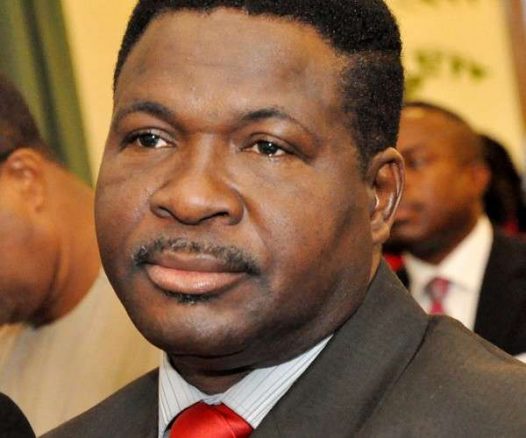
Paper delivered by Prof. Mike Ozekhome, SAN, at a Public Lecture held at the University of Ibadan, Ibadan, Nigeria
Nigeria, a country endowed with vast human and natural resources, holds a central position in the African geopolitical and economic landscape. With a population of over 220 million people[1] and significant crude oil reserves, it stands as the continent’s most populous country and one of its richest in terms of natural endowment. Yet, in the face of such wealth and demographic strength, Nigeria continues to struggle with enduring challenges that undermine its national potential. These challenges include insecurity, political instability, widespread poverty, youth unemployment, institutional decay, and a general lack of trust in public leadership. In light of these contradictions, a growing number of Nigerians have begun to echo a timeless question: from where comes our help?
The question is derived from the first verse of Psalm 121 in the Christian Bible, which reads, “I will lift up mine eyes unto the hills, from whence cometh my help?”[2] It is a question that is not merely spiritual but deeply existential, especially in the Nigerian context. It reflects the desperation of a people caught between national promise and persistent dysfunction. It articulates the psychological fatigue of citizens who, despite their resilience, continue to suffer under the weight of political mismanagement, corruption, violence, and socio-economic dislocation.
The Nigerian Constitution, which came into effect in 1999 at the beginning of the Fourth Republic which proclaims that: “the security and welfare of the people shall be the primary purpose of government.”[3] Despite this declaration, the lived experiences of millions of Nigerians suggest otherwise. Armed conflict in the northeast, kidnappings across the middle belt and southern regions, rampant banditry in the northwest, and urban violence in major cities all point to a severe failure of the state’s primary function[4]. Additionally, public infrastructure remains poor, healthcare systems are overstretched, and the education sector continues to suffer from underfunding and industrial actions[5]. About sixty-three (63) percent or 133 Million Nigerians are classified as multidimensionally poor according to a 2022 report by the National Bureau of Statistics[6].
This national predicament has caused many citizens, particularly young people, to seek opportunities abroad. The mass migration phenomenon, popularly referred to as “Japa,”[7] has become symbolic of the growing loss of faith in the Nigerian system[8]. Professionals, including doctors, engineers, and academics, are leaving the country in large numbers, further weakening an already strained domestic workforce. Trust in electoral processes has also declined, with the 2023 general elections drawing criticism over logistical failures, voter suppression, and credibility questions[9].
2.0 THE HISTORICAL BURDEN
Nigeria’s modern history is a tapestry of promise, pain, and unresolved contradictions. At independence, we inherited a nation bursting with potential—vast natural resources, a young and aspirational population, and a promising institutional framework. Instead, what followed was a pattern of squandered opportunities and structural erosion.
Enshrined in our national narrative is the repeated failure to translate constitutional gains into real development. Despite over six decades of self-rule, we remain “geometrically vast in population but arithmetically poor in growth and maturity”[10]. We are a country blessed with human and material wealth, yet we see systemic neglect that has left us living in poverty, craving justice, and struggling for basic dignity[11].
The collapse of industrial capacity—from Ashaka Steel and UAC to defunct national carriers—presents a haunting symbol of our reversal[12]. We once ranked among the world’s fastest-growing economies, yet today we languish as the poverty capital of the world[13]. Security, once taken for granted in our communities, has become a luxury beyond reach[14]. These are not isolated anomalies; they are the symptoms of deep-seated historical neglect and institutional decay.
2.1 The Leadership Question
If historical roots reveal the weeds, leadership is the rot at the core. Professor Chinua Achebe famously described our national pathology as “a failure of leadership.” Today, this remains painfully true[15]. Leadership in Nigeria has too often been about power without purpose, about patronage instead of public service—about self-enrichment rather than national enrichment.
We have seen leaders who see themselves not as servants of the people, but as lords over them. They are shielded from accountability by institutional fragility, surrounded by sycophants, and driven by self-interest—all while democratic forms mask oppressive realities[16].
Our leaders have weaponized ethnicity and religion to divide us, perpetuate fear, and justify incompetence. Where there should be bridges, they construct walls. Where there should be unity, they sow discord[17]. Boko Haram’s emergence is not simply about ideology—it is also a bitter outcry against exclusion and injustice perpetrated by the centre[18].
Yet all is not lost. Countries like South Korea, Singapore, and Rwanda—once in situations far worse than ours—found their way through transformative leadership committed to national unity and long-term planning[19]. These nations remind us: leadership matters. It can be the fulcrum on which fortunes change, or the pivot by which potentials perish.
2.2 The Socio-Economic Quagmire
Nigeria’s socio-economic landscape is stuck in a vicious cycle of poverty, inequality, and underdevelopment. Our nation, blessed with abundant natural and human resources, finds itself paradoxically impoverished—a phenomenon that Ozekhome aptly referred to as “economic insecurity,” where even formal recession looms amid plenty[20].
Consider the widening chasm between rich and poor. Oil revenues—our supposed lifeline—fuel government coffers but barely trickle to rural communities, where most Nigerians toil[21] . The result is an economy that offers few jobs, delivering neither dignity nor hope. Amid this landscape, disillusionment festers: “poor compensation or remuneration breeds inequality and affects productivity,” and, ultimately, fosters instability[22].
Infrastructure, a critical foundation of development, often exists more as blueprint than reality—pipelines rusting unused, railways decaying, power grids failing to deliver. Industrial capacity has collapsed, smothered by theft, neglect, and foreign neglect. The country that could build steel now depends on soup-imported cans—and cooks with candles dusk till dawn.
Such socio-economic dislocation does more than impoverish—it erodes civic trust, deepens regional inequality, and fuels insurgencies. When work is scarce, and wages low, people withdraw from the system; some even take up arms. This quagmire, thus, is not merely about money—it is about hope, dignity, and the breach of the social contract.
2.3 The Identity Crisis & Insecurity
The insecurities of Nigeria are not solely a breakdown of public order; they are symptoms of a fractured national identity. Ozekhome has observed this as the “national question,” rooted in exclusion and aggravated by systemic non-inclusiveness—where minorities feel neither seen, heard, nor represented, and unity becomes a fragile facade[23].
Violent extremism, whether Boko Haram in the northeast or Biafra agitation in the southeast, is often less about ideology, more about grievance. The latter can be traced to hunger, unemployment, arbitrary governance, and perceived marginalisation in citizenship and opportunities[24].
Similarly, farmer-herder clashes, kidnappings, and communal violence act as distress calls from a society convulsed by contest for survival and dignity. These conflicts, often labeled as ethnic or religious, are more accurately a byproduct of structural failure—an economy and polity unable to ensure order, equity, or access.
We witness, then, an erosion of the sense of “Nigerian” as anything more than a temporary label. Instead, we retreat into sub-national identities—ethnic, regional, sectarian—because the larger nation has failed to guarantee basic rights and security.
2.4 Youth & Diaspora: Seeds of Hope
Amidst the prevailing gloom, Nigeria’s youth and its diaspora emerge not just as observers, but as active catalysts for transformative change. As I pointed out in a discourse on democracy and governance, our youth are the architects of national renewal—the energy, innovation, and creativity they bring forward is Nigeria’s greatest untapped asset[25].
The diaspora, too, plays a critical complementary role. Often maligned as detached, they are in fact bridges across continents, channeling ideas, remittances, and global advocacy for reform. In recent contributions, I highlighted how diaspora legal professionals, working in concert with civil society, can offer invaluable support to our institutions—whether advocating for judicial independence or providing technical training to Nigerian lawyers and judges[26].
Consider these real-world interventions:
- Diaspora groups funding leadership training and gender quotas, inspired by models like Canada’s Equal Voice program—boosting inclusivity and representation[27].
- Financial and technical support flowing to local initiatives such as BudgIT and Enough is Enough—vital for fostering budget transparency and youth engagement in political processes[28].
- Remittances—nearly $20 billion sent home in 2023 alone—acting as economic lifelines for millions of families, directly sustaining education, healthcare, and small enterprises These accomplishments are neither anecdotal nor peripheral; they are deep wells of possibility. They show that while the state may falter, individual Nigerians—especially the young and those abroad—continue to build, innovate, advocate, and reconnect Nigeria to global opportunities.
If “help” is to come from anywhere, it must come in part from the hands, hearts, and minds of these citizens—those within and beyond our borders who refuse to surrender to despair. They are our seeds of hope.
Click here to read and download the entire paper.
NIGERIA.-FROM-WHERE-COMES-OUR-HELP-By-Mike-Ozekhome[1]WorldMeter, ‘Nigeria Population’ <https://www.worldometers.info/world-population/nigeria-population/> Accessed on the 20th of June, 2025.
[2]Psalm 121:1 KJV.
[3]Section 14(2)(b) 1999 Constitution of the Federal Republic of Nigeria (As amended).
[4]Nsirimovu, Okwuwada, ‘The modern day Consequences, Causes, and Nature of Kidnapping, Terrorism, Banditry, and violent crime in Nigeria: A comprehensive analysis’ (2023) <https://www.researchgate.net/publication/371691686_The_modern_day_Consequences_Causes_and_Nature_of_Kidnapping_Terrorism_Banditry_and_violent_crime_in_Nigeria_A_comprehensive_analysis> Accessed on the 20th of June, 2025.
[5]ibid
[6]National Bureau of Statistics (2022) <https://www.nigerianstat.gov.ng/news/78> Accessed on the 20th of June, 2025.
[7]ThisDay News, ‘Nigeria and Burden of Japa Syndrome’ (2023) <https://www.thisdaylive.com/2023/05/02/nigeria-and-burden-of-japa-syndrome/> Accessed on the 20th of June, 2025.
[8]ibid
[9]Dii, Christian, ‘Voters’ disposition and the outcome of 2023 general elections in Nigeria’ (2023)International Journal of Development and Management Review18 (1).
[10] Ozekhome, Mike, Nigeria @60: No social justice, religious and inter-ethnic tolerance (commentary, 2020), The Niche, The Vanguard Nigeria, https://thenicheng.com and https://www.vanguardngr.com. (accessed June 2025)
[11] Ozekhome, Mike, [Ibid. n.3]
[12] Mike Ozekhome, Me Celebrate Nigeria at 60? Sorry, No!!! – HARD FACTS, 2020. (newswirelawandevents.com) (accessed June 2025)
[13] Ibid n.3
[14] Ozekhome, Mike, Me Celebrate Nigeria at 60? Sorry, No!!! – HARD FACTS (2020), Newswire Law & Events, https://newswirelawandevents.com. (accessed June 2025)
[15] Ozekhome, Mike, Is This the Nigeria of Our Dream? (lecture, 2015), Mike Ozekhome Chambers, https://mikeozekhomeschambers.com. (accessed June 2025)
[16] Ibid
[17]Ozekhome, Mike, Me Celebrate Nigeria at 60? Sorry, No!!! (2020), Newswire Law & Events, https://newswirelawandevents.com. (accessed June 2025)
[18] Ozekhome, Mike (quoting James Madison on Boko Haram), A New Nigeria of Our Dream (2015), The Eagle Online, https://theeagleonline.com.ng. (accessed June 2025)
[19] Ibid n.2
[20]Ozekhome, Mike, “Economic Insecurity” (commentary, 2025), Mike Ozekhome Chambers Facebook, https://www.facebook.com/ozekhomemikeSAN/ (accessed June 2025).
[21] Wikipedia, Poverty in Nigeria, 2025, https://en.wikipedia.org/wiki/Poverty_in_Nigeria (accessed June 2025).
[22]Ozekhome, Mike, Minimum Wage, Maximum Rage (2024), BarristerNG, https://barristerng.com/minimum-wage-maximum-rage-by-professor-mike-ozekhome-san-con-ofr/ (accessed June 2025).
[23]Ozekhome, Mike & Sani, Shehu, “Ozekhome, Sani Others Seek Constitution Review to Address Nationality Problem” (2023), The Guardian Nigeria, https://guardian.ng/news/ozekhome-sani-others-seek-constitution-review-to-address-nationality-problem/ (accessed June 2025).
[24] Vanguard, “Ozekhome on IPoB and National Inclusivity” (2022), https://www.vanguardngr.com (accessed June 2025).
[25] Ozekhome, Mike, Has Democracy Led to Good Governance for Nigerians? (Part 1) (2025), Mike Ozekhome Chambers, https://mikeozekhomeschambers.com/nigerias-political-leadership-since-1960-and-rhythms-of-corruption-part-8/ (accessed June 2025).
[26]Sight News, “The Role of Nigerian Diaspora Groups in Enhancing Electoral Processes, Governance and Democracy,” by Ozekhome (May 2025), https://thesightnews.com/2025/05/01/the-role-of-nigerian-diaspora-groups-in-enhancing-electoral-processes-governance-and-democracy-by-prof-mike-ozekhome-san/ (accessed June 2025).
[27] Sight News, [Ibid.] (ref. 19).
[28] Sight News, [Ibid.] (ref. 19).




“Perhaps the gap stems from inadequate policy implementation, corruption, and lack of accountability. Bridging it might require institutional reforms, increased transparency, and citizen engagement to hold leaders accountable and ensure the Constitution’s promises are fulfilled.”