By Ladidi Sabo
Nigeria’s security crisis is facing renewed scrutiny at home and abroad as authorities dispute reports of a mass church kidnapping in Kaduna State, even as fresh allegations, foreign media controversies, and a multimillion-dollar lobbying deal raise broader questions about transparency, accountability and narrative control in Africa’s most populous nation.
Kaduna State Police Commissioner Alhaji Muhammad Rabiu on Monday dismissed reports that more than 100 Christian worshippers were abducted during church services in Kajuru Local Government Area, calling the claims false and politically motivated.
Speaking after a meeting of the State Security Council, Rabiu accused unnamed “conflict entrepreneurs” of spreading misinformation aimed at destabilising the state.
“Let anyone who claims this kidnapping occurred come forward with names and particulars of the victims,” he said.
But Christian leaders and local officials have rejected the police account, insisting that armed attackers stormed three churches during Sunday worship on January 18, abducting congregants in what they described as one of the largest mass kidnappings of Christians in the region.
The Christian Association of Nigeria (CAN), Northern Nigeria Chapter, said 172 worshippers were taken, with nine later escaping, according to its chairman, Rev. Joseph John Hayab.
“They invaded the churches while worship was ongoing,” Hayab said. “They held the worshippers hostage and marched them into the bush.”
Accounts of the incident vary. Usman Danlami Stingo, who represents the area in the Kaduna State House of Assembly, told The Associated Press that 177 people were kidnapped and 11 escaped, while Felix Bagudu, a federal lawmaker representing Kajuru/Chikun Constituency, said he doubted the figure exceeded 100 after briefing local government officials. But none of them denied that there was an abduction.
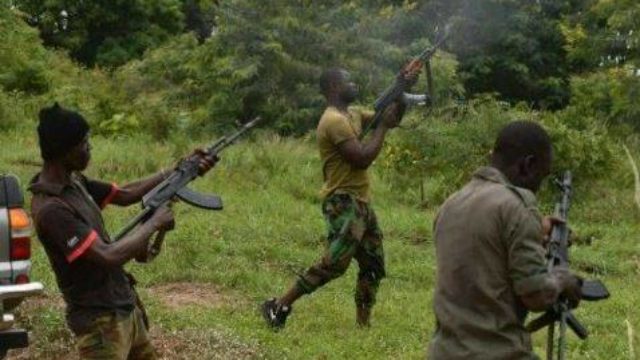
Sources told Truth Nigeria that the attacks occurred simultaneously in Kurmin Wali village, Afago ward, about eight miles south of Maro town. Survivors described the attackers as armed Fulani ethnic militias who marched worshippers into nearby forest camps believed to hold hundreds of captives.
An ECWA church member who escaped said the gunmen arrived around 10 a.m., firing shots and ordering worshippers to the ground before forcing them out.
“Some wore black robes and turbans, others wore shabby Nigerian Army camouflage,” the survivor said, adding that he escaped with his 10-year-old son through a window.
The disputed Kaduna incident comes amid heightened national tension following deadly attacks in neighbouring Plateau State, where suspected armed herdsmen killed Rev. Bulus Madaki, his daughter and son-in-law, and injured his three-month-old grandchild during an ambush on January 16.
The attack occurred around 10 p.m. at a bridge linking the Gassa and Nding communities in Barkin Ladi Local Government Area as the family travelled to a new church posting.
Confirming the incident, Rwang Tengwong, spokesperson for the Berom Youth Moulders-Association, said the victims were ambushed by armed men believed to be operating from the Jong area of Ropp District, warning that the violence reflected a “coordinated and escalating pattern” across Plateau State.
These developments are unfolding against the backdrop of a growing controversy over foreign media reporting and Nigeria’s response to international scrutiny.
In recent weeks, Nigerian officials, rights groups and political figures have clashed over a New York Times report on U.S. precision airstrikes in Sokoto State, with critics disputing the paper’s account and accusing unnamed actors of politicising intelligence surrounding the operation.
The controversy has intensified amid revelations from documents reportedly filed with the U.S. Department of Justice suggesting that the Nigerian government approved a $9 million lobbying contract with Washington-based DCI Group, including an initial $4.5 million payment.
The agreement, signed on December 17, 2025, is said to run for six months through June 30, 2026, with automatic renewal unless terminated. Under the contract, Nigeria would reportedly pay $750,000 per month to help “communicate” its efforts to protect Christian communities and sustain U.S. support for its counterterrorism operations amid mounting scrutiny in Washington.
The alleged arrangement has sparked backlash at home. The Abuja School of Social and Political Thought (TAS) has filed a Freedom of Information request with the Office of the National Security Adviser, demanding full disclosure of the contract’s terms and approvals.
Critics argue the funds would be better spent on protecting vulnerable communities rather than managing perceptions abroad.
“The government has signed away millions of dollars—not to rebuild destroyed communities, not to support widows and orphans—but to hire a Washington firm to polish its image,” said Franc Utoo, a Benue State native and human rights advocate. “They do not deny the graves. They simply try to talk around them.”
Journalist and rights advocate Charles Ogbu said the lobbying effort follows months of testimony by Nigerian clerics and survivors before U.S. lawmakers, including visits by the Catholic bishop of Makurdi and a U.S. congressional delegation led by Representative Riley M. Moore, who toured violence-hit areas in Benue State.
Ogbu also noted that Nigeria’s foreign affairs minister had publicly acknowledged government collaboration with U.S. authorities on intelligence related to the Sokoto airstrikes.
Despite this, Ogbu accused elements within Nigeria’s political establishment of attempting to redirect blame by promoting claims that intelligence for the U.S. strikes came a particular ethnic group—a narrative he said risks inflaming existing tensions.
The controversies come despite President Bola Tinubu’s declaration of a national security emergency, as Nigeria continues to battle kidnappers, bandits and insurgents across multiple regions.
Plateau, Benue and Kaduna states remain among the hardest hit, with persistent attacks raising questions about the effectiveness of security deployments—and about who controls the story of Nigeria’s conflict beyond its borders.