Atrocities Watch Africa (AWA), a non-partisan civil society organisation providing continental leadership in the prevention of and response to mass atrocities across Africa, in its 2026 watchlist warns that Nigeria’s deteriorating security situation risks spiralling further unless urgent action is taken.
Overview
Nigeria is facing a deepening security crisis marked by insurgency, banditry, communal violence, militancy, and widespread kidnappings. These overlapping threats are increasingly overwhelming state capacity and exposing civilians to grave harm. Without decisive measures to address both the violence and its underlying drivers—including poverty, youth unemployment, climate stress, and weak governance—the risk of large-scale atrocities will remain high in the coming year.
A Nation Under Strain
Violence now affects virtually every region of the country.
In the North-East, Islamist extremist groups, including Boko Haram and the Islamic State West Africa Province (ISWAP), continue a long-running insurgency. In the North-West, particularly in Zamfara and Katsina states, heavily armed criminal groups raid villages and carry out mass kidnappings for ransom, treating violence as a profitable enterprise.
The Middle Belt remains a major flashpoint, where recurrent clashes over land, identity, and religion fuel cycles of revenge attacks and large-scale civilian casualties. In the South-East, gunmen linked to separatist and criminal networks carry out deadly raids and kidnappings, while in the Niger Delta, armed groups periodically target oil infrastructure to press political and economic demands.
These security challenges are compounded by structural weaknesses, including widespread poverty, high youth unemployment, climate-related pressures, porous borders, weak institutions, and limited security capacity—leaving many communities effectively unprotected.
Escalation in 2025
In 2025, existing patterns of violence persisted and, in several cases, intensified and expanded geographically. During the first half of the year alone, at least 2,266 people were killed by bandits or insurgents—surpassing the total number of such deaths recorded throughout all of 2024.
ISWAP and Boko Haram increased the tempo of attacks in states such as Borno and Yobe, targeting both civilians and military infrastructure. In May, ISWAP launched its most sophisticated offensive in years, temporarily capturing strategic locations and attacking military installations and transport routes.
The group sustained its momentum into the second half of the year, including the September 5 Darul Jamal massacre, in which more than 60 civilians were killed. Clashes between ISWAP and Boko Haram also escalated in the Lake Chad area toward the end of the year, despite a temporary truce reached in October. Boko Haram attacks during this period reportedly resulted in between 50 and 200 fatalities across six clashes, making it one of the deadliest episodes since February 2023.
Banditry and Communal Violence
Banditry remained concentrated in Zamfara State, though violence spread further across the North-West. A newly emerged armed group, Lakurawa, integrated banditry with Islamist tactics across parts of Sokoto, Kebbi, and Zamfara, raising concerns about further ideological and operational convergence.
In the Middle Belt, inter-communal violence surged sharply. More than 100 people were killed in April, followed by an overnight attack on Yelwata village in Benue State in mid-June, where at least 150 people were reportedly killed. By early 2025, approximately 580,000 people had been displaced by violence in the region.
In the South-East, attacks by so-called “unknown gunmen” continued, alongside a rise in kidnappings linked to separatist and criminal networks.
Renewed Tensions in the Niger Delta
Tensions in the Niger Delta have begun to resurface after years of relative calm. In 2024, the Niger Delta Liberation Movement claimed responsibility for bombings targeting Chevron-operated pipelines, raising fears of renewed militancy. While attacks have remained limited, they signal growing frustration and the potential for escalation.
Kidnappings as an Industry
Kidnapping for ransom has become one of Nigeria’s most pervasive and profitable criminal activities. Between July 2024 and June 2025, at least 4,722 people were abducted in 997 incidents, with 762 victims killed. An estimated ₦2.57 billion was paid in ransom during this period.
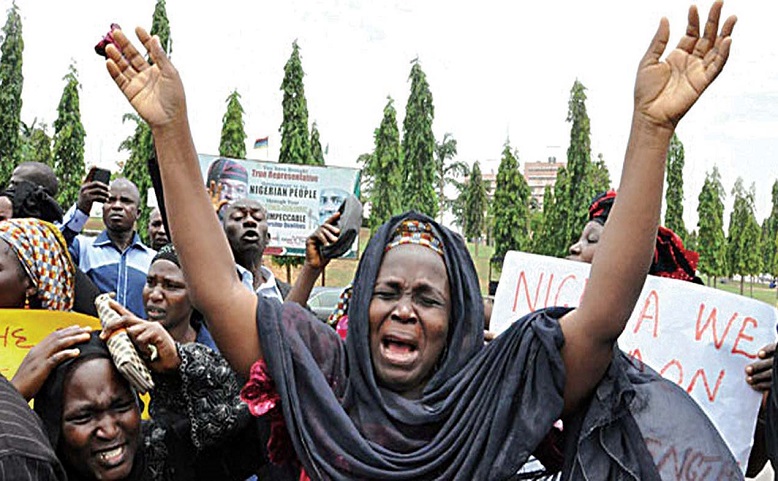
In November, Nigeria experienced one of its worst mass abductions in years when 315 children and school staff were kidnapped. The incident prompted President Bola Tinubu to declare a nationwide security emergency, acknowledging both the scale of the crisis and the state’s limited capacity to respond.
Outlook and Risks
If current trends continue, violence in Nigeria is likely to escalate further in the coming year. Multiple, overlapping security crises are unfolding simultaneously, stretching already overstretched security institutions and creating conditions in which mass atrocities could occur.
Violence in the North-East and Middle Belt is expected to persist, while kidnap-for-ransom operations—often used to finance criminal and extremist activities—are likely to expand in scale and geographic reach. Militancy in the South-East and Niger Delta also remains a significant risk.
The convergence of these crises is particularly concerning, as escalation in one region could create security vacuums that other armed actors exploit. Without stronger, coordinated security responses and sustained efforts to address underlying structural drivers—such as poverty, youth unemployment, climate stress, weak governance, and lack of accountability—the risk of mass atrocities in Nigeria remains alarmingly high.