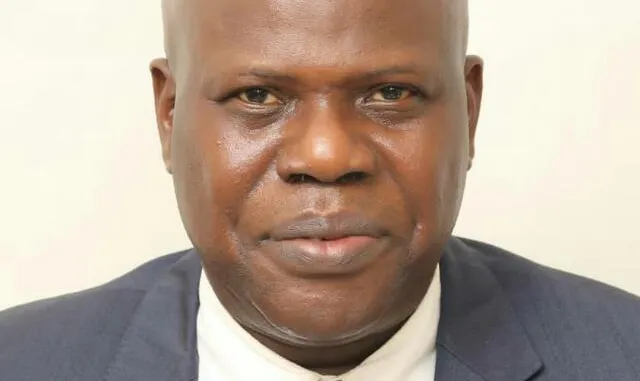
By Richard Odusanya
The worse moral failure that undermines humanity is to be bribed with material intents in order to stand against the truth.
The above statement is morally forceful, and its central claim — that bribery in exchange for silence or distortion of truth is a deep ethical failure — resonates strongly within the Nigerian context. Corruption here is not abstract; it has concrete developmental, institutional, and even security consequences.
When corruption diverts public resources, the damage manifests in poorly equipped hospitals, abandoned infrastructure, unpaid teachers, fragile institutions, and weakened public trust. In that sense, the quotation attributed to Navi Pillay captures a real developmental truth: corruption is not merely about money lost; it is about opportunities denied and lives indirectly shortened.
However, to frame corruption solely as “spiritual decay” may be rhetorically powerful but analytically incomplete.
In Nigeria, corruption is not only a moral weakness of individuals; it is also embedded in structural incentives. Weak enforcement mechanisms, opaque procurement systems, politicized institutions, and patronage-driven political financing create an environment where corruption is often rationalized as survival or obligation. When systems reward loyalty over competence and shield impunity, moral exhortation alone cannot solve the problem.
The biblical reference to 1 Timothy 6:10 — “the love of money is the root of all evil” — is frequently quoted, but it is worth emphasizing that the text does not condemn money itself, but disordered attachment to it. In a country like Nigeria, where economic insecurity is widespread, the pursuit of money is often intertwined with fear — fear of instability, unemployment, healthcare costs, or political marginalization. The moral problem arises when that pursuit overrides justice, equity, and truth.
In the Nigerian state, corruption has evolved beyond petty bribery into systemic capture in some sectors — contract inflation, regulatory compromise, procurement manipulation, and electoral financing distortions. The cost is cumulative: weakened institutions discourage investment, capital flight increases, public cynicism deepens, and young citizens lose faith in meritocracy. Over time, this corrodes national cohesion.
Yet, a purely moralistic narrative risks overlooking reform pathways. Countries have reduced corruption not only through preaching integrity but through structural redesign: digitalization of government payments, transparent procurement portals, whistleblower protections, judicial independence, competitive civil service recruitment, and civic accountability. When institutions reduce discretion and increase transparency, temptation declines.
The deeper Nigerian challenge, therefore, is dual: ethical renewal and institutional reform. Moral language is important because it shapes culture. But sustainable change requires aligning incentives with integrity — making corruption costly and honesty viable.
If truth can be “bribed,” it is often because systems permit it. The task ahead is to build institutions where truth is protected not only by conscience but by law, transparency, and consequences.
In the Nigerian context, that is not merely a spiritual aspiration; it is a developmental necessity.
In conclusion, the recent surge in high-profile corruption cases in Nigeria, particularly in the recent past years has indeed raised concerns regarding public sector integrity and the efficacy of anti-corruption campaigns. Reports indicate that despite efforts by anti-graft agencies, Nigeria has continued to face challenges, ranking 142nd out of 182 countries in the 2025 Transparency International Corruption Perceptions Index (CPI), with a consistent score of 26 out of 100.
Some Examples Below
- Godwin Emefiele: The former Central Bank of Nigeria (CBN) Governor is facing multiple trials regarding alleged $4.5 billion fraud, procurement violations, and abuse of office.
- Yahaya Bello: The former Kogi State Governor faces multiple charges, with trials in 2026 regarding alleged N80.2 billion and N110 billion money laundering.
- Abubakar Malami (SAN): The former Attorney-General is facing prosecution over alleged money laundering totalling N8.7 billion.
- Olu Agunloye: The former Minister of Power and Steel Development is on trial regarding a N6 billion fraud.
- Suspends Humanitarian Affairs Minister Betta Edu Over N585m Paid into Private Account.
- Former National Health Insurance Scheme (NHIS) Boss: Professor Usman Yusuf is under trial for alleged N90.4 million fraud.
- Former Acting Accountant General: Chukwunyere Anamekwe Nwabuoku is facing charges related to N868 million money laundering. These and many others are issues of deep concerns.
@Richard ODUSANYA
The views expressed by contributors are strictly personal and not of Law & Society Magazine.