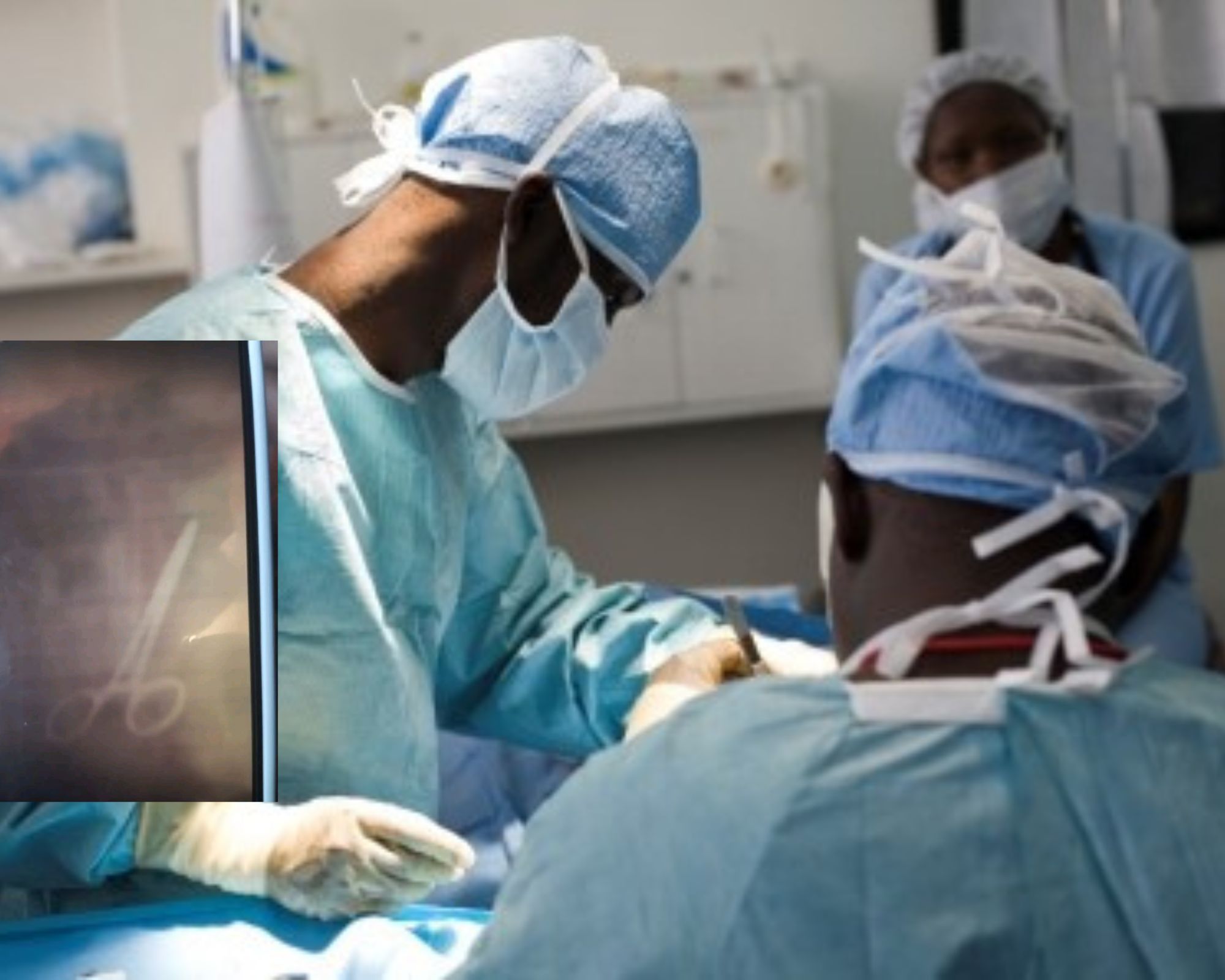
A Nigerian family is demanding accountability after a woman died following months of excruciating pain allegedly caused by a pair of surgical scissors left inside her body during an operation at a government hospital in Kano State.
Aishatu Umar died around 1 a.m. on Monday after enduring what relatives describe as relentless abdominal pain since undergoing surgery in September 2025 at the Abubakar Imam Urology Centre in Kano. She was survived by her husband and five children.
The allegation surfaced publicly through a Facebook post by Abubakar Mohammed, who identified the deceased as his sister-in-law. According to him, Aishatu fell ill while living in Kano and was admitted for surgery at the state-run facility several months ago.
“After the operation, she never knew peace again,” Mohammed wrote. “She complained of severe pain for months.”
Family members say Aishatu repeatedly returned to the hospital following the procedure, reporting worsening pain and discomfort. Instead of being subjected to comprehensive diagnostic tests, they alleged that hospital staff routinely prescribed painkillers and discharged her.
“She suffered this pain for four months,” Mohammed said.
It was not until two days before her death, the family said, that doctors finally ordered scans and other medical investigations. The results were devastating.
“Tests revealed that a pair of scissors had been left inside her body during the surgery in September,” Mohammed disclosed.
Plans were reportedly made to perform a corrective operation to remove the foreign object, but Umar’s condition deteriorated rapidly.
“Efforts were being made to operate again yesterday,” Mohammed said. “But her time had already run out.”
Relatives have described the case as a clear instance of gross medical negligence, questioning how a basic surgical protocol—accounting for instruments before closing a patient—could allegedly be ignored in a modern hospital.
“Is this not pure negligence?” Mohammed asked. “How can trained doctors forget scissors inside a patient’s body?”
Beyond the personal tragedy, the family said the incident reflects a deeper crisis within Nigeria’s healthcare system, where preventable errors, delayed diagnosis and institutional indifference continue to cost lives—even in hospitals that charge patients substantial fees.
Despite Nigeria producing thousands of medical professionals annually, underfunded facilities, poor oversight, exhausted staff and weak accountability mechanisms have turned hospitals into places many Nigerians increasingly fear. Families often shuttle between clinics for months, spending scarce resources on consultations and drugs, only to receive critical diagnoses when it is too late.
The death of Aishatu Umar has intensified calls for urgent reforms and accountability.
“We call on the Kano State Government to investigate this matter thoroughly,” the family said in a statement. “We call on health regulatory bodies to act. We demand justice for Aishatu Umar.”
As of the time of filing this report, neither the management of the Abubakar Imam Urology Centre nor the Kano State health authorities had issued an official response to the allegations.
The case comes amid growing public outrage over alleged medical negligence across Nigeria. Only days earlier, award-winning author Chimamanda Ngozi Adichie accused a Lagos-based hospital, Euracare, of negligence following the death of her 21-month-old son, Nkanu Nnamdi, on January 7, 2026.
Together, the incidents have reignited national debate over patient safety, hospital accountability and a healthcare system many Nigerians say is failing the very people it is meant to protect.
From Kano to Ibadan, Lagos and other parts of Nigeria, similar stories of alleged medical negligence, delayed diagnosis, and preventable deaths continue to surface, reinforcing public distrust in a healthcare system many say is failing across regions, income levels and hospital categories.
Whether in government-owned facilities or expensive private hospitals, families increasingly recount the same pattern: prolonged suffering, repeated hospital visits, dismissive treatment, ballooning medical bills and, ultimately, loss of life that might have been avoided with timely and competent care.