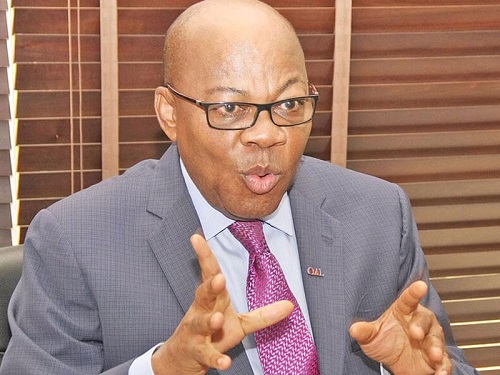
Nigeria’s healthcare system is facing a deepening crisis of medical negligence that has resulted in repeated, preventable deaths across the country, senior lawyer and medical malpractice specialist Dr Olisa Agbakoba, SAN, has warned, calling for an urgent overhaul of the nation’s health regulatory framework.
In a strongly worded statement issued on January 12, Agbakoba said the tragic death of Nkanu Nnamdi, the 21-month-old son of acclaimed Nigerian author Chimamanda Ngozi Adichie and her husband, Dr Ivara Esege, has once again exposed what he described as a “systemic collapse” in medical oversight, accountability and professional standards in Nigeria.
Agbakoba, who said he has spent over two decades handling medical negligence cases, warned that the incident—allegedly involving the administration of Propofol at a Lagos-based private hospital—was not an anomaly but part of a disturbing national pattern.
“Propofol is a high-risk anaesthetic that requires exceptional care due to its potential to cause cardio-respiratory failure,” Agbakoba said. “An overdose can be fatal, and there appears to be a strong possibility of overdose in this case. Sadly, I am not shocked that a procedure in a supposedly reputable hospital ended this way.”
While commending the Lagos State Government for ordering an investigation and praising the hospital, Euracare, for agreeing to cooperate, Agbakoba cautioned that such probes must be genuinely independent.
“I have personally witnessed cases where medical records were altered to avoid culpability,” he said, warning that without independent oversight, investigations risk becoming exercises in damage control rather than accountability.
A Pattern of Preventable Deaths
Agbakoba said the Chimamanda case represents only “the visible tip of a much larger crisis,” citing numerous cases his firm has handled, including patients who lost vital organs, mothers who died from delayed emergency responses during childbirth, children subjected to catastrophic surgical errors and patients fatally harmed by routine medical procedures.
“These are not isolated incidents,” he said. “They are symptoms of a broken system.”
According to Agbakoba, his practice is currently handling over 25 active medical negligence cases, with more than 20 additional complaints under review—figures that underscore the scale of the problem.
He also revealed that the issue is deeply personal, recounting his own misdiagnosis and a near-fatal operation suffered by his brother at the hands of a doctor who falsely presented himself as a surgeon.
Regulatory Collapse at the Core
At the heart of the crisis, Agbakoba said, is the collapse of Nigeria’s health regulatory architecture.
“In the past, Chief Medical Officers and Health Inspectors ensured oversight, compliance and accountability,” he said. “Today, that structure no longer exists.”
He blamed over-centralisation under the National Health Act and state health laws for weakening enforcement, allowing hospitals and practitioners to operate “with alarming impunity.”
“There are no routine inspections, no mandatory reporting, and no effective sanctions,” Agbakoba said, adding that Ministers and Commissioners of Health have wrongly combined policy-making with regulatory enforcement—“a fundamental governance failure.”
Calls for Emergency Reforms
Agbakoba called for immediate legislative and executive action, proposing sweeping reforms including the creation of an independent Health Regulatory Authority, reinstatement of the Office of Chief Medical Officer at federal and state levels, mandatory inspections of all health facilities, and independent investigative mechanisms with powers to preserve medical records.
“The time for half-measures is over,” he said. “We cannot continue to lose lives to preventable medical errors while our regulatory framework remains in shambles.”
Describing the situation as a “national emergency,” Agbakoba urged authorities to act decisively to restore trust in Nigeria’s healthcare system.
“This crisis affects ordinary Nigerians every day,” he said. “The Chimamanda case has simply forced the country to confront what countless families have endured in silence.”