Weeks after bulldozers tore through the fragile waterfront settlement of Makoko, the Lagos State House of Assembly has ordered an immediate suspension of demolition activities — but for thousands already displaced, the directive may have come too late.
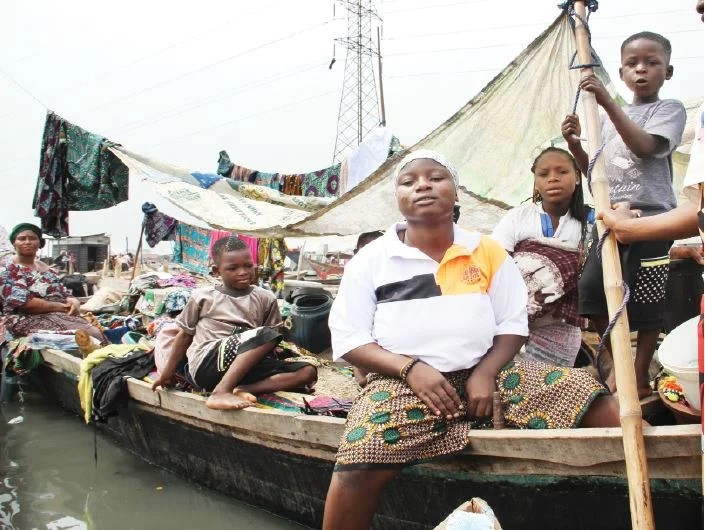
Across the lagoon, families now sleep in canoes, churches, and open spaces, exposed to rain and scorching sun. Children have dropped out of school, fishing businesses have collapsed, and grieving residents say the destruction has reshaped their lives overnight.
Read Also: Makoko After the Bulldozers: Families sleep in canoes as Lagos moves to prosecute community leader
The Assembly’s intervention followed mounting outrage and protests by displaced residents, some of which reportedly ended in arrests and allegations of excessive force.
Assembly Moves to Stop Demolitions
Chairman of the House ad-hoc committee, Noheem Adams, announced the resolution during a stakeholders’ meeting with leaders from affected communities.
The committee — constituted by Speaker Mudashiru Obasa amid rising public concern — directed all ministries, departments, and agencies to halt demolition operations in Makoko, Oko-Agbon, and Shogunro immediately.
“We are directing that all demolitions stop from today until further notice,” Adams said, adding that residents must be included in decision-making processes and that the government would pay compensation to those affected.
The announcement drew cheers from community representatives desperate for relief.
Yet behind the applause lies a humanitarian crisis still unfolding.
“What Will I Live For Again?”
For Mrs. Juliana, a mother of ten, survival has become a daily struggle.
“The demolition left us with nothing. We couldn’t even recover a pin because it happened suddenly,” she said through tears. “Since then, we have been sleeping in boats, under a billboard.”
Two of her sons remain hospitalised.
Multiple victims told reporters they were forced onto the water after their homes were flattened during the task force operation.
Local accounts suggest about 12 people may have died, while properties worth unquantifiable sums were destroyed.
Claims of Forced Evictions and a Hidden Agenda
Critics say the demolitions reflect a troubling pattern.
Environmental activist Nnimmo Bassey described the exercise as part of a “continuous, planned dispossession” designed to push out the poor and make way for “shiny estates and leisure parks.”
Reports from the scene indicate bulldozers allegedly moved in without adequate notice, destroying homes, schools, clinics, and churches.
Residents and civil society groups fear the prime waterfront location has made Makoko a target for aggressive redevelopment rather than meaningful urban improvement.
While the state government has cited safety concerns — including structures built beneath high-tension power lines — activists argue authorities have long neglected the area, engaging only when it is time to demolish.
“We Risk Extinction”
Spokesman of the Eegu General Assembly, Prof. Senayo Olaoluwa, warned that the continued destruction of riverine settlements could erase entire communities.
“These demolitions make us feel that Eegu people and other riverine communities are being targeted for extinction,” he said.
Ogunusi Adewale, whose home was destroyed after more than six years of uncertainty, added:
“People should be treated as human beings, not animals. Over 3,000 homes were destroyed and more than 10,000 people displaced. Mothers with babies are now living on water.”
Protest Turns Violent
Residents say a peaceful protest spiraled into chaos when security forces allegedly deployed tear gas.
“We came in peace,” said Jude Ojo. “Instead, we were met with tear gas.”
According to him, one protester was shot in the leg and rushed to hospital after bleeding heavily.
Some activists arrested during the demonstrations are reportedly still standing trial.
“The Bulldozers Came Back”
Student coordinator Israel Idowu claimed the demolition appeared deliberate.
“The governor had spoken about turning Makoko into a tourist centre,” he said. “We were told demolition would stop — but the bulldozers returned. We were told it was an order from above.”
Idowu also alleged that a pregnant woman died after bleeding profusely when access to medical care was restricted.
Now, he says, children are no longer in school and fishing — the community’s economic lifeline — has ground to a halt.
Livelihoods Destroyed Beyond Makoko
The ripple effects have spread to Owode Onirin, where traders say decades-old businesses vanished in a single day.
“In one day, traders lost their shops, spare parts, vehicles — everything,” said market chairman Abiodun Ahmed, who also alleged arrests and vehicle seizures during the operation.
Government Promises Compensation — and a “Water City”
Governor Babajide Sanwo-Olu’s Special Adviser on E-GIS and Urban Renewal, Dr. Babatunde Olajide, said the state had set aside $2 million since 2021 for the redevelopment of the Makoko waterfront to meet international standards.
Plans for a large “water city” project are underway, he added.
But for many residents, redevelopment sounds less like opportunity and more like displacement.
Calm — But No Closure
Although the Assembly’s order has temporarily eased tensions, uncertainty still hangs over Makoko’s stilted skyline.
Community leaders welcomed the intervention, calling it a “word of peace,” yet thousands remain homeless with no clear timeline for relief.
For families now adrift — literally and figuratively — the question is no longer whether demolition will stop. It is whether Makoko, as they know it, will survive at all.