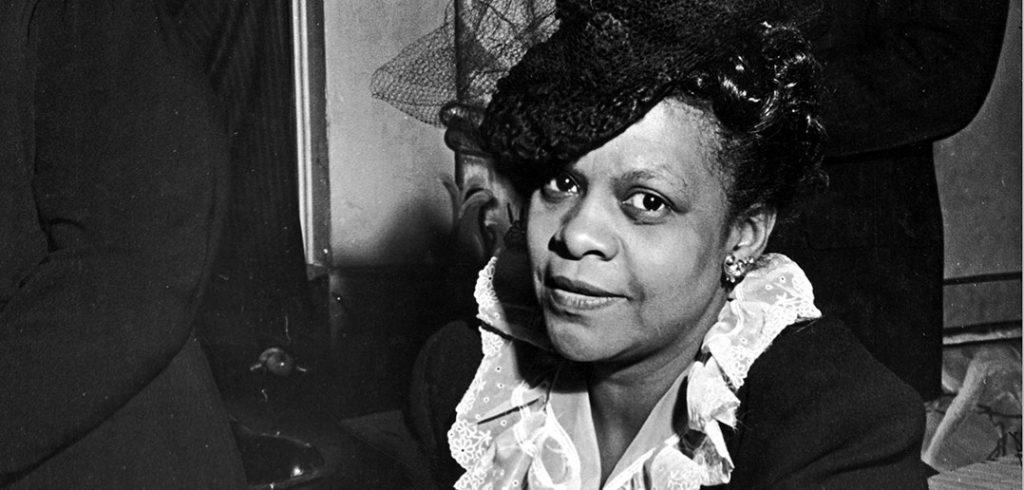
In 1936, in a New York City courtroom, a Black woman sat quietly, alone, unnoticed. To many in the room, she was invisible. But that mistake would cost America’s most powerful mobster his freedom.
At the time, Lucky Luciano ruled the streets. He controlled the money, the cops, and the Five Families—the very heart of organized crime. His empire was massive, untouchable. Prosecutors, investigators, and witnesses were all stymied. Luciano was a ghost who couldn’t be caught.
Then came Eunice Hunton Carter.
Born in Atlanta in 1899, Eunice grew up in a country that made it clear Black lives were expendable. At the age of seven, she witnessed the horrific 1906 Race Riot, when white mobs rampaged through the city, burning Black businesses and hunting Black families. The memory of the violence and fear stuck with her, not as trauma but as fuel for a fire she carried her whole life.
Her family fled the South during the Great Migration, looking for safety in the North, and Eunice vowed not just to survive—but to fight for justice.
By 1921, she was already making history. She earned both a bachelor’s and a master’s degree from Smith College in just four years, an achievement rare for any woman at the time. But she wasn’t done. Eunice set her sights on a career in law, despite the enormous hurdles of sexism and racism. In 1932, she became the first Black woman to graduate from Fordham Law School. But her law degree didn’t open doors—it slammed them shut. No law firm would interview her, and her achievements were ignored.
So Eunice created her own space.
In 1935, New York City’s Mayor Fiorello LaGuardia appointed her as a prosecutor in “women’s court,” a division meant to deal with minor offenses like prostitution. It was supposed to keep her occupied, contained, out of the way. But the system underestimated Eunice.
As she sat day after day in that courtroom, Eunice began to see something that no one else noticed. The same names kept cropping up. The same lawyers, the same bail bondsmen, the same women cycling in and out of the system. Everyone else saw chaos. Eunice saw a pattern—a design.
When Special Prosecutor Thomas E. Dewey launched his “Twenty Against the Underworld” task force, Eunice was the only Black person and the only woman on the team. They assigned her the “meaningless” work—prostitution cases, interviews, and paperwork. They thought it was small. Eunice saw the door.
She started building an index of every brothel in New York City, read through records that others dismissed, and spoke to the women whom society had cast aside. One name stood out: Abe Karp, a lawyer who represented prostitutes across the city. He was not the power himself—he was the entry point.
Behind him stood the untouchable Luciano.
Eunice connected the dots. Luciano had built his criminal empire on prostitution, using it as his financial backbone. He forced women to surrender half their earnings, using violence to ensure compliance. This wasn’t just prostitution—it was modern slavery.
On February 1, 1936, under Eunice’s direction, police raided dozens of brothels simultaneously. Over 100 arrests were made. And something extraordinary happened: the women began to speak. They testified about the violence, the coercion, the forced labour. Eunice’s case had broken open the facade of Luciano’s empire.
The trial in May was dubbed the “Trial of the Century.” Hundreds packed the courthouse. Cameras flashed. Thomas Dewey, the star of the show, took center stage. But the architect of this case, the woman who had made it possible, was left in the shadows. Eunice was not allowed to speak in court. She sat in the gallery, arranging witness protection, preparing testimonies, keeping the case from falling apart.
On June 6, 1936, Lucky Luciano was convicted on 62 charges and sentenced to 30 to 50 years in prison. The most powerful mobster in America fell—not because of the police or the press—but because a quiet Black woman paid attention when no one else did.
But Eunice didn’t stop there. She continued to rise through the ranks, eventually leading the largest bureau in the prosecutor’s office. She advised the United Nations and worked internationally to advance women’s rights. She never sought applause, never demanded recognition. She simply kept opening doors that were never meant to be opened.
Eunice Hunton Carter died in 1970, but for decades, her story was erased from history. When HBO’s Boardwalk Empire introduced a character inspired by her, critics dismissed it as unrealistic—an impossible feat for a Black woman in the 1930s to dismantle the mob.
They were wrong.
In 2018, her grandson, Yale Law professor Stephen L. Carter, restored her legacy with the book Invisible. Today, the world is finally beginning to acknowledge her.
Eunice Carter taught us a powerful truth:
Power doesn’t always announce itself.
Revolutions aren’t always loud.
And the most dangerous person in the room isn’t always the one at the podium.
#BlackHistory #WomenInLaw #HiddenFigures #SocialJustice #EuniceCarter