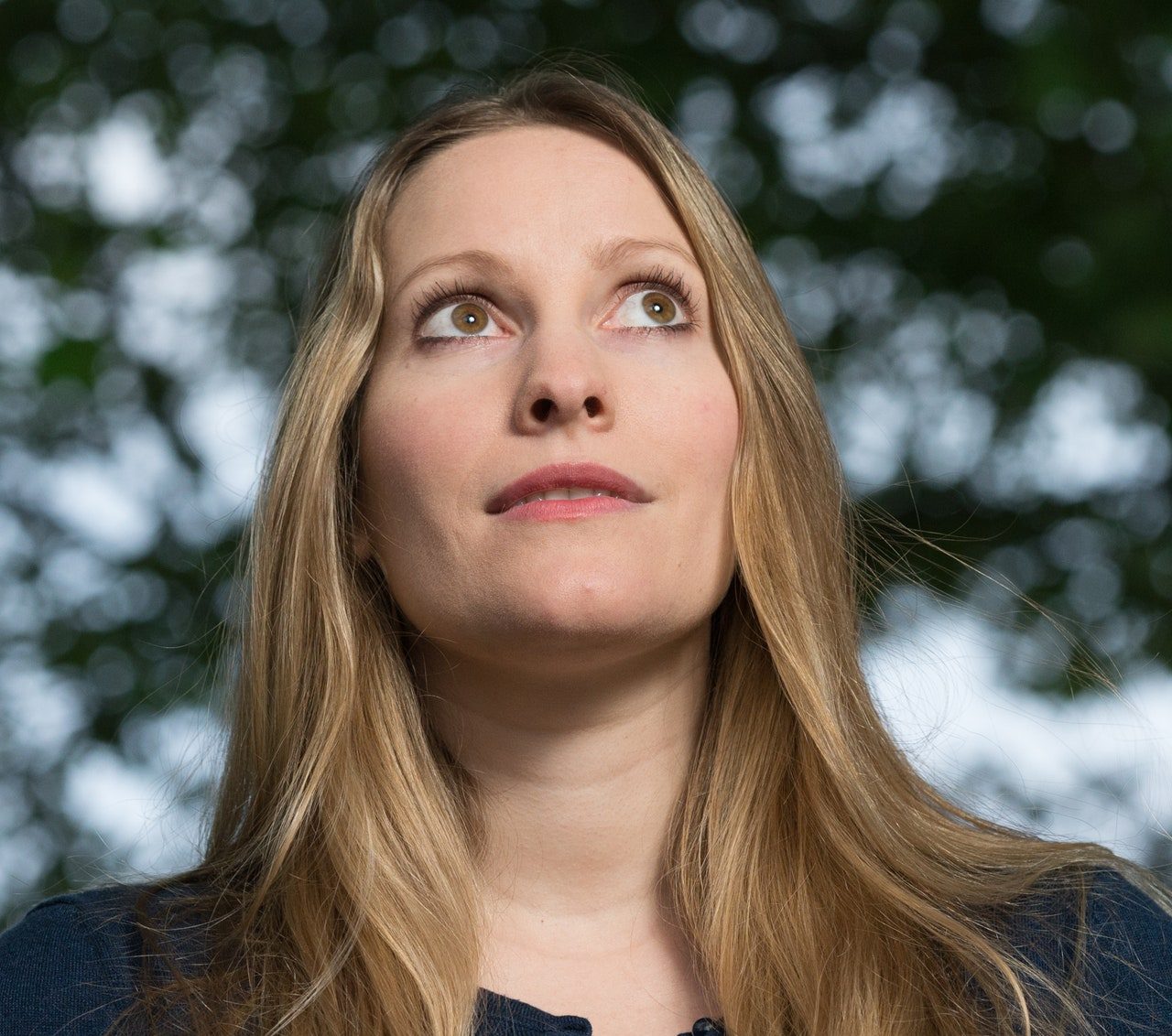
“I’d had a really bad week where in the space of just a few days I was sexually assaulted by a man on the bus, I was followed home by another man refusing to leave me or take no for an answer, and I had a bad experience of catcalling and street harassment,” Laura Bates, the author and founder of the Everyday Sexism Project, tells British Vogue. “By the end of the week, I was thinking about these three incidents that had happened so close together, and it struck me that if they hadn’t happened in such a short period of time, I never would’ve thought twice about any one of them individually because they were so normal.” This was in 2012, and shortly afterwards Bates, then 25, was inspired to start the Everyday Sexism Project. An online platform where people of any gender share their stories of daily gender inequality, eight years on it’s home to more than 80,000 stories from people all over the world.
“I didn’t think that I could solve sexism overnight, but I thought that maybe I could make it less invisible, and if other people could see it too then we’d be well on our way to starting to tackle it,” Bates, who published her first book, Everyday Sexism, in 2014, recalls. “The stories were from people across such a wide spectrum of experiences: from a woman in the City who was told to sit on her boss’s lap if she wanted her Christmas bonus; to a woman working in a shop who found that every time she went up the ladder to get new stock her boss would spank her; to a dad being congratulated for babysitting his own children; to a Reverend in the Church of England being constantly asked if there was a man available instead.”
Collectively, these stories added up to “the largest data set of its kind that had ever existed”. It allowed Bates to draw out “pretty clear data” on the problem, and to identify connections between sexism and other forms of prejudice, too. While Bates’s personal experience was the seed for the project, it’s not about her. One thing is very clear: her work is about creating change for the collective good – and it’s happening. This September, after taking young people’s stories about sexual harassment and sexual assault to cabinet ministers who were deliberating over whether aspects of sex and relationship education should be compulsory in schools, issues like consent are now (finally) part of the curriculum.
If anyone should be advising on topics schools need to cover in relation to sex, gender and relationships, it’s Bates. Over the past few years she’s been visiting schools across the country, to speak to young people about “knowing what their right is to their own body”. Many of us – Bates included – were never taught about topics like sexual consent, assault or harassment. “I was never taught about feminism or gender inequality at school or university [Bates studied English literature at Cambridge University], so for me it wasn’t until I was in my early twenties that this lightbulb moment of joining the dots happened,” she says.
That’s not to say she wasn’t seeing gender inequality up close. “I had been at a university where there was a supervisor who wore a black armband every year on the day that women were first admitted to the college. I had experienced extreme sexual harassment throughout my life, but I hadn’t had the language or the permission to call it what it was. I often think about the fact that by my early twenties I had experienced several sexual assaults that I never would’ve used that language to describe.”
Bates’s brilliant work in schools is what led to her eye-opening new book, Men Who Hate Women. Entering the “manosphere”, she spent just under two years conducting undercover work in toxic online communities. Her findings were chilling, and make for a fiercely important, if difficult read. “I think it’s a book for reading in small pieces,” Bates concurs. In it, she discusses incels, or “involuntary celibates”, who fantasise about murdering women who won’t have sex with them. Many incels worship the mass murderer Elliot Rodger, who killed several women in 2014 after being sexually rejected. Then there’s the still-growing million-dollar pick-up artist industry, most famously attributed to Neil Strauss’s The Game. And the Men Going Their Own Way (MGTOW) movement, made up of men who believe all women are liars and cheats. Plus much more.
“With this particular book, the more I researched it the more I felt I was uncovering something absolutely terrifying,” says Bates. “It’s quite hard to believe that these communities exist, [that they] are genuinely and deliberately advocating that women should be massacred, and are going out and committing those massacres, and that we still aren’t talking about it.” The more Bates, posing as “Alex” online, found, the more necessary the book felt, she says. “The more I uncovered, particularly around grooming and radicalisation, and realising the extent to which they were infiltrating young men’s networks online, the more it felt like there was a sense of huge urgency. I had to keep going, I had to write this book. There’s this huge threat to our society really, and particularly to women, that nobody even knew existed. That kind of kept me going.” She’s right, most people who read her book will learn about communities – online and off – that they never knew existed.
While Bates kept going, it was by no means easy. The abuse women encounter on a daily basis online far outweighs what comes men’s way – but the scale of the hate was on another level for her. “There’s been a spike in rape threats, death threats, attempts to hack into my email and my computer, people trying to track me down,” says Bates, who has been getting threats for years now. “I was very well prepared for it and I have spent the last 10 years very clearly protecting myself and my personal information, so I was at least braced, but it’s been pretty horrific nonetheless.”
Bates has delved into the darkest corners of the internet in order to shed light on the very real dangers to women that lurk there. As tempting as it is to look away, she’s determined that the world should “recognise that these people and communities exist. At the moment the simple fact is most people haven’t heard of them.” (vogue)