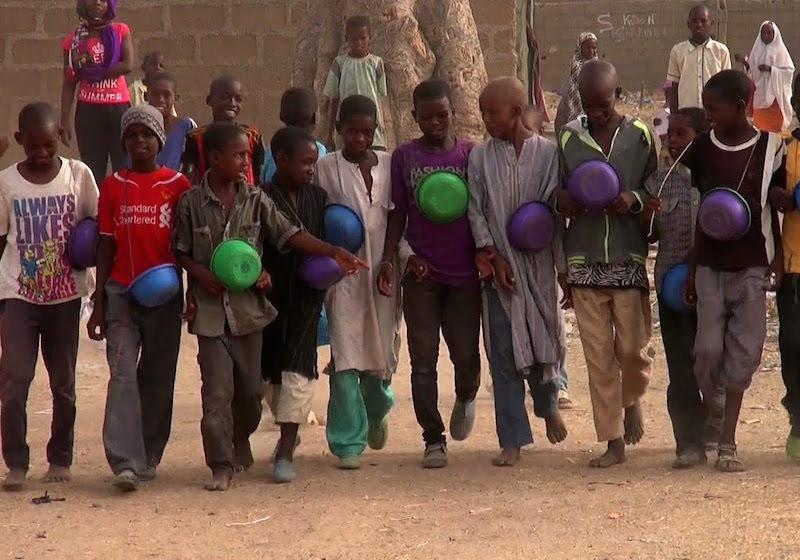
- Kano man expresses frustration after watching children, aged 2 and 5, ‘scavenge for food’
By Lillian Okenwa
Kano State, one of West Africa’s oldest commercial powerhouses and northern Nigeria’s undisputed hub of trade, textiles and political influence, is bracing for a population shock that could overwhelm an already fragile system, and deepen a humanitarian crisis playing out in plain sight.
Health authorities estimate that between 600,000 and 700,000 babies could be born in Kano in 2026 alone, a demographic surge that exposes the widening gap between political wealth and public neglect in one of Nigeria’s most powerful states.
The projection, based on a 3.5 percent population growth rate extrapolated from Nigeria’s last census, was disclosed by Dr. Mansur Mudi Nagoda, Executive Secretary of the Kano State Hospitals Management Board, during the maiden convocation of the Sardauna College of Health Sciences and Technology.
“Our population growth is outpacing the capacity of our health system,” Nagoda warned, revealing a shortfall of about 4,000 health professionals in the state. “Kano is facing a serious manpower crisis.”
The warning comes as Kano—home to some of northern Nigeria’s richest politicians, merchants and religious elites—continues to grapple with crumbling healthcare infrastructure, chronic underfunding, and one of the country’s highest poverty rates.

A State of Contradictions
Kano is a paradox. It is Nigeria’s historic centre of commerce in the North, a magnet for enterprise and political power. Yet its streets tell a harsher story—one of abandoned children, informal survival and systemic failure.
That contradiction exploded into public view last week after Zafrullah Abdulaziz, a Kano resident, shared a harrowing account on social media describing two children—a two-year-old boy and a five-year-old girl—scavenging for food in the cold.
“A baby. How did we get here?” Abdulaziz wrote. “How have we become so desensitised that we walk past toddlers begging for their lives and feel normal?”

His post struck a nerve in a city long accustomed to the almajiri system, which sends thousands of children—often under the guise of religious instruction—onto the streets to beg, scavenge and survive on charity.
“No tradition, no religion justifies throwing children into the streets,” Abdulaziz wrote. “Our silence is a betrayal of our humanity.”
The Almajiri Question No One Wants to Answer
Human rights advocates say Kano’s looming baby boom threatens to reproduce the same cycle of neglect, funnelling hundreds of thousands of new children into an environment already unable—or unwilling—to protect its most vulnerable.
“The almajiri system is not just a cultural issue; it is a governance failure,” said a public health analyst familiar with northern Nigeria. “You cannot celebrate population growth while ignoring where those children will sleep, eat, learn or receive healthcare.”
Despite repeated government pledges, primary healthcare facilities remain overstretched, rural communities lack trained personnel, and maternal and child mortality rates remain stubbornly high.
Nagoda said the state plans to recruit more health workers and deploy them to underserved local government areas such as Doguwa, Rogo and Sumaila, but experts warn that recruitment without sustained funding, accountability and social reform will have a limited impact.
A National Crisis, Sharpened in Kano
Nigeria already records between 7.5 million and 9.2 million births annually, a figure that now surpasses the combined births of Europe and Russia. Kano’s projected surge highlights the speed—and danger—of that growth in regions where public systems are weakest.
For critics, the issue is no longer demographic mathematics but moral urgency.
“A society that does not protect its smallest members has lost its way,” Abdulaziz wrote. “This is a ticking time bomb.”
As Kano’s elite continue to thrive and political power remains concentrated, the question grows louder: Who is responsible for the children left to survive on the streets, and what happens when the next 700,000 arrive?