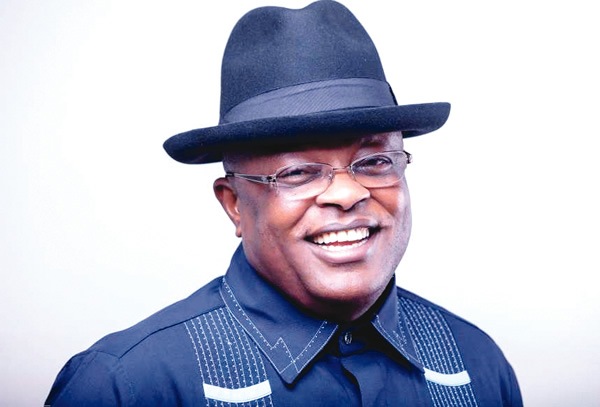
Nigeria’s Minister of Works, Dave Umahi, has dismissed allegations of sexual harassment and unpaid campaign debts levelled against him by a businesswoman, escalating a controversy that has spilled from social media into the courtroom.
The accuser, Mrs. Tracyniter (Tracy) Nicholas Ohiri, was arraigned before a magistrate court in Wuse Zone 2, Abuja, on a defamation charge after publicly accusing the former Ebonyi State governor of sexual harassment, intimidation, unlawful detention and refusal to pay for campaign materials she claims to have supplied.
She pleaded not guilty and was granted bail in the sum of N1 million with two sureties. The case was adjourned for further hearing.
The dispute has triggered viral online reactions, including a public confrontation between Umahi and activist and former presidential candidate Omoyele Sowore, who accused authorities of targeting Ohiri after her arrest.
The Allegations
Ohiri alleges her business relationship with Umahi dates back to the period before his election as Governor of Ebonyi State. According to her, she was contracted to produce corporate gift items for campaign purposes after submitting presentations and quotations.
She claims she proceeded with production despite not receiving mobilisation funds, financing the project through personal savings and loans. The goods, she said, were delivered to Umahi’s residence at her expense.
The businesswoman alleges that she was never paid the initial N25.4 million owed, which she claims has ballooned to N304 million with accumulated interest.
More explosively, Ohiri alleges that during one of her visits to Ebonyi for business discussions, Umahi entered her hotel room wearing only a towel and made advances toward her — claims the minister strongly denies.
She further alleges that after repeated demands for payment and threats to protest publicly, she received intimidation and was later arrested by security operatives following social media posts about the matter.
Umahi’s Response: ‘I’m Not Worried’
In a video response, Umahi dismissed the claims as baseless and politically motivated.
“As party chairman, I owed nobody,” he said. “Deputy governor, governor for eight years — nobody ever said I harassed them.”
The minister said he remains unfazed by the social media storm.
“What you read on social media, I’m not worried about it. It makes me stronger. I have fought many battles. This is nothing.”
In remarks that quickly drew attention online, Umahi referenced Senator Natasha Akpoti-Uduaghan while addressing insinuations about alleged advances.
“There’s nothing wrong to say, oh, you are chasing a woman,” he said.
“But if it is Natasha that is accusing me of chasing her, then my face will be bolder.
“But not any how person that will accuse this handsome man of chasing him for 12 years. That person must be the Queen of England.
“Because even one man cannot chase Senator Natasha for 12 years. So, it’s just to make social media to be alive.
“But I think we can turn our attention to the war in Iran now, and then allow Dave Umahi to rest”, he said, dismissing the claims against him.
His comments sparked debate, particularly as Akpoti-Uduaghan herself previously made sexual harassment allegations in 2025 against Senate President Godswill Akpabio, claims Akpabio has denied.
Police Investigation and Political Theatre
Umahi’s media office insists the minister did not deploy the police to settle personal scores. In a statement signed by his Senior Special Assistant on Media, Francis Nwaze, the minister said police acted on a petition submitted by his lawyer and followed standard legal procedures.
The statement described Ohiri’s claims as “inconsistent, contradictory, and lacking coherence,” and accused Sowore of staging “performative activism” by confronting the minister publicly.
Meanwhile, Sowore and other activists have rallied in solidarity with Ohiri, demanding transparency and due process.
As investigations continue, the controversy has evolved into more than a personal dispute, raising broader questions about power, accountability and the intersection of politics, business and gender in Nigeria’s public sphere.
For now, the courts, not social media, will determine what comes next.