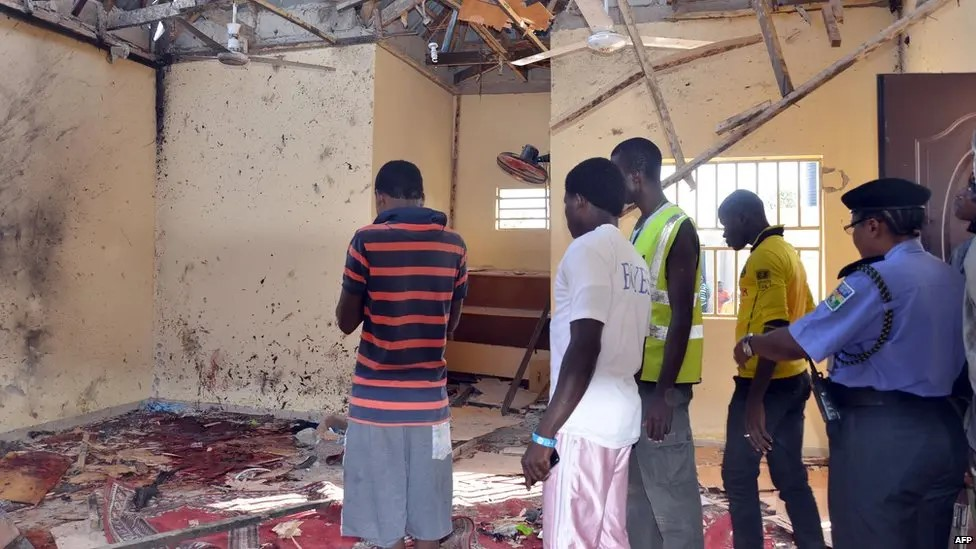
A survivor of the explosions that ripped through Maiduguri on Monday night has described the moment the blasts tore through a crowded market area, leaving dozens dead and scores injured in one of the city’s deadliest attacks in recent years.
“I heard a loud sound—and suddenly my neck started bleeding,” said Abacha Mustapha, speaking from his hospital bed at Umaru Shehu Hospital.
Mustapha said he had just broken his fast and was preparing to leave the market when the first explosion detonated.
“We were closing our shops when it happened. People started running in different directions. Some fell, others were shouting. At first, I didn’t even understand what had happened,” he said.
Chaos in a Crowded City
Eyewitnesses said the blasts struck at a peak hour, just as traders were closing for the day and residents were returning home after evening prayers.
The explosions hit multiple locations, including the entrance of the University of Maiduguri Teaching Hospital, the Monday Market, and the Post Office area.
Panic spread rapidly.
“It was chaotic,” Mustapha said. “There was confusion everywhere.”
Bleeding heavily from his neck, he said his brother acted quickly.
“My brother used his cloth to tie my neck to stop the bleeding and rushed me to the hospital. If not for him, I don’t know what would have happened.”
Rising Casualties
Emergency responders say the scale of the attack is significant.
The National Emergency Management Agency (NEMA) confirmed that at least 23 people were killed, while 146 others are receiving treatment for injuries ranging from shrapnel wounds to severe burns.
A total of 169 victims were evacuated to hospitals across Maiduguri.
“108 are currently receiving treatment at UMTH, 20 at Umaru Shehu Hospital, and 17 at Maiduguri Specialist Hospital,” said Surajo Abdullahi, NEMA’s zonal coordinator.
Hospitals were quickly overwhelmed as families rushed in search of loved ones.
A City on Edge Again
For many residents, the blasts mark a chilling return to a past they believed was behind them.
Maiduguri—once synonymous with frequent bombings and insurgent violence—had enjoyed years of relative calm.
“That fear is back,” one resident said. “The gory scenes, the panic—everything feels like it used to.”
The attacks, reportedly carried out around 7:25 p.m. and suspected to be linked to Boko Haram, have raised concerns about a renewed surge in violence in Nigeria’s northeast.
Residents are now calling for tighter security around markets and other densely populated public spaces.
Government Response
President Bola Tinubu condemned the attacks, describing them as “deeply upsetting” and vowed that Nigeria would not succumb to terror.
“These are desperate attempts by criminals and terrorist elements trying to instil fear,” Tinubu said in a statement.
He announced that service chiefs had been directed to relocate to Maiduguri to take charge of the security situation. At the same time, emergency agencies were instructed to ensure proper care for the injured.
“There is no place in Nigeria where terrorists will find safety,” he said. “We will locate them, confront them, and completely defeat them.”
Lingering Questions
Despite repeated assurances, questions persist about Nigeria’s ability to confront insurgent groups decisively.
Islamic cleric Ahmad Gumi has repeatedly claimed that authorities know the identities and locations of terrorist actors.
“The government knows every terrorist by name and by location,” he said in a recent interview, adding that his engagements with armed groups were conducted alongside security agencies.
The government has not publicly responded to those claims.
For survivors like Mustapha, however, the focus remains on survival—and recovery.
“I’m just grateful to be alive,” he said.