For decades, the phrase “no near route to Arochukwu” was more than a saying in Abia State; it was a warning.
It captured years of isolation, fear and fatal accidents linked to the crumbling Omenuko Bridge and the treacherous Bende–Abam–Ohafia–Arochukwu corridor.
Last week, that phrase was symbolically buried.
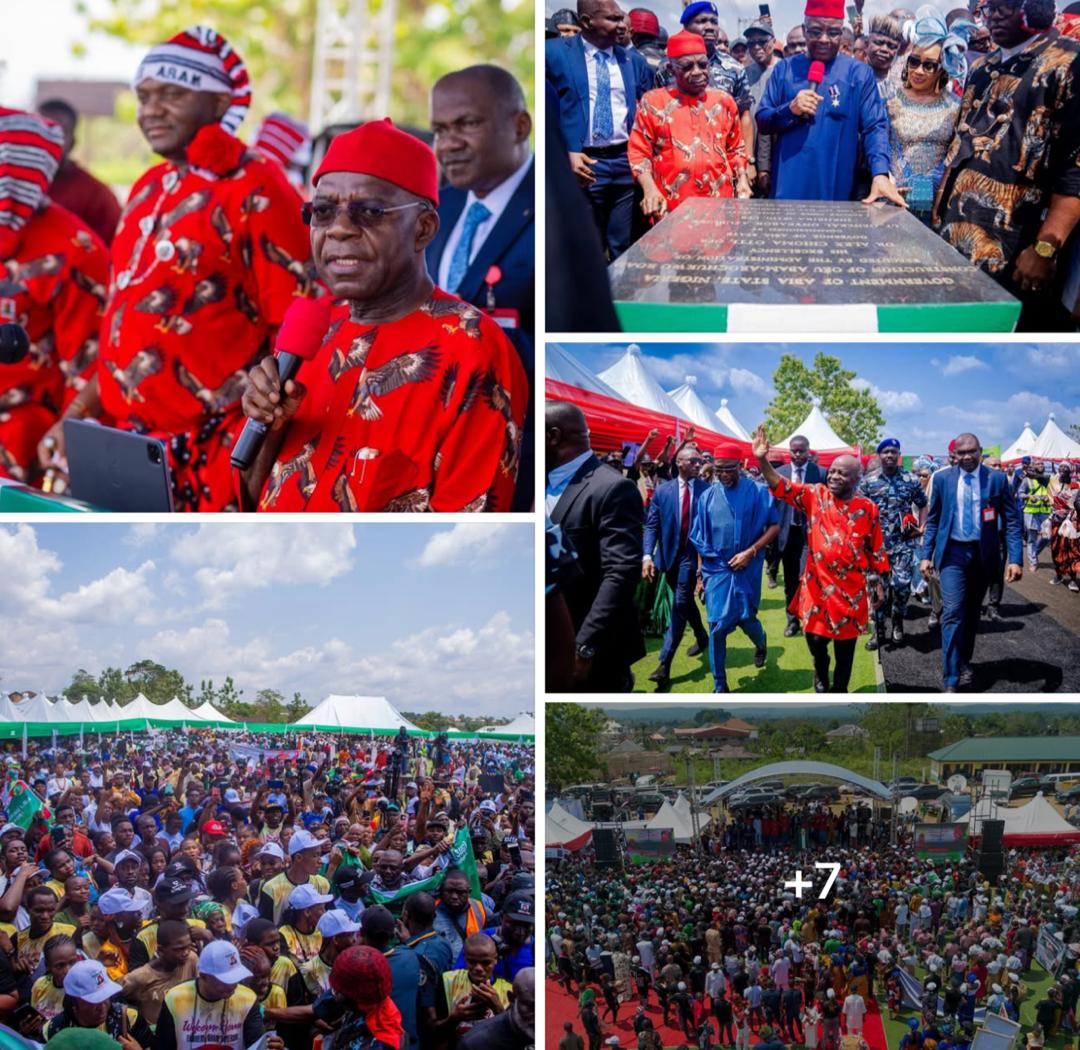
The commissioning of the newly reconstructed Omenuko Bridge and the 30-kilometre Amuvi–Ndi Okereke, Abam–Arochukwu Road marked what many described as the end of a 45-year cycle of neglect — and the beginning of a new chapter under Governor Alex Otti.
A Crowd Fuelled by Memory
From the moment the governor’s convoy arrived, the atmosphere was electric.

Traditional ogene rhythms pierced the air. Ikpirikpi egwu dancers stamped the earth in unison. Chants rose from every corner:
“Record Breaker!”
“History Changer!”
“Son of Abam!”
But beneath the celebration was something heavier.
Many in the crowd had lost relatives on the old bridge — a narrow, barrier-less structure that had become synonymous with tragedy. Some came to celebrate progress. Others came to confront painful memories.
Among them were students, elders, business owners and families who had long avoided returning home because of the dangerous crossing.
For some, the day was personal.
One attendee recalled abandoning plans to marry from Abam years ago after turning back at the sight of the deteriorating bridge. “I would rather remain a bachelor than take that risk,” he had once said. This time, he came to see for himself if history had truly changed.
Delegating Glory
In a gesture that surprised many, Otti handed the honour of cutting the ribbon to retired General Azubuike Ihejirika, a former Chief of Army Staff who marked his 70th birthday that day. The project plaques bore Ihejirika’s name.
For political watchers, the move signalled a leadership style willing to share credit rather than monopolise it.
Observers noted that in a climate where political capital is fiercely guarded, the symbolism stood out.
An Emotional Breaking Point
If the commissioning signalled transformation, the governor’s speech defined the day.
As Otti addressed the crowd, he acknowledged those who had died on the bridge over the years — including families and schoolchildren lost in accidents tied to its decay. He called for a one-minute silence.
The mood shifted.
Celebration gave way to grief.
Then, visibly overwhelmed, Otti struggled to continue. His voice trembled. He paused. He wept.
For many present, it was the defining moment.
In that instant, infrastructure ceased to be concrete and steel. It became about human lives — about mothers who disembarked from vehicles to cross the bridge on foot, about families who never made it home, about communities cut off from opportunity.
“Leadership met humanity,” one attendee said afterwards.
Development and Political Momentum
The ceremony also carried political undertones.
During the reception, community leaders publicly pledged ₦500 million toward Otti’s re-election campaign — following a ₦100 million donation from another regional bloc weeks earlier. The announcement drew cheers and underscored the administration’s growing grassroots support.
Yet for many residents, the deeper significance lay beyond politics.
For over four decades, administrations came and went without resolving the Omenuko crisis. The bridge’s deterioration was widely seen as a symbol of governance failure.
Its reconstruction, residents argue, represents more than infrastructure — it signals responsive leadership capable of delivering tangible change.
A Test of Transformational Governance
Across Nigeria, decaying infrastructure often mirrors broader frustrations about governance. In Abia, the Omenuko Bridge had become shorthand for abandonment.
By reopening it — alongside the 30km arterial road linking Amuvi, Ndi Okereke, Abam and Arochukwu — the state government has altered economic prospects for trade, education and emergency access in the region.
The event also reignited a broader debate: can empathetic, responsive leadership translate into sustained transformation?
For the thousands who gathered, the answer seemed clear.
As drums echoed and traffic flowed across the new span, one message resonated through the crowd:
Arochukwu is no longer far.
And for many in Abia, that may be the most powerful transformation of all.