By Lillian Okenwa
When the body of 29-year-old Saudi Prince Abdullah bin Fahad bin Abdullah bin Abdulaziz bin Jalawi Al Saud was discovered in a London hotel room last November, investigators found no evidence of violence or foul play. The inquest later concluded that he had died after consuming a combination of alcohol, Xanax, cannabis and gamma-hydroxybutyrate (GHB), a powerful central nervous system depressant. The verdict was misadventure.
It was an unexpected end for a man born into one of the world’s wealthiest and most influential royal families. Yet the circumstances of his death have become increasingly familiar to addiction specialists across the world.
The assumption that substance dependence belongs primarily to the poor has been overtaken by events. Addiction now cuts across economic status, education, profession and nationality with remarkable consistency. It is found in deprived communities and affluent neighbourhoods, among unemployed youths and successful professionals, in public schools and elite universities, in correctional facilities and luxury rehabilitation centres.
Nigeria reflects the same pattern.
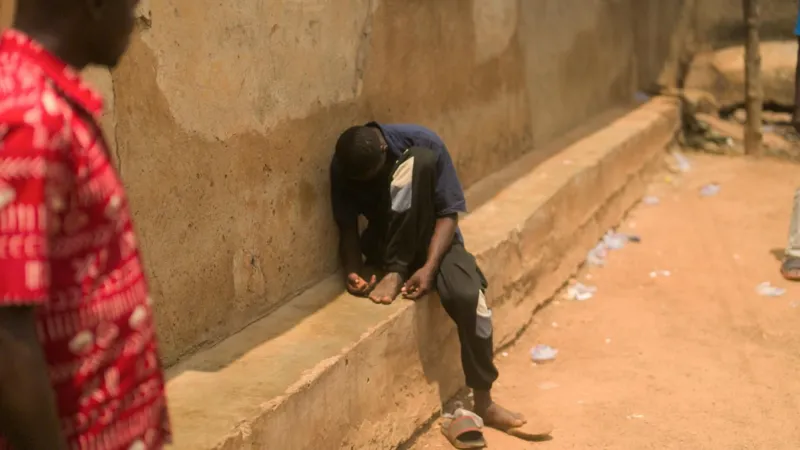
Drug dependence is no longer confined to communities defined by poverty or social exclusion. Physicians, psychiatrists and rehabilitation practitioners increasingly encounter patients from homes where financial hardship has never been part of family life. University students, entrepreneurs, bankers, entertainers, public officials and children of prominent families now appear alongside commercial drivers, artisans and unemployed young people in treatment programmes.
Their backgrounds are different. Their dependence often looks remarkably similar.
That reality challenges one of the most persistent misconceptions surrounding addiction. Economic hardship certainly increases vulnerability. Communities burdened by unemployment, insecurity and limited opportunities often experience higher rates of substance misuse as individuals search for temporary relief from persistent stress, trauma and uncertainty.
The same explanation, however, does not account for the growing number of affluent young Nigerians developing dependence on tramadol, cannabis, cocaine, methamphetamine, prescription sedatives and other psychoactive substances.
Mental health professionals describe addiction as the product of multiple forces acting together rather than a single cause. Trauma, depression, anxiety disorders, unresolved childhood experiences, family breakdown, loneliness, untreated psychiatric conditions, peer influence, social media culture and the increasing availability of synthetic drugs all contribute to vulnerability. Financial status may shape how addiction begins, but it rarely determines who becomes addicted.
Among wealthier families, the risks often present themselves differently. Greater purchasing power can make expensive drugs easier to obtain, while demanding careers, emotional distance within families, social expectations and inadequate supervision sometimes create conditions in which dependency develops unnoticed until it becomes severe.
Across every social class, one feature appears repeatedly.
People rarely begin using drugs with the intention of becoming addicted.
Some are introduced through curiosity. Others through friends. Some first encounter opioids after legitimate medical treatment. Others turn to stimulants while trying to remain productive, sedatives while struggling to sleep, or alcohol while attempting to manage emotional distress. What begins as experimentation, recreation or self-medication can gradually alter the brain’s reward system until choice gives way to dependence.
Scientific understanding of addiction has changed significantly over the past three decades. It is now recognised internationally as a chronic brain disorder influenced by biological, psychological, environmental and social factors. That understanding has reshaped treatment strategies in many countries, moving away from punishment alone and towards integrated recovery built around medicine, psychology, family support and long-term rehabilitation.
Nigeria’s public response has not evolved at the same pace.
Public discussion still focuses overwhelmingly on arrests, seizures and criminal prosecution. Those measures remain important in reducing drug supply, but they address only one side of the crisis. Every seizure raises another question that receives far less public attention: what becomes of the people whose lives have already been overtaken by addiction?
That question is becoming increasingly urgent. Reports from treatment providers, psychiatrists and public health experts suggest that demand for recovery services is growing faster than the country’s capacity to provide them. Specialist facilities remain limited, trained professionals are in short supply and many families continue to navigate addiction with little understanding of where effective help can be found.
The death of a Saudi prince thousands of kilometres away and the struggles unfolding daily across Nigerian communities point to the same conclusion. Addiction is no longer a problem that can be explained by poverty, geography or social class. It has become a public health challenge whose reach extends into every layer of society.
The question facing Nigeria is no longer whether the crisis exists. It is whether the country has built a recovery system capable of responding to it.
Next: Inside Nigeria’s Recovery Gap: Why treatment remains beyond the reach of millions.