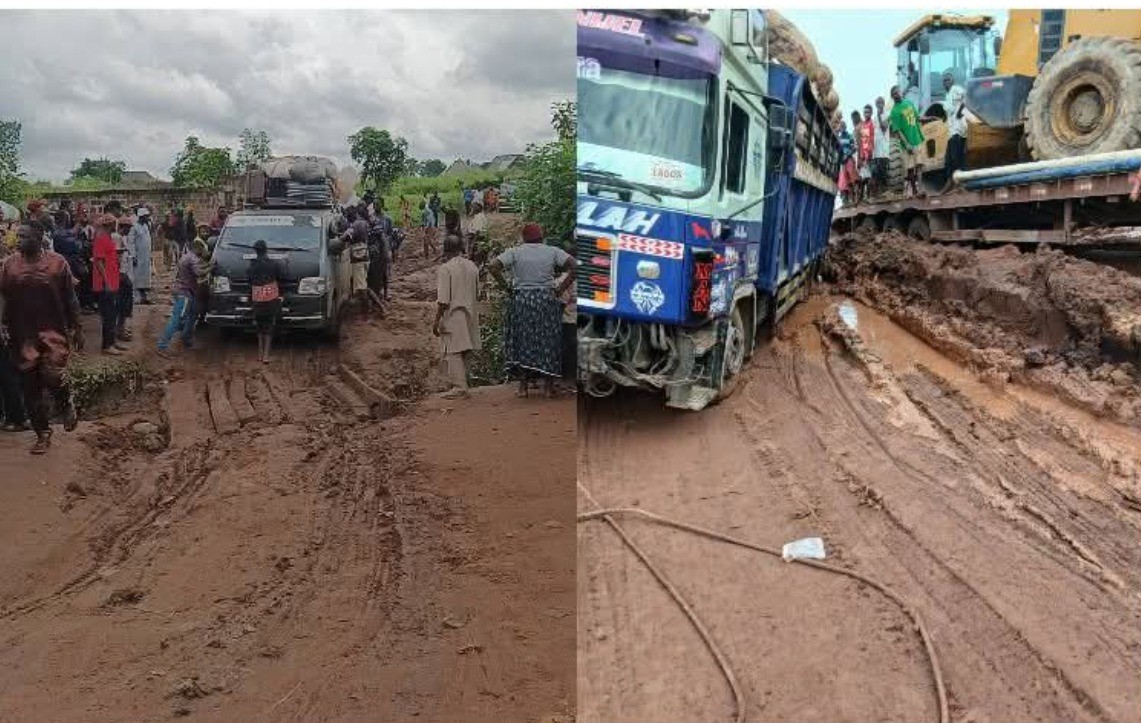
Barely three years after its high-profile commissioning by former President Muhammadu Buhari, the N38 billion Nasarawa–Oweto–Otukpo Federal Road has suffered extensive structural failure, morphing from a strategic transport corridor into what many motorists now describe as a death trap.
The highway—linking communities across Nasarawa State and Benue State while serving as a gateway to eastern Nigeria—was envisioned as a catalyst for trade, faster travel and rural economic growth. Today, large portions have collapsed, leaving the once-promising artery largely abandoned.
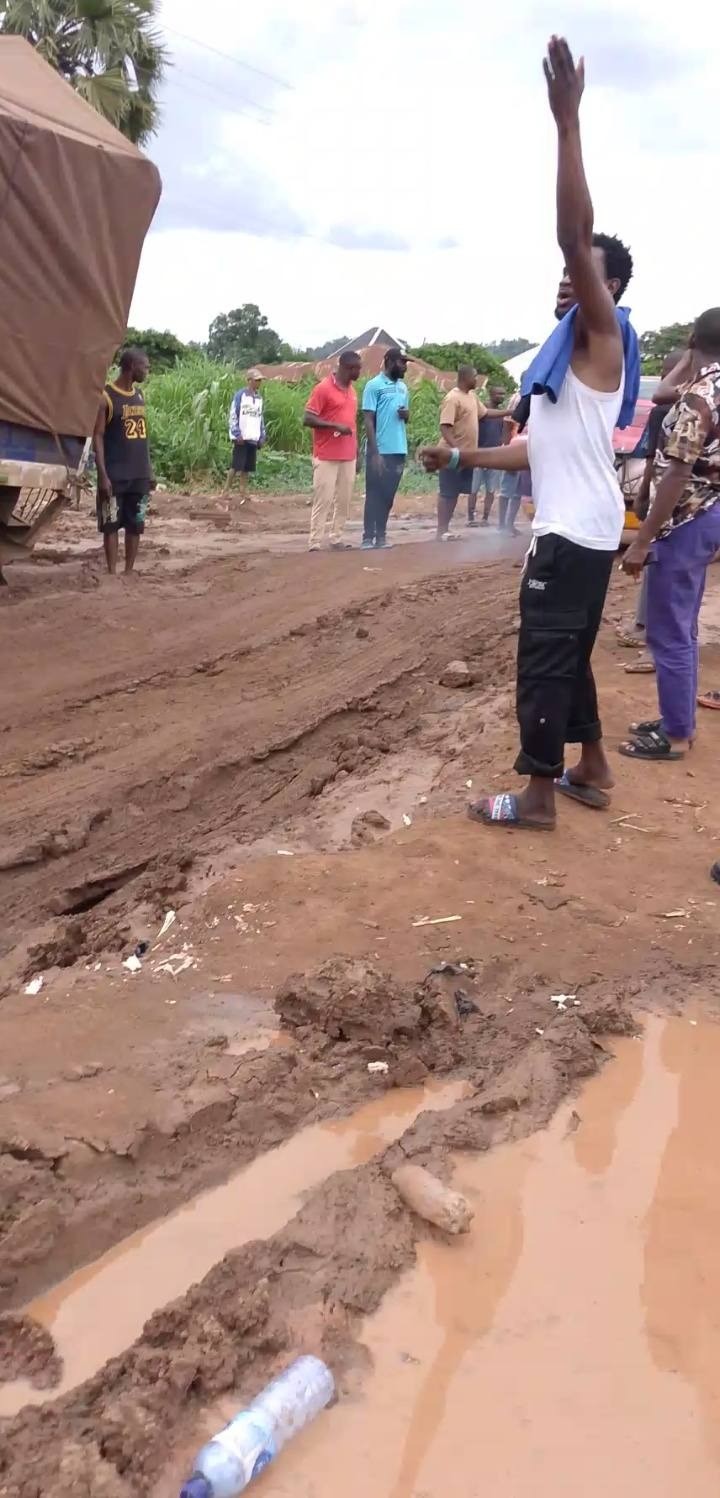
A visit by reporters revealed multiple failed sections where asphalt has peeled away, road shoulders have sunk, and aggressive erosion has gouged deep channels across the carriageway. In several areas, motorists are forced off the road and into surrounding bushes to bypass destroyed segments; elsewhere, passage is impossible.
Damaged and exposed culverts have further heightened fears about flawed drainage design—an issue infrastructure experts often cite as a recurring weakness in Nigerian road construction.
A Familiar Pattern on Nigeria’s Highways
The rapid deterioration underscores a broader national problem: highways across Africa’s largest economy have increasingly become hazardous corridors marked by potholes, collapses, criminal attacks and chronic neglect.
For millions of Nigerians who rely almost exclusively on road transport, such failures are more than an inconvenience—they carry economic and human costs, from fatal crashes to delayed emergency care.
Despite its strategic importance, the Nasarawa–Oweto–Otukpo corridor now sits eerily quiet, particularly along the Agatu–Otukpo stretch. Investigations suggest that worsening insecurity has compounded the road’s structural problems, accelerating its abandonment.
Most commuters have rerouted to longer alternatives, choosing safety over efficiency.
Heavy Trucks, Weak Enforcement
Findings indicate that an early surge of articulated trucks significantly hastened the highway’s decline.
After completion, long-haul trailers heading east reportedly deserted older routes in favor of the shorter corridor, concentrating immense axle pressure on infrastructure residents believe was never engineered for such sustained loads.
“After the road was opened, trailers and tankers took over the place. It didn’t take long before the surface started breaking,” said commercial driver Enoch Adagboyi.
Experts point to the absence of functional weighbridges and poor axle-load enforcement, systemic regulatory gaps that have historically undermined road durability nationwide.
Ironically, as the road worsened and insecurity escalated, those same heavy vehicles abandoned the route.
Kidnappings Turn Corridor Into No-Go Zone
Structural failure is only part of the story.
Frequent kidnappings and armed attacks along adjoining roads have transformed the corridor into a high-risk zone. In November 2025, gunmen reportedly abducted six passengers along the Ogobia–Adoka axis, while security sources have repeatedly flagged criminal hideouts in nearby forests.
The climate of fear now deters not just motorists but also transport unions and even maintenance crews—making routine repairs increasingly unlikely.
“It’s a Death Trap”
Commercial drivers voiced anger over what many see as a costly waste of public funds.
“The road started failing too early. Even before the collapse became serious, people stopped using it because of kidnappers. Today, it’s not safe and not motorable,” said driver Joseph Onche.
Another motorist was more blunt: “We were happy when it was commissioned. Now it looks like the money was wasted.”
For traders and farmers in Agatu, the consequences have been immediate. Once-busy roadside markets have emptied, choking off income streams and isolating rural producers from urban buyers.
“Before, vehicles passed here every day. We sold food, fish and farm produce. Now the road is empty,” said resident Margaret Ichalefu.
Residents also report growing difficulty accessing hospitals, schools and emergency services, an often overlooked ripple effect of infrastructure collapse.
Quality, Oversight—and the Corruption Question
Infrastructure specialists say the early failure raises troubling questions.
“A road of that cost should last far beyond three years, even without major maintenance,” civil engineer Simon Adakole noted, pointing to possible design flaws, substandard materials, inadequate drainage or weak supervision.
Such concerns echo long-standing allegations that corruption, contract irregularities and poor oversight frequently erode the value of Nigeria’s public works—leaving taxpayers to shoulder the burden of repeated reconstruction.
The Loko-Oweto Bridge and the associated road network were primarily constructed by Reynolds Construction Company Nigeria Limited after the project was awarded in 2011. Efforts to obtain comments from the contractor were unsuccessful.
Similarly, attempts to reach leadership at the Federal Roads Maintenance Agency yielded no response, fueling perceptions of institutional silence around a rapidly deteriorating national asset.
Maintenance Failures and Security Constraints
Analysts argue that delayed intervention may have allowed minor defects to spiral into catastrophic damage. Security threats, they say, often discourage inspection teams from conducting routine assessments, creating a cycle in which abandonment accelerates decay.
“Once a highway is neglected, erosion, vandalism and structural fatigue set in quickly,” one security expert warned.
A Costly Symbol of Broken Infrastructure
For residents of Benue South and surrounding communities, the ruined highway has become more than a failed project—it is a stark emblem of fragile infrastructure planning and limited accountability.
As Nigeria confronts mounting transport challenges amid economic strain, the collapse of a multibillion-naira road so soon after commissioning is likely to intensify scrutiny over how public funds are spent—and whether the country can build roads that last longer than political cycles.